










FREE SEWING PATTERNS: 20+ HOME DECOR IDEAs to Sew
Why Sewing Your Own Home Decor Is a Game-Changer
There is something deeply satisfying about looking around your home and knowing that the cushions on your sofa, the curtains framing your windows, and the table runner adorning your dining table were all made by your own hands. Sewing your own home decor is not just a hobby — it is a creative investment in your living space that pays dividends in personal expression, cost savings, and the quiet pride of craftsmanship. When you sew for your home, every stitch carries intention, and every finished piece tells a story that a mass-produced item simply cannot match.
The financial benefits alone are compelling enough to pick up a needle and thread. Decorative pillows at high-end home goods stores can cost anywhere from $40 to $150 each, while the same project sewn at home might cost a fraction of that in fabric and notions. Curtain panels, table linens, and wall hangings follow the same pattern. By sourcing fabric from sales, remnant bins, or even repurposing existing textiles, you can furnish and decorate a room beautifully without straining your budget. Free sewing patterns make this equation even more favorable, eliminating design costs entirely.
Beyond the economics, sewing your own home decor gives you complete creative control. You choose the fabric, the color palette, the dimensions, and the finishing details. Want curtains that are exactly 84.5 inches long to fit your oddly sized windows? Done. Need a throw pillow in a very specific shade of terracotta to complement your gallery wall? Simply find the right fabric and sew it yourself. This level of customization is impossible to achieve when shopping retail, and it is one of the most compelling reasons why so many decorators — amateur and professional alike — have embraced the sewing machine as a design tool.
Getting Started: Tools, Fabrics, and Free Pattern Resources
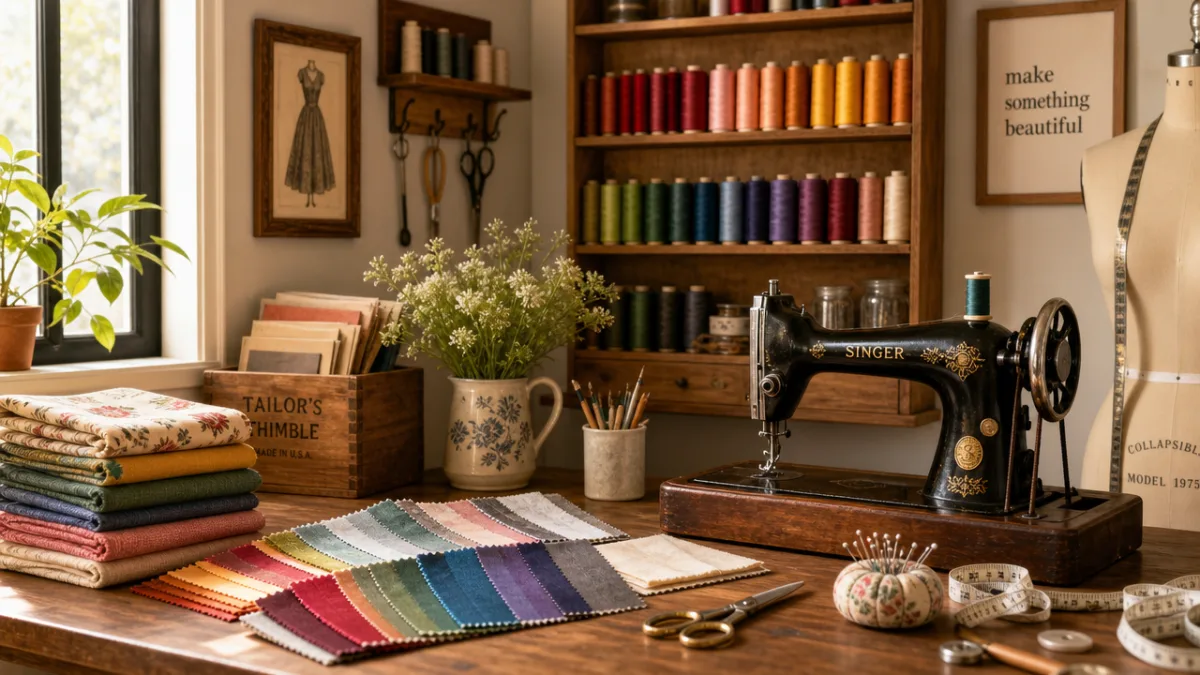
Before diving into your first home decor sewing project, it helps to have a solid foundation of tools and materials at the ready. A reliable sewing machine is your most important investment — it does not need to be expensive or feature-laden, but it should handle medium-weight fabrics like cotton canvas and linen with ease, as these are the workhorses of home decor sewing. A walking foot attachment is particularly useful for sewing multiple layers of fabric evenly, which comes up frequently in quilted projects, curtain panels, and padded organizers. Sharp scissors or a rotary cutter paired with a self-healing cutting mat will also make a significant difference in the precision and enjoyment of your work.
Choosing the right fabric is equally important, and for home decor projects the selection process differs somewhat from garment sewing. Home decor fabrics tend to be heavier, more durable, and often treated for stain resistance or UV protection — qualities that matter enormously for items that will see daily use or exposure to sunlight. Decorator-weight cotton, linen blends, canvas, outdoor fabric, and even upholstery fabric are all excellent choices depending on the project. That said, regular quilting cotton works beautifully for lighter applications like table linens, fabric baskets, and wall art. Shopping your local fabric store’s remnant section is a wonderful way to gather variety without spending much.
Finding free sewing patterns for home decor has never been easier, thanks to the thriving community of sewing bloggers, designers, and crafters who share their work online. Websites like See Kate Sew, Noodlehead, Melly Sews, and countless Pinterest boards aggregate hundreds of free downloadable patterns for every skill level. YouTube tutorials complement written patterns beautifully, offering visual guidance for tricky steps. Many fabric brands and retailers also publish free project patterns as part of their marketing, and these are often high quality. Bookmarking a reliable collection of free pattern sources will serve you well for years of decorating projects.
Pillow and Cushion Projects for Every Skill Level
Throw pillows are the entry point into home decor sewing for good reason — they are forgiving, fast, and have an outsized visual impact on a room. A basic envelope pillow cover requires nothing more than a rectangle of fabric folded and stitched, yet the result looks polished and intentional on any sofa or bed. From that simple foundation, you can layer in complexity through techniques like piping, flanged edges, button closures, smocking, or patchwork panels. Because pillow covers are removable and washable, they also offer a low-commitment way to experiment with bold patterns or colors you might not yet feel ready to commit to in larger quantities.
Some popular pillow patterns available for free online include the classic envelope back cushion cover, the Oxford pillowcase with its wide self-fabric border, the lumbar pillow with zipper closure, the boxed cushion for bench seating, and the floor pouf, which is essentially a large stuffed pillow that doubles as occasional seating. Each of these projects builds slightly different skills — zippers, piping, mitered corners — so working through several of them in sequence creates a natural progression in your abilities. Most free patterns come in multiple sizes, making it easy to sew a coordinated collection in various dimensions for a collected, curated look.
For beginners especially, starting with a simple no-zipper envelope pillow cover in a medium-weight fabric is highly recommended. The project typically takes less than an hour from cutting to finishing, which means you get to experience the satisfaction of a completed project quickly — a powerful motivator to continue sewing. Once you have mastered that first cover, adding a welt or knife-edge piping detail is a natural next step. The tools required are minimal: your machine, matching thread, fabric scissors, pins, and a pillow form or insert. Many sewists keep a rotating collection of pillow covers, swapping them seasonally to refresh a room’s look without purchasing new furniture.
Window Treatments: Curtains, Valances, and Roman Shades
Window treatments have a transformative effect on any room, and sewing your own means you can achieve a custom look at a fraction of the cost of ordering made-to-measure panels. The most fundamental curtain project is a simple rod-pocket panel — two long rectangles of fabric with hemmed sides, a folded and stitched channel at the top for the rod, and a weighted hem at the bottom. Despite its simplicity, a well-made rod-pocket curtain in a beautiful fabric can look entirely professional and intentional. Choosing a fabric with sufficient weight and opacity for the level of privacy and light control you need is the key decision in any curtain project.
Beyond the basic rod-pocket panel, free patterns are available for a wide range of window treatment styles. Pinch-pleat curtains create a more formal, tailored look and require heading tape or hand-stitched pleats. Tab-top panels have a casual, bohemian quality that works beautifully in bedrooms and relaxed living spaces. Café curtains cover only the lower half of a window, preserving light while adding privacy — a beloved choice for kitchen windows. And for a truly custom look, a gathered or flat valance at the top of a window adds color and pattern while allowing the full window to remain visible below.
Roman shades represent a slightly more ambitious project but are enormously rewarding to make. A flat Roman shade is essentially a fabric panel that folds up in even horizontal pleats when a cord is pulled, creating a clean, architectural look that suits both modern and traditional interiors. Free Roman shade patterns and tutorials are widely available online and break the project into manageable steps, usually involving sewing rings onto the back of the shade and threading a cord through a pulley system. The result is a window treatment that would cost hundreds of dollars at a custom workroom, made for the price of fabric, rings, a wooden dowel, and a few notions.
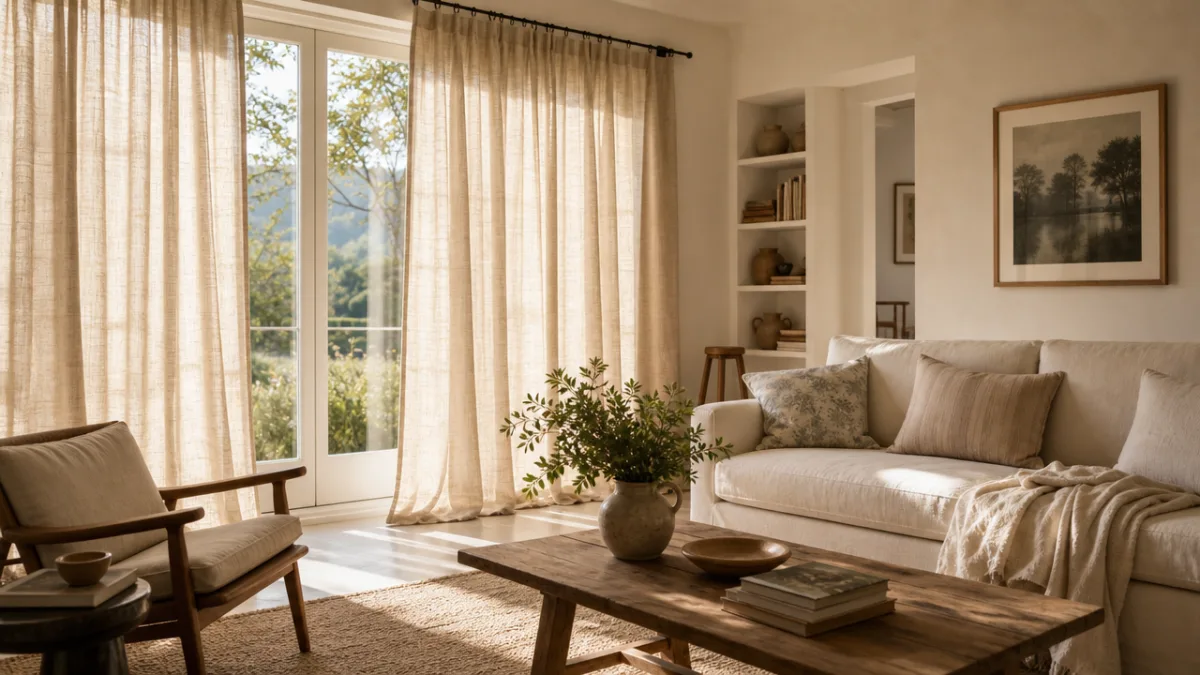
Table Linens, Kitchen Accessories, and Dining Room Decor
The dining room and kitchen offer some of the most practical and visually rewarding opportunities for home decor sewing. Table linens — runners, placemats, napkins, and tablecloths — are among the simplest projects a sewist can undertake, requiring little more than straight lines and hemming, yet they have an immediate and tangible impact on how a table looks and feels. Cloth napkins in particular are a wonderful first project: they are typically 18-inch squares of fabric with mitered corners, and a set of eight can be sewn in an afternoon. Using cloth napkins instead of paper ones is also an environmentally conscious choice that many households have come to appreciate.
Table runners are another high-impact, low-effort project. A runner typically measures about 13 to 15 inches wide and runs the length of the dining table, serving as a foundation for centerpieces, candles, and serving dishes. Free patterns for quilted table runners are particularly abundant, and they offer a wonderful way to practice patchwork skills in a small, manageable format. A simple nine-patch or log cabin block repeated in seasonal fabrics can yield a collection of runners that rotate through the year, giving the dining room a fresh look for each season without requiring new furniture or accessories.
Kitchen accessories extend the sewing opportunity further still. Fabric pot holders and oven mitts, aprons in cheerful prints, bread basket liners, small zippered pouches for tea bags and spices, and hanging dish towels with buttonhole loops for attaching to the oven handle are all practical, appealing projects with free patterns readily available. A coordinated collection of handmade kitchen textiles — all in the same fabric family or color palette — can make a modest kitchen feel thoughtfully designed and personalized. These items also make wonderful gifts, and because they are small and quick to sew, they are ideal for using up fabric scraps that might otherwise go to waste.
Storage Solutions, Wall Art, and Unique Decorative Accents
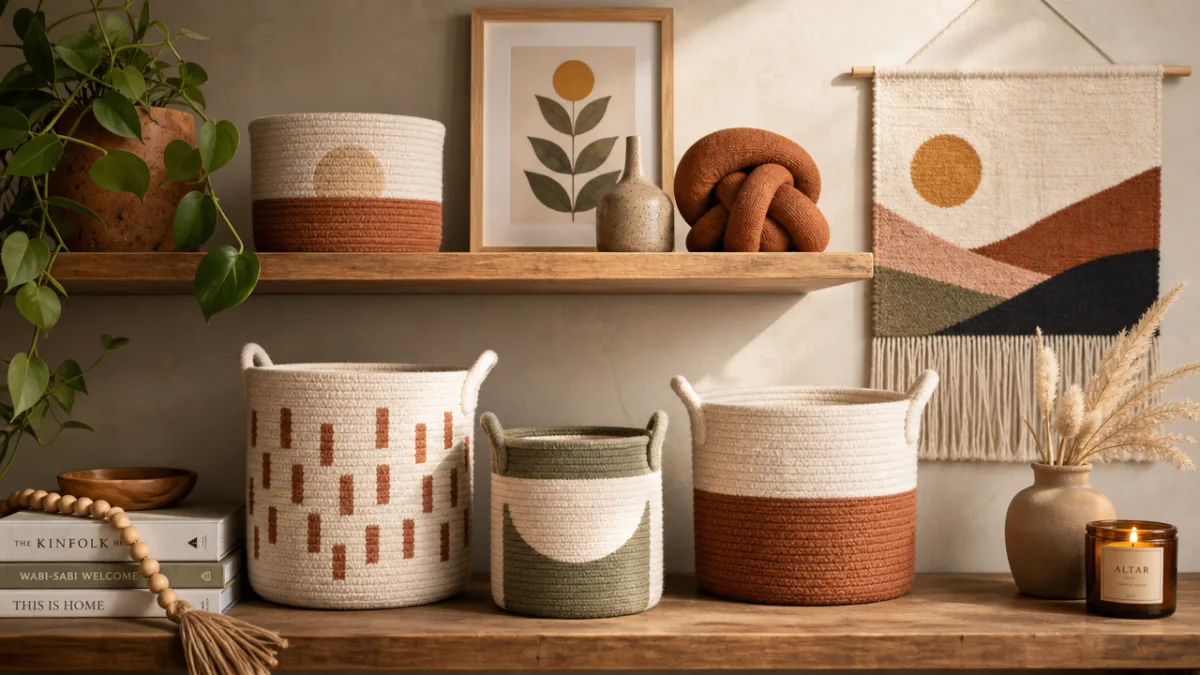
Some of the most inventive free home decor sewing patterns involve storage and organization — proving that functional items can also be beautiful. Fabric storage baskets, bins, and organizers have become enormously popular among the sewing community, and for good reason. A structured fabric basket made from sturdy canvas or interfaced cotton can hold toys, blankets, magazines, or bathroom supplies with style. Free patterns for these items are plentiful and range from simple fold-over pouches to complex boxed bins with handles and reinforced bases that rival commercial organizers in durability.
Wall art represents another frontier where sewing and home decor intersect beautifully. Fabric wall hangings, embroidery hoops displayed as art, quilted wall panels, and woven textile pieces add warmth and texture to walls in a way that framed prints simply cannot. A large piece of fabric — even a single yard of a stunning print — stretched over a wooden frame or stapled to a canvas stretcher becomes instant wall art that can be swapped out seasonally or as your tastes evolve. Free patterns for wall hangings range from simple folded designs to elaborate pieced and quilted works that require multiple techniques and considerable planning.
Beyond storage and wall art, the world of decorative sewing accents is limited only by imagination and the availability of free patterns. Fabric-covered photo frames, no-sew (or minimal-sew) ottomans upholstered in bold fabric, decorative book covers, lampshade covers, headboards padded with batting and wrapped in linen, bed canopies fashioned from sheer fabric panels, and even fabric-wrapped vases all represent opportunities to infuse handmade character into a home. The key insight is that nearly any surface in a home can be transformed through fabric — and with a library of free patterns at your disposal, the starting point for any project is just a few clicks away.
Tips for Success: Making the Most of Free Sewing Patterns
Working with free sewing patterns rewards a methodical approach. Before cutting a single piece of fabric, read through the entire pattern from beginning to end. This habit, which experienced sewists swear by, helps you anticipate tricky steps, gather all the necessary materials in advance, and avoid the frustration of discovering a missing notion or an unclear instruction mid-project. Free patterns vary considerably in quality and assumed skill level, so reading ahead helps you assess whether a given pattern is a good match for your current abilities or whether you might want to bookmark it for later.
Pressing — ironing seams open or to the side as you work — is one of the most underrated steps in home decor sewing, yet it makes a visible difference in the finish of any project. A well-pressed seam lies flat, reduces bulk, and gives a project that crisp, professional quality that separates handmade from homemade in the best possible sense. Investing a few minutes at the ironing board after each significant step pays off enormously in the final result. For home decor projects in particular, where items are often large and highly visible, pressing is not optional — it is essential.
Finally, embrace the community aspect of sewing. Sharing your finished projects on social media, joining online sewing groups, and engaging with the bloggers and designers whose free patterns you use creates a reciprocal relationship that benefits everyone. Leaving a comment on a pattern designer’s blog post, tagging them in a photo of your finished project, and sharing patterns you love with fellow sewists all contribute to a vibrant, generous community that keeps producing the free resources you rely on. The world of home decor sewing is welcoming, collaborative, and full of inspiration — and with more than twenty free patterns waiting to be explored, there has never been a better time to thread your machine and begin transforming your home, one stitch at a time.








What do you think?
It is nice to know your opinion. Leave a comment.