










Creating the Ultimate Cozy Netflix Theater Room: Your Complete Guide to the Perfect Movie Night Setup
There is something deeply satisfying about transforming a corner of your home into a dedicated cinematic sanctuary where every movie night feels like a special occasion. The rise of streaming platforms like Netflix has made home theater culture more accessible than ever, inspiring millions of people to invest in their personal viewing spaces. Whether you are working with a spacious basement or a modest spare bedroom, the dream of a cozy, immersive theater room is entirely within reach with the right planning and design choices.
A truly great home theater room is about far more than just a large screen and good speakers. It is about creating an atmosphere that envelops you the moment you step inside, making the stresses of everyday life melt away as soon as the opening credits roll. Every element, from the lighting to the seating to the smallest decorative detail, contributes to an overall sensory experience that elevates your entertainment to something genuinely luxurious. Dreamy spaces like the ones circulating on Pinterest prove that aesthetic and function can coexist beautifully in a home setting.
This comprehensive guide will walk you through every essential component of building your perfect cozy Netflix theater room, from foundational decisions like seating and screen selection all the way through to the finishing decorative touches that give your space its unique personality. By the end, you will have a clear roadmap for creating a space that your friends and family will want to spend every weekend inside, a room that feels like a warm hug the moment the lights go down and the movie begins.
Why Dedicated Home Theater Spaces Are Worth the Investment
Investing in a dedicated home theater room pays dividends in ways that go far beyond simple entertainment value. Research consistently shows that shared experiences, including watching films together, strengthen social bonds and create lasting memories. Having a space specifically designed for that purpose encourages more intentional quality time with the people you love. Instead of everyone huddled around a laptop or squinting at a small television across a busy living room, a theater room creates a focused, communal experience that genuinely rivals going out to the cinema.
From a practical financial perspective, a well-designed home theater also reduces the temptation to spend money on expensive outings. A single trip to the movies for a family of four can easily cost sixty dollars or more when you factor in tickets, snacks, and transportation. The upfront investment in your home setup quickly pays for itself over time, and you get the added luxury of pausing the film, choosing your own snacks, and watching in your pajamas without any judgment whatsoever. The long-term math is overwhelmingly in favor of the home viewing experience.
Beyond economics, there is a profound sense of personal pride and satisfaction that comes from building a space that reflects your tastes and meets your specific needs. A Pinterest-worthy theater room becomes a conversation piece, a hobby, and a retreat all at once. It is one of those rare home investments that you enjoy during the process of creating it and continue to enjoy every single time you use it, which in a great setup could easily be several times a week.
Choosing the Right Seating for Maximum Comfort and Style
Seating is arguably the single most important element of any home theater room, because no matter how spectacular your audio and visual setup may be, an uncomfortable chair will ruin the entire experience within the first thirty minutes of a film. The cozy aesthetic that defines the best Netflix theater rooms on Pinterest leans heavily into plush, oversized seating that invites you to sink in and stay for hours. You want your guests to feel like they never want to get up, which means prioritizing deep seats, generous cushioning, and ergonomic support that accommodates extended viewing sessions.
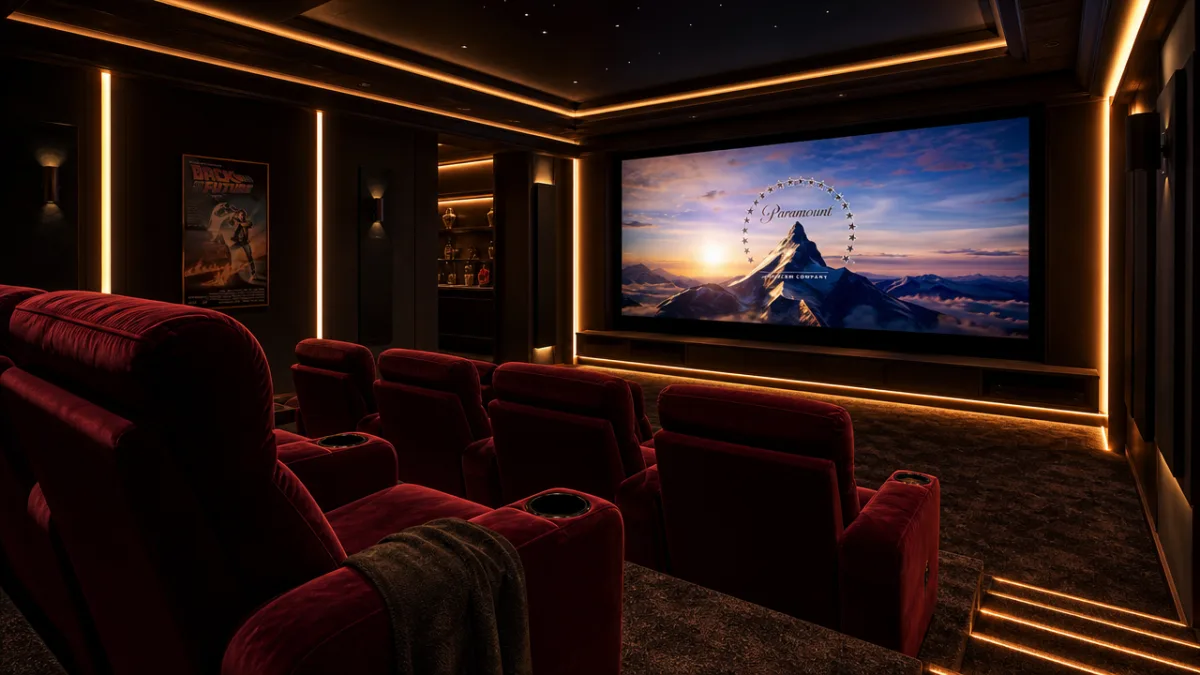
Recliners remain the gold standard for dedicated home theater seating, and for good reason. Modern power recliners offer an extraordinary range of adjustability, allowing each viewer to find their perfect angle for head, neck, and lumbar support. Many high-end models include built-in cup holders, USB charging ports, and even LED lighting along the base that adds an atmospheric glow to the room without creating disruptive brightness. For a cozy aesthetic, look for recliners upholstered in rich velvet, buttery leather, or soft microfiber in deep, warm tones like navy, forest green, burgundy, or charcoal gray.
If you prefer a more casual, lounge-like atmosphere rather than the traditional theater row layout, consider building your seating around a large sectional sofa layered with an abundance of throw pillows and soft blankets. This approach works especially well for smaller rooms and creates an undeniably cozy, nest-like feel that is perfect for marathon streaming sessions. You can elevate a simple sectional setup by adding a raised platform tier at the back of the room, giving rear viewers an unobstructed sightline while reinforcing the genuine theater feel of the space.
Seating Arrangement Tips for Different Room Sizes
The arrangement of your seating depends heavily on the dimensions of your room and the size of your screen. As a general rule, the ideal viewing distance from your screen should be approximately one and a half to two and a half times the diagonal measurement of your display. For a 100-inch screen, this translates to a seating distance of roughly twelve to fifteen feet, which gives you the immersive experience of a large image without any eye strain from sitting too close. Plan your layout on paper before purchasing furniture to ensure everything fits properly and allows for comfortable movement between seats.
For longer, narrower rooms, a traditional two-row theater setup works beautifully, with the second row elevated on a six-to-eight-inch platform to ensure clear sightlines over the heads of front-row viewers. Wider, more square-shaped rooms give you more flexibility and work particularly well with a curved or angled sectional arrangement that keeps every seat at a roughly equal distance from the screen. Whatever layout you choose, leave at least three feet of walking space along the sides and back of the seating area so people can move in and out without disturbing others mid-film.
Mastering Lighting to Create the Perfect Cinematic Atmosphere
Lighting is the single most transformative tool in your theater room design arsenal, and it is often the element that separates a good setup from a truly magical one. The goal of theater room lighting is to achieve a careful balance between ambient illumination that prevents eye strain and complete darkness that does not allow the screen’s image to wash out or lose contrast. Getting this balance right requires a layered lighting approach that gives you precise control over brightness and color temperature at every stage of your movie night, from pre-show gathering to the main event.
Smart LED strip lighting has become a staple of the Pinterest-aesthetic theater room, and its popularity is entirely deserved. Installed along the base of seating platforms, behind the television or projector screen, along ceiling coves, and beneath furniture, LED strips create a warm, atmospheric halo effect that is both functional and visually stunning. Choose strips that are tunable between warm white and cool white, or invest in full RGB options that allow you to shift to deep red, blue, or purple hues for a truly cinematic pre-show ambiance. Products like Philips Hue, Govee, and LIFX offer smart app control and can even sync their colors dynamically with the content playing on your screen.
Wall sconces and recessed ceiling fixtures with dimmer switches give you the overhead ambient lighting you need for safe movement in the room when the film is paused, while being easily dialed down to near-zero during viewing. Avoid any fixtures that create direct glare toward the screen, as this will introduce unwanted reflections and reduce the perceived contrast of your image. Blackout curtains or shades are an absolute necessity for any room with windows, allowing you to achieve true darkness regardless of the time of day, which makes a remarkable difference in image quality for both televisions and projectors.
Smart Lighting Systems and Scene Programming
One of the most satisfying upgrades you can make to your theater room lighting is investing in a smart home system that allows you to program lighting scenes with a single tap or voice command. Imagine walking into your theater room and saying “movie time” to have the overhead lights dim slowly to ten percent, the LED strips behind your screen illuminate in a warm amber glow, the floor accent lights shift to a deep blue, and your smart blinds descend to block out all external light simultaneously. Systems like Amazon Alexa, Google Home, or Apple HomeKit make this level of automation entirely achievable and surprisingly affordable.
Pre-programmed scenes can be created for different occasions beyond just movie watching. A “intermission” scene can bring lights up to a comfortable level for bathroom breaks and snack refills, while a “social” scene creates a warmer, brighter environment for pre-movie chatting and setup. A “credits” scene might slowly raise the lights as a film ends to ease everyone gently back into full brightness. These small automated touches add an almost theatrical polish to your home cinema experience that genuinely impresses guests and makes every viewing feel like a carefully curated event.
Color temperature plays a more significant role in viewer comfort than most people realize. Cooler, blue-tinted light signals wakefulness to the human brain, which is counterproductive in a room designed for relaxing entertainment. Warm, amber-toned lighting in the 2700 to 3000 Kelvin range creates a relaxed, cozy atmosphere that encourages your body and mind to settle in for a long, comfortable viewing session. This is why so many of the most successful and beautiful home theater rooms you see on Pinterest feature that characteristic warm, golden glow rather than the harsh, clinical brightness of standard overhead lighting.
Audio and Visual Equipment: Building an Immersive Sensory Experience
The screen and sound system are the technological heart of your home theater, and making informed choices here will define the quality of your viewing experience for years to come. For the visual component, you have two primary options: a large-screen television or a projector and screen combination. Modern OLED and QLED televisions in the 75-inch to 85-inch range offer breathtaking picture quality with deep blacks, vibrant colors, and excellent brightness in a slim, easy-to-mount package. They perform well in rooms that cannot be made fully dark and require minimal setup beyond mounting and connecting your streaming devices.
Projector setups, on the other hand, offer the authentic large-format cinematic experience at screen sizes that simply are not achievable with a television at a reasonable price point. A quality 4K laser projector paired with a 100-to-120-inch acoustically transparent screen creates a genuinely theater-like visual experience that is hard to match. The trade-off is that projectors require a properly darkened room to perform at their best, and the setup process is more involved than a simple television mount. Short-throw and ultra-short-throw projectors have become increasingly popular for home use because they can be placed very close to the screen, eliminating the need to run cables across the entire length of the room.
For audio, a 5.1 or 7.1 surround sound system remains the benchmark for immersive home theater experiences, with speakers placed strategically around the room to create three-dimensional soundscapes that draw you fully into the film. If you want to take things a step further, Dolby Atmos-capable systems add height channels through ceiling-mounted or upward-firing speakers that add a remarkable sense of vertical space to the sound field, making overhead effects like helicopters, rain, and explosions genuinely startling and thrilling. Brands like Sonos, Klipsch, SVS, and Polk Audio offer excellent options across a range of price points that deliver genuine cinematic audio quality.
Essential Equipment Checklist for Your Theater Room
Before making any purchases, it helps to have a clear picture of everything your theater room will need to function beautifully. The following categories cover the core equipment requirements for a complete, high-quality home theater setup. Starting with a comprehensive list prevents the frustrating experience of realizing mid-installation that you have forgotten a critical component, and helps you budget realistically from the beginning of the project rather than encountering unexpected costs partway through.
- Display: 75-inch or larger 4K OLED/QLED TV, or 4K laser projector with a 100-inch or larger screen
- Sound System: AV receiver with 5.1 or 7.1 surround sound speakers, or a premium soundbar with wireless surrounds and a subwoofer
- Streaming Device: Built-in smart TV apps, Apple TV 4K, Nvidia Shield, or Amazon Fire TV Stick 4K Max
- Cable Management: In-wall cable routing kits, cable raceways, and surge-protected power strips
- Acoustic Treatment: Bass traps, acoustic panels, and thick rugs or curtains to control sound reflections
- Universal Remote or App Control: Logitech Harmony hub or smart home integration for simplified device control
Acoustic treatment is one of the most frequently overlooked aspects of home theater design, yet it has an enormous impact on sound quality. Bare, hard surfaces like drywall, hardwood floors, and glass windows cause sound waves to bounce unpredictably around the room, creating echoes and muddiness that undermine even the finest speaker systems. Strategic placement of thick rugs, heavy curtains, upholstered furniture, and acoustic foam panels absorbs these reflections and tightens the sound considerably. Many of these treatments can be incorporated decoratively, with fabric-wrapped acoustic panels doubling as artwork and thick area rugs adding to the cozy aesthetic of the space.
Décor and Atmosphere: Adding the Cozy, Dreamy Finishing Touches
The technology in your theater room provides the functional foundation, but it is the decorative details that transform a technically impressive space into the genuinely dreamy, cozy retreat you see celebrated across Pinterest. The aesthetic sensibility that defines the best home theater rooms right now leans into richness and warmth, with deep jewel tones, sumptuous textures, and carefully curated accessories that communicate both sophistication and comfort. Think velvet curtains in midnight navy, cashmere throw blankets folded over armrests, vintage movie posters in matching gallery frames, and a dedicated snack station that makes every movie night feel like a considered occasion.
Ceiling treatments deserve special attention in theater room design because the ceiling is one of the most visible surfaces in a room where everyone is reclined and looking generally upward and forward. A painted ceiling in a deep, dark color like charcoal, navy, or black dramatically enhances the sense of enclosure and immersion that makes a theater room feel so different from the rest of your home. For a truly luxurious touch, consider a coffered ceiling with recessed LED lighting along the beams, or a starfield ceiling created with fiber optic lighting that transforms the overhead surface into a breathtaking night sky backdrop for your viewing sessions.
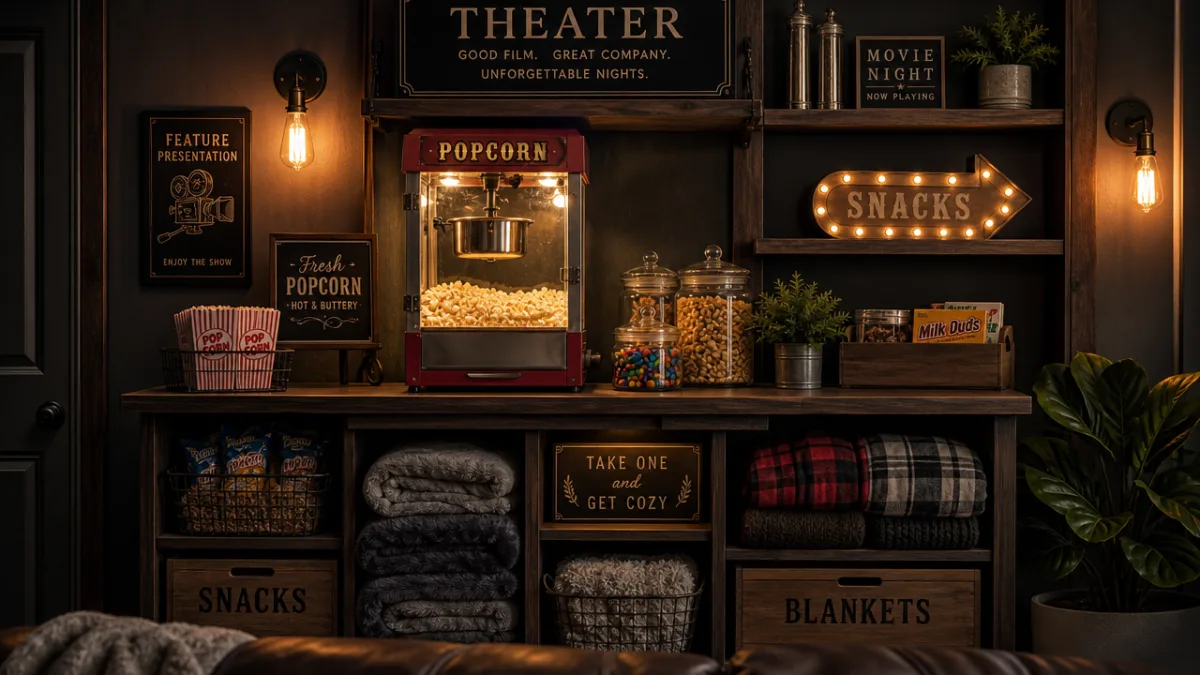
Wall treatments including dark paint, velvet wallpaper, wood paneling, or fabric-wrapped acoustic panels all contribute simultaneously to the visual atmosphere and the acoustic performance of the space. The trend toward dark, moody interiors in home theater design is not merely aesthetic, it is practical as well, since dark walls absorb ambient light and prevent it from washing out the image on your screen. Incorporate personal touches through carefully chosen accessories like a vintage popcorn machine, a neon sign in your favorite color, a curated display of Blu-ray cases or film memorabilia, and a well-stocked snack and beverage station that makes your theater room a complete entertainment destination.
The Snack and Comfort Essentials That Complete the Experience
No cozy movie night setup is truly complete without thoughtful attention to the creature comforts that keep everyone happy from opening credits to end scene. A dedicated snack station, whether a simple rolling cart or a fully built-in wet bar with a mini-refrigerator, elevates the entire experience and reduces the need to leave the room mid-film. Stock it with your favorite movie night treats, a popcorn maker, an assortment of beverages, and attractive serving vessels that make snacking feel intentional and special rather than an afterthought grabbed from the kitchen during the pre-show scramble.
The textile experience of your theater room is just as important as the visual one. Invest in an abundance of high-quality throw blankets in varied weights and textures so that viewers can adjust their comfort level as the night progresses and the room cools. Chunky knit throws, faux fur blankets, and lightweight cotton options give everyone the ability to customize their coziness. Oversized floor cushions and poufs provide flexible additional seating for overflow guests and can double as footrests during long viewing sessions, adding to the relaxed, informal atmosphere that makes home theater so appealing compared to a commercial cinema.
Finally, consider the small sensory details that collectively create an unforgettable atmosphere. A subtle, inviting scent from a candle or diffuser using warm notes like sandalwood, vanilla, or cedarwood sets a relaxing tone before the film even begins. A smart thermostat set to a slightly cool temperature encourages the use of those beautiful blankets and contributes to the snuggled-in feeling of a perfect movie night. These finishing touches, taken individually, might seem trivial, but together they create an atmosphere so compelling and comfortable that your home theater room quickly becomes the most beloved space in your entire house.
Planning and Budgeting Your Theater Room Project
A successful home theater room project begins with honest, detailed planning that accounts for every aspect of the transformation, from construction or renovation work through to the final decorative accessories. Before spending a single dollar, map out your available space carefully, measuring the room in all dimensions and noting the placement of electrical outlets, ventilation, existing lighting fixtures, and any structural elements that may affect your layout options. Understanding your space thoroughly at the outset prevents costly mistakes and helps you make smarter decisions about which elements to prioritize within your available budget.
Home theater budgets vary enormously depending on your goals and the current condition of your space. A comfortable, aesthetically pleasing entry-level setup, including a quality 75-inch television, a soundbar with wireless surround sound, blackout curtains, smart LED lighting, and upgraded seating, can be achieved for between three thousand and six thousand dollars with careful shopping and a willingness to prioritize value. A mid-range setup with a larger projector system, full surround sound, acoustic treatment, and professional installation typically falls in the eight thousand to fifteen thousand dollar range. Truly high-end custom installations with dedicated rooms, tiered seating, professional acoustic design, and premium equipment can extend well beyond fifty thousand dollars.
Regardless of your budget level, there are universal principles that help you get the most value from every dollar you invest. Prioritize audio quality above almost everything else, because most people underestimate how significantly sound quality affects their emotional experience of a film compared to incremental improvements in picture quality. Shop seasonal sales events for major electronics purchases, as Black Friday and holiday sales regularly offer substantial discounts on televisions, projectors, and audio equipment. Finally, remember that the cozy, dreamy aesthetic that makes Pinterest theater rooms so aspirational is often achieved more through thoughtful decorating than expensive technology. A beautifully styled room with mid-range equipment will almost always feel more special than a technically superior space that feels cold and untended.
A Phased Approach to Building Your Dream Space
If your ideal home theater room represents a larger investment than your current budget allows, a phased approach allows you to begin enjoying an improved space immediately while working toward your ultimate vision over time. Start with the elements that will have the greatest immediate impact on your viewing experience: better seating, blackout window treatments, and at least a basic smart LED lighting setup. These changes alone will dramatically improve the feel of your space and create a foundation for future upgrades without requiring a massive upfront commitment that might put other financial priorities at risk.
In the second phase, focus on your audio and visual equipment upgrades, which represent the largest investment and the most significant jump in experiential quality. Research thoroughly before buying, read professional reviews from trusted sources like Rtings, Sound and Vision, and AVS Forum, and if possible, audition equipment in person at a dedicated home theater retailer. Take your time with these decisions because your screen and sound system will define your experience for many years, and the difference between a hasty, under-researched purchase and a well-considered one can be enormous in terms of long-term satisfaction.
The final phase involves the decorative refinements and personal touches that give your theater room its unique character and that Pinterest-worthy finish. This is the most enjoyable stage of the project and can be approached gradually over months as you find the perfect poster, discover a beautiful piece of velvet wallpaper, or track down a vintage popcorn machine at exactly the right price. A home theater room is never truly finished, it evolves continuously with your tastes and with the expanding capabilities of home entertainment technology, making it one of the most enduringly engaging home improvement projects you can undertake. The journey of building it is nearly as satisfying as the countless cozy movie nights that await you on the other side.








What do you think?
It is nice to know your opinion. Leave a comment.