










17+ Lawn Border Ideas: The Most Loved Designs from Gardeners Like You
Why Lawn Borders Transform Your Entire Garden
A well-defined lawn border is one of the most impactful things you can do for your outdoor space. It draws the eye, creates a sense of intention, and signals that your garden has been thoughtfully designed rather than simply planted and left to its own devices. Whether you have a sprawling backyard or a compact urban plot, the right border turns a patch of grass into a polished landscape that holds its own through every season.
Gardeners who invest even a modest amount of time into their lawn borders consistently report that the effect goes far beyond aesthetics. Borders suppress weeds along the lawn edge, reduce the need for manual trimming, and physically separate turf from flower beds or pathways, which means less creeping grass into places where it does not belong. That practical dimension is part of why so many experienced gardeners consider edging an essential step rather than an optional finishing touch.
Perhaps most importantly, lawn borders give your garden a visual anchor. When someone walks up to your home or steps onto your patio, the clean line between grass and garden bed creates a sense of order that makes everything else look better by association. Colors appear more vivid, plants seem more intentional, and even an otherwise modest garden takes on a refined quality that feels far more expensive and curated than it actually is.
The Psychology of Edges in Garden Design
Landscape designers have long understood that the human eye gravitates toward contrast and definition. A crisp edge between a lush green lawn and a dark mulched bed triggers a satisfying visual response that a blurry, undefined transition simply cannot replicate. This is why professional landscape photographs almost always feature sharply defined borders — the edge itself communicates care, competence, and beauty simultaneously.
When you define a lawn border, you are essentially creating a frame around your garden, much like a painting benefits from a well-chosen frame. The border does not compete with the plants, flowers, or hardscaping inside the bed — it highlights them. Understanding this principle helps you choose a border style that complements rather than overwhelms your existing plantings, ensuring that the edge serves the overall composition rather than becoming a distraction.
Natural and Organic Border Materials
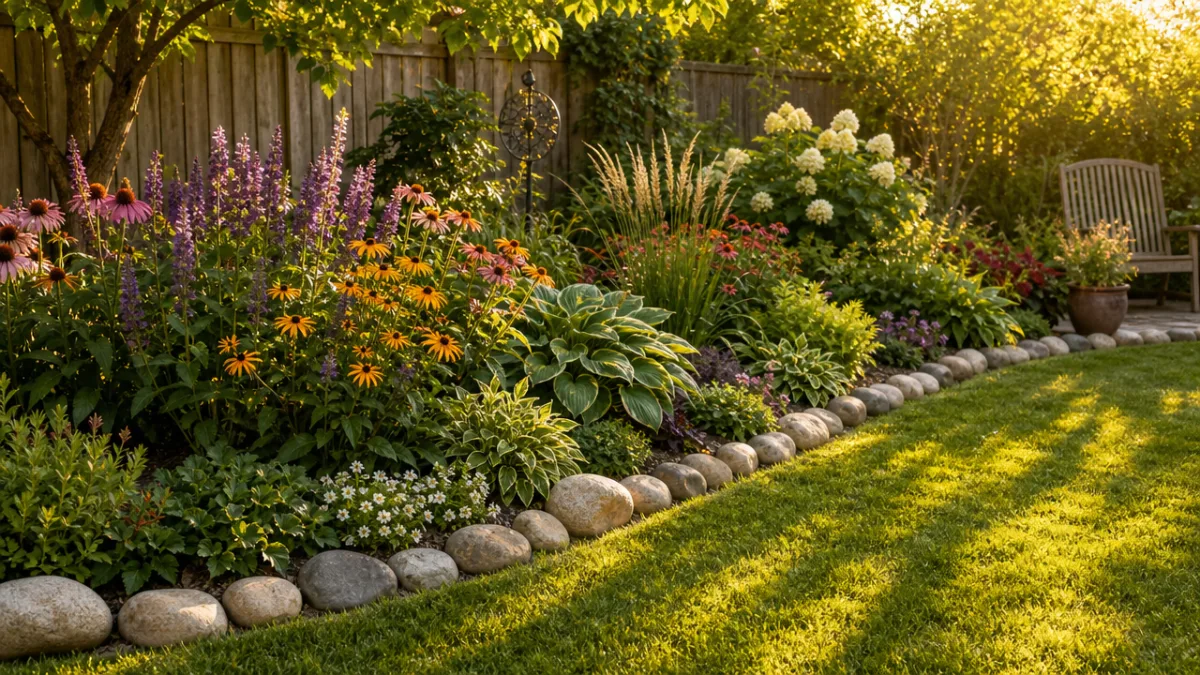
Some of the most beloved lawn border ideas among gardeners lean into natural materials that blend seamlessly with the surrounding landscape. River stones, fieldstones, and cobblestones have been used for centuries to delineate garden boundaries, and their enduring popularity is no accident. Natural stone carries an inherent warmth and character that manufactured materials often struggle to replicate, and it ages gracefully, developing a patina that actually improves its appearance over time.
Log rounds and timber edging represent another organic approach that has seen a significant resurgence in recent years. Half-log borders, in particular, offer a rustic charm that suits cottage gardens, woodland-themed spaces, and naturalistic plantings especially well. They are surprisingly affordable when sourced from local tree services or lumber yards, and with a coat of wood preservative, they can last for many seasons before needing replacement. Gardeners with children often appreciate the softer, friendlier aesthetic that wooden borders provide compared to metal or concrete alternatives.
Living borders — those made from low-growing plants like mondo grass, creeping thyme, or boxwood — represent the most organic option of all. These plant-based edges require more maintenance than static materials, but they offer something no inanimate border can: seasonal change, texture, fragrance, and even color. A border of flowering thyme, for instance, erupts into soft purple blooms in early summer, adding a decorative dimension that stone or metal simply cannot match. The trade-off in maintenance effort is, for many gardeners, entirely worth that living reward.
Choosing Stones for Maximum Visual Impact
Not all stones are created equal when it comes to lawn edging. Smooth river rocks in a uniform size create a clean, almost contemporary line that suits modern garden styles well. Irregular fieldstones, by contrast, produce a more relaxed, naturalistic border that feels as though it grew from the earth itself. The key is consistency within your chosen style — mixing stone types randomly tends to look haphazard rather than intentional, so select your material and commit to it throughout the bed’s perimeter.
Color matters too. Light-colored limestone or white quartz creates striking contrast against a dark green lawn and rich brown mulch, making the border visible from a distance and providing a crisp visual line. Darker basalt or slate produces a more subtle, sophisticated effect that lets the plants themselves take center stage. Consider the tones already present in your home’s exterior, patio materials, and existing garden features when selecting stone, aiming for a palette that feels cohesive rather than collected at random.
Metal and Modern Edging Solutions
Cor-Ten steel and aluminum lawn edging have become the go-to choices for gardeners who want a sleek, architectural look that holds its line year after year without shifting, rotting, or crumbling. Steel edging, in particular, has moved from commercial landscaping into residential gardens in a big way over the past decade, driven largely by the rise of contemporary and minimalist garden design. Its slim profile disappears into the lawn while maintaining a razor-sharp edge that makes the transition between turf and bed look almost machine-precise.
Aluminum edging offers many of the same benefits as steel at a lower cost and with considerably less weight, making it easier to install solo without specialized tools. It is highly flexible, bending readily to follow curved beds, and it resists corrosion exceptionally well, which makes it a wise investment in wetter climates where moisture is a constant factor. Many aluminum edging systems feature a stake-and-snap installation method that genuinely requires no professional assistance, putting a genuinely durable and attractive border within reach of any weekend gardener.
For gardeners who want the clean lines of metal edging but prefer a softer color palette, painted or powder-coated options are widely available in greens, blacks, and even terracotta tones that recede naturally into the garden setting. Black powder-coated aluminum edging, in particular, has become enormously popular because it creates a bold yet elegant contrast against lawn and mulch, while remaining virtually invisible from a distance. It photographs beautifully and consistently tops the most-shared lists on gardening platforms for exactly that reason.
Installing Metal Edging Like a Professional
The secret to metal edging that stays put and looks professional is proper installation depth. Most manufacturers recommend burying the edging so that only the very top lip sits at or just above soil level, which prevents grass from growing underneath and keeps the strip from being displaced by frost heave in colder climates. Using a flat spade to cut a clean, vertical trench before inserting the edging makes an enormous difference in the final result — an angled or ragged trench produces a crooked border no matter how good the materials are.
Stakes that come with most edging kits should be driven at regular intervals, typically every eighteen to twenty-four inches, and on curves they should be placed more frequently — roughly every eight to twelve inches — to prevent the edging from popping outward under soil pressure. Connecting sections properly, ensuring they overlap or interlock without gaps, prevents the visible joints that can undermine an otherwise immaculate installation. Taking an extra hour at the installation stage pays dividends for years of maintenance-free elegance afterward.
Brick and Paver Border Designs
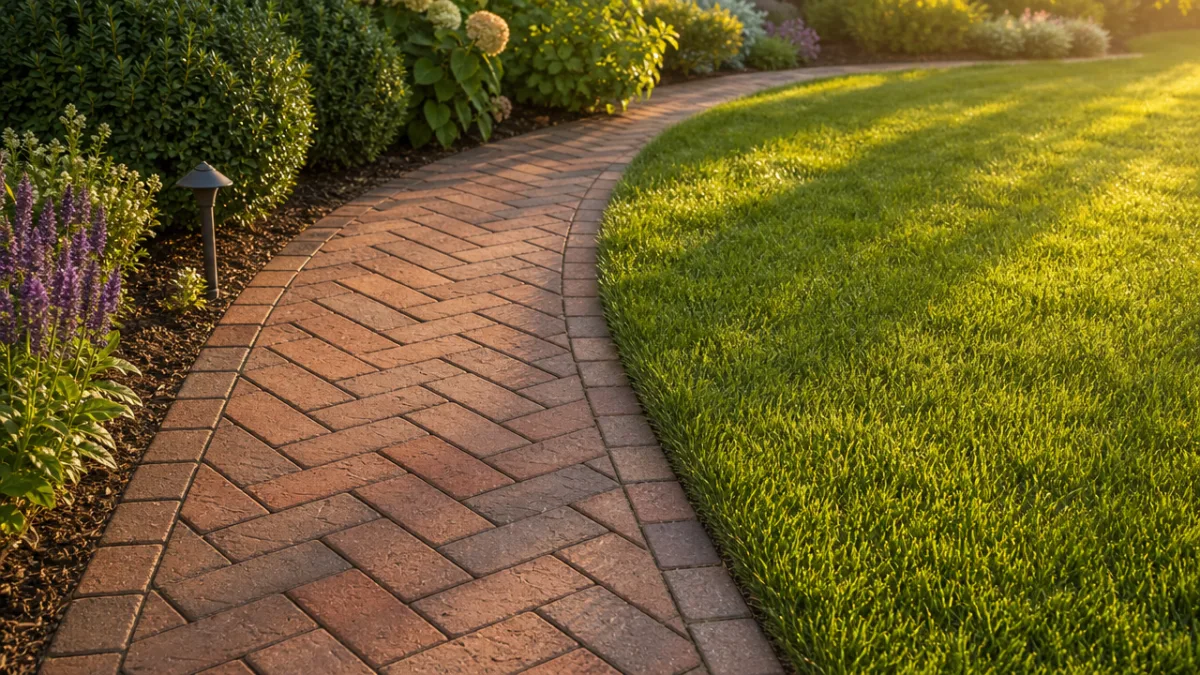
Brick borders carry a timeless quality that seems to flatter nearly every garden style, from formal English gardens to relaxed Mediterranean courtyards to tidy American suburban yards. The appeal is partly practical — brick is extraordinarily durable, resistant to weathering, and consistent in size, making it straightforward to install and easy to repair — and partly aesthetic. The warm reddish-brown tones of traditional clay brick harmonize with almost any planting palette, and the regular, modular form of individual bricks creates an intrinsic sense of order along the garden edge.
Pavers offer even more versatility than traditional brick because they come in a far wider range of colors, textures, sizes, and shapes. Tumbled concrete pavers mimic the look of aged stone at a fraction of the cost. Large-format porcelain pavers deliver an ultra-contemporary edge that suits modern gardens perfectly. Reclaimed brick pavers bring a wonderfully weathered character that new materials simply cannot replicate, and sourcing them from demolition salvage yards is both economical and environmentally responsible. Many of the most admired garden borders on Pinterest and Instagram feature reclaimed brick precisely because of that irreplaceable aged quality.
One particularly popular design technique involves setting bricks or pavers at a forty-five-degree angle along the lawn edge, creating a zigzag or sawtooth pattern sometimes called a Victorian diamond border. This approach was genuinely fashionable in Victorian-era gardens, fell out of favor for most of the twentieth century, and has made a strong comeback as gardeners rediscover traditional design motifs. The diagonal placement effectively doubles the visual width of the border while using the same number of bricks as a flat-laid installation, giving the impression of a more substantial edge investment than was actually required.
Mixing Materials for a Layered Look
Some of the most visually compelling lawn borders combine two or more materials for a layered, collected look that appears to have evolved organically over time rather than been installed in a single afternoon. A common and particularly successful combination pairs brick as the primary edging material with a narrow band of contrasting stone mulch or gravel immediately inside the brick line. This creates a clear hierarchy — brick defines the outermost boundary, gravel acts as a transitional buffer zone, and the planted bed occupies the interior — that reads as sophisticated and thoughtfully composed.
Another effective pairing combines low metal edging with brick or paver stepping stones set flush with the lawn surface at regular intervals along the border. The metal edging handles the practical task of containing the grass, while the occasional paver provides both a decorative accent and a functional foothold for accessing the bed without compacting the soil. This dual-material approach is especially well-suited to longer borders where a single material might become visually monotonous over a large expanse.
Creative and Unexpected Border Ideas
Beyond the conventional stone, metal, and brick options, a growing community of creative gardeners has embraced genuinely unexpected materials and approaches to lawn edging with striking results. Recycled wine bottles buried neck-down in the soil create a colorful, whimsical border that catches sunlight beautifully and costs almost nothing beyond the initial effort of collection. This idea has deep roots in folk garden traditions from Europe and the American South, and its reappearance in contemporary gardening reflects a broader interest in sustainability and individual expression over mass-produced uniformity.
Salvaged architectural elements — terracotta roof tiles, old chimney pots, vintage cast-iron drain covers — can be repurposed into borders with a wonderfully idiosyncratic character. Roof tiles set vertically on their long edges at a slight angle, overlapping like scales, create an undulating, textural border that suits Mediterranean-themed gardens particularly well. The terra-cotta color ties beautifully to warm-toned plantings, and because genuine salvage pieces vary slightly in color and weathering, each installation is inherently unique in a way that catalog-bought materials rarely achieve.
Gabion edging — small wire cages filled with stone, glass, or even broken crockery — has become a favorite among gardeners who appreciate the intersection of industrial and natural aesthetics. While traditionally used at a large scale for retaining walls, miniature gabion baskets work surprisingly well as low lawn borders, especially in modern or industrial-themed gardens. They are highly customizable in terms of fill material, making them an excellent outlet for gardeners who have accumulated a collection of interesting stones, sea glass, or reclaimed tiles and are looking for a purpose that showcases rather than hides them.
Edible and Pollinator-Friendly Living Borders
One of the most exciting developments in lawn border design over recent years is the growing interest in borders that do practical ecological work alongside their aesthetic function. Planting a border of chives, for instance, provides a tidy, grass-like edge that stays compact and low, produces beautiful purple flowers beloved by bees, and supplies a useful kitchen herb all in one low-maintenance package. Similarly, alpine strawberries make a charming low border with white spring flowers, attractive foliage, and a small but delicious summer fruit crop that children especially love to harvest directly from the garden edge.
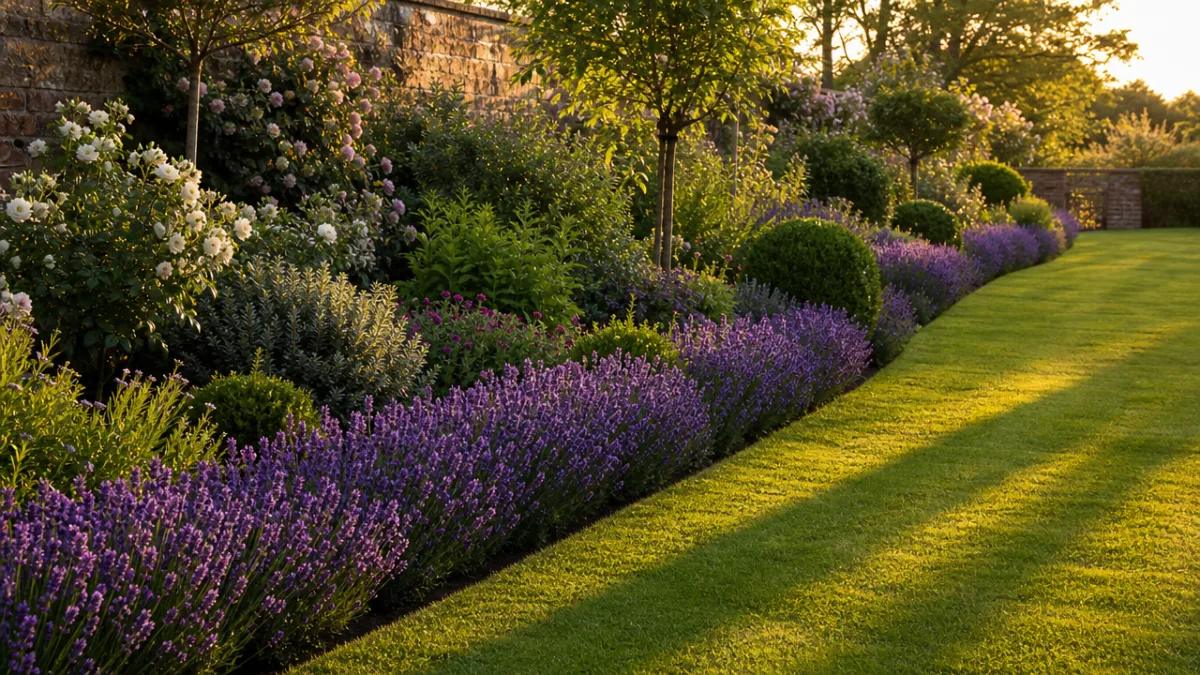
Lavender borders represent perhaps the gold standard of the pollinator-friendly edging approach. A dense row of compact lavender varieties like Hidcote or Munstead creates a fragrant, silvery-green border that is utterly drought-tolerant once established, requires minimal care beyond an annual post-flowering trim, and supports bumblebees, honey bees, and butterflies in enormous numbers throughout the summer months. The combination of sensory pleasure — fragrance, color, the sound of buzzing pollinators on a warm afternoon — and genuine ecological benefit makes lavender edging a deeply satisfying design choice that rewards the gardener on multiple levels simultaneously.
Maintaining Your Lawn Borders Through the Seasons
Even the most beautifully installed lawn border requires some ongoing maintenance to continue looking its best, and building a simple seasonal care routine into your gardening schedule makes that upkeep feel manageable rather than burdensome. In spring, after the ground thaws and grass begins growing actively again, a thorough re-edging pass with a half-moon edger or a powered lawn edger re-establishes any lines that have blurred over winter. This single task, taking perhaps an hour or two for an average-sized garden, sets the tone for the entire growing season and makes every subsequent maintenance visit easier and quicker.
Summer maintenance focuses primarily on keeping grass from creeping over or under the border and preventing weeds from establishing themselves in the transitional zone immediately inside the edging. A layer of mulch maintained at two to three inches depth inside the bed significantly reduces weed germination without requiring regular herbicide applications. Checking that border materials have not shifted — a particular concern with stones after heavy rainfall or repeated frost-thaw cycles — and resetting any displaced elements promptly prevents small issues from escalating into larger corrective projects later in the season.
Autumn is an excellent time for any remedial work on borders that have performed less well than expected over the summer. Resetting settled stones, replacing deteriorated wooden edging sections, or cutting back overgrown living borders before winter dormancy all benefit from the cooler, more comfortable working conditions that autumn provides. It is also the ideal season for adding new borders or extending existing ones, as the soil remains workable but grass growth has slowed enough that the installation area does not require immediate re-edging. Thoughtful autumn maintenance means your garden emerges from winter looking crisp and intentional rather than ragged and neglected.
Quick Maintenance Checklist by Season
- Spring: Re-cut all lawn edges with a half-moon edger or rotary lawn edger, refresh mulch depth inside beds, reset any frost-displaced border materials, and treat wooden edging with preservative if needed.
- Early Summer: Trim grass encroaching over metal or stone edges using a string trimmer set to a low angle, check that edging stakes remain secure, and hand-pull any weeds establishing in the border zone before they set seed.
- Late Summer: Assess living borders and trim back any plants that have spread beyond their intended boundary, clear any debris that has accumulated against the edging, and water newly installed living borders during dry spells.
- Autumn: Replace or repair damaged sections, cut back herbaceous living borders, top up mulch for winter weed suppression, and plan any new border installations or material upgrades for the following season.
- Winter: Inspect hardscape borders after heavy frost events and note any displacement for correction in spring. Research new border styles and source materials so you are ready to act when the growing season begins again.
Keeping a simple garden journal or even a photo record on your phone of how your borders look at different times of year is an underrated maintenance tool. Comparing photographs from season to season reveals subtle deterioration — a gradual shift of stones, a slow creep of grass over edging — that is easy to overlook in person because the change is incremental. Catching these small issues early keeps your lawn borders looking consistently polished without requiring major corrective interventions, and over time that photographic record becomes a genuinely useful reference for planning future improvements and understanding what works best in your specific soil and climate conditions.








What do you think?
It is nice to know your opinion. Leave a comment.