










Osteospermum: The Sun-Loving African Daisy That Brightens Every Garden
Introduction to Osteospermum: A Flower Born for Sunshine
Osteospermum, commonly known as the African daisy or Cape daisy, is one of the most cheerful and resilient flowering plants you can welcome into your garden. Native to southern Africa and the Arabian Peninsula, this stunning perennial or annual (depending on your climate) has captured the hearts of gardeners worldwide with its vivid, daisy-like blooms in shades ranging from crisp white and buttercup yellow to deep purple, coral pink, and magenta. When the sun is shining, there is simply no flower that responds with more enthusiasm than the osteospermum.
The name osteospermum comes from the Greek words “osteon” meaning bone and “sperma” meaning seed, a reference to the plant’s characteristically hard seeds. Despite this rather dry etymological origin, the plant itself is anything but dull. Its flowers open wide to greet the morning sun and gently close as evening approaches or when clouds roll in — a behavior known as photonasty that makes the plant almost seem alive with personality. Watching a bed of osteospermum respond to sunlight throughout the day is one of the quiet, rewarding pleasures of garden life.
What makes osteospermum especially beloved among both novice and experienced gardeners is its remarkable combination of beauty and low maintenance. This plant does not demand constant attention or specialized knowledge. It simply wants sun, reasonably good drainage, and the occasional drink of water. In return, it rewards you with months of continuous bloom, often from early spring well into autumn, and in frost-free regions, virtually year-round. If you have a sunny spot in your garden, on a patio, or along a pathway, osteospermum may well be the perfect plant to fill it.
The Botanical Profile: Understanding What Makes Osteospermum Unique
Osteospermum belongs to the family Asteraceae, which also includes sunflowers, daisies, zinnias, and chrysanthemums — a family defined by its composite flower heads, where what appears to be a single flower is actually a collection of many tiny florets. In osteospermum, the outer ray florets form the showy petals we admire, while the central disc florets handle pollination. This architectural elegance is part of what makes the flower so visually satisfying, offering both bold impact from a distance and intricate detail up close.
There are over seventy species within the genus Osteospermum, though the vast majority of plants available in garden centers are hybrid cultivars developed for improved color range, longer blooming periods, and greater tolerance of heat or cold. Modern cultivars such as the Serenity series, the Asti series, and the 4D series have pushed the boundaries of what gardeners expect from this genus. The 4D series, in particular, features spoon-shaped ray petals with a striking tubular form that gives the flowers an almost otherworldly, three-dimensional appearance quite unlike any traditional daisy.
The foliage of osteospermum is equally attractive and functional. The leaves are typically dark green, lance-shaped to spatula-shaped, and often slightly aromatic when brushed or crushed. The plants form neat mounds or sprawling cushions depending on the variety, ranging from compact six-inch specimens ideal for container planting to spreading plants that can reach eighteen inches or more across. This variety in growth habit makes osteospermum one of the more versatile flowering plants in a gardener’s palette, suitable for borders, rockeries, hanging baskets, and mass planting alike.
Growing Conditions and Sunlight Requirements: Where Osteospermum Truly Thrives
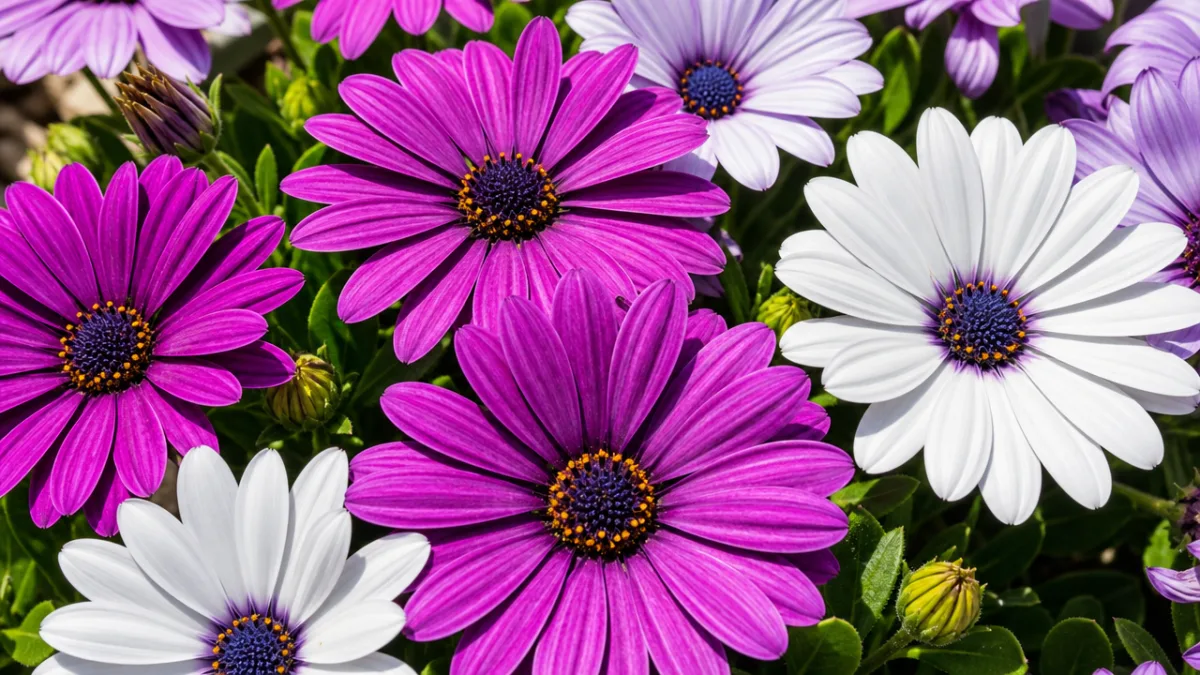
As the Pinterest pin so perfectly captures, osteospermum is absolutely in its element when the sun is shining. This plant requires a minimum of six hours of direct sunlight per day to perform well, and it genuinely flourishes with eight or more hours. In shaded or partially shaded conditions, osteospermum may survive, but it will produce far fewer flowers, become leggy and stretched toward the light, and generally lose the compact, floriferous habit that makes it so desirable. If you want the best from this plant, full sun is non-negotiable.
Beyond sunlight, osteospermum thrives in well-draining soil and is notably tolerant of poor, sandy, or gravelly conditions — a trait inherited from its native habitat in the rocky slopes and coastal scrublands of southern Africa. Heavy clay soils that retain moisture are the plant’s primary enemy, as waterlogged roots quickly lead to rot and decline. If your garden soil is heavy, amending it with horticultural grit, perlite, or coarse sand before planting will dramatically improve outcomes. Raised beds and containers with quality potting mix and drainage holes are excellent alternatives for gardeners dealing with challenging soil conditions.
Temperature is another important consideration. Most osteospermum cultivars are hardy to around 25–28°F (-3°C to -2°C), making them suitable as perennials in USDA Hardiness Zones 9 through 11, and as annuals in cooler zones. Interestingly, while osteospermum loves sun, it often performs best in regions with mild summers rather than intense heat. In very hot climates, the plant may slow its blooming during the peak heat of midsummer, a phenomenon called heat dormancy, before resuming flowering as temperatures moderate in autumn. Providing light afternoon shade in extremely hot climates can extend the blooming season considerably.
Planting, Watering, and Feeding: Practical Care for Abundant Blooms
Planting osteospermum is a straightforward process that rewards a little care at the outset. When planting in the ground, choose your sunniest, best-draining location and prepare the soil by loosening it to a depth of around twelve inches and incorporating organic matter if the soil is particularly poor. Space plants approximately twelve to eighteen inches apart to allow for airflow, which helps prevent fungal issues. In containers, choose a pot at least ten to twelve inches in diameter per plant, use a premium potting mix with added perlite, and ensure the pot has ample drainage holes.
Watering should be regular but not excessive. Osteospermum prefers the soil to dry out slightly between waterings, mimicking the seasonal rainfall patterns of its native environment. During the growing season, watering once or twice a week is typically sufficient in temperate climates, though container plants in hot weather may need daily attention. The classic advice applies here: water deeply and infrequently rather than shallowly and often. Deep watering encourages roots to grow downward, making plants more drought-resistant and robust. Always water at the base of the plant rather than overhead to minimize fungal disease risk.
Feeding osteospermum appropriately will significantly enhance blooming. A balanced, slow-release granular fertilizer applied at planting time provides a solid nutritional foundation. During the active growing and blooming season, supplementing with a liquid fertilizer high in potassium every two to three weeks will encourage prolific flower production. Avoid over-feeding with nitrogen-heavy fertilizers, which promote lush leafy growth at the expense of flowers. As with many flowering plants, the balance between foliage and flower is largely governed by the nitrogen-to-potassium ratio in your feeding program.
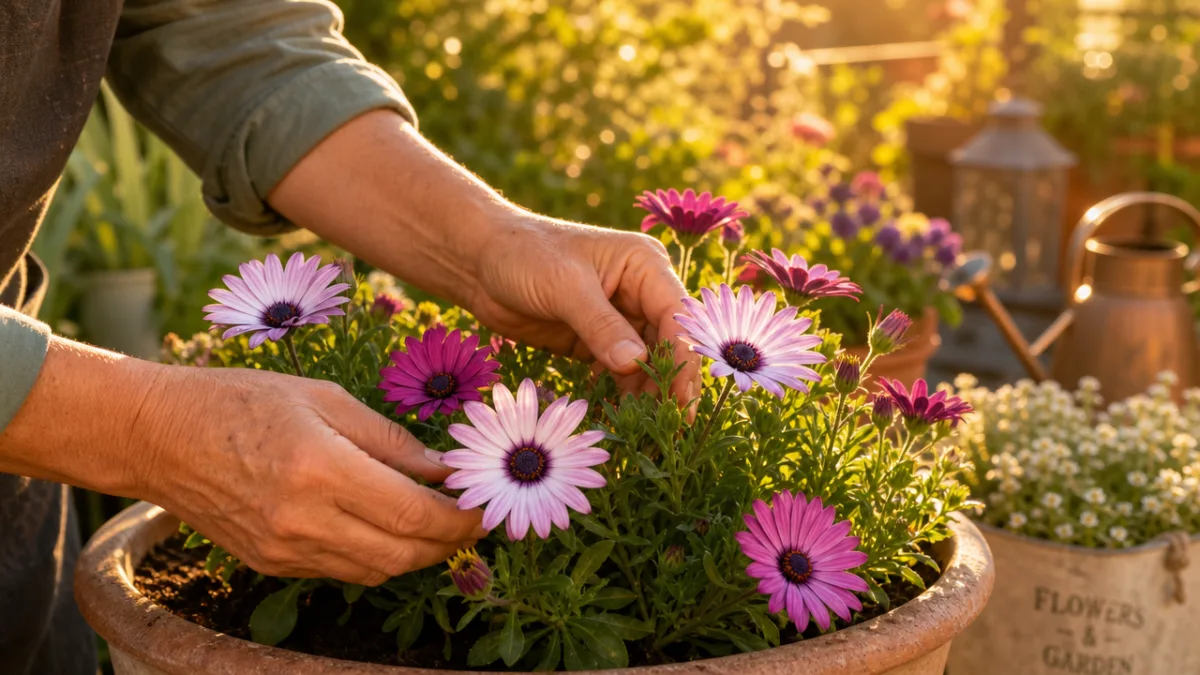
Deadheading, the practice of removing spent flower heads, is highly recommended to keep osteospermum blooming continuously. Left to set seed, the plant will slow its flower production as it redirects energy into seed development. Regular deadheading, simply pinching or snipping off the faded blooms just below the flower head, tricks the plant into continuing its reproductive effort by producing more flowers. In addition to deadheading, a light trimming or “shearing back” of the entire plant by one-third in midsummer can rejuvenate tired plants and trigger a fresh flush of autumn blooms.
Propagation Methods: Multiplying Your Osteospermum Collection
One of the most satisfying aspects of growing osteospermum is how easily it can be propagated, allowing you to multiply your collection at minimal cost and share plants with friends and fellow gardeners. The two primary methods of propagation are growing from seed and taking stem cuttings, and both are well within the reach of the home gardener with a little patience and care. Understanding the advantages and limitations of each method will help you choose the best approach for your situation and goals.
Growing osteospermum from seed is rewarding but requires planning, as seeds need to be started indoors six to eight weeks before the last expected frost date in your region. Sow seeds in a good seed-starting mix, just barely covered, and provide bottom heat of around 65–70°F (18–21°C) to encourage germination, which typically occurs within seven to fourteen days. Once seedlings emerge, move them to a bright, sunny location or under grow lights. One important caveat is that many of the most spectacular hybrid cultivars do not come true from seed, meaning the resulting plants may differ from the parent. For replicating a specific cultivar, cuttings are the better choice.
Stem cuttings are the preferred propagation method for preserving the exact characteristics of a beloved cultivar. Take cuttings of four to six inches from healthy, non-flowering shoot tips in late spring or early summer. Remove the lower leaves, dip the cut end in rooting hormone powder or gel, and insert into a moist mix of equal parts perlite and peat or coir. Place the cuttings in a warm, bright location out of direct sun and keep the medium consistently moist. Roots typically develop within three to four weeks, after which the young plants can be gradually acclimatized to outdoor conditions and potted on or planted in their final positions.
Common Pests, Diseases, and Troubleshooting: Keeping Your Plants Healthy
Osteospermum is generally considered a robust and relatively trouble-free plant, but like all garden subjects, it is not entirely immune to pests and diseases. Understanding the most common problems and their solutions allows you to intervene quickly and effectively, keeping your plants looking their best throughout the season. Prevention through good cultural practices — proper spacing, adequate drainage, and appropriate watering — remains the most reliable strategy for avoiding most issues before they arise.
Among pests, aphids are the most frequent visitors to osteospermum, particularly on soft new growth during spring. These small, soft-bodied insects cluster on stems and under leaves, sucking plant sap and potentially transmitting viral diseases. A strong jet of water from the hose will dislodge light infestations, while more serious outbreaks can be treated with insecticidal soap or neem oil. Whiteflies and spider mites may also occasionally appear, particularly on plants grown in containers or under stress from heat and drought. Maintaining plant vigor through consistent care is the best long-term defense against these opportunistic pests.
Disease issues in osteospermum most commonly involve fungal pathogens. Botrytis blight, also called gray mold, can affect plants during cool, wet periods, causing soft, brown lesions on stems and flowers. Root rot caused by Pythium or Phytophthora species is the consequence of overwatering or poorly draining soil. Powdery mildew may appear as a white powdery coating on leaves during periods of high humidity or poor airflow. In each case, the response involves improving cultural conditions: removing affected plant material, improving drainage, increasing spacing for airflow, and if necessary, applying an appropriate fungicide. Keeping plants in the right environment greatly reduces the likelihood of these issues occurring at all.
A useful quick-reference guide for troubleshooting osteospermum problems:
- Flowers closing during the day: Likely caused by cloud cover or insufficient sunlight. This is a natural photonastic response and not a sign of poor health. Move plants to a sunnier location if blooms are consistently closed.
- Leggy, sparse growth with few flowers: Insufficient sunlight is the most common cause. Ensure plants receive at least six hours of direct sun daily.
- Yellowing leaves: May indicate overwatering, poor drainage, or nutrient deficiency. Check soil moisture levels and consider a balanced fertilizer application.
- Wilting despite moist soil: Could signal root rot from waterlogged conditions. Improve drainage immediately and reduce watering frequency.
- Stunted growth and distorted leaves: May indicate viral infection, often transmitted by aphids. Remove affected plants to prevent spread.
Design Ideas and Garden Uses: Making the Most of Osteospermum’s Beauty
Osteospermum is one of those rare plants that is both a strong individual specimen and an excellent team player in mixed plantings. Its bold, daisy-form flowers create instant visual impact, while its relatively tidy growth habit means it integrates well into borders without overwhelming neighboring plants. Whether you are designing a formal garden with carefully considered color schemes or a relaxed cottage-style planting where plants are encouraged to find their own level, osteospermum has a role to play and will play it with distinction.
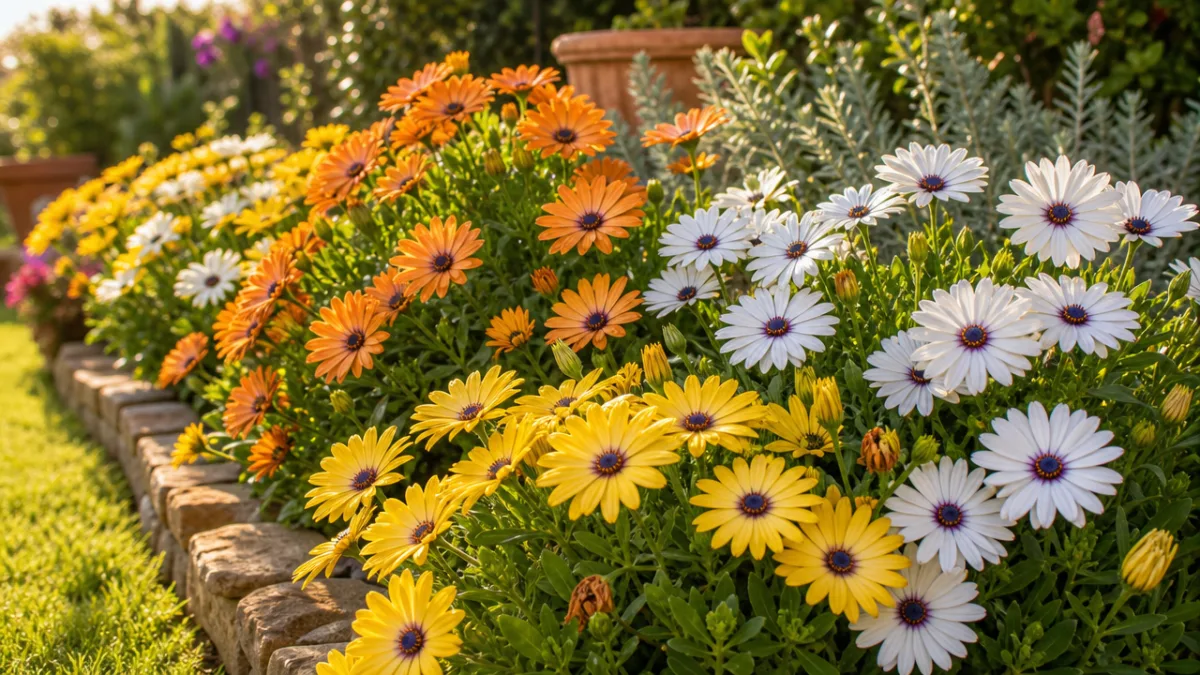
In mixed borders, osteospermum pairs beautifully with other sun-loving plants that share its preference for well-drained conditions. Consider combining it with lavender for a Mediterranean-inspired planting, with ornamental grasses for contrast in texture and form, with salvias for a rich tapestry of complementary blues and purples, or with calibrachoa and bacopa in containers for a cascading, abundant summer display. The white and yellow cultivars make excellent companions for deeper-colored perennials and annuals, providing visual relief and brightness, while the purple and magenta varieties add drama and richness to softer pastel schemes.
Container gardening with osteospermum is particularly rewarding and offers the practical advantage of mobility — you can move pots to follow the sun, bring them under cover during unexpected cold snaps, or rearrange your outdoor space as the season progresses. A large terracotta pot filled with a single variety in full bloom makes a striking focal point on a patio or doorstep, while window boxes planted with a mix of osteospermum cultivars create colorful cascading displays that can rival any professional planting scheme. The plant’s natural mounding habit means it fills containers beautifully without becoming invasive or unruly, maintaining its shape with minimal intervention.
For gardeners interested in attracting pollinators, osteospermum is an excellent choice. The open, accessible disc florets are welcoming to a wide range of bee species, butterflies, and hoverflies, making the plant a valuable contribution to any wildlife-friendly garden. Planting osteospermum alongside other nectar-rich flowering plants such as echinacea, rudbeckia, and catmint creates a pollinator corridor that supports local biodiversity throughout the growing season. In this way, the simple act of planting a few osteospermum in a sunny spot connects your garden to a much larger ecological story — one of sunlight, flowers, pollinators, and the endlessly generous reciprocity of the natural world.








What do you think?
It is nice to know your opinion. Leave a comment.