










Meg + Paul’s Rustic Chic Wedding at Mulberry Lane Farm: A Complete Guide to Recreating Their Timeless Celebration
The Magic of Mulberry Lane Farm: Setting the Scene for a Dream Wedding
Nestled in the heart of Southern California’s rolling countryside, Mulberry Lane Farm provided the perfect canvas for Meg and Paul’s unforgettable rustic chic celebration. The venue’s weathered wood beams, open-air pavilions, and sprawling meadows created an atmosphere that felt simultaneously intimate and grand — the kind of setting that makes guests feel as though they’ve stepped into a storybook. From the moment visitors arrived, the farm’s natural beauty did the heavy lifting, offering a warmth and authenticity that no ballroom could ever replicate.
Choosing the right venue is arguably the single most important decision a couple will make during the wedding planning process, and Meg and Paul’s selection of Mulberry Lane Farm demonstrates exactly why rustic venues have surged in popularity over the past decade. The property offers a rare combination of raw, natural textures and thoughtful infrastructure — things like ample parking, bridal suites, and built-in lighting rigs — that make it genuinely functional without sacrificing its pastoral soul. The result is a space that works as hard as it looks beautiful, which is a true rarity in the world of wedding venues.
For couples dreaming of a similar aesthetic, it’s worth understanding what makes a venue like Mulberry Lane Farm so special. The interplay of organic materials — exposed timber, native stone, wildflower meadows — with carefully curated rustic chic decor creates a layered visual experience that photographs exceptionally well at every hour of the day. Whether bathed in the golden warmth of late-afternoon sun or draped in the soft glow of string lights at dusk, the farm transforms with the light, offering a dynamic backdrop that keeps the celebration feeling fresh and alive from ceremony through final dance.
Ceremony Details: Where Rustic Meets Romance
Meg and Paul exchanged their vows beneath a breathtaking floral arch constructed from cascading garden roses, eucalyptus, and dried pampas grass — a design choice that perfectly encapsulated the rustic chic aesthetic they were aiming for. The arch served as the ceremony’s undeniable focal point, framing the couple against a backdrop of the farm’s open fields and distant tree line. Every element of the ceremony space was deliberately chosen to feel organic and unhurried, as though nature itself had arranged the setting in anticipation of this exact moment.
The ceremony seating arrangement played a beautifully subtle role in shaping the overall atmosphere. Instead of traditional white folding chairs, the couple opted for raw wooden cross-back chairs arranged in gentle curves rather than rigid straight rows — a small but meaningful departure from convention that made the space feel less formal and more like a gathering of loved ones in a backyard rather than a staged event. Delicate floral sprigs tied to the end of each row with twine added fragrance and visual softness, connecting the seating to the larger floral narrative running throughout the wedding design.
The aisle itself deserves special mention as one of the ceremony’s most photographed elements. Lined with low-lying terracotta vessels overflowing with garden blooms and trailing greenery, the pathway guided guests’ eyes naturally toward the altar while creating an immersive floral tunnel effect that felt genuinely transportive. Scattered dried flower petals in muted blush and ivory tones added texture underfoot, and the subtle fragrance of fresh botanicals carried on the breeze throughout the ceremony — an often-overlooked sensory detail that left a lasting impression on everyone present.

Reception Styling: Bringing the Rustic Chic Vision to Life
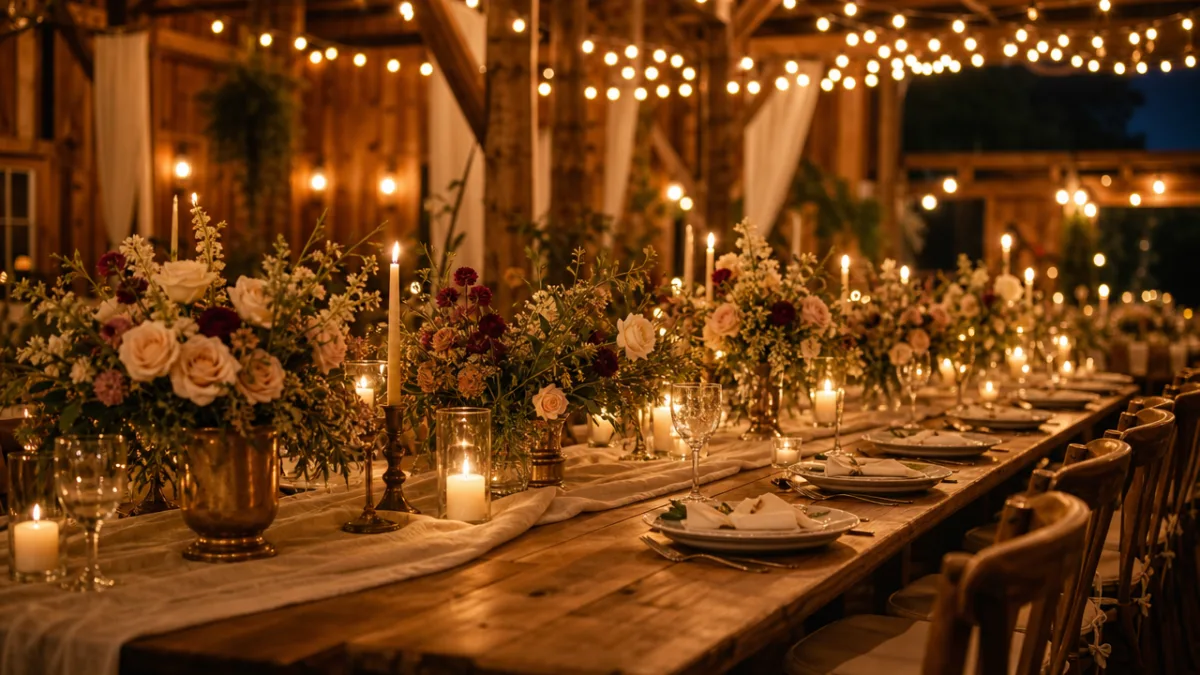
If the ceremony was where Meg and Paul made their promises, the reception was where their personalities truly shone. The main pavilion was transformed into a breathtaking dining experience through an expertly layered combination of long farm tables, linen runners, mismatched vintage candlesticks, and cascading floral centerpieces that varied in height to create visual rhythm across the room. The effect was one of abundant, effortless beauty — the kind that looks as though it came together organically but is actually the result of meticulous planning and a deeply coherent design vision.
Tablescapes at a rustic chic wedding are one of the most powerful tools a couple has at their disposal for communicating their aesthetic, and Meg and Paul used this opportunity brilliantly. Each table featured a unique but harmonious arrangement of elements drawn from the same cohesive palette of dusty rose, sage green, ivory, and terracotta. Vintage-style place cards written in elegant calligraphy rested against hand-painted stones collected from the farm property itself — a personal touch that guests were encouraged to take home as keepsakes, effectively turning the table setting into a functional piece of wedding favor design.
The lighting design at the reception deserves particular praise for the way it evolved throughout the evening to match the shifting emotional tone of the celebration. Warm Edison bulb strands crisscrossed the pavilion ceiling, casting a honeyed amber glow that grew more magical as the sun set and the natural light faded. Clusters of pillar candles at varying heights on each table added a flickering warmth to the dining experience, while strategically placed uplighting around the perimeter of the space gave the entire pavilion a soft, romantic depth that transformed even simple architectural details into dramatic design features.
Key elements that defined the reception styling included:
- Long harvest tables paired with a mix of cross-back chairs and wooden benches to create an informal communal dining atmosphere that encouraged conversation across the table
- Layered linen table runners in cream and natural linen tones, combined with textural woven placemats that added dimension without competing with the floral centerpieces
- A dedicated dessert table styled with a naked wedding cake surrounded by individual pavlovas, fresh figs, honey jars, and scattered rose petals that extended the botanical theme beyond the floral arrangements
- A handwritten chalkboard seating chart framed in reclaimed wood that served as both a functional guide and a striking decorative element near the pavilion entrance
- Vintage glass bottles and bud vases used throughout the space as accent pieces, filled with single stems or small clusters of blooms that softened every corner of the room
The Floral Vision: Nature-Inspired Beauty Throughout Every Detail
Florals were unquestionably the star of Meg and Paul’s wedding design, and the level of thought and intention behind every arrangement elevated the entire celebration from beautiful to genuinely extraordinary. The floral design philosophy throughout the day was rooted in an appreciation for organic, slightly wild beauty — arrangements that looked as though they had been gathered from an English countryside garden moments before the ceremony rather than constructed in a florist’s studio. This aesthetic, increasingly popular in modern wedding design, achieves its effect through the deliberate inclusion of imperfect, unexpected elements like dried grasses, trailing vines, seed pods, and flowers at various stages of bloom.
The bridal bouquet perfectly embodied this approach, combining garden roses in soft blush and cream tones with ranunculus, sweet peas, astilbe, and long trailing lengths of ivy and eucalyptus that cascaded nearly to knee height. The bouquet felt generous and lush without being structured or stiff, moving naturally as Meg walked down the aisle and creating beautiful, dynamic shapes in photographs. The bridesmaids carried smaller complementary arrangements that echoed the same botanical palette without being identical — a styling decision that looks far more sophisticated and intentional than a perfectly matching bridal party lineup.
Beyond the ceremony and reception arrangements, florals appeared throughout the property in thoughtful, unexpected ways that rewarded attentive guests. The wedding cake was adorned with pressed edible flowers and fresh rose petals. Sprigs of rosemary and lavender were tucked into the linen napkin folds at each place setting. A dramatic floral installation above the sweetheart table created a living ceiling of hanging blooms that served as the most photographed backdrop of the entire evening. These layered botanical moments are the hallmark of a truly considered floral vision, and they’re the details that guests remember and talk about for years after the celebration.
Fashion and Beauty: Meg’s Bridal Look from Gown to Glow
Meg’s bridal ensemble was a masterclass in understated elegance, chosen with obvious care for how it would interact with both the rustic setting and the romantic styling of the day. Her gown featured delicate lace detailing across the bodice and sleeves, with a flowing skirt that moved beautifully in the open-air setting and photographed with exceptional grace against the farm’s natural textures. The decision to opt for a style with some structure at the top and fluidity below was a smart one for an outdoor venue, providing the romantic softness of a full skirt while maintaining a silhouette with genuine visual presence in both intimate portraits and wide-angle ceremony shots.
Her hair and makeup balanced timeless bridal beauty with a freshness that felt wholly modern and appropriate for the setting. Rather than a heavy, highly structured updo, Meg chose a softly romantic style with loose, face-framing waves and delicate floral pins woven throughout — another point of connection between the botanical theme running through the decor and the personal styling of the bridal party. Her makeup leaned into a glowing, skin-forward aesthetic with warm rose tones on lips and cheeks, a dewy finish, and lashes that photographed beautifully without looking theatrical in person. The overall effect was of a woman looking genuinely, radiantly like herself on the best day of her life.
The bridesmaids were styled in a palette of dusty sage and warm terracotta, with each choosing her own gown silhouette from within a curated selection of dresses in those tones. This approach to bridesmaid styling — increasingly popular and for very good reasons — allows each attendant to wear something that genuinely flatters her individual figure, resulting in a bridal party that looks confident and beautiful rather than uniformly awkward. The mix of silhouettes also adds visual interest to group photographs and contributes to the organic, collected aesthetic that defined Meg and Paul’s entire wedding vision from beginning to end.

Food, Cake, and the Art of Celebrating Through Shared Meals
Any wedding that takes its setting seriously must take its food equally seriously, and Meg and Paul rose to this challenge with a catering approach that felt wholly in keeping with the farm-to-table spirit of Mulberry Lane Farm. The menu was built around seasonal, locally sourced ingredients prepared with a confident simplicity that allowed the quality of the produce to speak for itself. Rather than the elaborate, multi-course fine dining experience that formal venues often demand, the couple chose a generous family-style service where large platters of beautifully presented food were passed around each farm table — a format that naturally encourages conversation, community, and the kind of convivial, warm atmosphere that perfectly matched the rustic chic aesthetic.
The cocktail hour featured a thoughtfully curated grazing table that became one of the reception’s most talked-about elements. Styled with the same care as the floral arrangements and tablescapes, the grazing display incorporated artisan cheeses, cured meats, seasonal fruits, honeycomb, house-made preserves, and a stunning variety of bread and crackers arranged on a long reclaimed wood board that stretched nearly the entire length of one pavilion wall. Edible flowers scattered across the surface and potted herbs used as accent pieces connected the food styling to the wider botanical aesthetic of the day and created a spread that was as visually arresting as it was delicious.
The wedding cake itself was a triumph of both design and flavor — a three-tier naked cake with a light dusting of powdered sugar, adorned with fresh flowers that mirrored the bridal bouquet palette and trailed down the tiers in a loose, organic arrangement. Naked and semi-naked cakes remain enduringly popular at rustic weddings because their unfinished aesthetic genuinely suits the setting in a way that a fondant-covered cake never quite can. The visible layers of sponge and buttercream create an honest, unpretentious beauty that invites guests to engage with the cake as food first and decoration second — a philosophy that felt entirely in keeping with the values Meg and Paul wove through every element of their celebration.
Planning Tips: How to Achieve the Rustic Chic Look at Your Own Wedding
For couples inspired by Meg and Paul’s stunning celebration and eager to recreate a similar aesthetic at their own wedding, the most important foundational principle to understand is that rustic chic is not an absence of effort or investment — it is a very deliberate aesthetic that requires as much planning, budget allocation, and design coherence as any other wedding style. The effortlessness that characterizes the look at its best is entirely constructed. Every mismatched vintage candlestick, every trailing eucalyptus stem, every hand-lettered chalkboard sign was chosen and placed intentionally by people who understood exactly what effect they were creating and why each element served the larger vision.
Building a coherent rustic chic wedding starts with establishing a tight color palette and refusing to deviate from it regardless of how tempting certain individual elements might be. Meg and Paul’s palette of dusty rose, sage, ivory, and terracotta appeared in the florals, the bridesmaids’ dresses, the table linens, the stationery suite, the cake, and even the food styling on the grazing table. This level of color consistency is what separates a wedding that feels designed from one that simply feels decorated, and it’s the detail that sophisticated guests will notice and remember even if they can’t articulate exactly why the day felt so visually harmonious.
Practical recommendations for couples planning their own rustic chic celebration include:
- Prioritize your venue above all else, as the right barn, farm, or outdoor property will do a significant portion of your aesthetic work before a single decoration is placed
- Invest heavily in your florals, as botanicals are the single most impactful design element at a rustic wedding and the area where cutting corners will be most visible in photographs
- Choose a lighting designer who specializes in outdoor and barn weddings, since the transition from natural to artificial light is the most technically challenging aspect of an open-air reception
- Embrace the mix-and-match philosophy across furniture, tableware, and bridesmaid styling rather than pursuing uniformity, as intentional variety is central to the aesthetic
- Incorporate personal, handmade, or locally sourced elements wherever possible, as authenticity is the soul of the rustic chic style and guests can feel the difference between genuine warmth and manufactured charm
- Work with vendors who genuinely love and understand this aesthetic rather than vendors who simply offer it as one of many available packages, as true enthusiasm for the style will show in the quality and care of their work
Ultimately, what made Meg and Paul’s wedding at Mulberry Lane Farm so memorable and so widely celebrated was not any single spectacular element but rather the cumulative effect of hundreds of small, thoughtful decisions made in service of a clear and deeply felt vision. Their celebration demonstrated that the most beautiful weddings are not necessarily the most expensive or the most elaborate — they are the ones where every detail reflects something true about the couple at the center of it all, and where guests leave feeling not just that they witnessed a beautiful event, but that they were genuinely welcomed into a space created with love, intention, and an infectious joy in the art of celebration itself.








What do you think?
It is nice to know your opinion. Leave a comment.