










40 Upcycled Garden Ideas: Transforming Trash Into Treasure
Why Upcycling Is the Future of Garden Design
Gardening has always been about nurturing growth, but a new movement is reshaping how we think about the spaces we cultivate. Upcycling — the art of repurposing discarded or unused items into something beautiful and functional — has become one of the most exciting trends in contemporary garden design. Rather than spending hundreds of dollars on store-bought planters, trellises, and decorative features, creative gardeners around the world are discovering that the most charming outdoor spaces are often built from materials that others would throw away.
The environmental argument for upcycling in the garden is compelling. Every year, millions of tons of usable materials end up in landfills — old furniture, broken ceramics, worn-out boots, rusted tools, and countless other objects that still have life left in them. When we bring these items into our gardens, we reduce waste, lower our carbon footprint, and lessen the demand for newly manufactured products. This small shift in mindset can have a surprisingly large impact on both the environment and your wallet.
Beyond the ecological benefits, upcycled gardens carry an unmistakable personality. A garden filled with reclaimed wood raised beds, teacup succulents, and ladder-turned-plant-stands tells a story that no catalogue-bought garden ever could. Each piece carries a history, a texture, and a character that mass-produced items simply cannot replicate. When guests walk through your garden and ask, “Where did you get that?” the answer “I made it from an old pallet” is far more satisfying than any brand name you could mention.
Upcycled Containers and Planters: Thinking Outside the Pot
The humble plant container is where most gardeners begin their upcycling journey, and for good reason — virtually any object that can hold soil and has drainage potential can become a planter. Old colanders make whimsical herb gardens because their built-in holes provide perfect drainage. Cracked or chipped teapots and teacups add a cottage-garden charm when planted with delicate succulents or trailing ivy. Even old rubber boots lined with a simple plastic liner and drainage holes can become a quirky focal point near a garden entrance.
Wooden crates and pallets are among the most versatile upcycling materials available for container gardening. Wine crates from local liquor stores can be lined with burlap and used to grow strawberries, herbs, or flowering annuals. Stacked pallets, with their natural slat gaps, become vertical planting walls when lined with landscape fabric and filled with soil — perfect for small balconies or fences where ground space is limited. Wooden drawers pulled from old dressers or cabinets offer generous growing space and can be painted in vibrant colors to add a playful element to any garden corner.
The list of unexpected containers that thrive as planters is virtually endless. Consider these popular options that gardeners have successfully repurposed:
- Old wheelbarrows filled with soil become mobile cottage-style flower displays that can be moved with the seasons.
- Vintage metal washtubs and galvanized buckets develop a beautiful patina over time and suit rustic or farmhouse garden styles.
- Broken birdbaths or cracked garden urns can be laid on their side and planted with trailing plants for a dramatic, sculptural effect.
- Worn-out wicker baskets lined with moss or coconut coir make excellent temporary planters for annuals.
- Old kitchen colanders, enamel pots, and even toasters become conversation-starting planters with a little creativity and humor.
When working with any upcycled container, the key considerations are drainage, material safety, and longevity. Ensure that whatever you use either has holes or can be drilled to allow water to escape, preventing root rot. Be mindful that some materials, particularly treated woods or certain metals, may leach chemicals into the soil, so research your specific materials before planting edibles in them. With those precautions in mind, there is almost no limit to what can be transformed into a thriving container garden.

Furniture and Structural Pieces: Giving Old Items New Purpose
Some of the most dramatic upcycling transformations in the garden involve larger structural pieces — old furniture, doors, windows, and architectural salvage that might otherwise head to the dump. An old wooden ladder leaned against a fence becomes an instant vertical plant display when its rungs are fitted with small pots or hanging baskets. A rusted iron bed frame planted with climbing roses creates a romantic, fairy-tale focal point that looks as though it grew there naturally over decades. These large-scale upcycles create a sense of artistry and intention that elevates the entire garden aesthetic.
Old wooden doors and window frames are particularly beloved in the upcycling gardening community. A weathered door propped against a wall or fence creates an instant garden “room divider,” offering height, texture, and structure while lending a mysterious, romantic quality to the space. Window frames without glass can be hung horizontally from tree branches or pergola beams and planted with trailing succulents or used as a frame for climbing vines. Grouped together, several mismatched frames create an eclectic outdoor gallery wall effect that is entirely unique.
Wooden furniture that has seen better days inside the home often has tremendous potential in the garden. An old dresser with the drawers removed at staggered heights becomes a multi-tiered planting station. A tired wooden chair with its seat removed or replaced with wire mesh makes a charming planter for a single dramatic specimen plant. Even a broken rocking chair, laid on its side with vines allowed to weave through it, becomes a sculptural garden ornament. Here are some structural upcycling ideas worth exploring:
- Transform old wooden pallets into raised garden beds by standing them on edge, securing them with stakes, and filling the interior with quality soil mix.
- Repurpose an old bathtub as a deep-rooted vegetable bed — its depth is excellent for carrots, beets, and other root vegetables.
- Use old guttering sections mounted on fences or walls to create narrow horizontal herb gardens perfect for small spaces.
- Convert an unused swing set frame into a vertical trellis by training beans, cucumbers, or flowering vines up and over its structure.
- An old wooden wheelbarrow that no longer functions can be filled with soil and converted into a beautiful focal-point flower display.
The beauty of incorporating furniture and structural elements into the garden is that they bring with them a sense of narrative and nostalgia. A garden shed door that has protected a family home for thirty years, now repurposed as a trellis backdrop, carries emotional resonance that no garden centre product can match. This layering of history and horticulture is precisely what makes upcycled gardens feel so deeply personal and alive, a quality that skilled garden designers spend enormous amounts of money trying to artificially recreate.
Upcycled Garden Art and Decorative Features
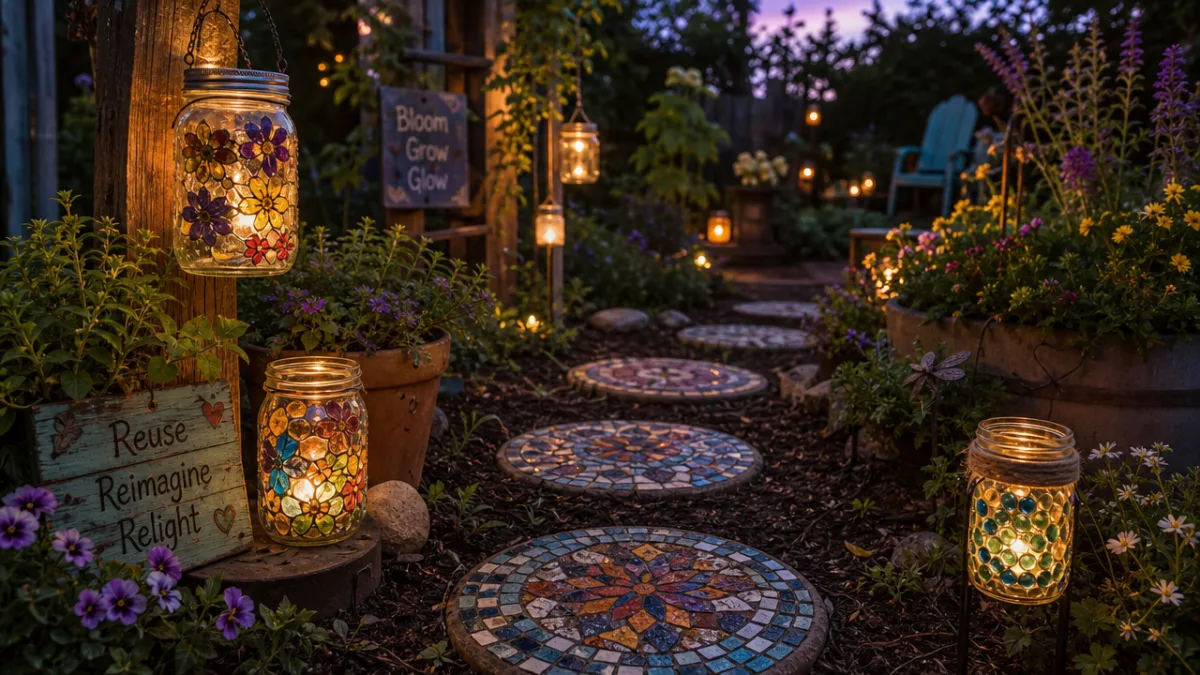
A garden without decorative accents can feel flat and uninspiring no matter how lush the planting. Upcycled garden art solves this problem beautifully — and at minimal cost. Broken ceramic tiles can be repurposed as colorful mosaic pathways or as decorative inlays for stepping stones, adding Mediterranean flair and color that persists through every season. Old glass bottles buried neck-down in rows along a pathway edge create a glittering border that catches sunlight magnificently. Rusted metal objects — keys, cutlery, tools, springs — welded or wired together become abstract sculptural pieces that add industrial character to naturalistic plantings.
Wind chimes and mobiles are among the easiest and most rewarding upcycled garden decorations to create. Gather a collection of old keys, buttons, spoons, shells, or broken jewelry and suspend them from a piece of driftwood or a salvaged branch. The result is a completely one-of-a-kind wind chime that makes a gentle, musical sound and reflects light beautifully. Similarly, old CDs or DVDs strung from fruit tree branches function as highly effective bird deterrents while also creating a mesmerizing visual shimmer when they catch the breeze.
Garden markers are another small but impactful decorative detail that can be entirely upcycled. Instead of purchasing uniform plastic labels, consider these creative alternatives that add character to every planting:
- Smooth river stones painted with plant names using weather-resistant paint — rustic, charming, and practically free.
- Old wooden spoons with names written in permanent marker, sealed with outdoor varnish for weather resistance.
- Pieces of slate broken into irregular shapes and labeled with a paint pen for a natural, elegant look.
- Corks from wine bottles skewered on bamboo sticks, with the plant name written directly on the cork surface.
- Bent teaspoons with the bowl end hammered flat to create a small flag surface for writing.
Lighting is perhaps the most transformative decorative element in any garden, and here too, upcycling opens up extraordinary creative possibilities. Old jam jars and wine bottles become instant lanterns when filled with a handful of battery-operated fairy lights. Vintage tin cans with holes punched in decorative patterns cast beautiful dappled light when a candle is placed inside. Even old colanders suspended from pergola beams with a light bulb fitted inside create a charming, industrial-style pendant light that defines an outdoor dining or lounging space with warmth and atmosphere.
Upcycled Raised Beds and Vegetable Gardens
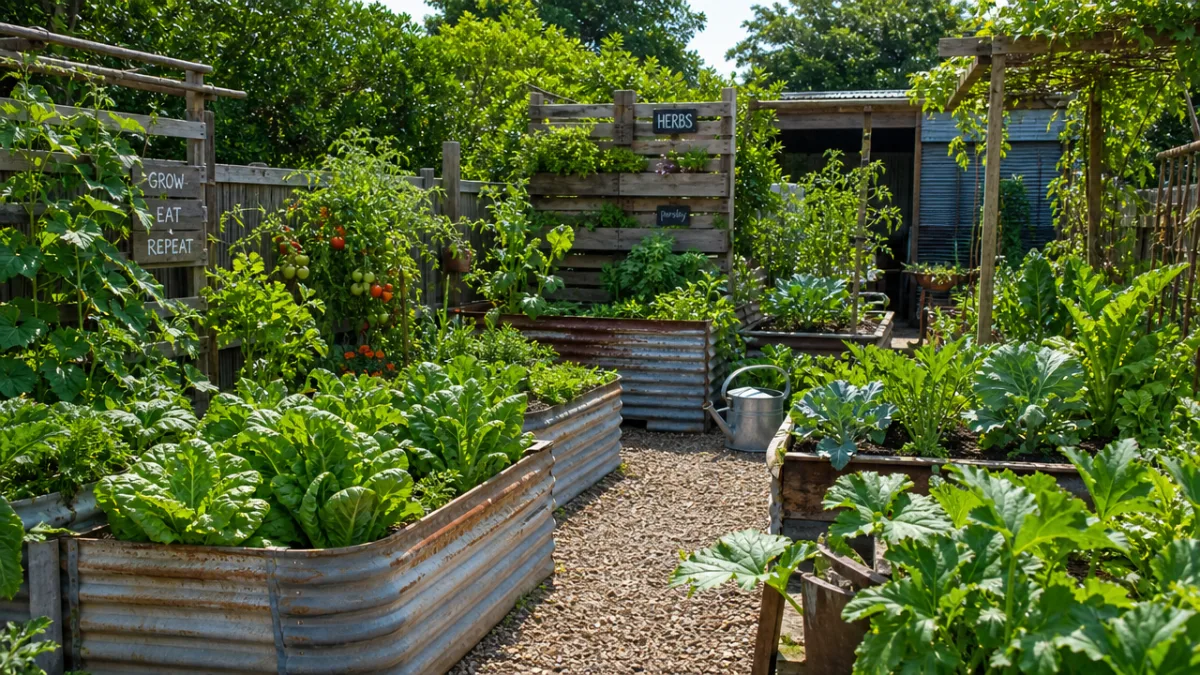
The vegetable garden is one of the most practical areas to apply upcycling principles, and some of the most successful food growing setups are built entirely from reclaimed materials. Old corrugated iron roofing panels bent into rectangular frames create inexpensive, long-lasting raised beds with a distinctive industrial aesthetic. Salvaged railway sleepers — the heavy wooden beams used in railway construction — make exceptionally durable raised bed walls that will last for decades. Even large, old car or truck tyres, stacked and filled with soil, create deep, warm-soil growing environments that are particularly well suited to potato cultivation.
Pallets, as mentioned throughout this article, deserve special recognition in the vegetable garden context. A single standard pallet can be transformed into a complete strawberry tower in an afternoon. Stand it upright, staple landscape fabric across the back and bottom, fill with rich compost, and plant strawberry runners through the slats. Within a season, you will have a lush, productive strawberry wall that takes up almost no horizontal space. This same basic technique works for lettuces, herbs, and compact flowering plants, making pallets one of the single most useful upcycling resources available to the home gardener.
Irrigation systems in upcycled gardens can also be built from reclaimed materials. Old plastic bottles are famously effective as slow-drip irrigation devices — simply remove the lid, poke a tiny hole in it, fill the bottle with water, replace the lid, and invert the bottle into the soil beside a thirsty plant. The water drips out slowly over hours, delivering moisture directly to the root zone where it is needed most. For larger-scale irrigation, old garden hoses with small holes punched along their length function exactly like commercially produced soaker hoses at a fraction of the cost.
When building an upcycled vegetable garden, it is worth thinking systemically about what materials you already have access to before purchasing anything new. A productive kitchen garden can be established with nothing more than:
- Old wooden pallets or reclaimed timber for raised bed construction.
- Cardboard boxes from grocery or appliance deliveries used as a weed-suppressing base layer beneath beds.
- Kitchen scraps and garden waste turned into compost to fill and fertilize those beds for free.
- Repurposed plastic bottles for seed starting, slow-drip irrigation, and mini cloches to protect seedlings.
- Bamboo canes or salvaged wooden dowels for plant supports, tied with strips of old fabric or t-shirt material instead of plastic ties.
Getting Started With Your Own Upcycled Garden
The prospect of creating a fully upcycled garden can feel overwhelming when viewed all at once, but the most important thing to understand is that no one creates such a garden in a single weekend. The best upcycled gardens evolve gradually, accumulating character and personality over months and years as new materials are discovered, new ideas are tested, and the gardener’s own creative confidence grows. The starting point is simply to begin looking at the world differently — to see potential in objects that others overlook, and to ask the question “what could this become?” before consigning anything to the bin.
Building a network of like-minded upcyclers can dramatically accelerate both your material supply and your creative Inspiration. Online communities on platforms like Pinterest, Instagram, and dedicated gardening forums are filled with thousands of creative individuals who share their projects, techniques, and free materials. Locally, charity shops, salvage yards, flea markets, and community exchange groups are excellent sources of interesting materials at low or no cost. Many municipalities also hold periodic “hard rubbish” collection days when neighbors put large items out on the curb — a tradition that dedicated upcyclers approach with the same excitement most people reserve for a sale at their favorite garden centre.
Finally, embrace imperfection as one of the defining qualities of a truly great upcycled garden. These spaces are not meant to look like the pristine, symmetrical showgardens of the Chelsea Flower Show. They are meant to look lived-in, loved, and genuinely creative — full of surprises at every turn, with a sense of humor and humanity that expensive, designed gardens often lack. A wonky mosaic, a lopsided boot planter, a pallet raised bed that is slightly out of square — these “flaws” are not failures. They are the fingerprints of a real person who made something beautiful and useful from what they had on hand, and that, more than any polished perfection, is what makes a garden truly worth spending time in.
Whether you begin with a single upcycled planter on a balcony or dive headlong into rebuilding your entire outdoor space from reclaimed materials, the principles remain the same: look at what you have, imagine what it could become, and give old things new life. Your garden will be richer for it — and so, in small but meaningful ways, will the world.








What do you think?
It is nice to know your opinion. Leave a comment.