










Monstera Plants Free Crochet Patterns You Can Crochet This Weekend
The Irresistible Charm of Monstera Crochet Projects
Honestly, it’s not hard to see why monstera plants have completely taken over the crafting world. Those big, dramatic leaves with their gorgeous splits and holes — called fenestrations — are just so instantly recognizable, and they translate into yarn and fiber art in the most satisfying way. Whether you’ve been crocheting for years or you’re more of a weekend hobbyist looking for something fun to sink your hook into, monstera patterns hit that sweet spot of feeling like a real creative challenge without making you want to pull your hair out.
And the appeal goes way beyond just how pretty they look. Monstera crochet projects are incredibly versatile — you can make a single stylized leaf to hang on your wall, work the motif into a market bag, stitch up a full potted plant amigurumi, or whip up a set of coasters that give your coffee table serious tropical energy. Once you get the hang of the basic techniques, you’ll find yourself reaching for these skills again and again across all kinds of projects.
What’s really great, though, is that most monstera crochet patterns are genuinely beginner-friendly. That iconic leaf shape is built from a combination of stitches you probably already know — chains, single crochets, half double crochets, and the occasional slip stitch to get those characteristic splits just right. You don’t need to be an expert to end up with something that looks like it belongs in a craft shop. And with so many free patterns floating around online these days, there’s never been a better moment to grab your hook and bring a little botanical magic into your crochet life.
Finding the Best Free Monstera Crochet Patterns Online
There is genuinely no shortage of free monstera crochet patterns out there — the internet is absolutely overflowing with them. But knowing where to look, and how to spot a good one, makes the difference between a fun weekend project and a frustrating mess. Ravelry, Pinterest, Etsy (where plenty of designers offer free downloads alongside paid ones), and individual craft blogs are your best starting points. Ravelry especially is great because you can filter by difficulty level, yarn weight, and how many people have left positive reviews, which takes a lot of the guesswork out of finding something that’s actually well-written and tested.
When you’re sizing up a free pattern, a few things are worth checking before you commit. A solid pattern will spell out exactly what yarn weight and hook size you need, give you a gauge recommendation, and include an abbreviation key for anything non-standard. Stitch counts at the end of rows or rounds are an absolute lifesaver — they let you catch a mistake early instead of realizing three inches later that something went sideways. Photos of the finished piece from a few different angles are also a huge help, and in-progress shots are even better.
Don’t sleep on the crochet community either. Searching Instagram hashtags like #monsteracrochet, #crochetmonstera, and #botanicalcrochet will turn up hundreds of finished projects, and most makers are genuinely happy to share a link to the pattern they used. Pairing a YouTube tutorial with a written pattern is also a game-changer, especially if you’re someone who learns better by watching than reading. A lot of designers create video walkthroughs specifically for this reason, and having both resources side by side can make even trickier techniques feel totally manageable.
Essential Materials and Tools for Your Monstera Project
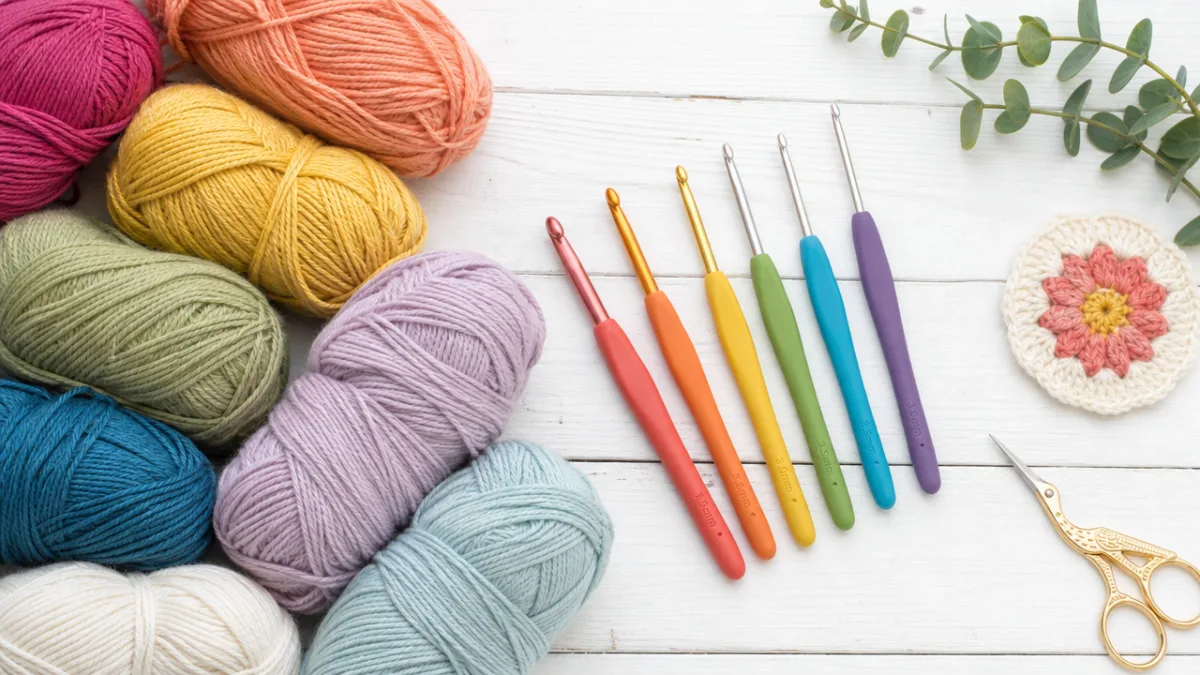
Getting your materials right before you start is one of those things that sounds boring but genuinely saves you a headache later. For most monstera leaf patterns — whether you’re making a flat decorative piece, a coaster, or an appliqué — a medium weight cotton yarn in DK or worsted is the way to go. Cotton holds its shape really well, which matters a lot when you want those crisp monstera leaf edges to actually look crisp. It also comes in a gorgeous range of greens, from soft celadon all the way to deep jungle tones, so you can match your project to your home or just go with whatever speaks to you.
If you’re making an amigurumi-style potted plant, the yarn situation shifts a bit. You’ll want something with a tighter spin and minimal stretch — a cotton-acrylic blend works really well — so your stitches stay defined and the leaves hold their shape without flopping over. If you want that slightly waxy, realistic sheen that actual monstera leaves have, some crafters swear by a bamboo-blend yarn, which has a natural luster that looks incredible both in person and in photos.
Beyond yarn, here’s a rundown of what’s worth having on hand before you get started:
- Crochet hooks in the right size for your yarn — usually somewhere between 3.5mm and 5mm for DK to worsted weight cotton
- A yarn needle for weaving in ends and seaming pieces together
- Sharp scissors with a fine tip so you can cut cleanly close to your work
- Stitch markers to keep tabs on round beginnings and important spots in the pattern
- Fiberfill stuffing if you’re going the three-dimensional amigurumi route
- Wire or pipe cleaners to stiffen leaves and give them that natural upright look
- A small terracotta pot or a crocheted one to show off your finished plant
- Blocking mats and pins for shaping and flattening your finished leaves
Speaking of blocking — please don’t skip it, even if you’re tempted. It’s the step a lot of beginners overlook, and it makes such a visible difference. Wet blocking your finished leaf, pinning it into shape on a foam mat while it’s damp and letting it dry completely, opens up the stitches, sharpens those edges, and gives your work that clean, polished look you see in the best project photos. Cotton takes to wet blocking especially well, and even first-timers are usually pretty amazed at how much better their piece looks afterward.
Step-by-Step Overview of a Basic Monstera Leaf Pattern
Every pattern has its own specific stitch sequences, but most basic monstera leaf patterns follow a similar enough structure that it’s worth understanding the general logic before you dive in. The leaf is usually built in segments, with each lobe formed separately and then joined as you work your way along the central spine. It might sound a bit fiddly when you first read it, but after one or two lobes, you’ll find yourself settling into a rhythm and the whole thing starts moving along much faster than you’d expect.
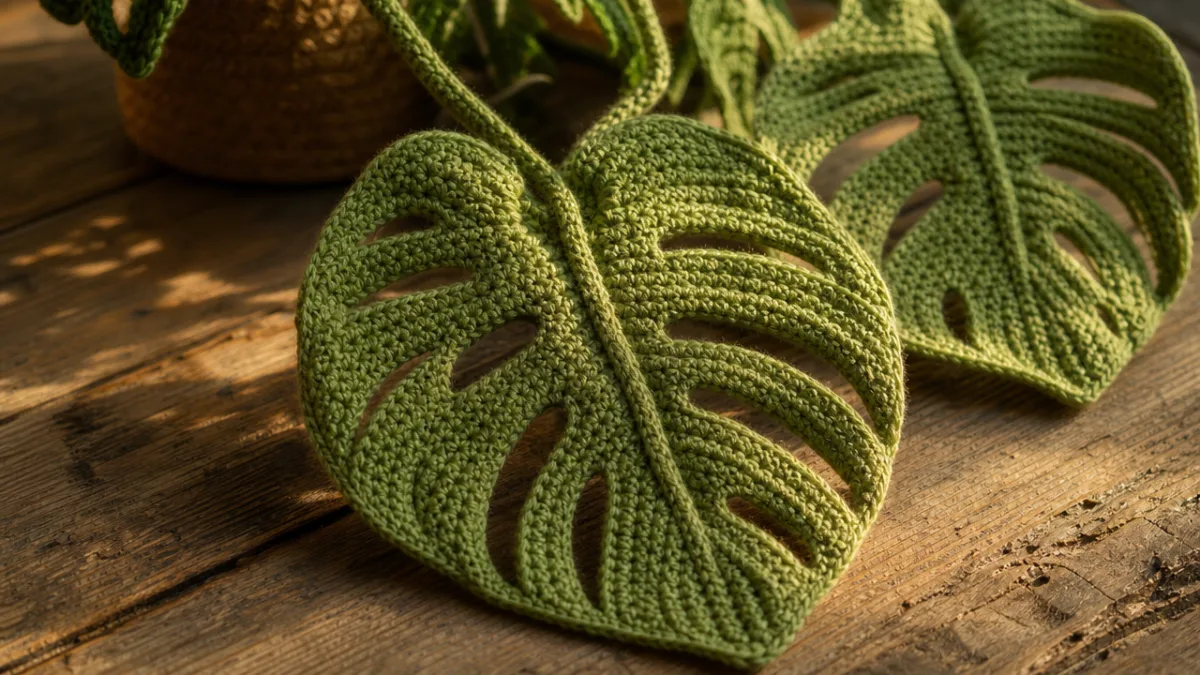
Here’s roughly how a typical beginner-friendly monstera leaf pattern tends to go: you start by chaining a foundation row that becomes the central stem and midrib of the leaf. From there, you work outward in shaped lobes — increasing on one side to build the rounded top of the lobe, then decreasing back down to the midrib. Each lobe is worked individually, connected back to the main spine with a slip stitch or short chain before you start the next one. As the lobes build up on both sides of that central midrib, the monstera silhouette starts to appear from your hook in a way that is honestly deeply satisfying every time.
The fenestrations — those signature holes — are handled one of two ways depending on the pattern. Some designers build actual open holes using chain spaces and skipped stitches within the lobe itself, while others use surface slip stitches or a bit of embroidery on the finished piece to suggest the holes. Both can look really great, but the chain-space method gives you genuinely open negative space, which is especially striking for wall hangings where the background shows through and adds visual depth.
Once all the lobes are done and joined, most patterns finish with a single round or row of single crochet around the whole perimeter. This tidies up the outline, gives you a clean and uniform edge, and also gives you a surface to pin into if you’re blocking. A short stem worked in chain stitches or a crocheted cord finishes the look, and a little piece of florist wire tucked inside lets you pose the leaf at whatever angle looks most natural.
Creative Ways to Use Your Finished Monstera Crochet Pieces
Once you’ve got a collection of crocheted monstera leaves, the possibilities for using them are honestly a little overwhelming in the best way. One of the most popular things to do is make a botanical wall hanging — grouping several leaves in different sizes, attaching them to a piece of driftwood or a wooden dowel with natural twine, and hanging the whole thing somewhere it can be admired. It makes a beautiful focal point in a living room, bedroom, or home office, and brings that warm, organic, plant-filled vibe without any of the actual plant care involved.
Monstera motifs also work really well as appliqués for personalizing things you already own. A single well-blocked leaf stitched onto a canvas tote, a denim jacket, or a plain throw pillow turns something ordinary into something that feels handmade and special. Since you can make the appliqués ahead of time and attach them later, they’re also a really practical gift option — you can crank out a bunch of leaves in an afternoon and then use them to customize things for different people, swapping colors and sizes as needed.
If you’re drawn more to functional crochet, here are some other directions you might take the monstera motif:
- Monstera leaf coasters in sturdy cotton that protect your tabletops while looking like they belong in a botanical garden shop
- A monstera motif market bag worked in tapestry crochet, with the leaf silhouette showing up as a graphic across the body of the bag
- Crocheted monstera bookmarks, worked as tiny flat leaves and perfect for gifting to any book lover you know
- A full amigurumi potted monstera plant with a crocheted terracotta pot, soil texture, and multiple wired leaves — the ultimate forever-plant
- Monstera-shaped pot holders or trivets in thick cotton for a botanical kitchen that actually functions
- Earrings and hair accessories using tiny stiffened leaves worked in fine thread yarn for a wearable botanical statement
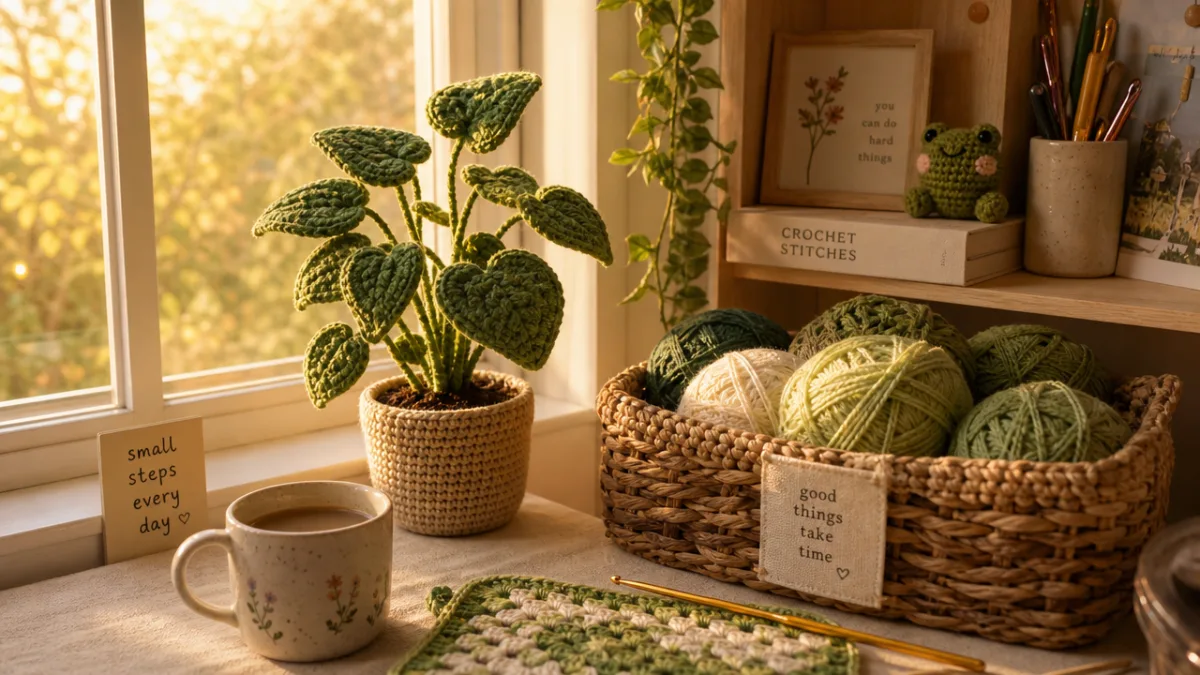
The amigurumi potted plant is worth calling out on its own, because it’s genuinely one of the most beloved monstera crochet projects in the online crafting world for good reason. These little three-dimensional plants, with their carefully shaped and wired leaves poking out of a crocheted pot, are absolutely charming and photograph so beautifully. They make wonderful housewarming gifts, the cheeriest desk companions, and great photography props. And because they never need watering and are basically indestructible, they’re a perfect option for anyone who loves the look of plants but can’t quite keep the real ones alive.
Tips for Success and Growing Your Crochet Skills
Every craft skill grows through practice and a fair bit of patience, and crochet is no different. If you’re new to monstera patterns specifically, start with the flattest and simplest leaf you can find — something single-color with minimal shaping and no three-dimensional elements — before moving up to more complex designs. This gives you a chance to get comfortable with how lobe construction works and how the leaf shape builds stitch by stitch, without piling on too many new techniques at once. Finishing that first simple project and having it actually look like a monstera leaf does a lot for your confidence going into the next one.
Tension consistency is one of those things that quietly has a huge impact on how your finished work looks, and it matters especially for monstera projects where you really want those leaf edges to look crisp and intentional. If you notice your tension tightening up when you’re concentrating hard at the start and loosening as you relax, try working swatches of each stitch type before beginning the main project. A lot of experienced crocheters also find that good lighting and a comfortable, relaxed posture make a real difference to how even their stitches stay over the course of a longer session.
Color is another place where you can really have fun and push your monstera projects beyond the expected. Deep jungle green is always a classic and always looks great, but don’t be afraid to go somewhere unexpected. Dusty sage, golden yellow, rich burgundy, or an ombre gradient running from pale mint to forest green can all produce monstera pieces that feel fresh and personal. Variegated yarn that shifts gradually between shades can also create a beautiful light-and-shadow effect across the leaf lobes, mimicking the way real monstera leaves catch light differently across their surface.
And finally, don’t underestimate how much connecting with the wider crochet community can help you grow. Facebook groups, Reddit communities like r/crochet, and the comment sections on pattern pages are full of friendly, knowledgeable crafters who genuinely enjoy helping people troubleshoot problems, suggesting tweaks to patterns, and cheering on finished projects. Sharing your work — even when it’s not quite what you envisioned — inspires other people, builds your own confidence, and adds to that warm, creative energy that makes the crochet community such a good place to be. Your weekend monstera project just might be the Inspiration that gets someone else to pick up a hook for the very first time.








What do you think?
It is nice to know your opinion. Leave a comment.