










How to Grow Nicotiana (Flowering Tobacco): A Complete Growing Guide
Introduction to Nicotiana: The Enchanting Flowering Tobacco Plant
If you’re looking for a plant that’s both beautiful and a little bit magical, Nicotiana — better known as flowering tobacco — might be exactly what your garden is missing. Unlike the tobacco grown commercially, ornamental Nicotiana is all about those delicate tubular blooms, that intoxicating evening fragrance, and a laid-back versatility that makes it fit into almost any garden. These graceful plants belong to the Solanaceae family and have been winning over gardeners for centuries with their star-shaped flowers in shades of white, pink, red, lime green, and deep crimson.
Originally from South America and parts of North America, Nicotiana has adapted surprisingly well to gardens all over the world. The most popular ornamental types are Nicotiana alata, Nicotiana sylvestris, and Nicotiana tabacum, and each one brings something a little different to the table. Nicotiana alata is probably the one you’ll see most often — it’s compact, blooms like crazy, and is easy to love. Then there’s the towering Nicotiana sylvestris, which sends up long, drooping white trumpets that fill the evening air with a jasmine-like sweetness that’s genuinely hard to beat.
One of the best things about growing flowering tobacco is how brilliantly it attracts wildlife. Hummingbirds, hawk moths, and butterflies simply can’t resist those tubular flowers. The fragrance is strongest in the evening, right when hawk moths come out to feed, and watching that happen at dusk is one of those garden moments you don’t forget quickly. Whether you tuck it into a border, pop it in a container, or let it roam through a cottage garden, Nicotiana brings a romantic, old-world charm that’s genuinely hard to replicate with anything else.
Choosing the Right Nicotiana Varieties for Your Garden
Getting the right variety matters more than you might think, because these plants vary quite dramatically in height, color, and fragrance. Compact types like the Sensation Mix and Perfume Series stay between 12 and 18 inches tall, which makes them perfect for containers, window boxes, or the front of a border where you want something tidy and manageable. These shorter cultivars were bred specifically for ornamental garden use, and one nice bonus is that they tend to stay open during the day rather than just at night — so you actually get to enjoy them while you’re outside.
If you want something with real presence, Nicotiana sylvestris — sometimes called woodland tobacco or “only the lonely” — can grow four to five feet tall or more. Its long, pendant white flowers hang in beautiful clusters from tall branching stems, and it makes a genuinely striking specimen in the back of a border. Garden designers love it for the way it bridges the gap between lower perennials and background shrubs, giving mixed plantings that airy, almost wild quality that feels both intentional and effortless.
Color-wise, Nicotiana gives you more to work with than you might expect. The lime-green varieties, like Nicotiana ‘Lime Green’, have become real favorites in contemporary garden design because they make the colors around them pop. Deep crimson and rose-pink varieties look stunning massed together, while pure white forms have a timeless quality and practically glow as the light fades in the evening. One thing worth knowing: if fragrance is important to you, lean toward species types and older heirloom varieties rather than modern F1 hybrids. Breeders have often traded scent for day-opening flowers and a wider color range, which is a fair swap for some gardens but not for everyone.
- Nicotiana alata ‘Grandiflora’ – Classic white, intensely fragrant, excellent for evening gardens
- Nicotiana sylvestris – Tall architectural species, cascading white trumpets, powerful fragrance
- Nicotiana ‘Lime Green’ – Chartreuse flowers, modern designer favorite, good cut flower
- Nicotiana Perfume Series – Compact, day-opening, wide color range, ideal for containers
- Nicotiana tabacum – Ornamental tobacco, large bold leaves, pink flowers, dramatic foliage effect
Starting Nicotiana from Seed: Timing and Technique
Growing Nicotiana from seed is genuinely one of the more rewarding things you can do as a gardener, and it opens up a whole world of varieties you’ll never find as transplants at a local nursery. The key thing to know upfront is that Nicotiana seeds are incredibly tiny and actually need light to germinate — so whatever you do, don’t cover them with soil. A single seed packet holds hundreds of dust-fine seeds, and getting them sown thinly and evenly takes a steady hand and a bit of patience.
Timing matters quite a bit here. In most temperate climates, you’ll want to start seeds indoors about six to eight weeks before your last expected frost date. Start too early and you end up with leggy seedlings running out of patience before it’s safe to plant them out; start too late and you cut your blooming season short. A heat mat set to around 70 to 75 degrees Fahrenheit makes a real difference — most seeds will sprout within ten to fourteen days under those conditions, which is much faster and more reliable than hoping for warmth from a windowsill alone.
When you’re ready to sow, fill your seed trays with a fine, well-draining starting mix and moisten it thoroughly, then simply press the seeds onto the surface without covering them. A neat trick is to mix the seeds with a little fine sand first — it makes it much easier to distribute them evenly and avoid overcrowding. After sowing, pop a humidity dome on top or tent the trays loosely with plastic wrap, and set them under grow lights or in your brightest window. Check moisture daily and mist gently with a spray bottle if things start to dry out, being careful not to waterlog the seedlings once they appear.
Seed Starting Checklist
- Fill trays with fine, well-draining seed-starting mix and moisten thoroughly
- Mix seeds with fine sand to aid even distribution across the surface
- Press seeds gently onto the surface without covering — light is required for germination
- Cover trays with a humidity dome and place on a heat mat at 70–75°F
- Position under grow lights or in the brightest available window
- Check moisture daily and mist with a spray bottle as needed
- Expect germination in 10 to 14 days; remove dome once seedlings emerge
- Thin seedlings when they reach one inch tall to prevent overcrowding
Transplanting, Soil Preparation, and Planting Outdoors
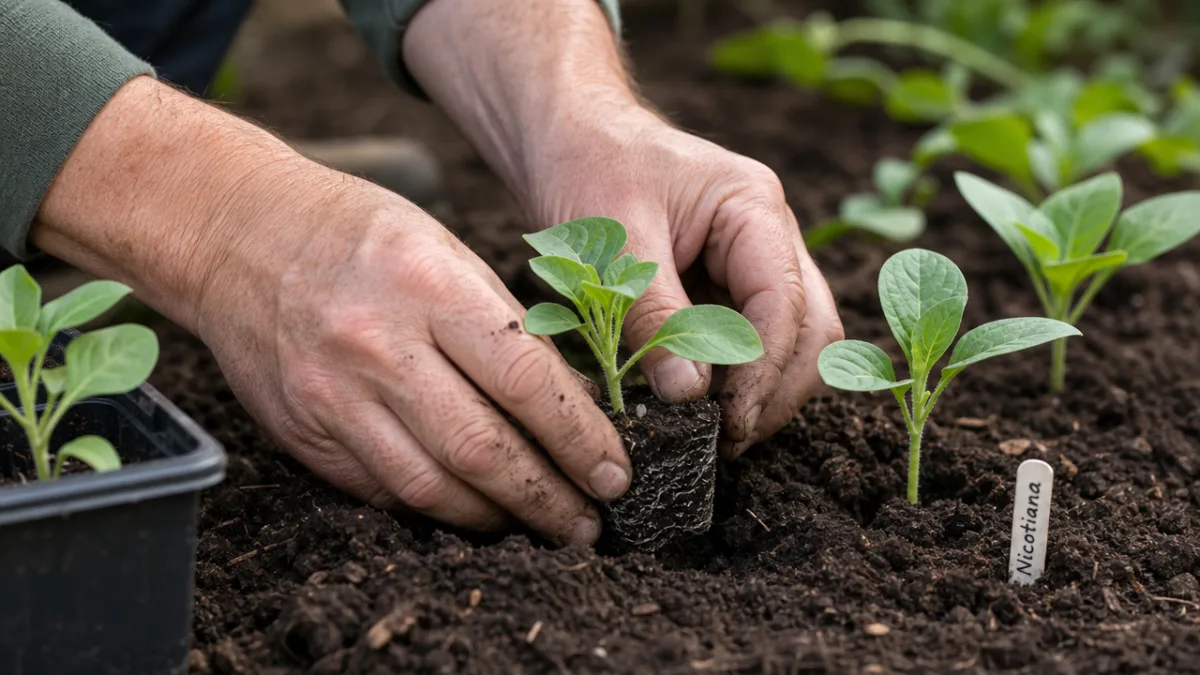
Before your seedlings go outside, you need to harden them off — and this step is not one to rush. Spend seven to ten days gradually introducing the plants to outdoor conditions by setting them in a sheltered spot for increasing amounts of time each day, starting with just an hour or two and working up to full days outside. It sounds a little fussy, but skipping this step is probably the most common mistake beginners make. The result can be transplant shock, wilting, sunscald, and plants that just never quite recover their momentum. A little patience here genuinely pays off once they hit the ground.
Nicotiana does best in rich, well-draining soil with a slightly acidic to neutral pH somewhere between 6.0 and 7.0. Before planting, work in a good amount of compost or well-rotted manure to give the bed some structure and fertility. These plants will grow in average garden soil, but if you put some effort into soil prep, you’ll notice the difference — bigger plants, more flowers, and a longer season. If you’re dealing with heavy clay, raised beds are worth considering, or at least work in some coarse grit, because Nicotiana really doesn’t like sitting in waterlogged ground and can develop root rot when drainage is poor.
Plant out after all frost risk has passed and nighttime temperatures are reliably above 50 degrees Fahrenheit. Give compact varieties about 10 to 12 inches of space between plants, and allow 18 to 24 inches for taller types like Nicotiana sylvestris, which need room to spread and good airflow around them. As for sun, full sun is great but partial shade works well too — Nicotiana is one of the more shade-tolerant annuals you can grow, and in hot climates it actually appreciates some afternoon shelter from the harshest heat, which can cause wilting and knock back flower production if things get really intense.
Ongoing Care: Watering, Fertilizing, and Maintenance
Once it’s settled in, Nicotiana is pretty low-maintenance — it just wants consistent, thoughtful care rather than a lot of fussing. Water newly transplanted seedlings regularly until you see active new growth, which tells you the roots are finding their feet in the surrounding soil. After that, the plants have moderate water needs and do best with deep, infrequent watering that lets the top inch or two of soil dry out a little between sessions. Try to water at the base rather than overhead where you can, since wet foliage can invite fungal problems — especially in humid spots or where air circulation isn’t great.
Fertilizing is simple but worth doing consistently if you want the long, generous blooming season Nicotiana is capable of. Work a balanced slow-release granular fertilizer into the soil at planting time to build a nutritional foundation, then follow up with monthly liquid feeds — either a balanced formula or one that’s a little higher in phosphorus to keep flowers coming. The main thing to avoid is going heavy on nitrogen, which pushes the plant into producing lots of lush foliage at the expense of blooms. It’s a surprisingly common reason gardeners think their plants are underperforming when really they’ve just been a bit too generous with the feed.
Deadheading spent flowers on compact varieties does encourage new buds and keeps the display going into autumn. That said, if you let some flowers go to seed, Nicotiana will often self-sow so enthusiastically that it comes back year after year without any effort from you at all. This self-seeding habit makes it exceptional value — one good season can establish a colony that persists and even naturalizes over several years. Taller types like Nicotiana sylvestris are especially prolific self-seeders and can become delightfully weedy in the best possible sense if conditions suit them.
Common Pests and Problems
- Aphids – Common on new growth; treat with insecticidal soap spray or strong water jets
- Whitefly – Can colonize undersides of leaves; yellow sticky traps and neem oil are effective controls
- Tobacco mosaic virus – Causes mottled, distorted foliage; remove and destroy affected plants immediately
- Powdery mildew – Appears in humid conditions with poor air circulation; improve spacing and apply fungicide if needed
- Slugs and snails – Target young seedlings; use iron phosphate bait or copper tape barriers around containers
Using Nicotiana in Garden Design and Cut Flower Arrangements
Nicotiana is one of those rare plants that fits comfortably into almost any garden style — formal parterres, relaxed cottage borders, or clean contemporary plantings. In a cottage garden, mixing different Nicotiana species and colors with roses, salvias, verbenas, and foxgloves creates that lush, romantic layering that defines the style at its best. The taller species are especially useful as transitional plants, filling the gap between mid-border perennials and background shrubs in a way that feels graceful and unforced rather than stuck in as an afterthought.
For an evening or moonlight garden, Nicotiana isn’t just a good choice — it’s arguably the most important plant you can include. The white-flowered forms take on an almost luminous quality as daylight fades, and the fragrance, which builds steadily through the evening, turns the garden into something you genuinely want to linger in after sunset. Pairing white Nicotiana with white petunias, silver-leaved artemisia, white cosmos, and the white forms of annual phlox creates a garden that reaches its peak exactly when most people most want to be outside — on warm, quiet summer evenings.
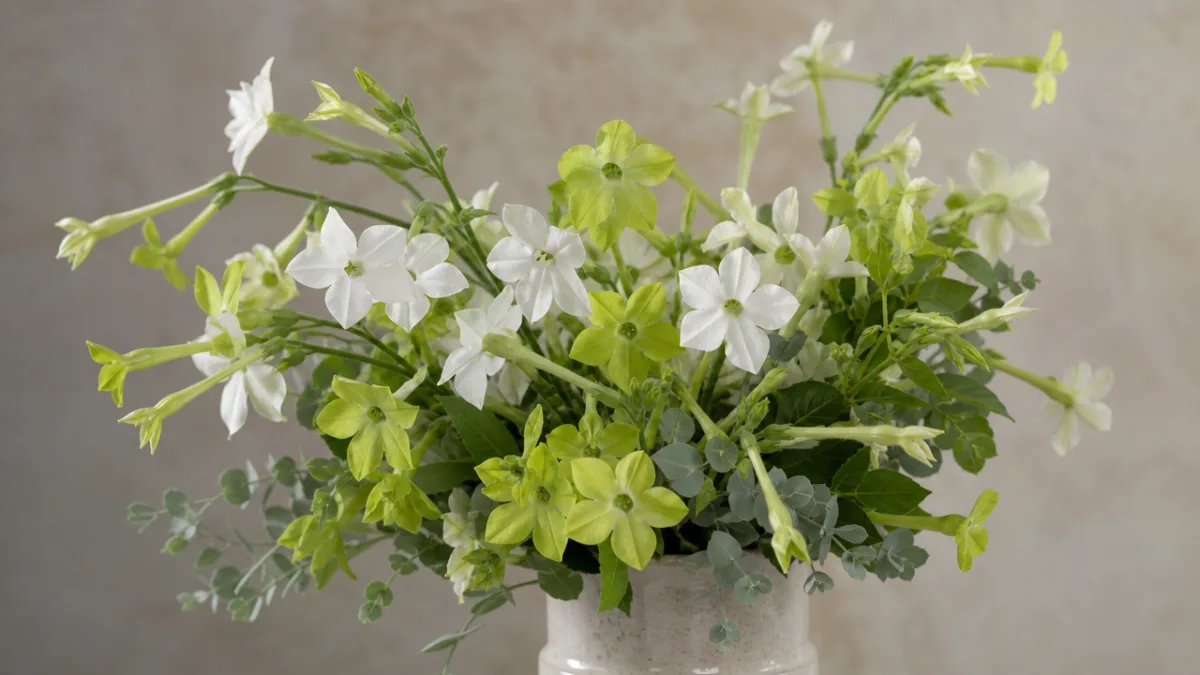
As a cut flower, Nicotiana is having a real moment. Varieties like ‘Lime Green’ and the taller forms of Nicotiana alata are increasingly showing up in florist work and home arrangements for their willowy stems and unusual flower shapes, which bring movement and delicacy to a vase in a way that chunkier blooms simply can’t. Cut stems when a few flowers on the spike are open but plenty of buds remain, then condition them in cool water for a few hours before arranging. They pair beautifully with structural elements like alliums and airy fillers like dill and ammi, and the fragrance makes them an especially lovely choice for table centerpieces or bedroom arrangements where you can really appreciate it.
Saving Seeds and Extending Your Nicotiana Collection
One of the genuinely lovely things about growing Nicotiana is how freely and abundantly it sets seed, which makes saving your own for future seasons completely straightforward. Rather than deadheading everything, let some of your healthiest, most beautiful plants run to seed at the end of the season. The seed capsules will swell and turn brown as they ripen, and once they begin to split open naturally, they’re ready. Cut the whole seed head off and drop it upside down into a paper bag, then give it a gentle shake — the tiny seeds will fall right out.
Once you’ve harvested them, sift out the chaff and plant debris, then store the cleaned seeds in clearly labeled paper envelopes or small glass vials somewhere cool, dark, and dry. Stored well, Nicotiana seeds stay viable for two to three years, though germination will be strongest in that first year after collection. One thing to keep in mind if you’re growing several varieties close together: Nicotiana cross-pollinates freely, thanks to all those moth and insect visitors, so saved seeds may not come true to the parent. That’s not necessarily a bad thing — you might end up with some genuinely beautiful accidental hybrids that make the following season feel like a surprise.
Building a Nicotiana collection over time is one of those slow, satisfying garden projects that keeps on giving. The species complex is huge, with enormous variation in size, flower form, color, fragrance, and climate adaptability. Seed companies like Johnny’s Selected Seeds carry a well-chosen range of both classic and more unusual varieties that make a great starting point. From there, seed-swapping networks and specialist plant societies can connect you with growers who cultivate rare species and regional varieties that never make it into commercial catalogs — and that’s where things get really interesting.








What do you think?
It is nice to know your opinion. Leave a comment.