










Handcrafted Crochet Tulip Bouquet: The Ultimate Guide to Nylon Yarn Flowers for Gifts and Crafting
The Art of Crochet Tulip Bouquets: A Timeless Craft Tradition
Crochet tulip bouquets have captured the hearts of crafters and gift-givers around the world, offering a stunning blend of artistry, durability, and heartfelt sentiment. Unlike fresh flowers that wilt within days, a handcrafted crochet tulip bouquet made from high-quality nylon yarn retains its beauty indefinitely, making it a truly enduring token of affection. Whether displayed in a vase, presented as a birthday surprise, or arranged as a centerpiece for a holiday table, these textile blooms carry a warmth and intentionality that no store-bought gift can replicate.
The history of crocheted flowers stretches back centuries, with needleworkers across Europe and Asia crafting decorative blooms to adorn clothing, hats, and home furnishings. Tulips, with their clean, elegant silhouette and rich cultural symbolism — representing perfect love in the Victorian language of flowers — have long been a favorite subject for fiber artists. The structured shape of a tulip translates beautifully into crochet stitches, allowing crafters to capture the flower’s graceful cup-shaped petals with remarkable realism using relatively simple techniques.
Today, the popularity of handcrafted crochet bouquets has surged dramatically, fueled by a growing appreciation for slow-made, sustainable goods and the rise of social sharing platforms like Pinterest, where intricate floral arrangements in vibrant nylon yarn stop scrollers in their tracks. Artisans and hobbyists alike have embraced these projects not only for their aesthetic appeal but also for the meditative, stress-relieving quality of the crochet process itself. Creating a tulip bouquet from scratch is both a creative journey and a form of mindful relaxation that yields a tangible, beautiful result.
Why Nylon Yarn is the Superior Choice for Crochet Flowers
The choice of yarn is perhaps the single most important decision a crafter makes when embarking on a crochet tulip bouquet project, and nylon yarn stands out as the premier material for this application. Nylon fibers offer an exceptional combination of strength, sheen, and flexibility that natural fibers simply cannot match when it comes to creating realistic, long-lasting floral pieces. The slight luster inherent in nylon thread mimics the natural sheen of fresh tulip petals, giving finished bouquets a lifelike quality that immediately catches the eye and impresses anyone who sees them.
Beyond aesthetics, nylon yarn provides outstanding durability that makes it ideal for pieces intended as keepsake gifts or permanent decorative items. Natural fibers like cotton or wool are susceptible to moisture damage, fading, and deterioration over time, especially when exposed to sunlight or humidity. Nylon, by contrast, resists moisture absorption, maintains its color vibrancy even after years of display, and holds its shape without sagging or stretching. A crochet tulip bouquet crafted from premium nylon yarn can look just as fresh and vibrant a decade after it was made as on the day it was completed.
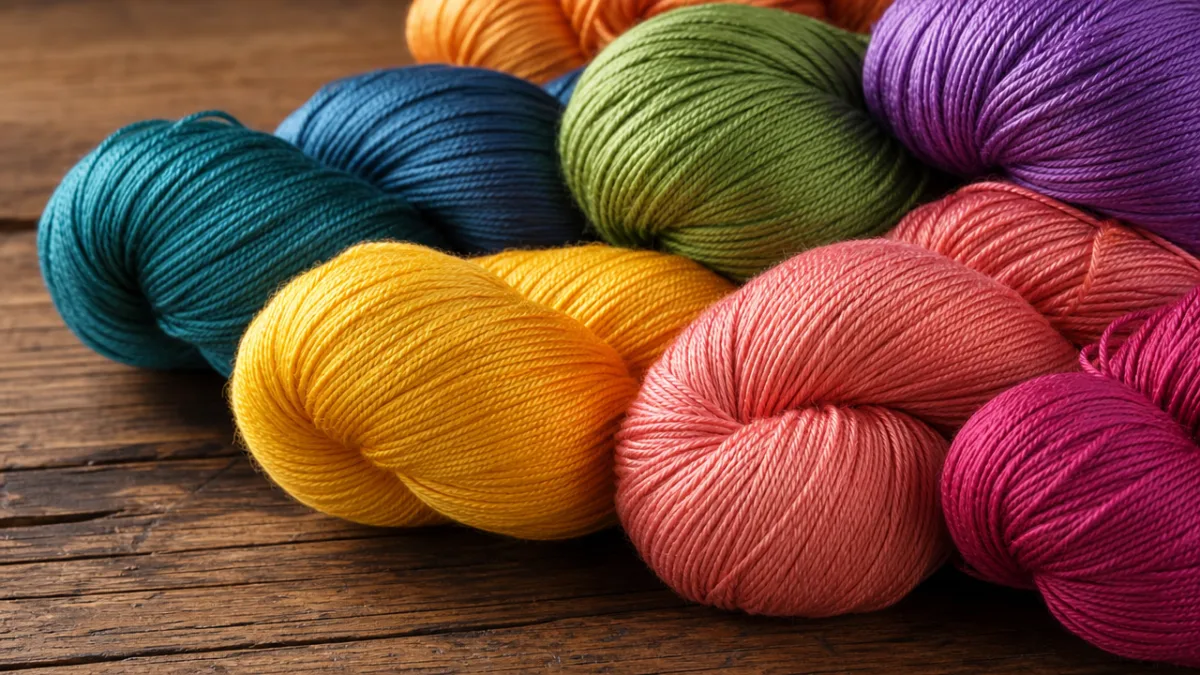
From a practical crafting standpoint, nylon yarn also offers excellent stitch definition, meaning every loop and turn of the hook creates a crisp, visible texture that contributes to the overall professional appearance of the finished flower. It glides smoothly over crochet hooks, reducing hand fatigue during longer crafting sessions, and its consistent thickness makes it easier for beginners to achieve even tension throughout their work. Many crafters also appreciate that nylon yarn is widely available in an extraordinary range of colors, from the softest blush pinks and creamy whites to the most vivid magentas, purples, and oranges, making it possible to recreate virtually any tulip variety imaginable.
- Colorfast and UV-resistant: Nylon yarn retains vibrant color even with prolonged exposure to light and air, ensuring your bouquet looks fresh for years.
- Moisture-resistant: Unlike wool or cotton, nylon does not absorb humidity, preventing mold, mildew, or shape distortion in varying climates.
- Excellent sheen: The natural luster of nylon fibers closely replicates the glossy surface of real tulip petals, enhancing visual realism.
- Strong and flexible: Nylon resists tearing and breaking, allowing petals and stems to be shaped and reshaped without damage.
- Wide color variety: Available in hundreds of shades and gradients, enabling highly customized and realistic floral colorways.
Essential Tools and Materials for Your Crochet Tulip Project
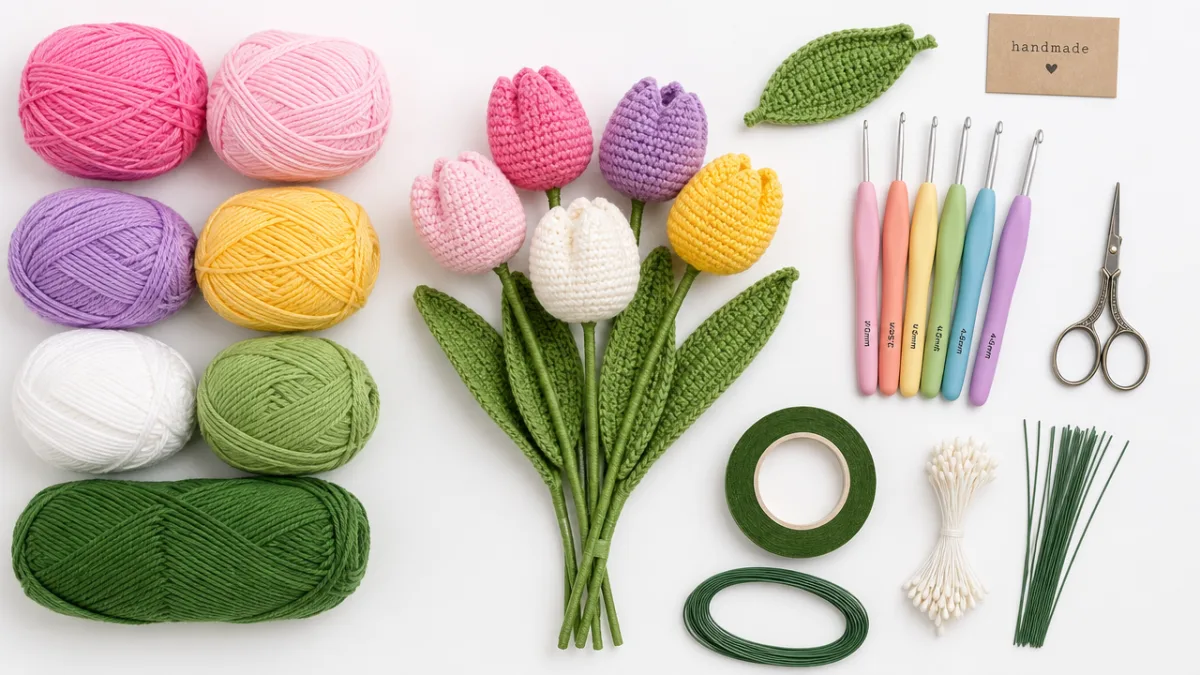
Before you begin crocheting your tulip bouquet, assembling the right set of tools will make a significant difference in both the process and the final result. The foundation of any successful crochet project is a well-matched hook and yarn combination. For nylon thread typically used in crochet flowers, a steel crochet hook ranging from size 1.5mm to 2.5mm is most commonly recommended, though the exact size will depend on the specific weight and thickness of your chosen yarn. Ergonomic hooks with cushioned handles are particularly helpful for this type of detailed work, as the fine stitches required for realistic petals can involve repetitive small movements over extended periods.
In addition to yarn and hooks, wire stems are an essential component of any crochet tulip bouquet that aims to be displayed or gifted like a real flower arrangement. Floral wire, available in various gauges at craft stores, provides the structural backbone that allows each tulip to stand upright and be positioned naturally within an arrangement. Most crafters wrap their floral wire in green floral tape before attaching crocheted leaves and sepals, creating a seamless, polished look that closely mimics a real flower stem. Wire stems also allow the recipient to arrange and rearrange the bouquet in any vase or container they choose.
A few additional materials round out the toolkit for a complete crochet tulip bouquet. Fiberfill stuffing or small amounts of batting can be used to lightly pad the interior of tulip blooms, giving them a pleasing three-dimensional roundness rather than a flat appearance. Stitch markers are invaluable for tracking rounds in amigurumi-style construction. A yarn needle for weaving in ends neatly is essential for achieving a professional finish. Many crafters also keep a small spray bottle of water and fabric starch on hand to lightly stiffen and shape petals after completion, helping them hold their form permanently.
- Steel crochet hooks (1.5mm–2.5mm) matched to your nylon yarn weight
- High-quality nylon yarn in your chosen petal, leaf, and stem colors
- Floral wire in appropriate gauges for stems and structural support
- Green floral tape for wrapping stems and blending wire with crocheted elements
- Fiberfill or batting for three-dimensional petal shaping
- Stitch markers for tracking rounds in continuous crochet construction
- Yarn needle for finishing and weaving in ends
- Fabric starch or stiffening spray for final shaping and firmness
Step-by-Step Guide to Crafting Your Crochet Tulip Bouquet
Creating a crochet tulip bouquet begins with mastering the individual tulip bloom, which is typically constructed in separate pieces that are then assembled. The petals are usually worked in sets of three, as a standard tulip has two sets of three petals forming the inner and outer whorls of the flower. Begin by creating a foundation chain of six to eight stitches and joining it into a ring. From this ring, work increases in double crochet or treble crochet stitches to create the rounded base of the petal, then decrease at the tip to form the characteristic pointed top of a tulip petal. Work each petal to the same dimensions for a symmetrical bloom.
Once all six petals are completed, the assembly process begins. Arrange three petals evenly around a piece of floral wire that has been bent into a small loop at the top, and use your yarn needle and a length of matching yarn to stitch them firmly together at their bases, ensuring they fan outward evenly. The remaining three petals are then positioned between the first three and stitched in place, creating the layered look of a real tulip. A small crocheted calyx — the green base that cups the bottom of the bloom — can be worked separately and slipped up the wire stem to cover the gathered bases, adding an important realistic detail that elevates the finished flower.
Leaves and stems are the final elements that bring a crochet tulip bouquet together into a cohesive arrangement. Tulip leaves are typically long and slightly elongated with a slight curve, and can be worked in green nylon yarn using simple increases and decreases to create a leaf shape. Attaching leaves to the wire stems at varying heights creates the natural, slightly asymmetrical look of real tulip foliage. Once all individual flowers and leaves are complete, the bouquet is assembled by gathering several stems together, wrapping them with floral tape or a decorative ribbon, and adjusting each bloom to a pleasing height and angle for the final presentation.
Crochet Tulip Bouquets as Holiday and Special Occasion Gifts
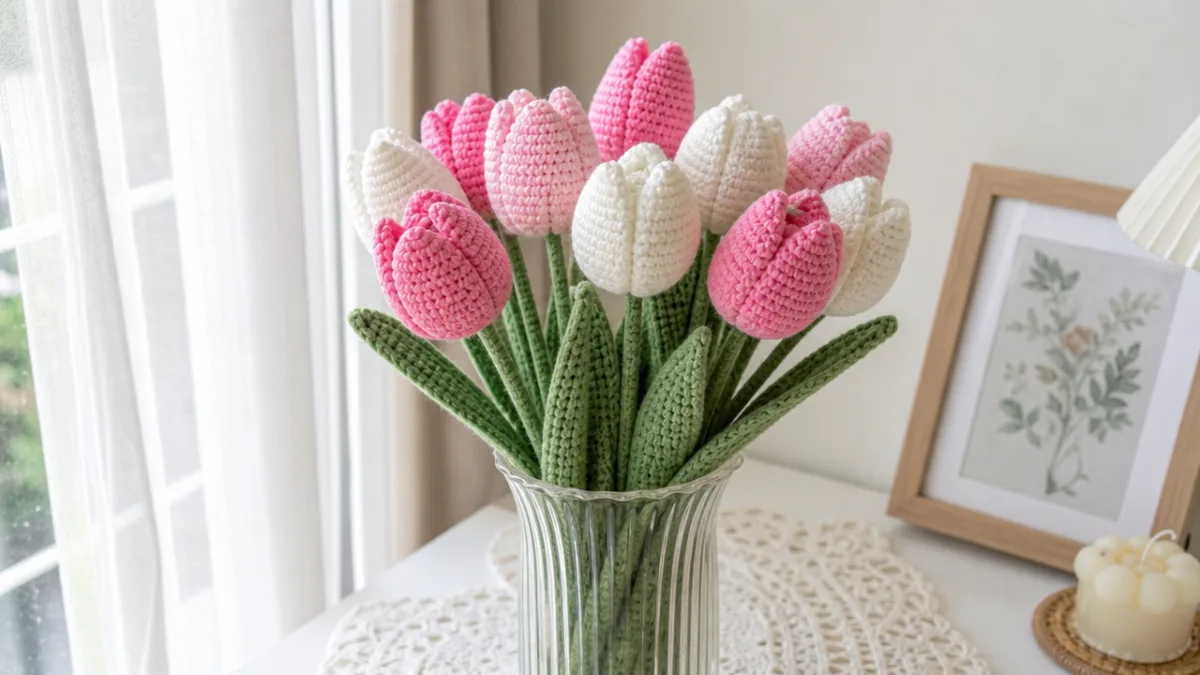
Few handmade gifts carry the same combination of elegance, practicality, and emotional resonance as a carefully crafted crochet tulip bouquet. Unlike consumable gifts that are used up or perishable gifts that fade, a nylon yarn bouquet is a permanent keepsake that the recipient can enjoy every day without any upkeep or water. This makes it an ideal gift for a wide range of occasions and for people who live in small spaces, travel frequently, or simply prefer low-maintenance home décor. The recipient can place it on a desk, a windowsill, or a bookshelf and enjoy a perpetual reminder of the thoughtfulness behind the gift.
For holiday gifting, crochet tulip bouquets can be customized in an almost limitless number of ways to suit the season, the occasion, and the individual recipient’s tastes and personality. A Christmas bouquet might feature deep red and white tulips accented with tiny crocheted holly leaves and a gold ribbon. A spring Easter arrangement could incorporate pastel yellows, lavenders, and soft pinks. For Mother’s Day, a classic arrangement in a recipient’s favorite colors, perhaps paired with a handmade card or a small crocheted gift tag, becomes a profoundly personal expression of love and appreciation that a generic store-bought item could never achieve.
Beyond holidays, crochet tulip bouquets make exceptional gifts for virtually any life event or milestone. Birthdays, weddings, housewarmings, graduations, get-well gestures, and teacher appreciation gifts are all occasions where a handcrafted bouquet strikes exactly the right note of care and creativity. Many crafters have built small businesses around custom crochet flower orders, offering personalized bouquets in specific color schemes to match a wedding party’s palette, or creating commemorative arrangements that incorporate flowers significant to a couple’s relationship story. The versatility and personalization potential of the handcrafted crochet tulip bouquet is truly one of its greatest strengths as a gift item.
- Mother’s Day: A full bouquet in the recipient’s favorite colors with a heartfelt handmade card
- Weddings: Custom arrangements matched to the bridal party’s color palette for lasting floral décor
- Christmas: Red and white tulips with seasonal accents like holly leaves or tiny crocheted ornaments
- Birthdays: Personalized with the recipient’s birth month flower colors or their favorite hues
- Graduations: School colors incorporated into a bouquet for a memorable, meaningful keepsake
- Housewarmings: A permanent floral arrangement that never needs watering, perfect for any new home
Tips for Selling and Sharing Your Crochet Tulip Creations
For crafters who have mastered the art of the crochet tulip bouquet and are ready to share their work with a wider audience, the opportunities for selling and showcasing these pieces have never been more abundant. Online marketplace platforms such as Etsy have become the go-to destination for handmade goods, and beautifully photographed crochet flower bouquets consistently perform well there, attracting buyers from around the world who are seeking unique, high-quality alternatives to mass-produced gifts and décor. Setting up a shop requires relatively modest investment, and the profit margins on nylon yarn bouquets can be quite favorable given their low material costs relative to the prices discerning buyers are willing to pay for quality handcraft work.
Photography is arguably the most critical factor in successfully selling crochet tulip bouquets online. Since customers cannot touch or examine pieces in person, the quality of your product images must do all the work of conveying texture, color accuracy, scale, and the overall beauty of your work. Investing time in learning basic product photography techniques — including the use of natural light, neutral backgrounds, multiple angles, and close-up detail shots — will pay enormous dividends in terms of click-through rates, customer confidence, and ultimately sales. Pinterest in particular is a powerful discovery platform for handmade goods, and a single beautifully composed image of a crochet tulip bouquet can drive thousands of visitors to a shop or portfolio over time.
Beyond selling finished pieces, many experienced crochet artists have found success in offering patterns, tutorials, and craft supply kits related to their tulip bouquet designs. A well-written and clearly illustrated crochet pattern for a nylon tulip bouquet can generate passive income for years after it is first published, as other crafters purchase and share it within their communities. Bundling nylon yarn in carefully curated color sets along with floral wire, hooks, and step-by-step instructions as a complete craft kit adds another revenue stream and makes the project accessible to beginners who might feel overwhelmed sourcing materials independently. Teaching in-person or online workshops is yet another avenue for sharing expertise while building a community around this beautiful craft.
Caring for and Displaying Your Crochet Tulip Bouquet
One of the most compelling advantages of a nylon crochet tulip bouquet is how little care it requires compared to real flowers, but a few simple maintenance habits will keep your arrangement looking its absolute best for many years to come. Dust is the primary adversary of any textile display piece, and gently removing accumulated dust with a soft brush, a light puff of canned air, or a very low setting on a hair dryer every few weeks will prevent buildup that can dull the vibrancy of the yarn’s colors and texture. Nylon yarn is also quite resilient to light cleaning with a barely damp cloth if more significant dirt or smudges need to be addressed.
When it comes to display, placement decisions can make a meaningful difference in how well a crochet tulip bouquet holds up over time. While nylon is more UV-resistant than many natural fibers, prolonged direct sunlight exposure can eventually cause some fading in intensely pigmented colors. Positioning your bouquet in a spot that receives bright ambient light rather than harsh direct sun will preserve its colors most effectively over the long term. Humidity and temperature extremes are generally not a concern with nylon yarn, making it suitable for display in most rooms of the home without special precautions.
For crafters who have created multiple bouquets or who need to store pieces not currently on display, proper storage practices will prevent crushing and distortion of petals and leaves. Placing bouquets in individual clear plastic bags or boxes, stored upright rather than laid flat, and kept away from heavy objects that could press down on delicate petals, will ensure they emerge from storage looking as lovely as when they were put away. With even minimal attention to these straightforward care guidelines, a well-made nylon crochet tulip bouquet will remain a treasured decorative piece and a testament to the enduring craft of handmade textile art for decades to come.








What do you think?
It is nice to know your opinion. Leave a comment.