










Creative Ideas on How to Recycle Wine Bottles
Why Recycling Wine Bottles Matters
Every year, billions of wine bottles are produced and consumed worldwide, and while glass can technically be recycled through your local curbside program, a surprising number of those bottles still wind up in landfills. Glass takes an almost unimaginably long time to break down — we’re talking over a million years — which makes finding creative ways to reuse it more worthwhile than most people stop to think about. When you choose to upcycle a wine bottle instead of tossing it, you’re making a small but real contribution to cutting down on waste and saving the energy it takes to manufacture new glass from scratch.
There’s also something genuinely satisfying about giving an old bottle a second life that has nothing to do with environmentalism. Wine bottles have a natural elegance to them — smooth curves, rich color, nice proportions — that makes them great raw material for home décor, garden projects, lighting, and kitchen accessories. Plenty of professional artisans and interior designers have caught on to this, and the results often look polished and intentional rather than craft-fair-y. These aren’t tchotchkes; they’re actual design objects that add real character to a space.
And getting started is a lot easier than you might think. You don’t need a workshop or a bunch of expensive tools. Most of the projects here call for basic supplies you can pick up at any hardware or craft store, plus a little patience and a willingness to experiment. Whether you’ve been doing DIY for years or you’re picking up a hot glue gun for the first time, wine bottle upcycling has something for you — from quick, simple projects you can finish in an afternoon to more involved builds that are genuinely challenging in a fun way.
Transforming Wine Bottles into Stunning Home Décor
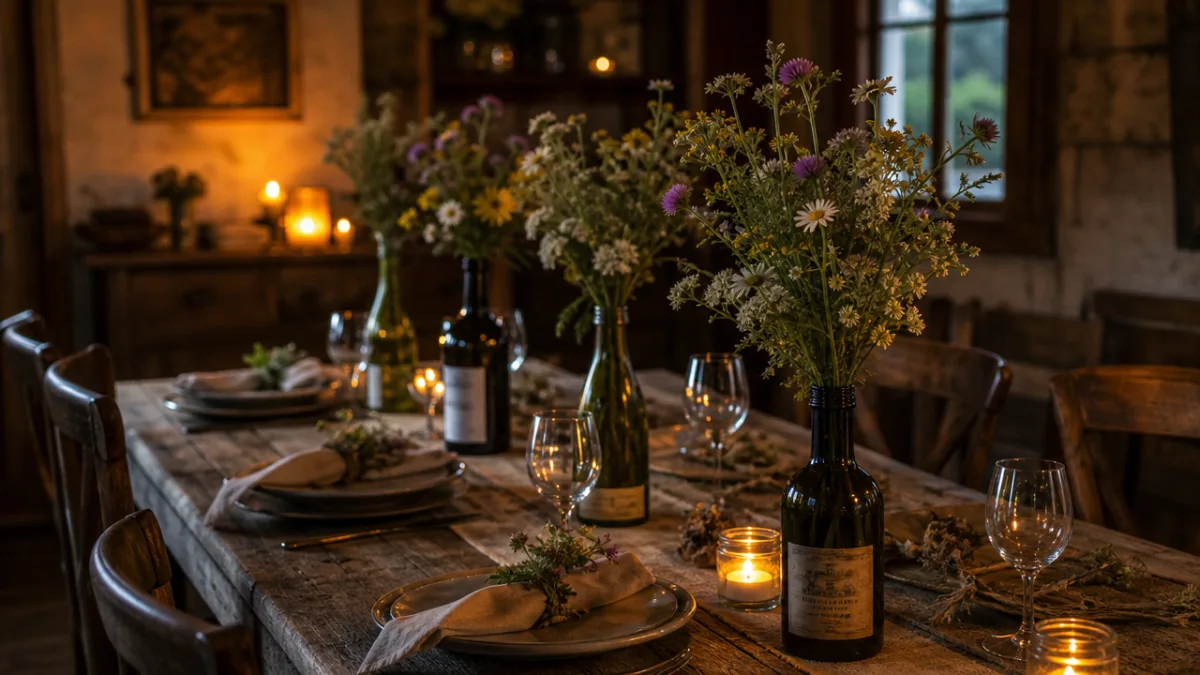
One of the easiest and most popular ways to reuse a wine bottle is to turn it into a vase or centerpiece. A clean, label-free bottle filled with fresh wildflowers, dried pampas grass, or even a single eucalyptus stem can hold its own as the focal point of a dining table or mantle. The deep green or amber glass that most wine bottles have gives off an earthy, organic vibe that works surprisingly well in both rustic farmhouse settings and sleek, modern ones. For a more intentional look, cluster a few bottles of different heights together — try painting some in matte white or chalk paint and leaving others as bare glass for contrast.
Fairy lights and wine bottles are a combination that DIY decorators have been obsessing over for good reason. Tuck a strand of battery-operated lights into the neck of an empty bottle and you’ve got a warm, glowing lantern that’s perfect for a bedside table, mantel, or patio. To take it up a notch, fill the bottle partway with sea glass, decorative stones, or water tinted with a few drops of food coloring before dropping the lights in. The effect is a soft, ambient glow that makes any corner of a room feel a little more intimate and thoughtful.
Wine bottles also work beautifully as candle holders with almost no effort. Let a pillar candle drip wax down the sides of a bottle for a dramatic, bohemian look that restaurants and wine bars have been pulling off for decades. Or just stick a taper candle directly into the bottle neck — the opening is usually just the right size to hold a standard taper snugly. Line up a few bottles with tapers of different heights on a wooden board or tray and you’ve got a centerpiece that looks effortlessly put-together for a dinner party or holiday table.
Wine Bottle Lighting Projects for Every Room
Pendant lamps made from wine bottles have become a signature look in industrial-chic and farmhouse-style interiors, and once you see a well-made one in person, it’s easy to understand why. The basic idea is to cut the bottom off the bottle cleanly (more on that below), thread an electrical cord and pendant socket through the neck, and install a bulb that shines down through the glass. The green, amber, and deep blue tones of wine bottles filter the light in a really lovely way, casting subtle color across nearby surfaces. A row of these above a kitchen island or home bar makes a statement that would cost a small fortune if you bought something similar from a lighting store.
If wiring things up isn’t your idea of a good time, solar-powered bottle lights are a genuinely great alternative. Small solar LED units designed to fit right inside a bottle are easy to find online and at craft stores. You set the solar cap on top of the bottle somewhere it’ll get sun during the day, and the light charges automatically and switches on at dusk — no wiring, no ongoing electricity costs. They’re ideal for garden paths, patio railings, fence posts, or outdoor dining areas, where they create exactly the kind of warm, lantern-like glow that makes an outdoor space feel magical in the evening.
If you’re ready for something more ambitious, wall sconces and clustered light installations are worth considering. A plank of wood or a piece of reclaimed barn wood can serve as a backing board for several bottles mounted at different angles using pipe flanges and fittings from a plumbing supply store. Wire them up with Edison bulbs — which have that warm, vintage-toned glow — and you’ve got a genuine statement piece for a living room, home bar, or restaurant wall. The combination of organic glass shapes and warm incandescent light creates a richness that’s really hard to replicate with anything mass-produced.
Garden and Outdoor Uses for Recycled Wine Bottles
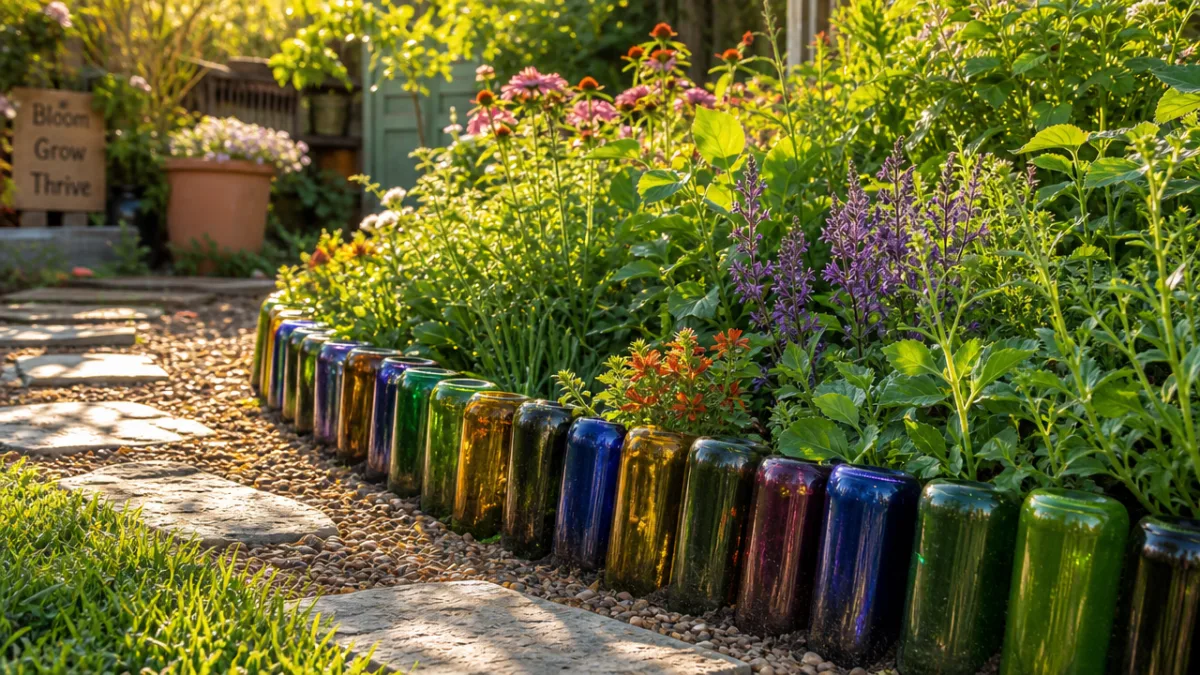
The garden might actually be the most natural home for repurposed wine bottles. They’re weather-resistant, they come in beautiful colors, and they’re practical in ways you might not expect. One of the simplest things you can do is use them as border edging for garden beds: bury bottles neck-down in a row along the edge, and you get a colorful, slightly wavy border that catches the light all day as the sun shifts. Mix and match bottle colors — the greens from white wine, deep purples and reds from specialty bottles, clear from some sparkling wines — and you can create patterns or gradients that look surprisingly intentional.
Wine bottles also make great self-watering plant stakes, which is a trick more gardeners should know about. Fill a clean bottle with water, put your thumb over the opening, flip it upside down, and push the neck a few inches into the soil near your plant’s roots. The water seeps out slowly as the soil dries, giving the plant a steady, gentle supply of moisture that can last for days. It’s a lifesaver when you’re traveling or when you hit a hot, dry stretch and the soil dries out faster than you can keep up. For container plants on balconies or patios, this can genuinely be the difference between a plant that thrives and one that doesn’t make it through the week.
For those who want to get a little more creative outdoors, wine bottle wind chimes and garden mobiles are a surprisingly beautiful option. Scoring and snapping bottles into rings or strips using a glass cutter lets you create individual glass pieces that can be hung from driftwood, copper pipe, or a repurposed wire hanger with fishing line or thin wire. When they catch a breeze, the sound is a soft, musical clink that’s totally different from traditional metal chimes — more delicate and a little ethereal. Add stained or painted glass pieces and the visual effect is just as good as the sound.
Kitchen and Entertaining Uses for Upcycled Bottles
Wine bottles have a lot of practical applications in the kitchen that go well beyond just looking nice on a shelf. A clean bottle with a pour spout — available at kitchen supply stores for just a few dollars — makes an excellent olive oil or vinegar dispenser. The dark glass actually does something useful here: it blocks UV light that can degrade sensitive oils over time, which clear glass containers don’t do. Stick a small chalkboard tag or a bit of washi tape and a marker on the side, and you’ve got something that looks great on the counter and actually works better than most store-bought oil bottles.
Wine bottles are also a wonderful vessel for homemade infused oils, flavored vinegars, and DIY liqueurs — all of which make incredibly thoughtful gifts. Fill a bottle with good olive oil, add some fresh rosemary sprigs, dried chilies, or whole garlic cloves, cork it, and let the flavors develop for two to four weeks. What you end up with is a gourmet product in an attractive bottle that looks like something from a specialty food shop, at a fraction of the cost. Dress it up with a custom label, a bit of raffia around the neck, or a handwritten tag, and you’ve got a gift people genuinely remember for housewarmings, holidays, or as a hostess thank-you.
When it comes to entertaining, wine bottles work beautifully as carafes for water, lemonade, or sangria on a summer table. A thoroughly rinsed and chilled bottle holds just enough for four to six glasses, which is a perfect amount for a dinner party. Soak the label off with warm water and a little cooking oil or adhesive remover, and the clean bottle becomes a quietly elegant, minimalist carafe that needs no decoration at all. Some people paint a simple pattern or initial on the bottle with glass paint for a personal touch — guests always seem to notice and ask about it, which makes for easy, charming conversation.
Learning the Basics: How to Cut and Prepare Wine Bottles
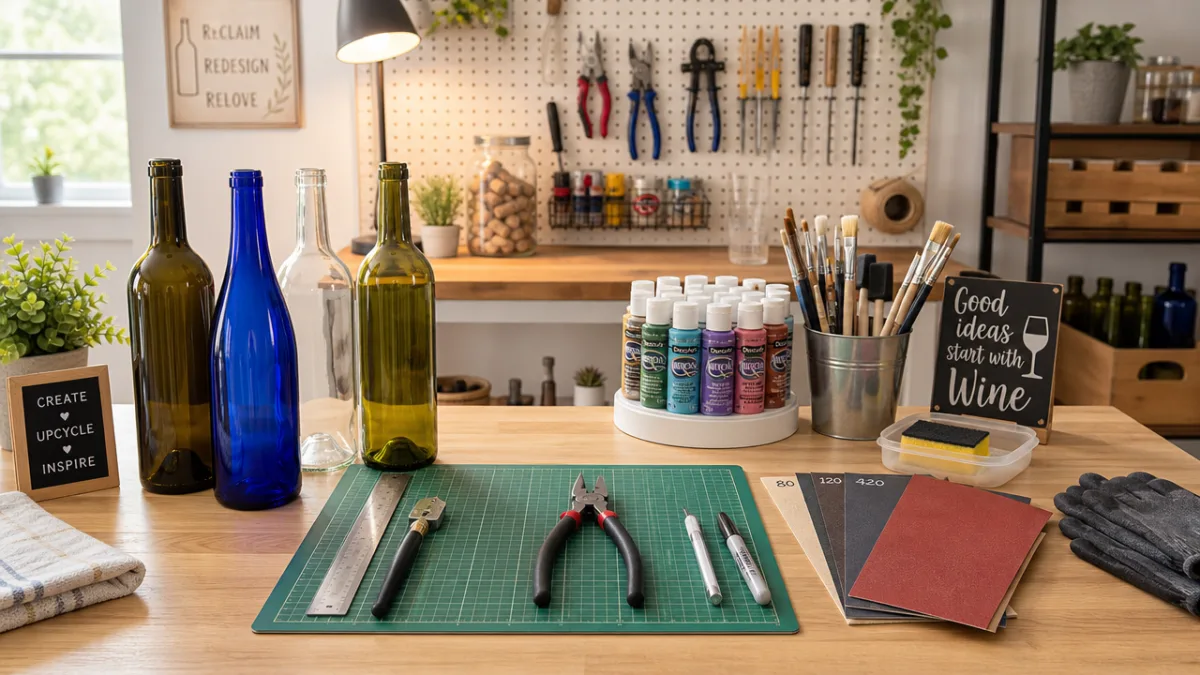
A lot of the more interesting wine bottle projects involve cutting the glass, and while that might sound intimidating at first, it’s genuinely a learnable skill that opens up a huge range of possibilities. The easiest method for home crafters uses a glass bottle cutter — a simple, inexpensive tool (usually $10 to $30) that scores a clean line all the way around the bottle. Once you have your score line, you run hot water over it, then immediately follow with cold water, and the alternating expansion and contraction causes the glass to snap cleanly along the stress line. It takes a little practice, but once it clicks, it really works.
Safety matters a lot when you’re working with glass, and a few basic precautions go a long way. Wear safety glasses and work gloves whenever you’re scoring or snapping bottles, and keep kids and pets out of the area while you work. Once you’ve made a cut, the raw edge will be very sharp and needs to be sanded smooth — start with around 80-grit wet-dry sandpaper and work your way up through 150, 220, and 400 grit until the edge feels smooth to the touch. This isn’t an optional finishing step; it’s a real safety necessity, and it also makes the finished piece look and feel much more professional.
Before you start any project, getting the bottle properly cleaned and prepped makes a real difference in the results. Soak bottles in warm water to loosen labels, then tackle any leftover adhesive with cooking oil, rubbing alcohol, or something like Goo Gone. Wash inside and out with hot soapy water, rinse well, and let the bottle dry completely before you start painting, filling, or doing anything else with it. For any project that involves food or drinks, a quick sanitizing rinse with diluted bleach solution followed by a thorough rinse with clean water gives you the peace of mind that the bottle is truly ready for its new purpose.
- Glass bottle cutter (available online or at craft stores for $10–$30)
- Wet-dry sandpaper in multiple grits (80, 150, 220, and 400)
- Safety glasses and cut-resistant work gloves
- Goo Gone or rubbing alcohol for label adhesive removal
- Glass paint or chalk paint for decorative finishing
- Mod Podge or clear sealant for protecting painted surfaces
- Battery-operated fairy lights for interior illumination projects
- Pendant lamp kits for electrical lighting projects
Inspiring Others and Building a Sustainable Habit
One of the nicest things about getting into wine bottle upcycling is how naturally it spreads. Once the people in your life see what you’ve been making, they start saving their bottles for you — and more often than not, they get curious enough to try something themselves. Hosting a casual craft night where everyone brings their empties and works on a project together is a genuinely great time, and the things you make carry a little extra meaning because of the occasion they’re attached to. It’s one of those rare activities that’s just as good for the social side of life as it is for the environmental side.
Communities of bottle-upcycling enthusiasts are thriving on Pinterest, Instagram, and YouTube, and they’re remarkably generous with what they share. Spending some time browsing before you start your first project is a smart move — you’ll get a realistic sense of what’s achievable, learn from mistakes other people have already made, and stumble onto techniques and ideas you wouldn’t have found in any single article. Some of the creators in these spaces have developed real expertise in things like glass cutting, mosaic work, kiln fusing, and detailed painting, and they share it in tutorials detailed enough to take you from total beginner to genuinely skilled with a reasonable amount of time and effort.
In the end, the whole thing is most worthwhile when it stops being a novelty and becomes a regular habit. Keep a box or crate somewhere accessible — the kitchen or garage works well — for collecting bottles as they come in, and check back on it when you’re looking for a weekend project or a gift idea that feels personal. Over time you’ll build up a set of go-to techniques, develop a sense for which bottle shapes and colors work best for what, and find a satisfying kind of continuity between enjoying a good bottle of wine and making something lasting and beautiful from what’s left. It’s hard to think of many habits that are as practical, creative, and easy on the planet all at once.








What do you think?
It is nice to know your opinion. Leave a comment.