










Bitterroot Secret Garden Tour: Discovering a Hidden Rural Paradise on a Montana Ranch
The Magic of Montana’s Bitterroot Valley
Nestled in the stunning Bitterroot Valley of western Montana, where the jagged peaks of the Bitterroot Mountain Range rise dramatically against an impossibly blue sky, lies one of the American West’s most unexpected horticultural treasures. The valley itself stretches roughly 100 miles from Missoula southward to the Idaho border, carved by the Bitterroot River and flanked by wilderness that feels simultaneously ancient and alive. It is here, amid working ranches and wide open spaces, that passionate gardeners have carved out something truly extraordinary — secret gardens that challenge every assumption about what can grow in a high-altitude, cold-climate landscape.
Montana gardening is not for the faint of heart. The Bitterroot Valley sits at elevations ranging from roughly 3,000 to 4,000 feet, and gardeners contend with short growing seasons, late spring frosts, early autumn freezes, and summer temperatures that can swing wildly between scorching afternoons and cool mountain nights. Average last frost dates can linger well into May, and the first killing frost of autumn may arrive before September has fully settled in. Yet despite these formidable challenges, dedicated plant enthusiasts have learned to work with the land rather than against it, creating gardens that feel lush, abundant, and deeply intentional.
The concept of a “secret garden” carries particular resonance in a landscape as vast and open as rural Montana. When you drive along a ranch road and suddenly encounter a gate leading to an explosion of color, texture, and fragrance, the contrast with the surrounding sagebrush and grassland feels almost theatrical. These are not gardens that announce themselves from the highway. They are discoveries, earned by curiosity and rewarded with beauty. The Bitterroot Secret Garden Tour, featured in Fine Gardening magazine, shines a spotlight on these hidden masterpieces and the remarkable individuals who tend them with such dedication and skill.
A Ranch Garden Born of Vision and Determination
The garden at the heart of the Fine Gardening feature began, as so many great gardens do, with a blank canvas and an audacious dream. When the property’s owners first arrived at their Montana ranch, they encountered the characteristic landscape of the Bitterroot: dry summers, clay-heavy soils in places, gravel and rock in others, and a wind that arrives from the mountains with little warning and even less mercy. Transforming such a site into a flourishing garden required not only horticultural knowledge but also an almost stubborn refusal to accept limitations that the land seemed eager to impose.
The design philosophy that emerged over years of trial, error, and hard-won experience centers on creating distinct garden rooms, each with its own character and mood, connected by pathways that invite exploration. This approach borrows from the great English garden traditions while adapting them to the realities of a high mountain climate. Hedges and walls create microclimates that shelter tender plants from the relentless wind. Raised beds improve drainage and soil warmth, extending the growing season by precious weeks on either end. Thoughtful plant selection prioritizes species and cultivars that can thrive under Montana’s particular brand of stress without sacrificing beauty or diversity.
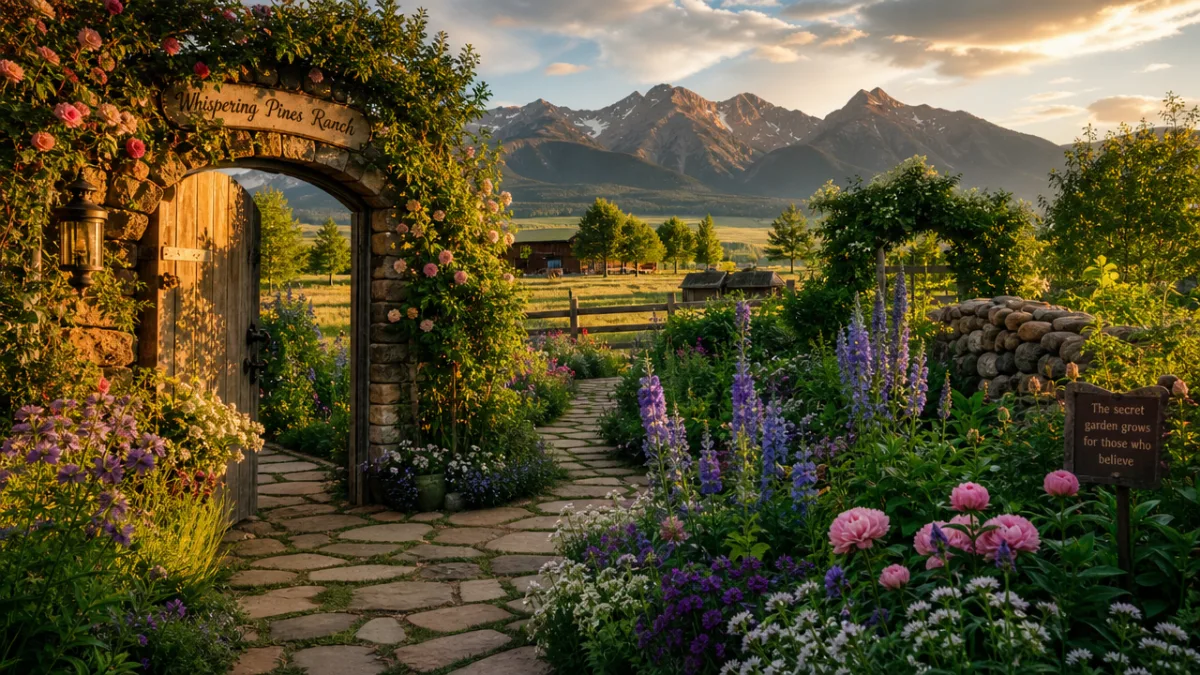
What distinguishes this garden from a simple collection of hardy plants is the evident attention to composition, proportion, and the relationship between plants and the broader landscape. The Bitterroot Mountains are never truly absent from the garden experience — they loom over every view, their snow-capped peaks serving as the ultimate backdrop. Rather than competing with this overwhelming scenery, the garden design embraces it, framing views of the peaks through archways and along sight lines, making the wilderness feel like a deliberate design element rather than a coincidental neighbor.
Plant Selection: Thriving Where Others Struggle
Choosing the right plants for a Montana ranch garden is an exercise in both research and humility. The gardener must become intimately familiar with USDA hardiness zones — most of the Bitterroot Valley falls in Zone 5 or Zone 6, though microclimates can shift that reality considerably — but hardiness ratings alone do not tell the full story. A plant rated hardy to Zone 4 may still fail in Montana if it cannot handle the extreme temperature fluctuations, the dry summers, or the particularly brutal combination of late-season cold and intense spring sun that can damage plants before they have fully emerged from dormancy.
The plant palette in Bitterroot secret gardens tends to favor tried-and-true perennials that have proven their resilience over seasons of observation. Among the reliable performers that appear again and again in successful Montana gardens are the following standouts that bring color, structure, and ecological value to the landscape:
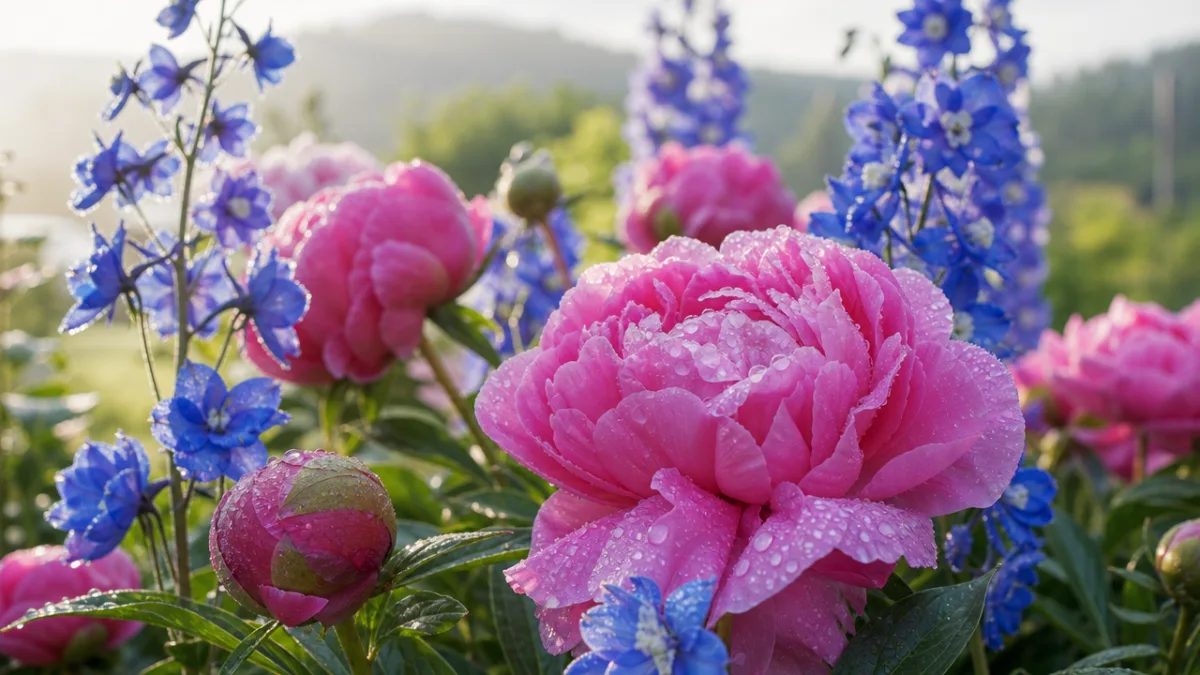
- Peonies — Perhaps the quintessential Montana garden flower, peonies thrive in cold climates and reward patient gardeners with spectacular blooms that feel almost miraculous against the rugged backdrop of ranch land and mountains.
- Delphiniums — Tall, stately, and breathtakingly blue, delphiniums seem made for the sky-meets-mountain aesthetic of the Bitterroot, requiring staking against the wind but offering unmatched vertical drama.
- Siberian Irises — More adaptable than their bearded cousins, Siberian irises handle wet spring soils and dry summer conditions with equal grace, producing elegant blooms in purples, blues, and whites.
- Yarrow (Achillea) — A Montana native at heart, yarrow spreads cheerfully, tolerates drought, and provides flat-topped flower clusters in gold, yellow, and pink that attract pollinators and dry beautifully for arrangements.
- Russian Sage (Perovskia) — With silvery stems and lavender-blue flower spikes, Russian sage offers months of interest, tolerates poor soils, and provides a misty, romantic quality that complements the mountain landscape perfectly.
- Hardy Geraniums (Cranesbills) — The workhorse of the perennial border, hardy geraniums fill gaps reliably, suppress weeds, and produce an endless supply of cheerful flowers in shades from white through pink to deep purple-blue.
Alongside these perennial stalwarts, successful Montana gardeners make generous use of annuals to fill the spaces left by early-finishing perennials and to sustain color and interest through the brief but glorious summer months. Zinnias, cosmos, and sweet alyssum all perform admirably, started indoors to maximize the short season and transplanted after the last frost has passed. Roses, long considered too tender for serious Montana gardening, have found their place in these gardens through careful selection of hardy varieties including the Canadian-bred Parkland and Explorer series, which can survive even the most brutal winters with minimal protection.
Garden Structure: Creating Rooms Within the Ranch Landscape
The architectural bones of a great garden are what separate a merely pretty collection of plants from a truly compelling landscape experience. In the Bitterroot secret gardens, structure comes from multiple sources: hardscaping elements like stone walls, gravel paths, and wooden arbors; living structural plants like shrubs, ornamental grasses, and clipped hedges; and the careful use of vertical elements that draw the eye upward and create a sense of enclosure within the vast openness of the Montana landscape. Getting this structure right is arguably more important in a setting like this than it would be in a more temperate climate, because without strong bones, a Montana garden risks looking sparse and exposed during the long shoulder seasons when perennials have not yet emerged or have already retreated underground.
Stone plays a particularly central role in Bitterroot garden design, and with good reason — Montana offers an abundance of beautiful rock, from the rounded river stones of the Bitterroot River to the flat-faced fieldstones that surface in agricultural fields and the rough-cut local limestone and granite that serves double duty as both building material and natural ornament. Stone walls provide not only physical barriers against wind but also thermal mass, absorbing heat during sunny days and releasing it slowly through cool nights, creating the kind of microclimatic warmth that allows marginally hardy plants to survive where they otherwise could not. Dry-stacked stone in particular has an informal, organic quality that feels entirely at home in a ranch setting.
Water features appear in many of the finest Bitterroot gardens, introduced not merely as decorative elements but as functional components of a thoughtfully designed landscape ecosystem. A small pond or recirculating fountain brings the sound of moving water into the garden, which provides a psychological counterpoint to the sometimes overwhelming silence and scale of the Montana wilderness. Water also attracts wildlife — birds, dragonflies, and beneficial insects that contribute to the garden’s health — and creates planting opportunities for moisture-loving species that would struggle elsewhere on the property. Even a modest water element can become the focal point around which an entire garden room organizes itself, providing the kind of visual anchor that draws visitors in and encourages them to slow down and truly experience the space.
The Challenges and Rewards of High-Altitude Gardening
Ask any Montana gardener about their greatest challenges and the answers come quickly, shaped by years of hard experience: the late frost that destroys emerging hostas in mid-May, the hailstorm that shreds a season’s worth of careful cultivation in twenty violent minutes, the summer drought that turns what should be peak season into a test of irrigation ingenuity and mulching discipline. High-altitude gardening in the Bitterroot Valley demands a philosophical resilience that goes beyond mere technical skill. The gardener who cannot accept loss, adapt their plans, and begin again with something approaching equanimity will not last long in this pursuit.
Yet these very challenges are part of what makes success in a Montana garden so deeply satisfying. When a garden thrives against the odds — when peonies bloom extravagantly in June, when the perennial border reaches its midsummer peak of perfection, when the sweet scent of old roses drifts across the evening air on a warm July night — the pleasure is amplified by the knowledge of everything that had to align for this moment to exist. Gardeners in more forgiving climates may take their achievements somewhat for granted. Montana gardeners rarely do. Every successful season feels like a collaboration between human effort and natural grace, a negotiation with forces that remain ultimately beyond control.
The rewards extend beyond the purely aesthetic. High-altitude gardens in Montana develop a distinctive ecological richness, attracting pollinator species including native bees, sphinx moths, and hummingbirds that pass through the valley on migration routes. A well-planted garden in the Bitterroot can become a genuine wildlife corridor, providing food and shelter for creatures that contribute to the health of the broader landscape. Many Montana gardeners find that embracing native plants alongside their ornamental choices — incorporating species like blanket flower, purple coneflower, and native penstemons — deepens this ecological connection and reduces the maintenance burden while adding authentic regional character to the planting palette.
Soil improvement is perhaps the single most consequential investment a Bitterroot gardener can make. The valley’s native soils range from the gravelly, fast-draining outwash of ancient glacial deposits to heavy clays that crack in summer and become waterlogged in spring snowmelt. Neither extreme is ideal for the broadest range of garden plants, and years of dedicated amendment — adding organic matter through compost, aged manure, and cover cropping — gradually transforms these challenging substrates into the kind of rich, balanced growing medium that makes the difference between struggling plants and flourishing ones. This soil-building work is never truly finished, but its cumulative effect over a decade or more of effort becomes unmistakably visible in the quality and vitality of the plants growing in it.
Seasonal Rhythms: A Garden That Evolves Through the Year
One of the most compelling aspects of a well-designed Bitterroot garden is the way it moves through the seasons with a choreography that feels both inevitable and endlessly surprising. Spring arrives tentatively in the Bitterroot Valley, often beginning with a few warm days in March that raise hopes, then retreating into snow and cold before finally committing to warmth sometime in May. The garden responds to these tentative advances with corresponding caution, sending up the earliest bulbs — snowdrops, early crocus, species tulips — as if testing the air before committing to full emergence. This spring awakening has a particular poignancy in a climate where winter is genuinely formidable, and gardeners find themselves watching the soil with an intensity that feels almost meditative.
Summer in the Bitterroot arrives decisively and departs too soon, compressed into the roughly four months between final frost and first freeze. During this period, the garden moves through a rapid succession of peak moments: the peony flush of late June, the mid-July explosion of delphiniums and roses, the late-summer richness of dahlias, rudbeckias, and ornamental grasses reaching their full height and volume. Experienced Montana gardeners plan their planting calendars to ensure that these moments overlap and succeed each other without significant gaps, creating what garden designers call “continuous color” — a standard that is achievable even in a challenging climate with sufficient planning and plant diversity.
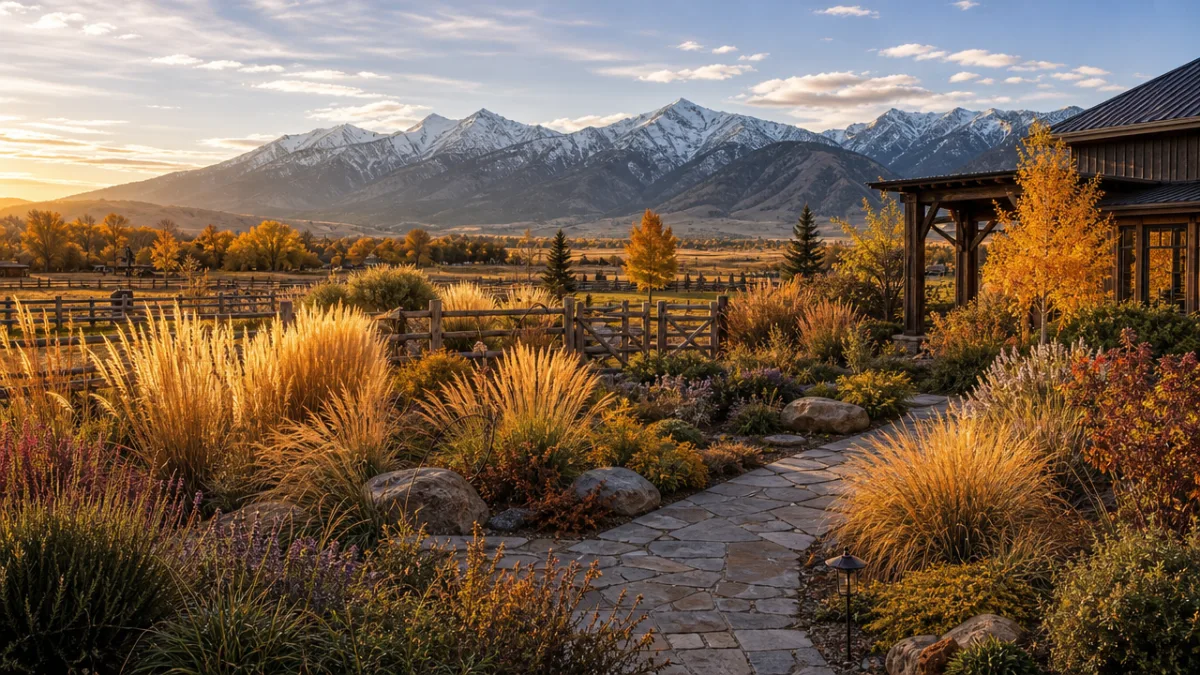
Autumn brings its own particular beauty to the Montana garden, and the wisest gardeners have learned to celebrate rather than mourn this transition. The ornamental grasses glow amber and gold in the slanting September light. Seed heads of coneflowers and rudbeckias provide architectural interest and food for migratory birds. The foliage of certain shrubs and trees — serviceberry, native spireas, mountain maples — turns colors that rival any New England display. By leaving much of the garden standing through the autumn rather than cutting everything back in a premature tidying impulse, thoughtful gardeners extend the season of visual interest and provide habitat value that carries genuine ecological benefit.
Winter in the Bitterroot demands that the garden be viewed differently — as a study in form, texture, and the quiet beauty of dormancy rather than as a failure of color and life. The best Montana gardens are designed with this winter reading in mind: evergreen shrubs and conifers hold their structure through the snow, dried grasses catch the light on sunny February afternoons, and the stone and wooden elements of the hardscape take on a stark clarity against the white background of snow. For the gardener, winter is the season of planning, of seed catalogs and notebooks, of reflecting on what worked and what failed and what new experiment might be worth attempting when spring finally comes around again.
Inspiration and Legacy: The Meaning of a Secret Garden
The gardens featured on the Bitterroot Secret Garden Tour represent something larger than individual horticultural achievement. They are expressions of a deep and abiding love for place — for the specific quality of light in a Montana valley, for the drama of weather moving across mountain ranges, for the particular mixture of wildness and cultivation that defines the ranching landscape of the American West. Creating and maintaining a garden in this setting is an act of sustained commitment that spans decades, requiring the gardener to develop relationships not only with their plants but with their soil, their climate, their watershed, and ultimately with the broader community of living things that share the landscape.
For visitors to these gardens, the experience often proves unexpectedly moving. There is something about encountering beauty in an unlikely place — about finding an exquisitely planted border or a fragrant rose garden tucked behind a weathered ranch fence — that seems to expand one’s sense of what is possible. These gardens challenge the assumption that fine horticulture belongs only in mild climates, that the limitations of a cold, dry, high-altitude landscape necessarily preclude beauty and abundance. They demonstrate, through years of accumulated evidence, that determined and knowledgeable gardeners can create something genuinely extraordinary almost anywhere, if they are willing to learn from both their successes and their inevitable failures.
The legacy of these Montana gardens extends forward through time as well as outward through community. Seeds saved and shared, divisions of beloved perennials passed to neighbors, knowledge exchanged at garden tours and plant swaps — all of these small transactions accumulate into a culture of gardening that strengthens the entire region. Young gardeners learn from those who have been at it for decades. Experienced growers find inspiration in the fresh approaches of newcomers. The knowledge of what grows and what doesn’t, of which varieties survive and which ones succumb, builds up in the collective memory of a gardening community in ways that serve everyone who participates.
Perhaps most profoundly, the Bitterroot secret gardens remind us of the essential human need to make beauty, to nurture living things, and to create spaces of order and abundance within a landscape that remains fundamentally wild and unpredictable. Montana is a place where nature’s scale and power are impossible to ignore, where the mountains and the weather and the vast open spaces assert themselves with an authority that puts human ambitions in perspective. A garden created within this landscape is not an attempt to conquer or subdue that wildness but rather a conversation with it — an ongoing negotiation between human vision and natural reality that, at its best, produces something neither could achieve alone.








What do you think?
It is nice to know your opinion. Leave a comment.