










Upcycled Plastic Bags Turned Into Tote Bags: The Art of Plarn Crochet
What Is Plarn and Why It’s Changing the Craft World
Plarn — a portmanteau of “plastic” and “yarn” — is one of the most innovative materials to emerge from the upcycling movement in recent years. Made by cutting plastic bags into strips and looping them together into a continuous strand, plarn transforms what would otherwise be landfill-bound waste into a surprisingly durable and workable crafting medium. The concept is elegantly simple: take something disposable, strip it of its single-use identity, and give it an entirely new purpose that can last for years. What makes plarn particularly compelling is that it requires no special tools, no expensive supplies, and virtually no prior crafting experience to begin making it at home.
The rise of plarn crochet has coincided with growing global awareness about plastic pollution. Every year, hundreds of billions of plastic bags are used and discarded worldwide, with only a small fraction being recycled through conventional means. Many municipalities lack the infrastructure to process soft plastics, meaning that even well-intentioned recycling efforts often result in these bags ending up in landfills or, worse, in natural waterways and ecosystems. Plarn offers individuals a tangible, hands-on way to intercept this waste stream before it becomes an environmental problem, turning personal consumption into an act of creative stewardship.
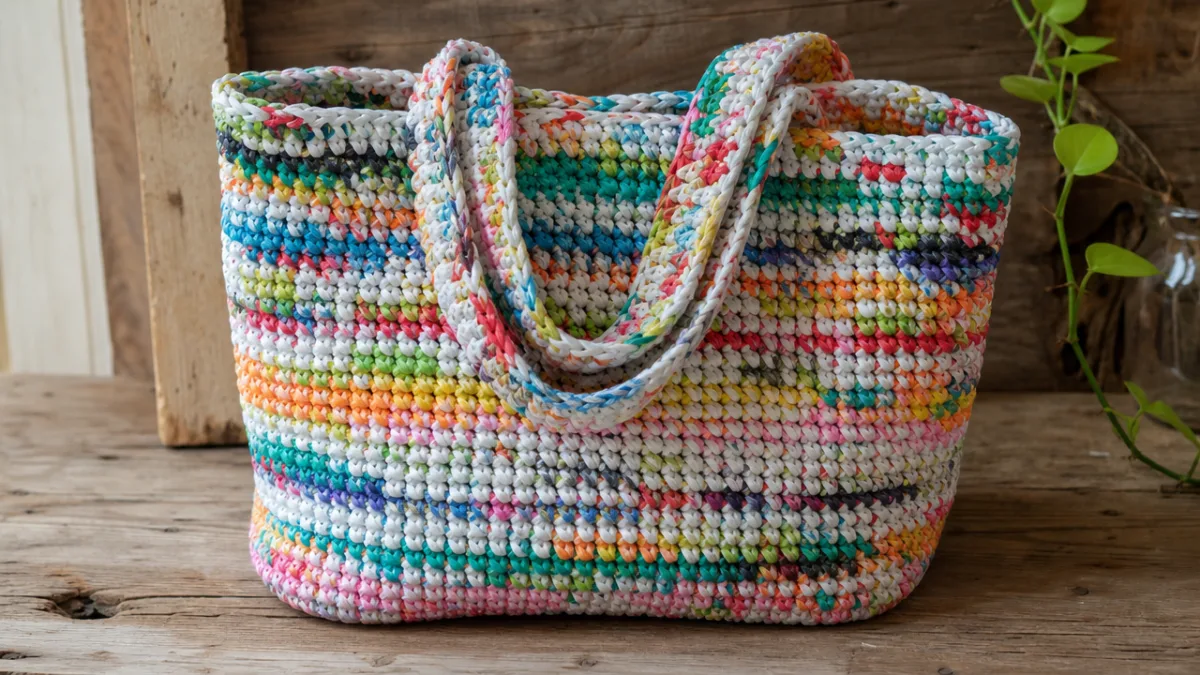
Crochet patterns specifically designed for plarn have become a vibrant niche within the wider crafting community. Designers on platforms like Etsy have developed structured, tested patterns that guide crafters through every step of the process, from preparing the plarn to finishing the final product. One standout example is the “Upcycled Plastic Bags, Turned Into Tote Bag” pattern by Grannie Annie, available in two sizes, which has garnered attention for its clarity, accessibility, and genuinely attractive finished results. This kind of thoughtfully designed pattern makes the difference between a frustrating first attempt and a genuinely satisfying crafting experience.
How to Make Plarn: Turning Plastic Bags Into a Workable Yarn
Making plarn is a meditative and satisfying process once you understand the basic technique. The most common method involves flattening a plastic bag, folding it lengthwise several times until it forms a narrow strip, and then cutting across it at regular intervals to create loops. These loops are then joined by threading one through another and pulling it tight, similar to making a chain of rubber bands. The width of your cuts determines the thickness of your plarn — wider cuts produce a thicker, sturdier strand, while narrower cuts yield something finer and more flexible. Most patterns will specify a recommended cut width to achieve the correct gauge.
The type of plastic bag you use matters more than many beginners realize. Standard grocery store bags, the thin translucent kind, are the most commonly used because they’re plentiful and easy to work with. However, thicker bags — from clothing retailers or specialty stores — produce a more robust plarn that holds its shape better in finished items. Many experienced plarn crafters collect bags over weeks or months before beginning a project, sorting them by color to create intentional striped or patterned designs in their finished pieces. The inherently random nature of bag collection means no two plarn projects are ever truly identical.
Preparing enough plarn for a full tote bag requires a significant number of bags, which is part of what makes the project so meaningful from an environmental perspective. A standard-sized tote bag might require anywhere from 50 to 150 grocery bags, depending on the pattern size and the thickness of the plastic being used. Rather than feeling daunting, many crafters find this aspect motivating — it transforms what might otherwise be a guilty accumulation of plastic into raw material with clear purpose. Once you begin seeing plastic bags as potential yarn rather than waste, it fundamentally changes your relationship with these ubiquitous objects.
Understanding the Grannie Annie Tote Bag Pattern
The Grannie Annie tote bag pattern stands out in the crowded field of plarn projects for several important reasons. First and foremost, it is designed for real-world usability. Unlike some novelty plarn projects that are more decorative than functional, this tote bag pattern produces a finished item that can genuinely bear weight, withstand regular use, and hold its structured shape over time. The pattern is available in two sizes — a standard everyday tote and a larger market-style bag — making it adaptable to different needs and use cases. Whether you need something compact for light errands or a spacious carry-all for grocery shopping, the pattern covers both scenarios with equal care and detail.
The pattern itself is written with clarity and accessibility in mind, making it suitable for crafters who are relatively new to crochet as well as those with more experience. It uses basic crochet stitches — primarily single crochet and slip stitch — which are among the first techniques any beginner learns. This deliberate choice keeps the learning curve manageable while still producing a professional-looking result. The instructions walk you through the construction of the base, the sides, and the handles in a logical sequence, with stitch counts provided at regular intervals so you can check your progress and catch any errors before they compound over many rows.
One of the most praised aspects of the Grannie Annie pattern is its attention to the structural challenges unique to plarn. Unlike yarn, plarn has no natural elasticity, which means that tension management and stitch consistency are especially important. The pattern addresses this directly, offering tips on maintaining even tension, choosing the right hook size for different plarn thicknesses, and finishing edges cleanly so the bag looks polished rather than homemade in the pejorative sense. These thoughtful inclusions reflect the experience of a designer who has actually worked extensively with the material and understands its quirks from the inside.
The Environmental Impact of Plarn Tote Bags
The environmental case for plarn tote bags is genuinely compelling, and it operates on multiple levels simultaneously. At the most immediate level, each bag you crochet removes dozens or even hundreds of single-use plastic bags from the waste stream. Because plarn tote bags are durable — lasting years with regular use — they also reduce the demand for future single-use bags each time they’re taken shopping. This dual effect, removing existing plastic waste while displacing future plastic consumption, gives plarn projects a leverage that most upcycling activities can’t match. It’s a rare situation where a craft project can claim both backward-looking remediation and forward-looking prevention.
From a material science perspective, plarn is also interesting because it creates a product that is more durable than the original plastic bags in their intended form. Woven or crocheted plastic has greater structural integrity than a single layer of thin polyethylene film. This means the plastic is effectively upgraded rather than merely repurposed — it becomes something that will remain in useful service rather than being discarded after one trip home from the supermarket. While the plarn tote bag will eventually wear out, it does so on a timescale measured in years rather than hours, which represents a dramatic improvement in the useful life of the material.
It’s worth acknowledging, however, that plarn tote bags are not without environmental complexity. Plastic, even when crocheted into a tote bag, does not biodegrade at the end of its life. When a plarn bag does finally wear out, it cannot be composted or easily recycled. This means plarn projects work best as part of a broader strategy that also includes reducing plastic consumption overall, rather than as a justification for continued plastic use. That said, for the plastic bags that already exist in homes and that would otherwise be discarded, plarn crochet represents one of the most genuinely creative and effective forms of diversion currently available to everyday people.
Getting Started: Tools, Tips, and First Steps
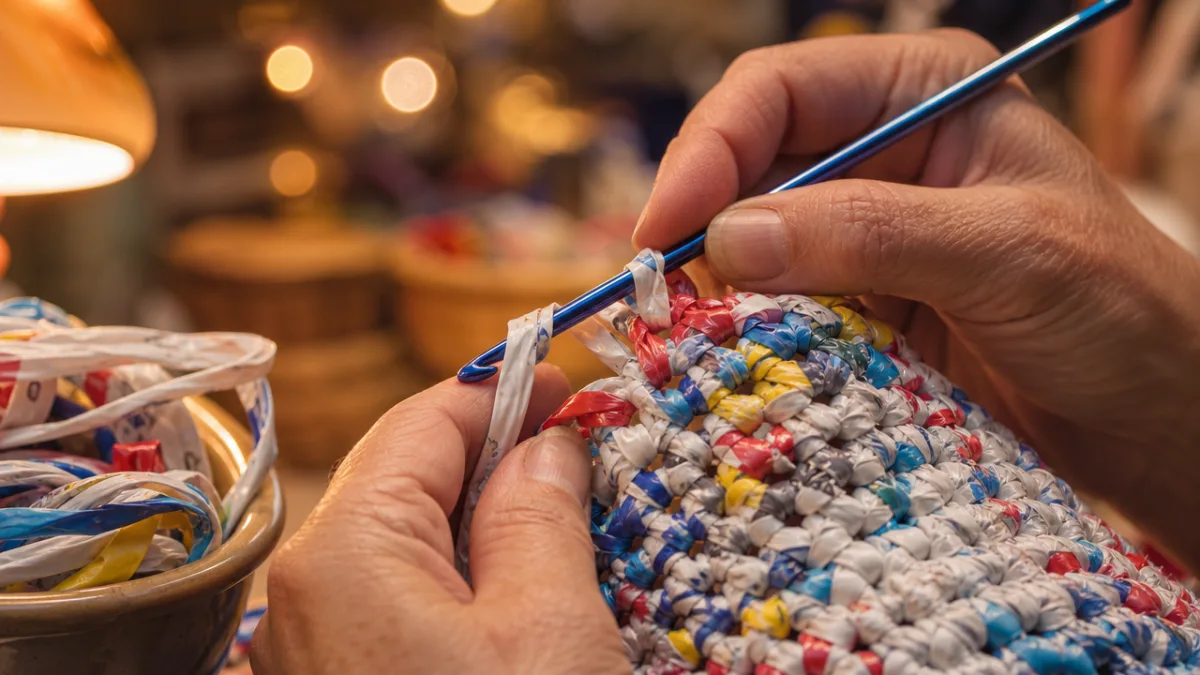
Beginning your first plarn tote bag project requires very little in the way of upfront investment, which is one of the craft’s most accessible qualities. The core tools you’ll need are a crochet hook in the appropriate size — typically somewhere between a 10mm and 15mm hook works well for standard grocery bag plarn — a pair of sharp scissors for cutting the bags consistently, and a surface on which to work comfortably. Many crafters find it helpful to prepare all their plarn before beginning to crochet, winding it into balls as they go so it feeds smoothly during the project. Having your plarn prepared in advance allows you to focus entirely on the crochet work without interruption.
Color planning is one of the most enjoyable aspects of plarn tote bag creation and deserves more attention than many tutorials give it. While natural-colored plarn from white or translucent bags produces an understated, almost neutral aesthetic, incorporating bags with printed graphics or solid colors opens up a wide range of design possibilities. You can create bold stripes by switching colors at regular row intervals, work in gradient sequences from light to dark, or even attempt simple geometric patterns with careful planning. Because plastic bags come in a surprisingly wide range of colors — from the deep reds of certain drugstore chains to the vivid yellows of hardware retailers — a dedicated collector can amass quite a varied palette over time.
When you’re ready to begin crocheting, working a small gauge swatch before starting the full pattern is strongly recommended, particularly when working with plarn for the first time. Plarn behaves differently than yarn in several important respects: it makes a distinct rustling sound as you work, it doesn’t grip the hook the way fiber does, and it requires a slightly firmer hand to maintain consistent tension. A practice swatch lets you get comfortable with these differences before you’re committed to a full project. It also helps you confirm that your hook size and plarn thickness will produce the correct gauge, ensuring your finished bag matches the intended dimensions of the pattern you’ve chosen.
- Collect at least 80–100 grocery bags before starting a standard-size tote to ensure you have enough material without running short mid-project.
- Sort bags by color before cutting to make it easier to plan striping sequences and avoid disruptive color changes at inconvenient points in the pattern.
- Use sharp fabric scissors rather than kitchen scissors for cleaner, more consistent cuts that produce even plarn strips.
- Wind plarn into balls as you make it, keeping each color separate and clearly identified for easy access during crocheting.
- Work in a well-lit space, as the sheen of plastic can make it harder to see your stitches clearly in dim conditions.
- Take breaks more frequently than you would with yarn projects, as the lack of give in plarn can create more tension in your hands and wrists over extended sessions.
The Broader World of Upcycled Crochet and Crafting Communities
Plarn tote bags are just one corner of a much larger and remarkably vibrant movement dedicated to upcycled crochet. Crafters around the world have developed techniques for working with everything from old t-shirts cut into “t-yarn,” to strips of denim, to even paper bags processed into workable fiber. What unites these different streams is a shared philosophy: that material value is often discarded prematurely, and that skilled hands can extend the useful life of everyday objects far beyond what their original designers intended. This philosophy is both deeply practical and quietly radical, challenging consumer assumptions about disposability and value at the most personal, hands-on level.
Online communities have played an enormous role in the growth and refinement of plarn crochet. Platforms like Pinterest, Ravelry, Instagram, and various dedicated Facebook groups have allowed crafters to share their finished projects, exchange tips on technique, and support each other through the challenges of working with unfamiliar materials. Pattern designers like Grannie Annie have found natural homes on Etsy, where their carefully developed instructions reach a global audience of crafters who might never have encountered plarn otherwise. This distributed, peer-to-peer transmission of craft knowledge means that skills and innovations spread quickly across geographic and cultural boundaries, enriching the practice for everyone involved.
Perhaps most importantly, the plarn crochet community tends to be notably welcoming and supportive of newcomers. Because the raw material is free — it comes from bags that would otherwise be thrown away — there is none of the gatekeeping that sometimes characterizes crafting communities where expensive materials or specialized equipment are involved. Anyone can participate regardless of budget, and the environmental motivation provides a sense of shared purpose that goes beyond the craft itself. Making a plarn tote bag is never just about making a bag; it’s about participating in a collective act of creative resistance against a culture of disposability, one plastic bag at a time.
- Start with the Grannie Annie pattern’s smaller size to build confidence before attempting the larger market tote.
- Join a plarn or upcycled crochet group online to find encouragement, tips, and inspiration from experienced crafters.
- Share your finished projects on social media using relevant hashtags to connect with the wider community and inspire others to try plarn.
- Once comfortable with the basic tote, experiment with other plarn projects such as market bags, bath mats, or even outdoor furniture covers.
- Consider donating completed plarn bags to food banks or community organizations, many of which welcome sturdy, reusable bags for clients.
Why Plarn Tote Bags Make Meaningful Gifts and Community Projects
A handmade plarn tote bag carries a depth of meaning that few other gifts can match. It represents not just the hours of crochet work involved in its creation, but also the planning, the material collection, the environmental intention, and the skill development that preceded it. Recipients who understand what they’re holding — a bag made entirely from what would have been discarded plastic — often find it more remarkable and touching than something purchased from a store. The story of the object is embedded in its material, and that story is one of creativity, care, and a genuine commitment to reducing environmental harm. In a gift landscape increasingly saturated with mass-produced objects, a plarn tote bag stands meaningfully apart.
Schools, community centers, libraries, and environmental organizations have begun to recognize plarn crochet as an excellent group activity with both educational and practical outcomes. A plarn workshop can simultaneously teach basic crochet skills, introduce participants to concepts of upcycling and the circular economy, and produce tangible items that benefit the community — all in a single session. The relatively low cost and the universal availability of the raw material make it possible to run such workshops with minimal budget, while the hands-on, tactile nature of the craft makes it engaging for participants across a wide age range. For environmental educators in particular, plarn projects offer a rare opportunity to make abstract concepts about plastic pollution concrete and personally relevant.
The practice of gifting or donating plarn tote bags also connects to a longer tradition of craft as community care. Throughout history, knitting and crochet circles have produced practical items — blankets, socks, hats — for those in need, combining social connection with purposeful making. Plarn tote bags fit naturally into this tradition. Food banks, homeless shelters, refugee assistance organizations, and similar groups often have genuine practical use for sturdy, reusable bags, and a donation of handmade plarn totes carries with it the additional dimension of environmental responsibility. Making these bags becomes an act that simultaneously addresses multiple forms of need: the need for practical goods, the need to reduce plastic waste, and the deeply human need to contribute meaningfully to something larger than oneself.








What do you think?
It is nice to know your opinion. Leave a comment.