










The Art of the Crochet Wedding Ring Pillow: A Complete Guide to Luxury Lace Cushions
Introduction to Wedding Ring Pillows and Their Timeless Significance
The wedding ring pillow is one of the most cherished accessories in any ceremony, serving as the ceremonial resting place for the rings that will bind two people together for life. Far from being a mere functional prop, a beautifully crafted ring pillow becomes an heirloom — a tangible piece of the wedding day that can be passed down through generations. Among all the styles available, the handcrafted crochet ring pillow stands in a category entirely its own, blending the artistry of fine lacework with deeply personal symbolism.
Crochet wedding ring pillows have experienced a remarkable renaissance in recent years, as modern couples increasingly seek alternatives to mass-produced wedding accessories. There is something profoundly meaningful about choosing a handmade item for such an important moment. When that item is crafted from fine cotton lace yarn and features the couple’s own initials worked into the design, it transcends decoration and becomes a piece of wearable — or displayable — art that tells a story unique to one love story.
This guide explores every dimension of the luxury lace crochet ring pillow, from understanding the materials and techniques involved to appreciating why a downloadable PDF crochet pattern gives crafters of all skill levels the opportunity to create something truly extraordinary. Whether you are a seasoned crocheter preparing a gift or a bride-to-be hoping to add a handmade touch to your ceremony, this comprehensive resource will illuminate every aspect of this wonderful craft tradition.
Understanding the Design: Luxury Lace Meets Personalized Elegance
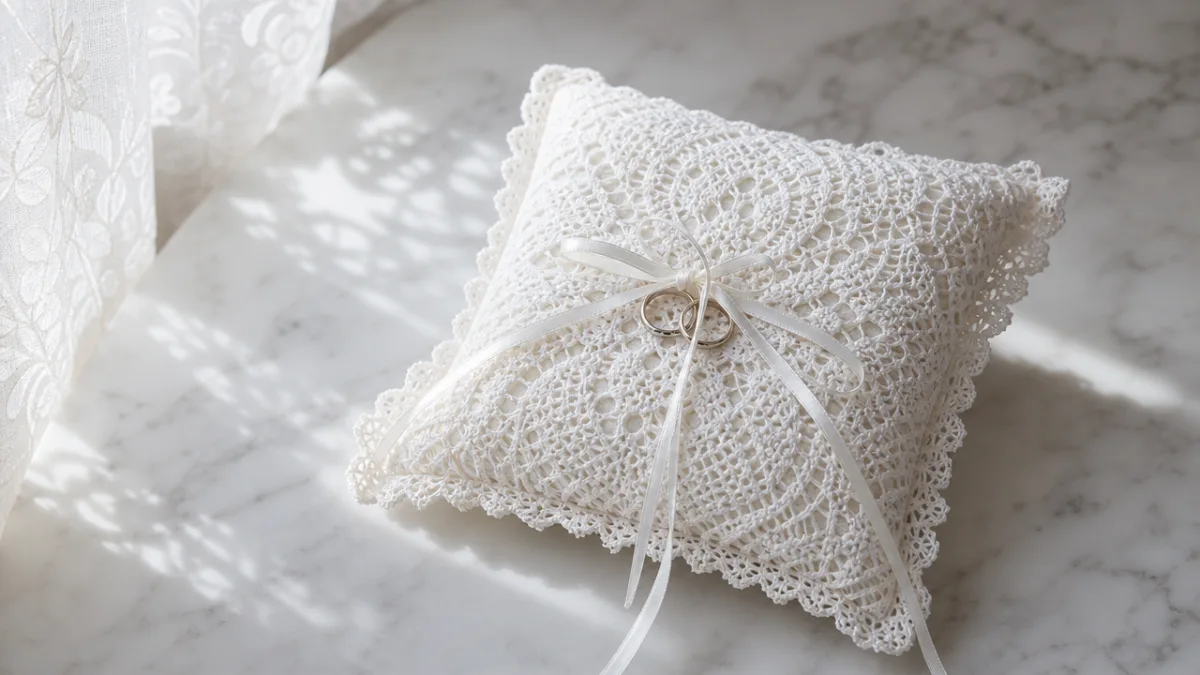
The design philosophy behind a luxury lace crochet wedding ring pillow centers on the marriage of delicate beauty and practical form. At approximately 18 by 15 centimeters, the pillow is the perfect size to cradle two rings comfortably while remaining compact enough for a small ring bearer to carry with confidence. This carefully considered sizing is no accident — it reflects generations of experience with what works in a real ceremony setting, ensuring the pillow is neither so large it becomes unwieldy nor so small that it looks insignificant.
What elevates this particular design above a standard ring pillow is the inclusion of personalized initials worked directly into the lace pattern. Rather than being embroidered or applied as an afterthought, the initials become an integral part of the crocheted fabric itself. This level of personalization requires thoughtful pattern engineering, where letter forms must be adapted to the inherent grid-like structure of crochet stitches while maintaining both legibility and aesthetic grace. The result is a monogrammed cushion that feels genuinely bespoke rather than merely customized.
The dual function of this cushion as both a wedding ring pillow and a pot pourri pouch adds another layer of thoughtful design. Once the ceremony is over, the pillow can be filled with dried lavender, rose petals, or any fragrant botanicals the owner prefers, transforming it from a ceremonial prop into an everyday luxury item. This ingenuity ensures the piece never sits forgotten in a box but continues to bring beauty and fragrance to a bedroom, wardrobe, or keepsake chest for years to come.
The Role of Cotton No. 20 in Achieving Fine Lace Quality
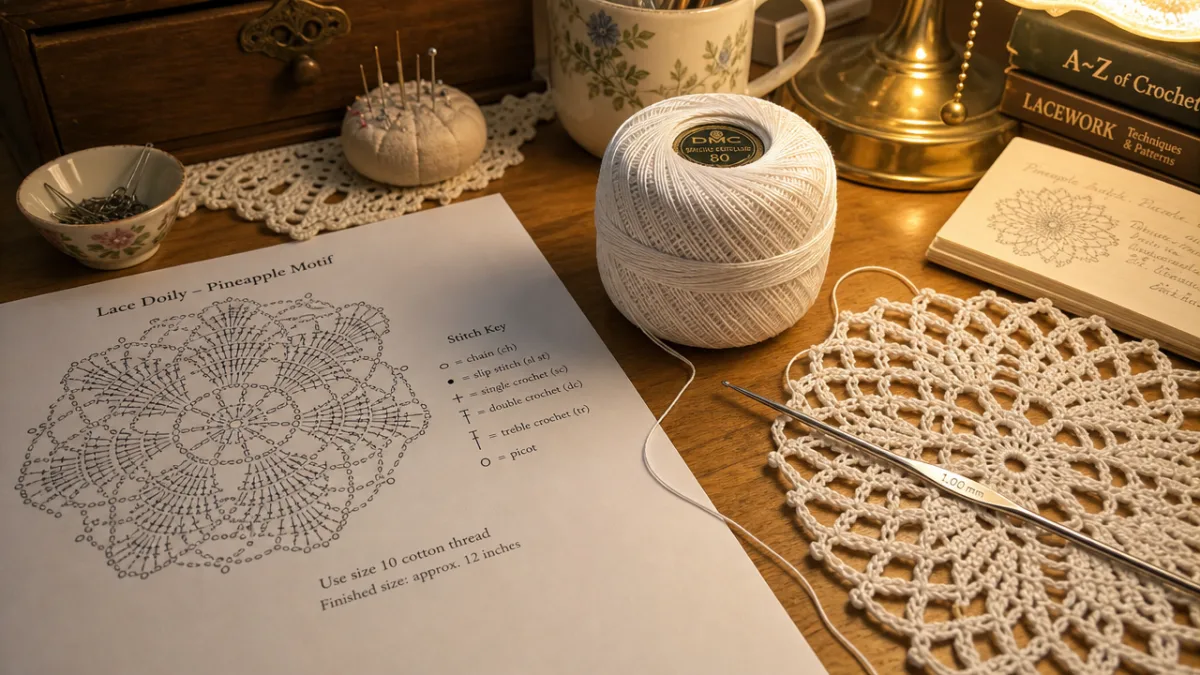
The choice of yarn is perhaps the single most important decision in any crochet project, and for a wedding ring pillow of this caliber, cotton no. 20 thread is the unequivocal standard bearer. Cotton crochet thread is categorized by weight, with lower numbers indicating thicker thread and higher numbers indicating finer, more delicate thread. At no. 20, the thread occupies a sweet spot — fine enough to produce genuinely lace-like fabric with intricate stitch definition, yet substantial enough to be manageable for an intermediate crocheter working with a fine steel hook.
One of the outstanding characteristics of cotton thread at this weight is its ability to hold a crisp, defined stitch. Unlike wool or acrylic yarns, which have a degree of elasticity and softness that can blur stitch definition, cotton has a smooth, firm hand that allows every loop, chain, and picot to stand cleanly apart. This crispness is essential in lace work, where the beauty of the pattern depends entirely on the clarity of the negative space — the holes and gaps that form the lacy motifs — contrasting with the solid areas of stitching.
For a wedding accessory, cotton offers additional practical advantages that are well worth considering. It is a natural fiber with excellent durability, meaning the finished pillow will not degrade or discolor over time the way some synthetic materials might. Cotton also takes blocking exceptionally well, a finishing technique where the damp piece is stretched and pinned to its final dimensions to set the lace open and flat. A properly blocked cotton lace pillow has an almost architectural precision that elevates even a competently worked piece into something that looks genuinely professional and bridal.
When selecting cotton no. 20 for this project, crafters should consider a few key factors to ensure the best possible result. White and ivory are the most traditional choices for a wedding pillow, but ecru — a warm, natural off-white — has become increasingly popular for its vintage, romantic appeal. Mercerized cotton, which has been treated to increase its sheen and color vibrancy, is often preferred for lace work because the slight luster it imparts gives the finished piece a subtle glow that catches the light beautifully during a ceremony.
Reading and Working from a Downloadable PDF Crochet Pattern
The advent of the downloadable PDF pattern has genuinely transformed the crafting world, democratizing access to high-quality designs from talented makers all over the globe. A well-constructed PDF crochet pattern for a project of this complexity should be a comprehensive document, providing not just the stitch instructions but everything a maker needs to understand the project before they even pick up a hook. This includes a clear materials list, gauge information, stitch abbreviations, and ideally some explanatory notes about the construction logic of the piece.
For a pattern that includes personalized initials, the PDF should provide either a full alphabet chart or at minimum the specific letters needed, rendered as crochet-readable grids where each square represents a stitch. Some designers include multiple size options for the lettering, allowing the crocheter to choose a scale that suits their preferred working style or the size of the finished piece. Understanding how to read these charts — which are typically worked from the bottom right corner upward and read in alternating directions on each row — is a fundamental skill that any crocheter working on this project should review before beginning.
The downloadable format offers several significant advantages over printed patterns. The buyer receives the pattern immediately upon purchase, with no waiting for shipping. The file can be printed as many times as needed, allowing the crocheter to make working copies that can be annotated, highlighted, or physically marked as rows are completed without any risk of destroying the master copy. Many makers print multiple copies at different scales — a full-size working copy for the bench and a reduced overview copy that allows them to see the overall structure of the pattern while working on individual sections.
- Immediate access: Download the PDF instantly after purchase and begin planning your project right away, gathering materials while reviewing the instructions.
- Print multiple copies: Annotate your working copies freely, mark completed rows, and note any personal modifications without affecting the original file.
- Zoom and enlarge: Digital files allow you to zoom in on complex chart sections or print them at a larger scale, making intricate stitch diagrams far easier to follow.
- Searchable content: A well-formatted PDF allows you to search for specific terms — like a particular stitch abbreviation — saving time when you need a quick reference mid-project.
- Permanent library: Store the file in a digital crafting library and return to it years later for a second make, a gift, or a refresher on the techniques involved.
Before beginning any project from a new-to-you designer’s pattern, it is worth taking a few minutes to read through the entire document from start to finish without a hook in hand. This overview gives you the opportunity to identify any unfamiliar stitches or techniques you may need to research before you begin, note any materials you might need to source, and develop a mental map of how the finished pillow is constructed. Many experienced crafters describe this initial reading as one of the most valuable parts of the making process, as it prevents mid-project surprises and helps establish a clear vision of the finished object.
Step-by-Step Construction: From Foundation Chain to Finished Pillow
The construction of a crochet wedding ring pillow, while it may look dauntingly intricate to the uninitiated, follows a logical sequence that becomes progressively more satisfying with each completed section. Most lace ring pillow patterns begin with the creation of the two main panels — the front face, which carries the decorative lace motifs and the personalized initials, and the back panel, which may be worked in a simpler mesh or solid crochet to provide stability and a clean finish. Understanding this two-panel construction logic from the outset helps the maker approach the project with confidence.
The front panel is where the lion’s share of the artistry resides, and it is typically worked in a combination of filet crochet — a technique based on a regular grid of open and closed mesh squares — and additional decorative elements such as picots, shells, or floral motifs placed at the border or within the design. Filet crochet is the ideal vehicle for incorporating the couple’s initials because its grid structure translates letterforms naturally, with filled mesh squares forming the solid parts of each letter and open squares creating the lacy background. Working from a chart, the crocheter builds the design row by row, with each line of the chart corresponding to one row of stitches.
Once both panels are complete and have been blocked to their final dimensions, the finishing process begins. The two panels are joined — typically with a neat border worked in slip stitch or a decorative shell edging that simultaneously closes the seam and frames the pillow attractively. Most patterns leave one short edge partially open to allow the insertion of a small stuffed inner cushion or a sachet of pot pourri. Ribbon ties, worked in satin or organza, are then attached to the pillow surface so the rings can be secured for the ceremony without risk of rolling or falling.
The finishing details make an enormous difference to the perceived quality of the completed piece. Taking the time to weave in all yarn ends with a fine tapestry needle, ensuring the blocking is even and precise, and choosing ribbon and any decorative embellishments with the same care given to the crochet itself — these are the details that separate a finished object that looks handmade in the best sense of the word from one that merely looks homemade. For a piece destined for a wedding, these extra moments of care are an expression of love in their own right.
Gifting, Customization, and Preserving Your Wedding Ring Pillow as a Keepsake
A handcrafted lace wedding ring pillow is widely considered one of the most thoughtful and generous gifts a skilled crocheter can offer to a bride and groom. Unlike many wedding gifts that are practical but impersonal, a hand-worked piece represents dozens of hours of focused attention, skill, and care directed specifically toward celebrating the couple. When it also incorporates their initials — a detail that makes the piece uniquely theirs — the gift becomes something that no store could replicate and no amount of money alone could purchase.
Customization extends well beyond the initials. A thoughtful gift-maker might choose to work the pillow in ivory rather than white to complement a vintage-inspired wedding aesthetic, or select a cotton thread in a very pale blush or champagne tone to coordinate with the wedding’s color palette. The ribbon ties can be coordinated with bridesmaid dress colors, and the pot pourri filling can be chosen to include botanicals with personal significance — perhaps dried flowers from the bride’s family garden, or lavender from a meaningful location. Each of these choices layers additional meaning onto an already deeply personal object.
For brides making their own pillow as part of a broader collection of handmade wedding accessories, the ring pillow often becomes a centerpiece project that sets the tone for everything else. Many crafters find that working on a delicate, meaningful project like this becomes a form of meditative preparation in the weeks before the wedding — a chance to slow down, focus on something beautiful, and process the emotional significance of the occasion in a constructive and creative way. The finished pillow, completed with one’s own hands, carries that energy forward into the ceremony itself.
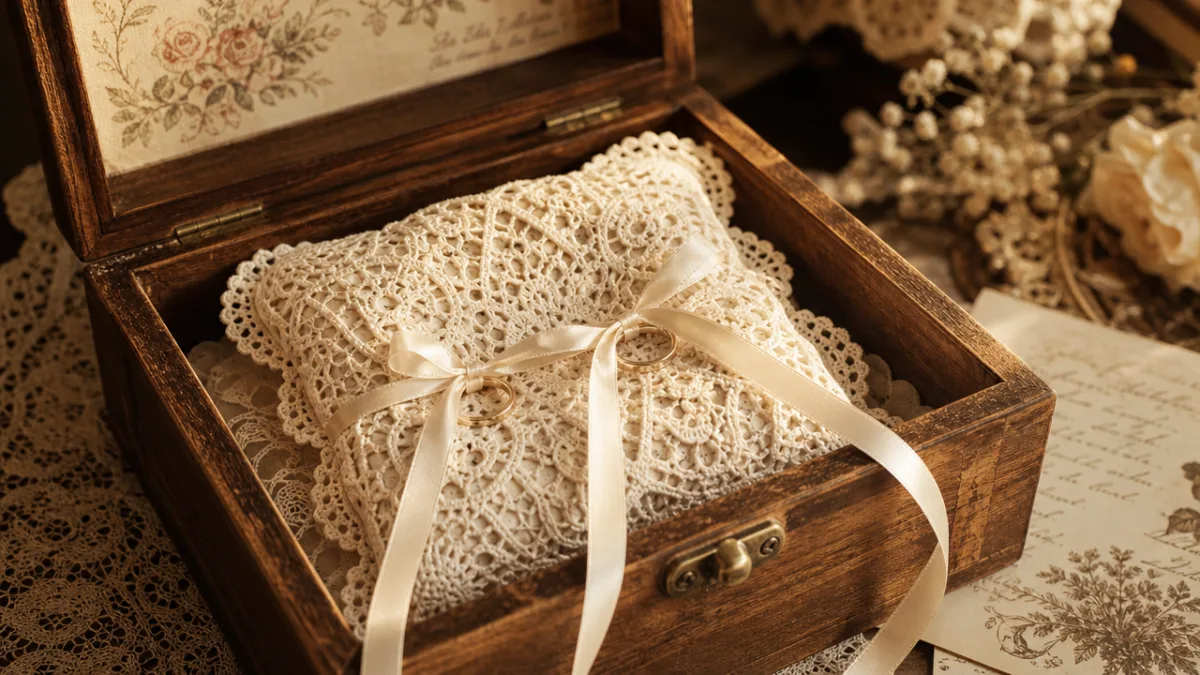
Preserving the wedding ring pillow as a long-term keepsake requires some consideration. Cotton lace, while durable, should be stored away from direct sunlight, which can yellow natural fibers over time. Acid-free tissue paper is ideal for wrapping the pillow for storage, and a clean cotton bag or archival box will protect it from dust and pests. With proper care, a well-made cotton lace crochet ring pillow can remain as beautiful decades after the wedding as it was on the day of the ceremony — a genuine heirloom piece that bridges past, present, and future.
Why Handmade Matters: The Value of Craft in Modern Weddings
In an era dominated by fast fashion, algorithmic trend cycles, and the convenience of one-click shopping, the deliberate choice of a handmade wedding accessory is a quietly radical act. It declares that the people involved in this union value time, skill, and human attention over speed and mass production. A crochet ring pillow made from a carefully researched PDF pattern, worked stitch by careful stitch in fine cotton thread, represents an investment of both resources and emotion that a factory-produced alternative simply cannot replicate, regardless of how refined its finish may appear.
The resurgence of interest in fiber arts among younger generations has reinvigorated the market for high-quality, thoughtfully designed craft patterns like this one. Platforms that connect independent designers directly with crafters have made it possible for small-scale makers with exceptional skill to share their work with a global audience, and buyers in turn have access to a remarkable diversity of designs that would never make it into a commercial retail catalog. The downloadable PDF wedding ring pillow pattern is a perfect example of this ecosystem at its best — a specialist, luxury design available to any skilled crocheter anywhere in the world.
There is also an environmental dimension to the handmade choice that aligns with the values of many contemporary couples. A single ring pillow made from natural cotton thread, worked by hand over several evenings, has an infinitely smaller environmental footprint than a factory-produced accessory manufactured overseas, packaged in plastic, and shipped halfway around the world. For couples who are thoughtful about their ecological impact, choosing handmade — or choosing to make themselves — is a value-aligned decision that extends the ethics of their everyday lives into one of the most significant days of their lives.
Ultimately, the luxury lace crochet wedding ring pillow represents everything that is best about the intersection of craft and ceremony. It is beautiful, personal, skillfully made, and imbued with meaning at every level — from the natural fibers it is worked in to the initials that make it uniquely theirs. Whether purchased as a finished piece from a skilled artisan, gifted by a talented friend, or made with one’s own hands from a carefully crafted PDF pattern, it is the kind of object that earns its place not just in a wedding ceremony but in a family’s story for generations to come.








What do you think?
It is nice to know your opinion. Leave a comment.