










14 Hidden Pet Bed Bedroom Ideas for a Clutter-Free Look
Why Hidden Pet Beds Are Transforming Modern Bedrooms
The way pet owners think about their living spaces has changed a lot over the past decade. There was a time when a bulky dog crate or a beat-up pet cushion shoved in the corner was just part of the deal — you loved your animals, so you accepted the visual chaos that came with them. But that’s no longer the case. Homeowners today want something better, and hidden pet beds are delivering exactly that: a way to make room for your furry family members without letting them take over the look of your carefully put-together bedroom.
Good interior design has always been about proving that a space can be both practical and beautiful — and hidden pet beds are a perfect example of that idea in action. When they’re done well, they stop being pet accessories and start being part of the room itself. Think built-in niches under the bed frame, a nightstand with a secret sleeping compartment, or custom cabinetry with a cozy little door cut into the side. These aren’t workarounds; they’re genuine design choices that say your pet belongs here just as much as anyone else does.
And the benefits go beyond looks. Dogs and cats are naturally drawn to den-like spaces — somewhere enclosed and sheltered where they feel safe. A tucked-away sleeping nook taps into that instinct in a way a cushion sitting out in the open never really can. A more settled pet tends to mean a more settled night’s sleep for everyone in the room. On top of that, a built-in pet bed is genuinely easier to keep clean than a freestanding one that slides around the floor and becomes a dust trap under the furniture.
Under-Bed Nooks: Making the Most of Unused Space
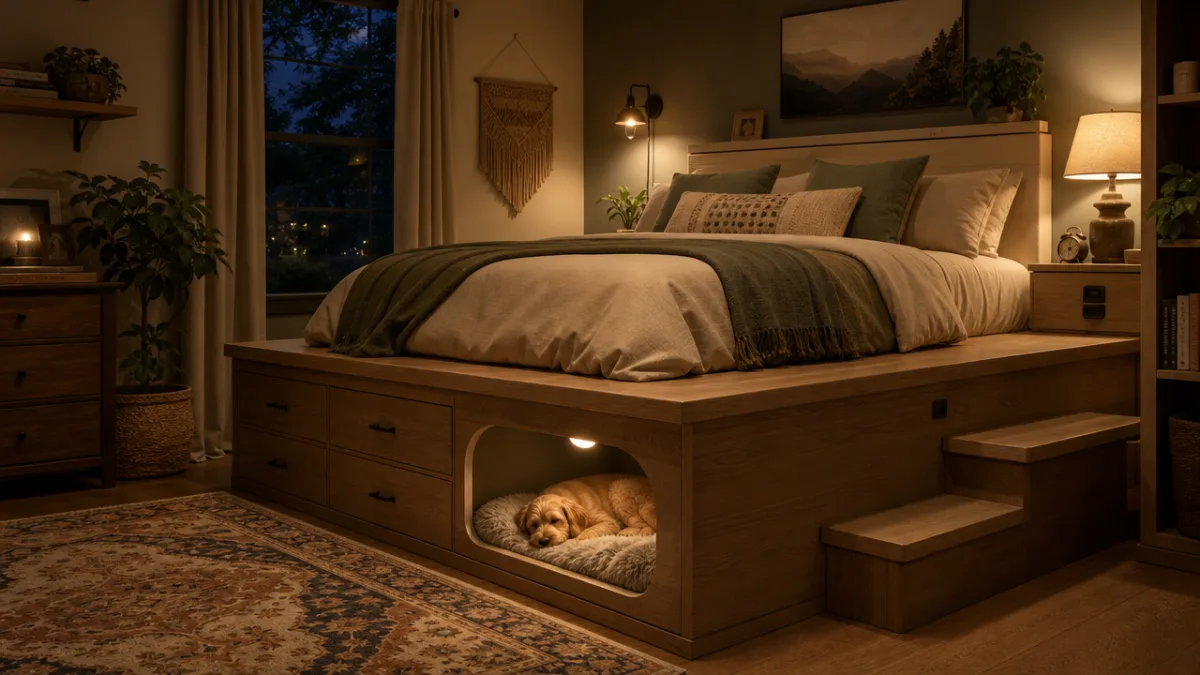
Honestly, the space under your bed might be the most wasted real estate in your entire home. Most of us treat it as a graveyard for storage bins we forget about and dust that quietly accumulates for years. But with a bit of creative thinking, it transforms into a genuinely cozy little hideaway for your pet. Raised platform beds with a framed opening cut into one side are probably the most popular way to do this — the entrance is clearly defined, the pet has a proper space of their own, and from across the room it just looks like a thoughtful design detail.
If you’d rather not commit to anything permanent, there are now quite a few furniture brands making purpose-built under-bed pet inserts that slide right beneath an existing frame. They come with a raised edge to keep your pet from drifting too far, a removable cushion you can throw in the wash, and some even have a small curtain or lattice panel across the front for a little extra privacy. It’s a particularly smart solution if you’re working with a smaller bedroom where you can’t afford to dedicate a separate corner to a pet bed.
The materials you choose make a bigger difference than you might expect. Matching the wood tone of the bed frame, or picking up the same fabric used on the headboard for the pet cushion, creates a sense of continuity that makes the whole thing look intentional rather than cobbled together. A small LED strip light tucked inside the nook is a nice touch too — it makes the space feel welcoming for your pet and adds a subtle glow that’s genuinely pretty to look at.
Furniture Conversions: Nightstands, Dressers, and Cabinets
There’s something deeply satisfying about taking a piece of furniture you already own and turning it into something that works twice as hard. A standard two-door nightstand is actually a fantastic candidate for this. Pull out the lower shelf, swap the cabinet door for a decorative lattice or a small framed opening, line the interior with a soft cushion, and you’ve got a hidden pet bed that sits right next to you at night. The top of the nightstand still holds your lamp and your book and your glass of water — nothing about its function changes, except now your pet has somewhere cozy to sleep just inches away.
Got a bigger dog? A tall dresser gives you a lot more to work with. Remove the bottom two drawers, frame out the opening, and you’ve created a sleeping compartment that’s actually roomy enough to be comfortable for a larger breed. The drawers above stay right where they are, so you’re not losing any storage — you’re just redirecting what that lower section does. It takes some basic carpentry know-how, but the end result looks like the piece was custom-built for the room, because in a real sense, it now is.
If DIY isn’t really your thing, there are plenty of ready-made options worth looking at. A growing number of brands have developed credenzas, media consoles, and wardrobe-style units that include a dedicated pet sleeping compartment as part of the design. The pet door is usually positioned at one end so it stays contained and easy to miss at a glance. The quality of these pieces has genuinely improved in recent years — ventilation panels, removable washable interiors, and durable finishes that hold up to real life with animals are becoming standard.
Built-In Bedroom Niches and Custom Carpentry Solutions
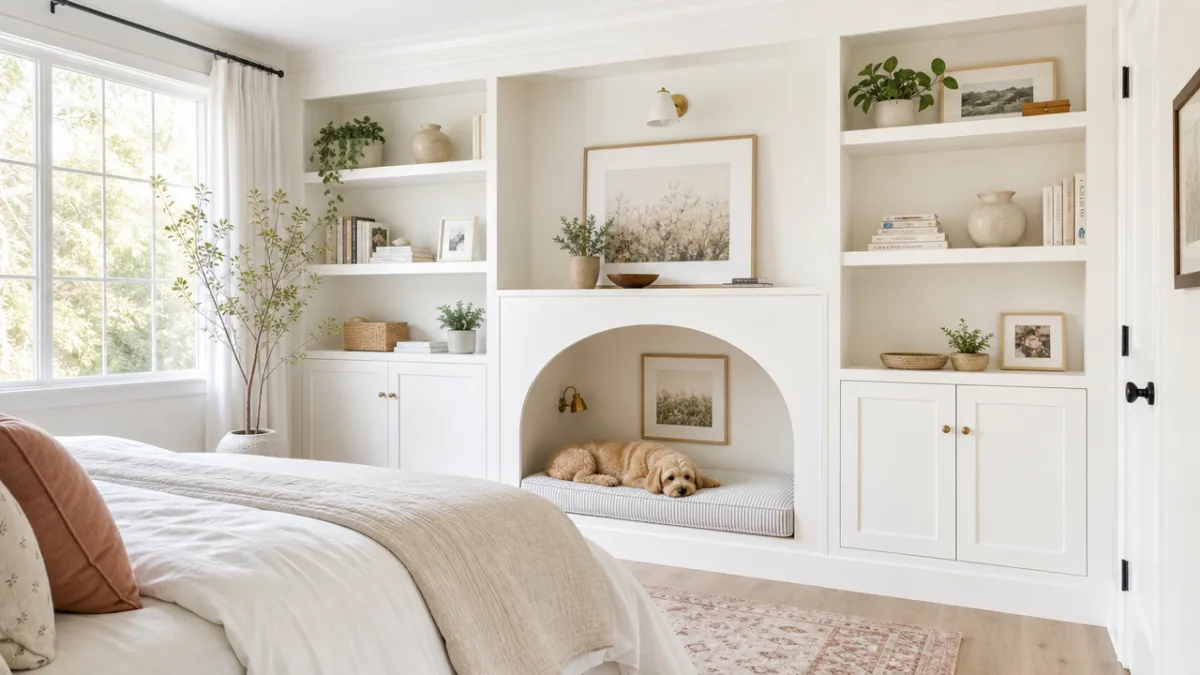
If you’re renovating or working with a contractor, a built-in niche is about as good as it gets when it comes to hidden pet beds. A recessed alcove carved into a wall, close to the floor and trimmed out to match the rest of the room, practically disappears into the architecture. From across the room you’d never know it was there — it just reads as part of the built-in storage that makes a well-designed bedroom feel so put-together. Walk up close, though, and there’s a perfectly proportioned little retreat waiting for your cat or small-to-medium-sized dog.
A window seat bench is another great starting point for a custom solution. These benches are already popular in bedroom renovations for the storage they offer and the cozy reading nook they create, and adding a pet compartment to one end requires relatively little extra material. A small arched or squared opening at the right height gives your pet their own entrance, and the cushion on top can be made to match your bedding or accent colors, tying the whole piece into the rest of the room seamlessly.
If you happen to have a walk-in closet right off the bedroom, that opens up yet another possibility. Carving out a section of the lower shelving and converting it into a sleeping area keeps your pet close at night without having them in the main bedroom at all. A pet door or a simple arched cutout at floor level lets the animal move freely between the two spaces. Cats especially tend to love this kind of arrangement — they get the coziness of an enclosed space and the security of being near you, which is basically the perfect combination for them.
Design Principles for Seamless Integration
The hidden pet beds that really work — the ones that make guests do a double take when they finally notice them — tend to share a few key principles. The biggest one is material consistency. When the pet sleeping area is painted the same color, stained the same tone, or upholstered in the same fabric as everything around it, it stops reading as a separate element and just becomes part of the room. It takes a little extra planning, but the difference it makes is significant. A bedroom where every detail feels coordinated has a quietness to it that’s good for both humans and animals.
Scale is something a lot of people underestimate. A nook that’s too big looks out of proportion and draws more attention than you want. One that’s too small is uncomfortable for your pet and will probably be ignored, which defeats the whole point. Before you commit to any dimensions, actually measure your pet — both stretched out and curled up. As a general rule, the opening should be just large enough for them to walk in and turn around comfortably. A snugger fit actually tends to feel better to animals, because it’s closer to the den-like security they instinctively seek.
It’s easy to get so focused on how the outside looks that you forget about what’s happening inside, but don’t make that mistake. Pets are genuinely particular about the comfort of their sleeping surface, and if it doesn’t feel right, they’ll just sleep somewhere else. A good-quality orthopedic foam cushion in a washable, pet-friendly cover is your starting point. Tuck in a familiar blanket or an old piece of clothing that smells like you, especially when you’re first introducing them to the space — it helps a lot. And make sure there’s adequate airflow in any enclosed compartment, whether through small drilled holes or a lattice panel on one face.
Style Inspirations: From Minimalist to Rustic Farmhouse
One of the things that makes hidden pet beds so appealing is how well they adapt to different design styles. In a minimalist bedroom — clean lines, neutral palette, nothing out of place — a pet nook cut into a white-painted built-in with a simple square opening fits right in without creating any visual noise. The opening becomes just another quiet geometric detail in a room that’s all about visual order. Match the cushion fabric to the throw pillows on the bed and the connection between the two sleeping areas feels completely natural.
Rustic farmhouse bedrooms are a completely different world, and the hidden pet bed opportunities there are just as good. Reclaimed wood, a distressed paint finish, or a sliding barn-door-style panel to close off the pet area when it’s not in use — all of that feels completely at home in a farmhouse aesthetic. Add rope handles, wrought iron hinges, and a burlap or heavy cotton cushion cover and you’ve got something that looks like it was always meant to be there.
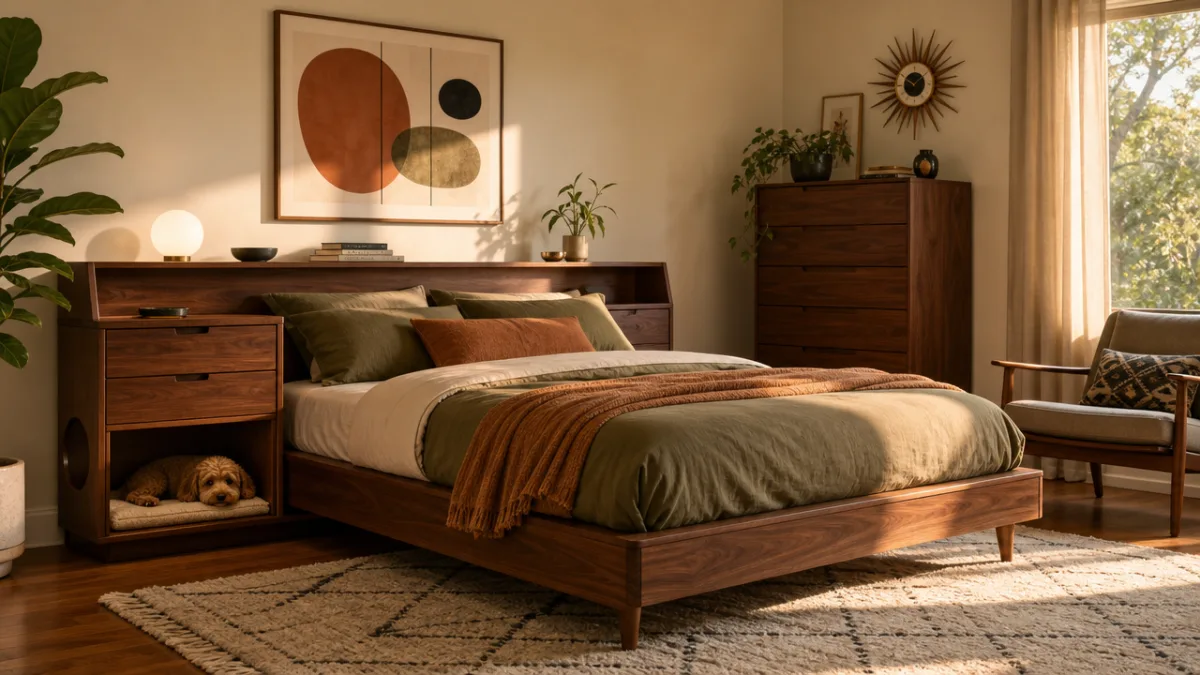
Mid-century modern is arguably the most natural fit of all, because the style has always been built around the idea that beautiful things should also be functional. A credenza with a pet compartment built into one end, finished in walnut with brass hardware and a cushion in a geometric print — that’s a piece of furniture people will actually admire before they even register what it’s for. Which is, really, the whole goal.
- Minimalist style: Use square openings, white or neutral paint, and linen cushion covers to maintain clean visual lines throughout the room.
- Farmhouse style: Incorporate reclaimed wood, sliding barn-door panels, and burlap or cotton cushion fabric for a warm, textured look.
- Mid-century modern: Choose walnut finishes, brass hardware, and geometric upholstery patterns to honor the style’s design heritage.
- Scandinavian style: Emphasize light wood tones, simple rounded arches for the pet opening, and monochromatic cushion colors for a serene effect.
- Industrial style: Combine raw steel framing with concrete or dark wood surfaces, and use a heavy canvas cushion for a rugged, urban aesthetic.
Practical Considerations: Maintenance, Safety, and Pet Acceptance
A beautiful hidden pet bed that’s a nightmare to clean isn’t actually a good hidden pet bed. Hygiene matters, and the integrated nature of these setups can make cleaning trickier than just picking up a freestanding cushion and taking it outside. The smartest thing you can do at the design stage is build in full accessibility — either hinge the front panel so it swings completely open, or design the compartment with removable side or top panels. That way you can pull the cushion out for washing and wipe down the interior surfaces without having to drag the furniture across the room.
Safety is worth thinking through carefully before you build anything. Ventilation is the obvious one, but the materials inside the compartment matter just as much. Any paint, stain, or adhesive used on the interior should be non-toxic and fully cured before your pet goes anywhere near the space. Edges and corners inside should be smooth and rounded — this matters especially for puppies and kittens who tend to be more energetic and less graceful. If you have a very young animal, it’s also worth thinking about whether the opening size could allow them to get stuck, and adjusting accordingly.
Getting your pet to actually use their new bed takes patience, and that’s completely normal. Most animals are creatures of habit, and a new sleeping spot — especially one that looks different from what they’re used to — can take some warming up to. Put familiar bedding inside, leave a few treats near and then just inside the opening, and let them investigate at their own pace over several days. Trying to rush it usually backfires. But once they’ve claimed the space as their own, the routine tends to lock in quickly and naturally — and that little hidden nook becomes one of those small, well-considered details that genuinely makes the bedroom better for everyone sleeping in it.








What do you think?
It is nice to know your opinion. Leave a comment.