










Goji Berry ‘Big Lifeberry’: A Complete Guide to Growing and Enjoying Lycium barbarum
Introduction to the Goji Berry and Its Ancient Heritage
The goji berry, known botanically as Lycium barbarum and sometimes as Lycium halimifolium, is one of the most celebrated superfoods in both traditional medicine and modern horticulture. Often referred to as the wolfberry, this remarkable plant has been cultivated across China, Tibet, and the Himalayan regions for thousands of years. Among its many cultivated varieties, the ‘Big Lifeberry’ stands out as an exceptional garden performer that combines ornamental beauty with extraordinary nutritional productivity.
What makes the goji berry story particularly compelling is the depth of its cultural resonance. Ancient Chinese physicians wrote extensively about its properties in texts dating back over two millennia, prescribing it for everything from eye health to longevity. Villages in the Ningxia Hui Autonomous Region of China still hold annual festivals celebrating the harvest of these brilliant red berries, and local residents who consume them daily have long been the subject of fascination for gerontologists studying exceptional human lifespans.
The ‘Big Lifeberry’ cultivar represents a significant horticultural achievement, bred specifically to produce larger, meatier fruits than the species type while retaining all of the nutritional density that has made goji berries so sought after worldwide. Whether you are an experienced gardener looking to expand your edible landscape or a newcomer drawn to the promise of homegrown superfoods, understanding this plant’s origins and characteristics is the essential first step toward a rewarding growing experience.
Botanical Classification and Naming
The naming of this plant reflects an interesting chapter in botanical history. Lycium barbarum received its formal scientific name from Carl Linnaeus in 1753, with the epithet barbarum referring to its origins in regions outside the classical Roman world. The species Lycium halimifolium is now largely considered a synonym or closely related variant rather than a distinctly separate species, which is why you will encounter both names used interchangeably in nursery catalogues, scientific literature, and gardening guides. Understanding this nomenclatural history prevents confusion when sourcing plants or researching growing advice.
Lycium barbarum belongs to the Solanaceae family, placing it in the same botanical family as tomatoes, peppers, aubergines, and potatoes. This family connection is immediately visible when the plant flowers, producing small purple-lilac blooms that are distinctly reminiscent of a potato flower in miniature form. The family relationship also provides useful guidance on soil preferences and cultural requirements, since many solanaceous plants share a love of well-drained, moderately fertile soils and full sun positions.
The ‘Big Lifeberry’ Cultivar: What Sets It Apart
The ‘Big Lifeberry’ variety was developed through selective breeding programs aimed at enhancing the commercial and garden appeal of the standard goji berry. The primary achievement of this cultivar is its fruit size, which can be notably larger than wild-type specimens, producing elongated red berries that are fleshy, juicy, and visually striking. This increased size does not come at the cost of flavour or nutrition; in fact, many growers report that ‘Big Lifeberry’ fruits have a pleasantly sweet-tart profile that makes them more immediately appealing to palates unfamiliar with the sometimes bitter notes found in wild goji berries.
Beyond fruit quality, ‘Big Lifeberry’ has been selected for vigour and adaptability. It establishes readily in a range of temperate climates, demonstrating a hardiness that allows it to survive winter temperatures as low as -15°C (5°F) in many recorded cases. This cold tolerance makes it an excellent choice for gardens across much of the United Kingdom, northern Europe, and the northern United States, where other superfood plants might struggle to survive the winter months. The plant is also notably drought-tolerant once established, requiring minimal supplemental irrigation in most temperate climates.
The ornamental value of ‘Big Lifeberry’ should not be underestimated when planning its placement in the garden. The plant produces arching, slightly pendulous canes that are covered from late spring through summer in small but charming purple flowers, which transition into green berries that gradually ripen through yellow and orange before reaching their final brilliant red at harvest time. This extended season of interest, combined with the plant’s tolerance for training against walls or fences, makes it a genuinely multi-functional addition to any edible or ornamental landscape.
Fruit Nutritional Profile
Goji berries have earned their superfood reputation through a genuinely impressive nutritional profile. The fruits are exceptionally rich in zeaxanthin and lutein, two carotenoids that are critically important for eye health and have been studied extensively for their role in reducing the risk of age-related macular degeneration. A single serving of dried goji berries can provide more than 100% of the recommended daily intake of vitamin A in its beta-carotene form, alongside meaningful quantities of vitamin C, iron, zinc, and dietary fibre.
- Zeaxanthin and lutein for eye health and protection against macular degeneration
- High polysaccharide content, including the unique Lycium barbarum polysaccharides (LBPs) studied for immune support
- Complete amino acid profile, unusually for a fruit, making goji berries a partial protein source
- Rich antioxidant content as measured by ORAC (Oxygen Radical Absorbance Capacity) values
- Significant quantities of B vitamins, including thiamine and riboflavin
- Meaningful iron content that compares favourably with many conventional dietary sources

Planting and Site Selection for Optimal Growth
Choosing the right location is perhaps the single most important decision you will make when establishing a ‘Big Lifeberry’ goji in your garden. This plant is fundamentally a sun-lover, having evolved in the open, bright environments of central Asia and the Mediterranean basin. A position receiving at least six to eight hours of direct sunlight per day is strongly preferred, and in cooler climates, a south-facing wall can provide the additional warmth and reflected light that encourages the most productive fruiting. While the plant will tolerate partial shade, reduced light exposure typically results in fewer flowers, smaller fruits, and a leggy growth habit that diminishes both productivity and ornamental appeal.
Soil requirements for Lycium barbarum are refreshingly straightforward, reflecting the plant’s origins in relatively harsh, well-drained environments. The ‘Big Lifeberry’ thrives in loamy to sandy soils with excellent drainage, and it handles slightly alkaline conditions particularly well. Heavy clay soils present the most significant challenge and should be amended generously with horticultural grit, sharp sand, and organic matter before planting. Waterlogging is the one condition that goji berries genuinely cannot tolerate; roots sitting in saturated soil will rot rapidly, leading to the sudden collapse of what may have appeared to be a thriving plant.
When preparing the planting site, it is worth taking time to clear perennial weeds thoroughly, as the goji berry’s initially modest growth rate can allow competitive weeds to establish during the first season. Dig a generous planting hole, at least twice the width of the root ball and of equal depth, and incorporate a modest amount of well-rotted organic matter at the base. Avoid excessive feeding at planting time, as overly fertile soil can encourage lush leafy growth at the expense of flowering and fruiting. A slightly lean soil actually tends to produce the most productive and floriferous specimens.
Spacing and Support Structures
In open ground conditions, ‘Big Lifeberry’ plants should be spaced approximately 1.5 to 2 metres apart to allow adequate air circulation and prevent fungal diseases from spreading between established plants. The natural growth habit produces long, arching canes that can reach 2 to 3 metres in length if left unpruned, and some form of support structure is advisable in most situations. A simple post-and-wire system similar to that used for raspberries works extremely well, allowing canes to be tied in and kept off the ground while maintaining good access for picking.
Wall training is an attractive option for gardeners with limited space, and goji berries can be successfully trained as informal espaliers or fan-trained specimens against south or west-facing walls. This approach has the added benefit of providing some frost protection to early spring growth and can extend the productive season at both ends where the wall retains and radiates daytime heat. When training against a wall, ensure a gap of at least 30 to 40 centimetres between the plant and the wall surface to allow adequate air movement and reduce the risk of powdery mildew development.
Pruning, Care, and Ongoing Maintenance
Pruning is one of the most important and most frequently misunderstood aspects of goji berry cultivation. Many first-time growers make the mistake of either pruning too aggressively in the early years, which delays fruiting establishment, or neglecting pruning entirely, which results in an unmanageable tangle of unproductive old wood. The key to success is understanding that goji berries fruit on lateral shoots growing from wood that is at least one year old, which means maintaining a framework of productive older canes while regularly renewing the plant with vigorous new growth from the base.
In practical terms, the pruning approach differs by the age of the plant. During the first two years, focus primarily on establishing a clear framework of three to five main canes and pinching out the growing tips of these leaders when they reach approximately 30 centimetres above the desired final height of the plant. This encourages the development of the lateral shoots that will carry the bulk of future fruiting wood. Resist the temptation to remove all flowers in the first year; allowing a modest crop to develop helps the plant set its productive patterns and rewards the patient gardener with a preview of the fruit quality to come.
From the third year onwards, an annual pruning session in late winter or very early spring, carried out before new growth begins, should form a regular part of garden maintenance. At this time, remove approximately one-third of the oldest and most exhausted canes right to the base, thin out overcrowded lateral shoots on the remaining framework, and shorten any excessively long laterals to two or three healthy buds. This rejuvenation approach ensures a continuous supply of productive wood and prevents the plant from gradually declining in vigour as it ages.
Watering and Feeding Regimes
Once established, ‘Big Lifeberry’ is genuinely one of the more drought-tolerant fruiting shrubs available to temperate gardeners, but this drought tolerance does not extend to newly planted specimens in their critical first growing season. During the establishment period, water newly planted goji berries regularly during dry spells, aiming to keep the soil consistently moist but never waterlogged. A layer of organic mulch applied around the base of the plant, kept clear of the stem itself, will help retain soil moisture during dry periods while also suppressing weed competition and gradually improving soil structure as it breaks down.
Feeding requirements are modest compared to many other fruiting plants. An annual top-dressing of balanced, slow-release fertiliser applied in early spring as growth resumes is generally sufficient to maintain good vigour and fruit production in most garden soils. Alternatively, a dressing of well-rotted garden compost or farmyard manure applied as a mulch in autumn serves a dual purpose of feeding and soil conditioning. Avoid high-nitrogen liquid feeds during the growing season, as these tend to produce excessive leafy growth that shades developing fruits and can increase susceptibility to fungal disease.

Harvesting, Preserving, and Using Your Goji Berry Harvest
The harvest season for ‘Big Lifeberry’ typically runs from midsummer through to autumn, with the precise timing varying according to local climate conditions and the weather experienced during the growing season. Berries are ready to pick when they have turned a deep, even red and have softened slightly to the touch, releasing easily from the calyx with gentle pressure. One of the peculiarities of goji berry harvesting that surprises many first-time growers is the irritant sap present in the stems and leaves, which can cause skin reactions in sensitive individuals. Wearing light gloves during harvesting is advisable, particularly for anyone with a known sensitivity to other members of the Solanaceae family.
Fresh goji berries have a shelf life of only a few days at room temperature, though they can be extended to a week or more when stored in the refrigerator. The traditional and most practical preservation method is drying, which the berries take to exceptionally well. Spread fresh berries in a single layer on drying racks or baking sheets and dry them at the lowest oven setting with the door slightly ajar, or use a dedicated food dehydrator set to around 55°C. The process takes between 12 and 24 hours depending on the method used and the size and moisture content of the individual berries. Properly dried goji berries, stored in an airtight container in a cool, dark location, will retain their quality for up to 12 months.
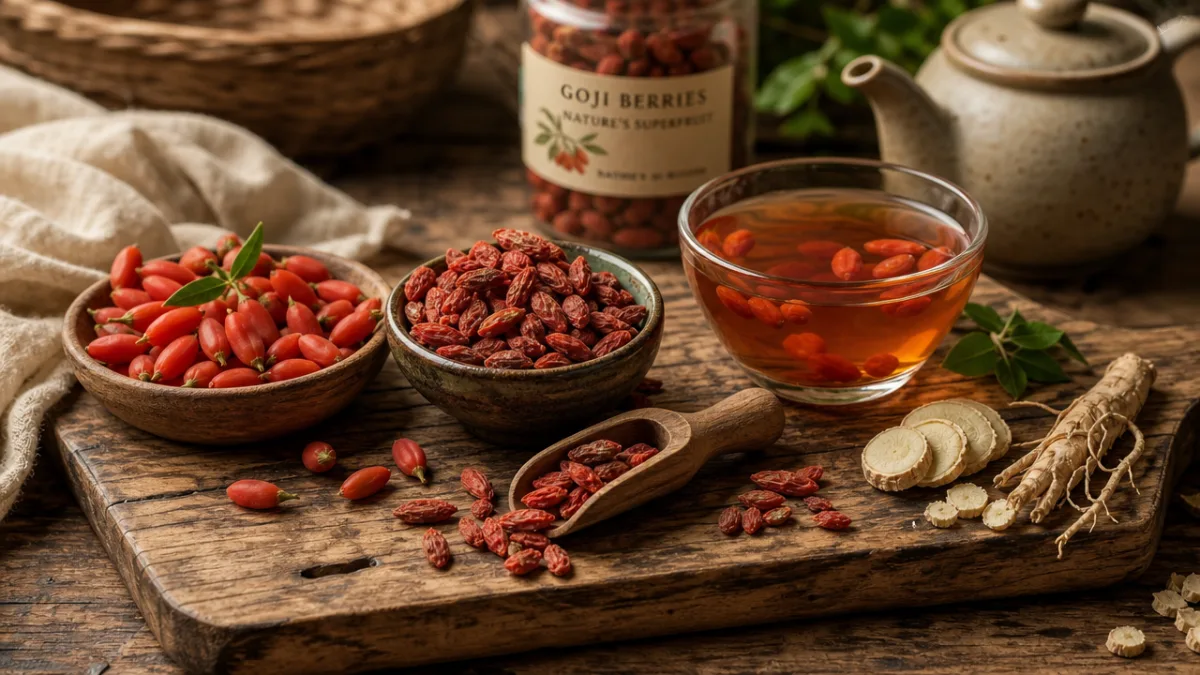
In culinary terms, goji berries are remarkably versatile and their slightly sweet, slightly tart flavour profile lends itself to an enormous range of applications. Dried berries can be eaten as a snack exactly as they are, added to trail mixes and granolas, stirred into porridge or yoghurt, incorporated into baked goods from muffins to fruit cakes, or used as a colourful garnish. Fresh berries work beautifully in fruit salads, summer puddings, and as a topping for desserts where their jewel-like appearance makes an immediate visual impact. In Chinese cuisine, goji berries are traditionally added to slow-cooked soups, broths, and teas, a use that extracts their polysaccharides and other water-soluble nutrients particularly effectively.
Traditional and Modern Culinary Uses
The culinary tradition surrounding goji berries in East Asian cooking is rich and deeply practical. Chinese cooks have long combined dried goji berries with other tonic ingredients such as jujube dates, longan fruit, and lotus seeds to create nourishing sweet soups and teas. The berries are also a standard addition to the famous tonic soup known as ba bao zhou (eight treasures porridge), consumed particularly during the colder months as a warming and fortifying meal. Understanding these traditional uses provides both inspiration for home cooking and insight into why this plant has been cultivated and valued for so long.
- Add dried goji berries to overnight oats or chia puddings for a nutritional boost and natural sweetness
- Brew a simple goji berry tea by steeping a tablespoon of dried berries in hot water for five to ten minutes
- Incorporate fresh berries into smoothies alongside complementary flavours such as orange, mango, or raspberry
- Use dried goji berries as a substitute for raisins or cranberries in baked goods and salads
- Add to slow-cooked chicken or vegetable broths in the final thirty minutes of cooking for depth and nutrition
- Infuse in spirits or honey for a striking and flavourful pantry staple with multiple culinary applications
Pests, Diseases, and Common Growing Challenges
Despite its many positive qualities, the ‘Big Lifeberry’ goji is not entirely without its vulnerabilities, and a well-prepared gardener is one who understands the challenges before they arise. Aphids represent the most commonly encountered pest problem, particularly during spring when new growth is tender and populations of these soft-bodied insects can build rapidly on the succulent shoot tips. A strong jet of water from a hose is often sufficient to dislodge aphid colonies before they become established, and encouraging beneficial insects such as ladybirds and lacewings into the garden provides ongoing biological control throughout the season without any chemical intervention.
Powdery mildew is the fungal disease most likely to affect goji berries, particularly during the warm, dry conditions of late summer when poor air circulation around the foliage creates a microclimate ideal for fungal development. The characteristic white, powdery coating appears first on the upper surfaces of leaves and can spread rapidly if left unchecked. Prevention through appropriate spacing, good pruning practice, and avoiding overhead watering in the evening is far more effective than attempting to treat an established infection. Where mild infections do occur, removing affected growth promptly and ensuring good airflow around the plant usually allows it to recover without lasting damage.
Birds present a more cheerful but nonetheless commercially significant challenge for gardeners growing goji berries in quantity. The brilliant red berries are irresistible to many species, particularly blackbirds and starlings, and a productive established plant can be stripped surprisingly quickly during the peak harvest season. Netting is the most reliable solution, but must be applied carefully to avoid trapping birds rather than simply deterring them. A fine-mesh net supported on a frame above and around the plant, secured at the base, will protect the crop effectively while still allowing the gardener easy access for picking and the bees unobstructed access to the flowers earlier in the season.
Winter Care and Cold Hardiness
One of the greatest advantages of ‘Big Lifeberry’ over many other superfood plants is its genuine cold hardiness, which allows it to be grown as a permanent, fully hardy perennial shrub throughout most of the United Kingdom and large portions of continental Europe and North America. The plant enters dormancy naturally as day length shortens in autumn, dropping its leaves and directing its energy into the root system and permanent framework canes. In this dormant state it can tolerate considerable frost without protection, making it a genuinely low-maintenance choice compared to tender perennials that require lifting and overwintering under cover.
In regions experiencing particularly harsh winters with sustained temperatures below -15°C, a modest amount of protection during the most extreme cold snaps can help newly established plants in their first two winters before they have developed deep, extensive root systems. A wrapping of horticultural fleece around the main framework canes and a generous mulch of straw or composted bark over the root zone are usually sufficient measures. Established plants of three years or more rarely require any winter protection even in challenging climates, demonstrating a resilience that makes them excellent long-term investments in the productive garden.
Spring care is equally important to winter hardiness in determining the long-term success of a goji planting. Late frosts can damage early new growth, and while this rarely causes permanent harm to an established plant, it can set back the season’s productivity if tender shoots are repeatedly frosted. In frost-prone gardens, delaying the pruning of old canes until the risk of late frost has passed provides the new growth with some insulation during the most vulnerable period. Monitoring local weather forecasts and being ready to throw a layer of horticultural fleece over the plant during predicted late frost events is simple insurance against what is otherwise an easily avoidable setback for this otherwise supremely capable garden plant.








What do you think?
It is nice to know your opinion. Leave a comment.