










22 Small Garden Ideas for 2026: Narrow Spaces, Clever DIY, and Clean Design
Why Small Gardens Are Having a Major Moment in 2026
The gardening world has undergone a quiet revolution over the past few years, and nowhere is that shift more visible than in the rise of the small garden. Urban living, rising property costs, and a growing desire for personal green space have pushed millions of people to reimagine what a garden can actually be. You do not need a sprawling backyard or a countryside estate to grow something beautiful, productive, and deeply satisfying. In 2026, the small garden is not a compromise — it is a deliberate, intelligent choice made by people who understand that limitations often breed the most creative solutions.
The design philosophy driving small garden culture right now is rooted in intentionality. Every square foot matters, every plant earns its place, and every structural element serves at least two purposes. This is a stark contrast to the sprawling, unfocused gardens of previous decades where abundance was mistaken for beauty. Today’s small garden enthusiasts are approaching their spaces the way an architect approaches a studio apartment — with precision, purpose, and an eye for how form and function can coexist without sacrifice. The results, as seen across social media platforms like Pinterest, are genuinely stunning.
What makes 2026 particularly exciting for small garden design is the convergence of accessible DIY culture, affordable materials, and a mature aesthetic vocabulary that anyone can draw from. You no longer need to hire a landscape designer to achieve a professional-looking result in a tiny courtyard or narrow balcony. With the right ideas, a free weekend, and a modest budget, even the most compact outdoor space can be transformed into something that feels expansive, intentional, and uniquely yours. This article will walk you through 22 ideas — organized by theme — to help you do exactly that.
Making the Most of Narrow Spaces and Vertical Opportunities
Narrow gardens present what many designers consider the most interesting challenge in residential landscaping. A side passage between two houses, a long thin balcony, or a courtyard barely wider than a doorway — these spaces seem discouraging at first glance but are actually full of potential once you start thinking vertically rather than horizontally. The single most transformative shift in narrow garden design is redirecting your gaze upward. Walls, fences, trellises, and stacked planters become your primary canvas, and once you embrace that, the possibilities multiply dramatically.
Vertical garden panels have become one of the defining trends of 2026, and for good reason. Modular planting systems — either purchased as kits or built from reclaimed pallets and timber — allow you to create a living wall of herbs, succulents, ferns, or flowering plants without consuming any ground-level square footage. These installations are particularly effective in narrow passages where foot traffic needs to remain unobstructed. A well-planted vertical panel on a bare brick wall can reduce urban noise, improve air quality, insulate a wall, and add a breathtaking focal point all at once. That is four functions from a single installation, which is exactly the kind of efficiency small garden design demands.
For those working with a narrow strip of actual soil rather than a paved surface, the planting strategy matters enormously. Tall, slender plants like ornamental grasses, columnar evergreens, and climbing roses trained onto a framework create vertical interest without sprawling into the walkable space. Layering plants by height — groundcover at the base, mid-height perennials in the middle, and climbers at the top — creates the illusion of lushness and depth even in a space that is only a meter wide. Adding a small mirror at the far end of a narrow passage is an old designer trick that genuinely works, making the space appear to continue beyond where it actually ends.
- Install a reclaimed pallet vertical planter on a bare fence and fill it with trailing herbs like thyme and oregano for a fragrant, edible wall feature.
- Use wall-mounted tiered shelving with weather-resistant brackets to display terracotta pots at eye level, drawing the gaze upward and freeing the floor completely.
- Train a climbing hydrangea or jasmine up a slim metal obelisk positioned in a corner to add height without width.
- Hang canvas or felt pocket planters in a grid pattern on a wooden frame for a soft-textured living wall that works beautifully with succulents and small ferns.
- Create a zigzag path of stepping stones through a narrow bed to make the space feel longer and more adventurous to navigate.
Clever DIY Projects That Elevate Any Small Outdoor Space
The DIY element of small garden design in 2026 is not about cutting corners — it is about personalisation, sustainability, and the profound satisfaction of building something with your own hands that genuinely improves your daily life. The most popular DIY garden projects right now share a common characteristic: they use inexpensive or reclaimed materials to create structures and features that would cost hundreds or even thousands of dollars from a landscape contractor. A set of cedar raised beds built over a weekend for the cost of a few planks of timber can deliver years of productive growing and look every bit as polished as anything you would find in a design magazine.
One of the most versatile DIY projects you can tackle in a small garden is building a custom bench with integrated planting boxes at each end. This single piece of construction gives you seating, storage beneath the bench seat, and two planted features flanking the sitting area — all in a footprint that takes up no more room than a standard garden bench would. Using pressure-treated timber or naturally rot-resistant cedar, this project can be completed in a single day with basic tools. Paint it in a matte sage green or charcoal tone and it will look far more considered and intentional than anything mass-produced from a garden center.
Water features are another area where thoughtful DIY can make an outsized impact. A small self-contained water feature — even one as simple as a sealed terracotta pot fitted with a tiny solar-powered pump — adds sound, movement, and a sense of calm to even the smallest space. The sound of trickling water has a remarkable ability to mask urban noise and make an outdoor space feel like a genuine retreat rather than just an extension of the city. Building one yourself costs a fraction of purchasing a ready-made unit and allows you to match the materials and scale precisely to your existing garden aesthetic.
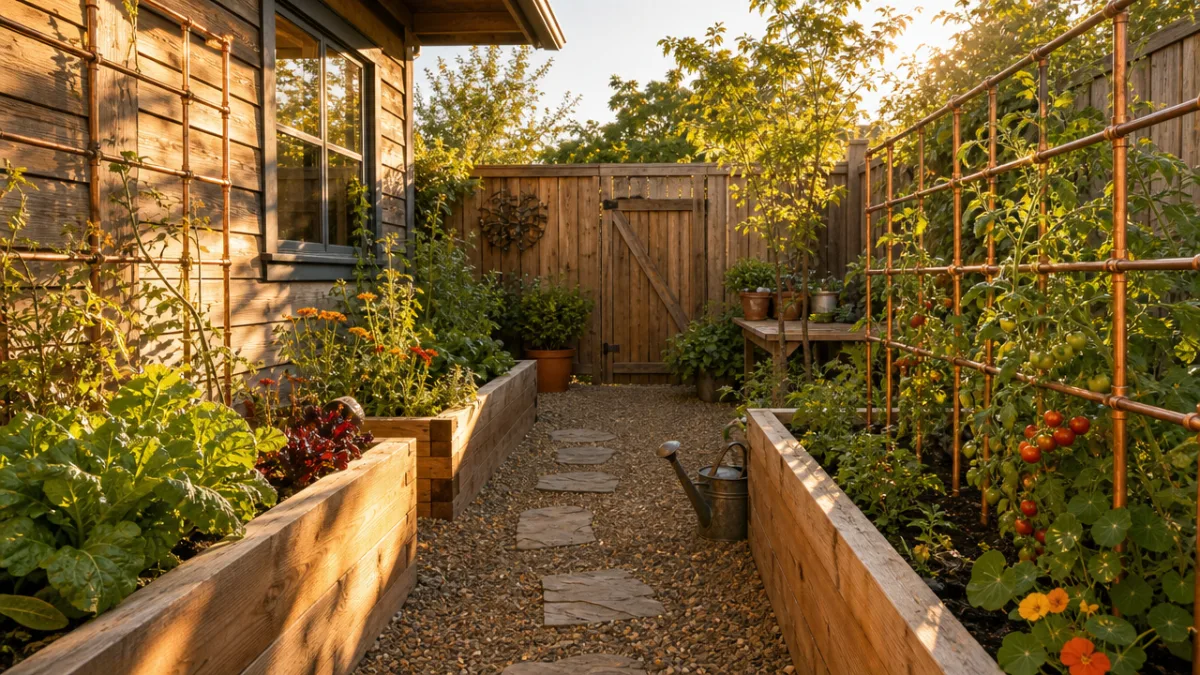
- Raised cedar planting beds: Frame them with mitered corners for a professional finish and line the base with landscape fabric before filling with a quality compost mix.
- Cinder block herb garden: Stack two rows of cinder blocks in a U-shape, fill each cavity with compost, and plant individual herbs in each cell for a graphic, industrial-chic growing feature.
- Upcycled pallet sofa: Sand two pallets smooth, stack them, add outdoor cushions and bolsters, and you have a low-profile sofa that looks deliberate rather than improvised.
- Copper pipe trellis: Solder or wire copper pipes into a grid or geometric shape and mount it on a wall as a climbing frame — it will weather beautifully to a verdigris patina over time.
- Solar lantern path markers: Set frosted glass jars fitted with solar fairy lights along a path edge for atmospheric evening lighting that costs almost nothing to run.
Storage is one of the most underrated aspects of small garden design, and a clever DIY storage solution can dramatically change how usable and comfortable a compact space feels. A built-in bench with a hinged lid conceals garden tools, pots, potting compost, and hoses, keeping the surface of the garden clean and uncluttered between uses. This principle of hidden storage — borrowed directly from interior design — is one of the most impactful things you can apply to an outdoor space that is too small to absorb visual clutter without feeling chaotic and cramped.
Clean Design Principles for a Calm, Considered Garden
The clean design movement in small gardens is essentially the application of minimalist interior design principles to outdoor spaces, and it works remarkably well at small scale. The core idea is editing ruthlessly — choosing fewer elements, better materials, and a more disciplined planting palette in exchange for a space that feels expansive, calm, and deeply satisfying to spend time in. In a small garden, visual noise is the enemy. Every pot, every ornament, every mismatched chair adds complexity, and complexity at small scale creates a feeling of chaos rather than abundance. The goal of clean design is visual breathing room.
A restricted material palette is the foundation of clean garden design. Choosing two or three complementary materials and applying them consistently throughout the space — say, pale limestone paving, weathered timber, and black steel — creates a sense of coherence that makes even a tiny garden feel designed rather than assembled. This principle extends to plant selection as well. Rather than planting twenty different species in a small bed, consider planting three or four species in greater numbers. A mass planting of a single ornamental grass, for example, has far more visual impact than a patchwork of competing plants and is also much easier to maintain.
Colour discipline is equally important in clean small garden design. The most sophisticated small gardens of 2026 tend to work within a narrow tonal range — often a combination of deep greens, soft greys, warm whites, and one carefully chosen accent colour in the planting. This approach prevents the space from feeling visually fragmented and allows the textures and forms of the plants and materials to do the work that colour would otherwise drown out. When colour does appear — in a cushion, a painted wall, or a seasonal flowering plant — it registers as a deliberate, delightful accent rather than just more noise.
Lighting is the element that most often gets overlooked in small garden design, yet it has the power to completely transform a space after dark, effectively doubling the hours of enjoyment you get from it. In a clean design scheme, lighting should be subtle and layered rather than bright and uniform. Uplighting a single architectural plant, threading warm fairy lights through a pergola, and placing a low lantern at path level creates depth and atmosphere without cluttering the space with fixtures and cables. The best small garden lighting is practically invisible during the day and magical at night — a quality that requires planning but rewards beautifully.
Plant Selection Strategies for Maximum Impact in Minimum Space
Choosing the right plants for a small garden is arguably more important than any structural or design decision you make, because plants are dynamic — they grow, spread, die back, and change with the seasons. In a small space, a plant that outgrows its position or requires constant cutting back will undermine the entire design, whereas a plant chosen with genuine care for its ultimate size, seasonal interest, and maintenance needs will reward you for years with minimal effort. The guiding principle for small garden plant selection is simple: every plant should earn its place by delivering at least two seasons of interest and requiring no more space than you can comfortably give it.
Structural plants — those with strong architectural form that anchor the design regardless of the season — are particularly valuable in small gardens. Japanese maples, pleached hornbeams, clipped box balls, and columnar yews all provide year-round presence and a sense of permanence that sets the framework for everything else. Around these structural anchors, a layer of seasonal planting can shift with the year — bulbs in spring, perennials in summer, ornamental grasses in autumn, and evergreen groundcover in winter — creating a garden that feels alive and changing without ever feeling chaotic or unplanned.
Edible plants deserve a special mention in the context of small garden design because they offer something purely ornamental plants cannot: usefulness. Growing herbs, salad leaves, tomatoes, or dwarf fruit trees in a small garden adds an entirely different dimension of engagement with the space — you are not just looking at it, you are harvesting from it. Many edible plants are also genuinely beautiful. Purple basil, bronze fennel, rainbow chard, and espalier apple trees are all striking enough to earn their place in a design-led small garden without any apology for their utilitarian purpose.
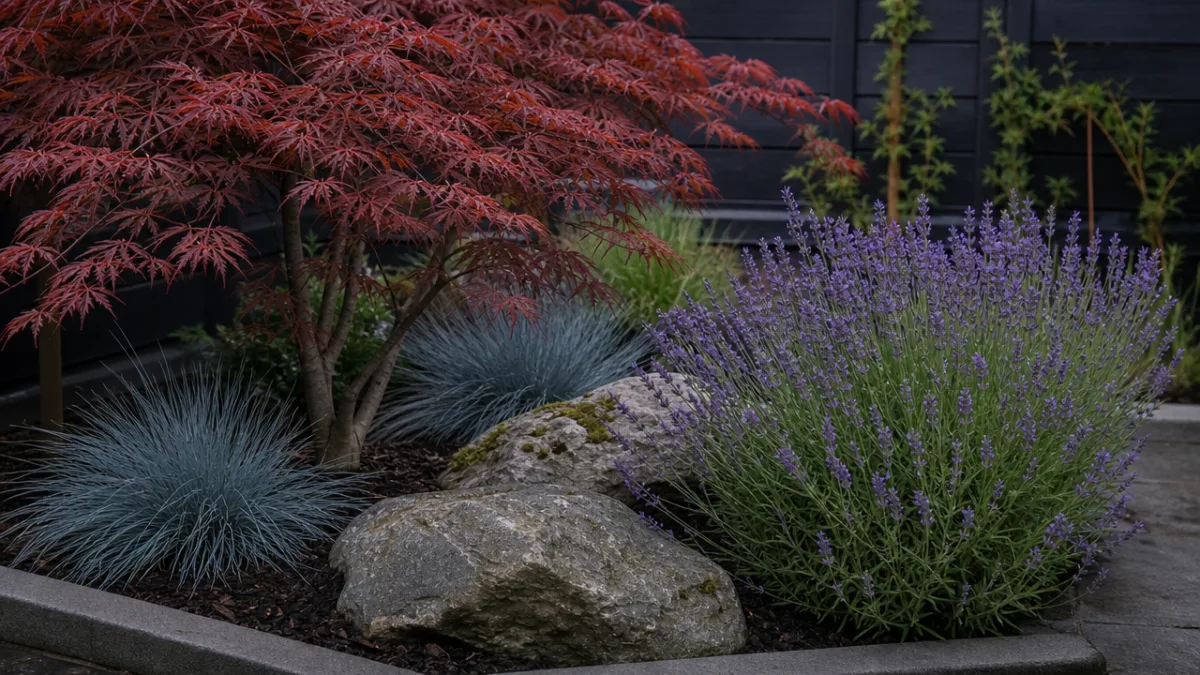
- Acer palmatum (Japanese maple): Slow-growing, spectacular autumn colour, tolerant of containers, and naturally compact — a near-perfect small garden tree.
- Festuca glauca (blue fescue): A low clumping ornamental grass that provides year-round steel-blue colour and requires almost no maintenance beyond an annual comb-through.
- Lavandula angustifolia: Fragrant, drought-tolerant, beloved by pollinators, and available in compact varieties that stay well below 40 centimetres in height.
- Hydrangea paniculata ‘Limelight’: Flowers from midsummer to late autumn, tolerates shade, and can be pruned hard each year to keep it perfectly in scale with a small space.
- Heuchera varieties: Evergreen groundcover with foliage in colours from lime green to deep burgundy — ideal for filling gaps and suppressing weeds in shaded small gardens.
Bringing the Inside Out: Outdoor Living in Small Garden Spaces
One of the most significant shifts in how people relate to their gardens — particularly small ones — is the blurring of the boundary between indoor and outdoor living. In 2026, small gardens are increasingly designed as outdoor rooms: furnished, lit, and accessorised with the same care and attention as a living room or kitchen. This approach requires a shift in thinking from garden-as-garden to garden-as-space, and once you make that mental shift, the decisions you make about furniture, lighting, textiles, and even scent become far more deliberate and far more rewarding.
The furniture choices you make for a small outdoor living space will define how it feels more than almost anything else. Oversized furniture is the most common mistake in small garden design — a large teak dining set that would be perfectly at home in a spacious garden becomes an obstacle course in a compact courtyard. The right furniture for a small garden is scaled thoughtfully, often folding or stackable for flexibility, and chosen in materials that complement the wider design palette. A pair of slim bistro chairs around a small marble-topped table, for example, creates an intimate dining space that takes up barely more floor area than a single armchair.
Outdoor textiles — cushions, rugs, throws, and canopies — are the element that most powerfully signals that a small garden has been designed as a genuine outdoor room rather than just an outdoor storage area. Weather-resistant fabrics have improved dramatically in recent years, and it is now entirely possible to use outdoor textiles that look and feel indistinguishable from their indoor equivalents. A striped outdoor rug laid on clean paving, a set of deep-toned cushions on a timber bench, and a linen-look shade sail overhead transforms even a plain concrete yard into a space that feels genuinely inviting and human-scale.
Finally, scent is the most underused tool in small garden design and arguably the most powerful. Because small gardens are experienced at close range — you are never far from any plant in them — fragrant plants deliver their reward with unusual intensity. Positioning a fragrant plant like jasmine, sweet box (Sarcococca), or chocolate cosmos near a seating area means that every moment spent sitting outside is accompanied by an invisible layer of sensory pleasure that photographs cannot capture but memory preserves perfectly. A garden that smells extraordinary will be used and loved far more than one that merely looks good, and in a small space, the two ambitions are entirely compatible. Choose your fragrant plants carefully, place them close to where people will sit or pass, and let scent do the quiet, transformative work that it does better than any other design element.








What do you think?
It is nice to know your opinion. Leave a comment.