










10 Things That Made Me Happy in July
Embracing the Joy of Ordinary Summer Moments
July has a particular quality of light that no other month quite captures — that golden, syrupy warmth that settles over everything in the late afternoon and makes even the most mundane moments feel cinematic. This past July, I made a quiet promise to myself to pay closer attention, to notice the small things that were quietly lifting my mood and filling my days with a sense of ease. What I found surprised me: happiness wasn’t hiding in grand gestures or expensive experiences. It was folded into the everyday, waiting to be acknowledged.
There’s something to be said for the ritual of reflection. When you take the time to look back at a month and ask yourself what genuinely moved you, what made you smile without thinking, you start to see patterns you might otherwise miss. July turned out to be a month rich in those small, accumulating pleasures — the kind that don’t make headlines but quietly rebuild a person from the inside out. Some of them were planned, many were completely accidental, and all of them reminded me why paying attention is one of the most generous things you can do for yourself.
This article is my attempt to bottle that feeling, to share the ten things that genuinely lit me up this past July. Think of it as a love letter to the month, a document of gratitude, and maybe an invitation for you to start keeping your own list. You don’t need a big life to have a happy one. You just need to notice what’s already there — and this July, I finally got good at that.
Slow Mornings and the Art of Not Rushing
The single biggest shift I made this July was deciding that mornings belonged to me before they belonged to anyone or anything else. No phone for the first thirty minutes, no emails, no social media scroll disguised as staying informed. Just coffee, a window with decent light, and whatever thoughts arrived on their own schedule. It sounds small, even obvious, but for someone who had spent years lunging at the day the moment her eyes opened, this was genuinely revolutionary. The quality of the hours that followed improved in a way I hadn’t anticipated.
Slow mornings gave me back a sense of agency I hadn’t realised I’d lost. When you begin the day by reacting — to notifications, to other people’s urgency, to the relentless churn of the news cycle — you spend the rest of it in a mild state of low-grade stress that feels normal only because it’s so constant. Taking those first thirty to sixty minutes to simply exist, to drink something warm, to sit with my own thoughts before the world rushed in, created a kind of buffer that made everything else more manageable. July was the month I stopped treating my mornings as a warm-up to productivity and started treating them as worthwhile in their own right.
What filled those mornings varied day to day. Sometimes I read. Sometimes I sat outside and listened to birds with a thoroughness I hadn’t devoted to birdsong since childhood. Once or twice I wrote in a notebook without any particular goal, just moving the pen to see what came out. The content mattered less than the pace. Slow mornings taught me that gentleness is a practice, and like any practice, it gets easier and more natural the more consistently you show up for it.
Rediscovering Books I’d Been Meaning to Read
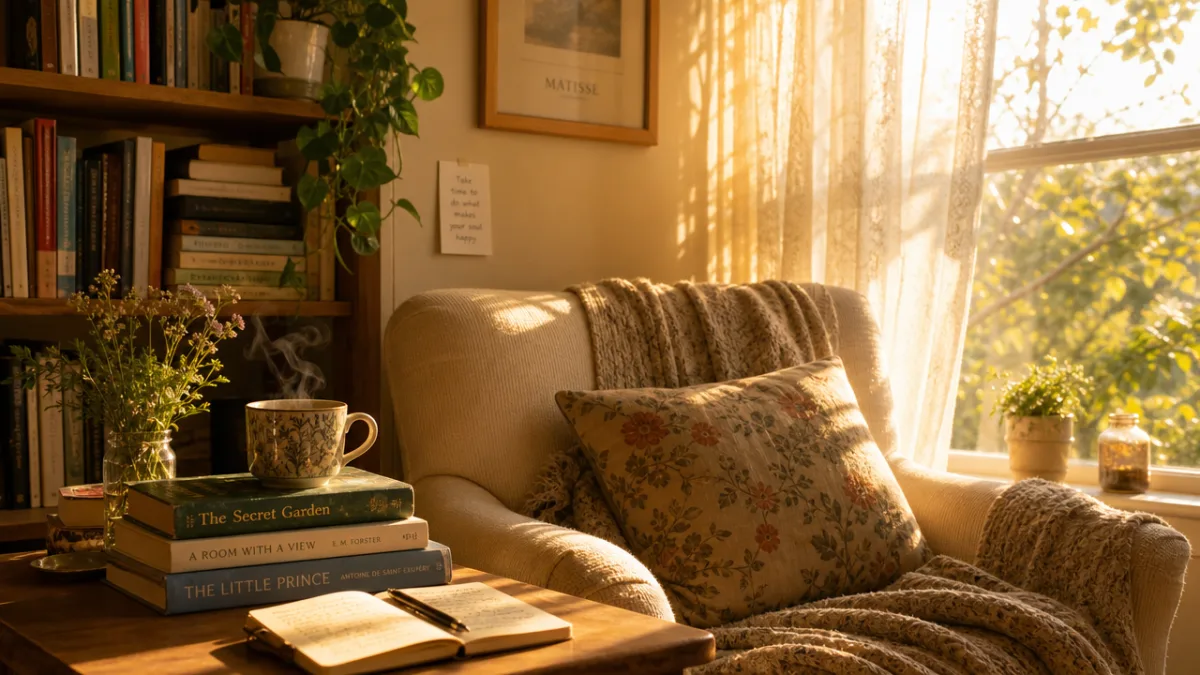
July became, almost by accident, a deeply literary month. I finally cleared the architectural backlog of books on my nightstand — those well-intentioned purchases and borrowed copies that had been quietly judging me for months. I picked up three novels I’d been circling for over a year, and every single one of them delivered in a way that reminded me why reading fiction is not a luxury but a genuine necessity. There is a specific kind of rest that only a good book provides, a complete transportation out of your own nervous system and into someone else’s world.
The books themselves ranged widely in tone and subject, which I think is part of what made the experience so nourishing. One was a slow, atmospheric novel set in rural Ireland that I read mostly in the evenings, accompanied by the kind of quiet that only descends after nine o’clock in summer. Another was sharply funny and propulsive, the sort of book you read in great hungry gulps. The third was more demanding, the kind that requires a pencil nearby for underlining, and it rewarded that effort generously. Together they created a reading life that felt curated and intentional in a way my reading rarely does.
Something worth noting is the way reading in July felt different from reading in the colder months. There’s a particular pleasure in reading outdoors, feeling actual sunlight on your arms while you’re transported somewhere fictional and completely interior. I read on the back steps, in the park, in the car while waiting. Every small window of time became an opportunity rather than an inconvenience. If you’ve been meaning to get back to books and haven’t quite managed it, I’d gently suggest that summer is the perfect re-entry point. The light is good, the pace is slower, and the books are waiting.
Long Walks Without a Destination
I started walking in July without any particular purpose, and it turned out to be one of the most restorative decisions of the month. Not power-walking, not fitness-walking with a tracking app and a heart rate goal, but genuine wandering — leaving the house with no fixed route and no time pressure, following whatever direction seemed interesting, and coming back when I felt like it. This kind of walking is almost subversive in an era that insists all movement be optimised for maximum physical benefit. Walking without a goal felt faintly radical, and I loved it for that.
What I noticed on these walks surprised me. I discovered streets in my own neighbourhood that I had driven past hundreds of times without ever registering. I found a small garden someone had planted along a back fence, crammed with sunflowers and lavender and the kind of cheerful chaos that only happens when a gardener has completely given up on tidiness and committed entirely to joy. I noticed the way sound changes as you move through different parts of a street, the acoustic signature of trees, the way a distant lawnmower sounds comforting rather than annoying when you’re not the one who has to mow. July made me a more careful observer of my own local world.
The psychological benefits of aimless walking are well-documented, but experiencing them firsthand is something else entirely. There’s a particular quality of thinking that only happens in motion — problems that seemed intractable at a desk resolve themselves quietly as you walk, ideas arrive that wouldn’t have come sitting still, and the low hum of anxiety that often accompanies stillness gradually dissipates into something more neutral and manageable. I returned from every single walk in July in a better state than I left. That’s a statistic I find deeply compelling and one I intend to keep collecting.
Cooking Something New Every Week
July became the month I finally stopped defaulting to the same ten meals on rotation and committed to cooking at least one entirely new dish each week. This wasn’t about impressing anyone or developing some aspirational relationship with food. It was simpler and more personal than that: I wanted the small, contained pleasure of learning something, of having a tangible goal with a clear outcome that I could eat. Cooking, I rediscovered, is one of the most immediate forms of creative satisfaction available to ordinary people on an ordinary Tuesday night.
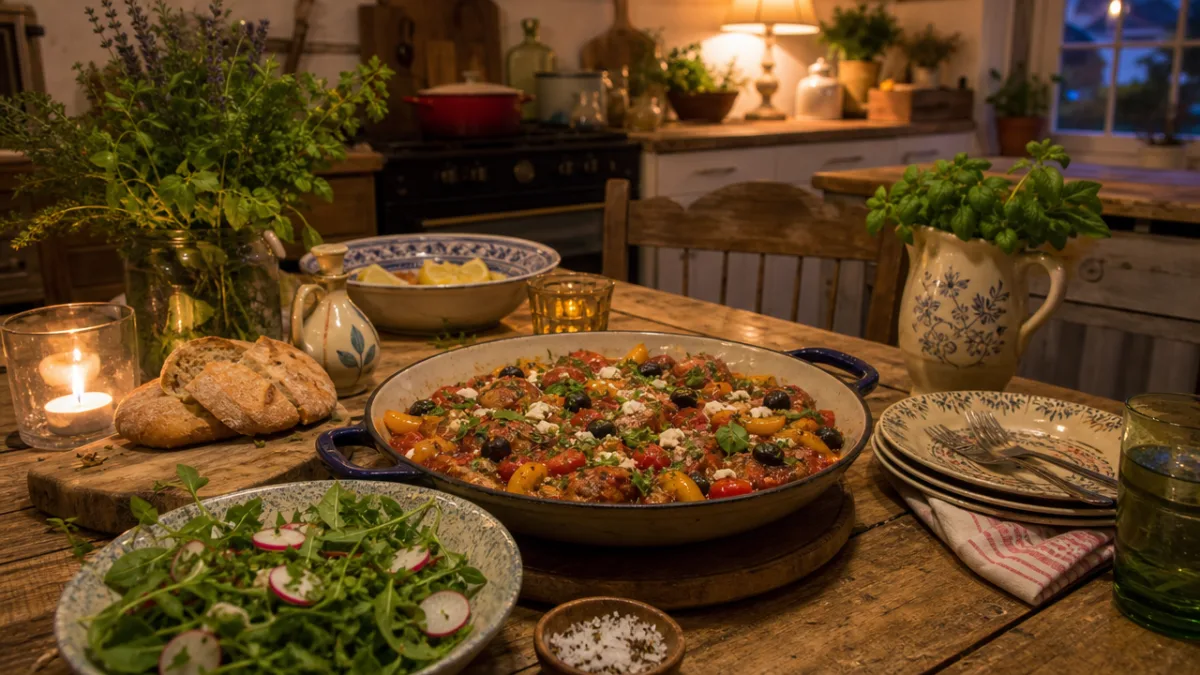
The dishes themselves were nothing extraordinary — a Turkish lamb stew that required spices I had to hunt for across two shops, a cold noodle dish with a peanut sauce I adjusted four times before getting right, a surprisingly successful attempt at a layered vegetable tart that looked significantly more impressive than the effort it required. None of them were flawless on the first attempt, and that turned out to be part of the point. The process of tasting and adjusting, of making a judgment call about whether something needs more acid or more salt or more time, is its own quiet engagement. It requires presence in a way that’s genuinely meditative.
There were practical side effects worth mentioning. My grocery shopping became more interesting because I was buying with specific purposes rather than habit. My kitchen felt more like a place where things happened and less like a room I passed through. And the meals themselves were more satisfying, not necessarily because they were better-tasting than the reliable old standbys, but because I had invested something in making them. Food made with even modest intention tastes different. This is not a recipe tip. It’s a happiness one.
- Turkish lamb and apricot stew with toasted almonds — rich, warming, and genuinely worth the spice hunt
- Cold sesame noodles with cucumber and chilli — endlessly adjustable and perfect for hot evenings
- Provençal vegetable tart with a cream cheese base — simple enough for a weeknight, impressive enough for guests
- Miso-glazed roasted aubergine — four ingredients, thirty minutes, and completely transformative
Reconnecting with People I’d Been Meaning to Call
July was also the month I stopped letting the phrase “I’ve been meaning to call you” remain a comfortable intention and started turning it into an action. I made three long phone calls to people I hadn’t properly spoken to in months — in one case, over a year. Not texts, not brief check-ins, but actual calls where I sat down, gave them my full attention, and talked for ninety minutes or more. Every single one of those conversations left me feeling more like myself. The nourishment of real connection, it turns out, doesn’t transfer well through abbreviated digital formats.
What struck me most was how easily we all slipped back into the rhythm of genuine friendship, the kind where you can be honest about what’s actually going on rather than performing a curated version of your life. There’s a particular safety in old friendship — in talking to someone who knew you before you had your current job, your current concerns, your current self-presentation. Those calls reminded me that I have a longer history than I sometimes feel in the midst of an ordinary week, and that the people who carry that history with you are genuinely precious and worth the activation energy it takes to pick up the phone.
I also arranged two in-person meetups from these calls, both of which happened before July ended and both of which confirmed what the phone calls had suggested: that presence is irreplaceable, and that the low-effort maintenance of friendship through occasional likes and emoji responses is no substitute for time actually spent together. This is not a novel observation. But July made it feel newly urgent, and I’m carrying that urgency into the months ahead with considerably more intention than I’ve managed in recent years.
Finding a New Place That Became a Regular Haunt
Every happy period of my life seems to involve discovering a place that becomes “mine” in some informal but emotionally significant way — a café, a park bench, a particular corner of a library. July delivered one of these: a small independent coffee shop I stumbled into on a walk and immediately recognised as the kind of place that takes its work seriously without taking itself too seriously. The coffee was exceptional, the light was good, the music was pitched at the exact right volume, and crucially, no one made me feel like I should leave once I’d finished my drink. I went back six times in one month.
There’s a psychological concept sometimes called a “third place” — a location that is neither home nor work, where you belong without obligation and can exist alongside other people without having to perform or produce. These places matter more than we acknowledge. They provide a sense of being embedded in a community, of having a small but meaningful relationship with a physical location and the people who run it. By the end of July, the person behind the counter knew my order. That might sound like a minor thing. It is not a minor thing. It is, in its quiet way, a form of being known.
Part of what made returning to this place such a reliable happiness was the ritual quality it took on. Same corner table when available, same order with minor seasonal variations, same forty-five minutes of reading or writing before the day’s demands reasserted themselves. Ritual, I’ve come to believe, is one of the most underrated sources of comfort available to us. It converts random time into meaningful time simply through the intention of repetition. Finding a new third place in July gave me a ritual I hadn’t known I was missing, and I’m already slightly anxious about what I’ll do if they raise their prices.
Letting Myself Rest Without Justification
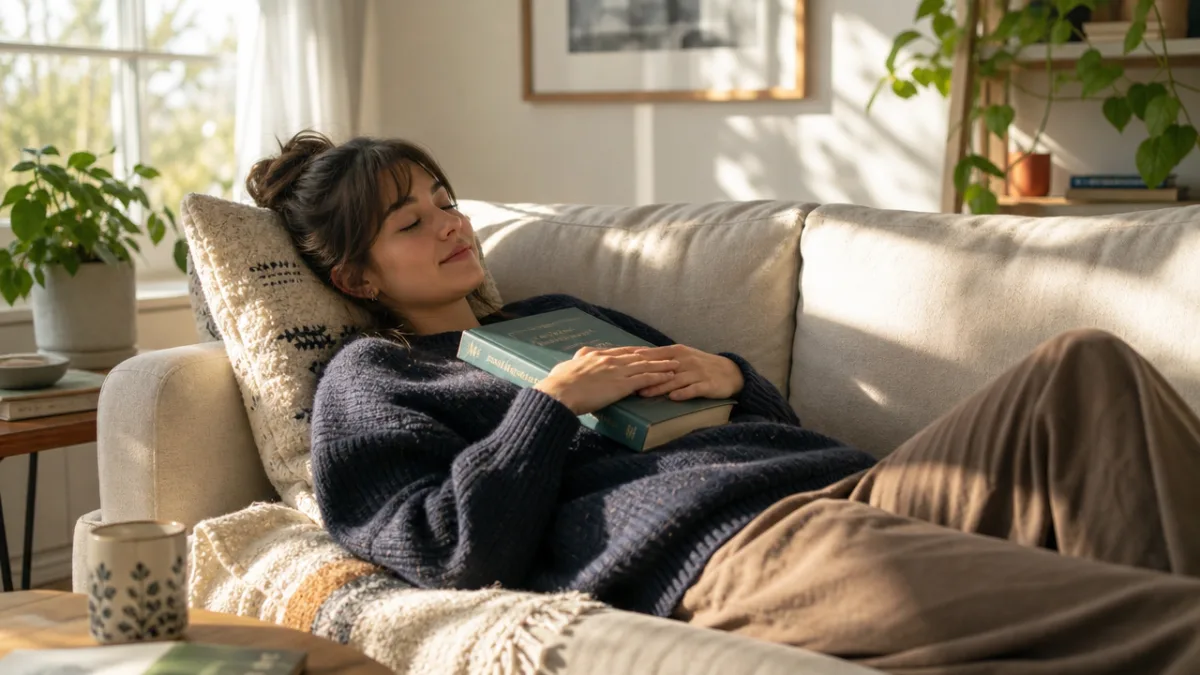
Perhaps the most quietly significant thing that happened in July was learning to rest without earning it first. I am a person who has historically required a certain amount of exhaustion or productivity as a prerequisite for guilt-free relaxation — as if lying on a sofa reading or doing nothing in particular required justification through prior effort. July, perhaps through accumulated warmth and the general permission that summer seems to grant, was the month that began to loosen that requirement. I started resting simply because I wanted to, and I let that be enough.
The effects were immediate and somewhat embarrassing in how obvious they were. I slept better. I was better company. My thinking was clearer and my patience was longer. The things I was worried about didn’t become less real, but they became more manageable when I wasn’t approaching them from a baseline of depletion. Rest, treated as a genuine priority rather than a reward for sufficient effort, turned out to function exactly as advertised: as a foundational condition for everything else going well. I’m still not entirely comfortable with it, but I’m getting there.
What helped most was reframing rest not as laziness or avoidance but as a form of active maintenance — the same kind of necessary upkeep I’d apply without question to a car or a garden but had somehow decided didn’t apply to myself. July was a corrective month in this respect. The things I rested from still existed on the other side of the rest, but I met them differently. That gap between problem and person, held open by genuine recovery, might be the most valuable thing July gave me, and the one I most intend to protect going forward.
Small Acts of Beauty in Everyday Spaces
July was also the month I started taking the aesthetics of my daily environment more seriously — not in an expensive or aspirational way, but in the simple sense of noticing what my surroundings looked like and occasionally doing something small about it. Fresh flowers from the market on the kitchen table. Rearranging the books on my shelf so the colours were pleasing rather than randomly distributed. Lighting a candle in the evenings instead of just turning on the overhead light. These are tiny interventions, individually almost laughably minor, but collectively they had a measurable effect on my mood.
There’s a body of research suggesting that the environments we inhabit daily have a significant and largely underappreciated effect on our psychological state. We tend to focus on the big interventions — therapy, medication, exercise, nutrition — while overlooking the ambient quality of the spaces we move through every single day. July reminded me that beauty in everyday life is not a frivolity. It is a form of self-respect, a signal to yourself that your daily experience is worth investing a small amount of care and intention in. A bunch of sunflowers on a table is twenty minutes of pleasure every time you walk into the room. That’s a remarkable return on a very modest investment.
I also started paying attention to beauty outside my own walls with renewed intentionality — the way light hit a particular building at seven in the evening, the colour of a front door I walked past on my daily route, the satisfying geometry of a well-stacked market display. Learning to notice small beauty is a skill, and like most skills it improves with practice. By the end of July I was richer in these small observations than I’d been in years, and that richness felt like something I’d actively cultivated rather than passively received. July, it turns out, is a very good month for learning to look.
Gratitude as a Daily Practice, Not a Platitude
The tenth thing that made me happy in July sounds, I acknowledge, like the kind of thing printed on a mediocre motivational poster. But bear with me, because the way I came to it this month felt genuinely different from every previous attempt. I started, very simply, ending each day by naming three things that had been good — not profound, not transformative, just good. A good cup of tea. A conversation that went better than expected. The specific satisfaction of crossing the last item off a list. Small, specific, real. Not gratitude as performance but gratitude as accurate accounting.
What changed was the specificity. Generic gratitude — “I’m grateful for my health, my home, my loved ones” — is true but too abstract to generate much emotional response. Specific gratitude, the kind that pins down a particular moment and examines it closely enough to feel it again, works very differently. “I’m grateful for the way the evening light fell across the kitchen at six-thirty and made everything look briefly golden” generates an actual feeling. That feeling, repeated daily, builds into something that starts to change the baseline of your experience. You begin to look for the good things not because you’re in denial about the difficult ones but because you’ve trained yourself to notice both.
By the end of July, I had thirty days of small specific goods documented in the notes app on my phone. Reading back through them felt unexpectedly moving — a detailed map of a month that might otherwise have blurred into the general undifferentiated recent past. The sunflowers, the phone calls, the slow mornings, the books, the walks without destinations, the new café, the cooking experiments, the rest taken without guilt, the small beautiful things — all of it was there, specific and real and mine. July, it turned out, was a very good month. I’m glad I wrote it down.








What do you think?
It is nice to know your opinion. Leave a comment.