










10 Genius Repurposed Vintage Jewelry Ideas: Breathe New Life Into Old Treasures
The Art of Seeing Potential in Forgotten Pieces
There is something deeply satisfying about looking at a tangle of old brooches, a box of mismatched earrings, or a drawer full of broken necklaces and seeing not junk, but raw material. Vintage jewelry carries stories within it — the Art Deco brooch your grandmother wore to dances, the chunky beaded necklace from a thrift store find, the single earring whose partner vanished decades ago. Rather than discarding these pieces, a growing movement of creative makers and home decorators has discovered that repurposing vintage jewelry opens an entirely new world of artistic possibility, one that honors the past while creating something fresh and personal.
Repurposing vintage jewelry is not simply a trend — it is a philosophy rooted in sustainability, creativity, and a genuine respect for craftsmanship that is increasingly rare in today’s mass-produced world. Every piece of vintage jewelry was made by someone, worn by someone, and loved by someone. When you transform an old brooch into a decorative curtain tieback or convert a string of pearls into a lampshade trim, you are extending the life and relevance of that object in a way that feels meaningful rather than wasteful. The environmental benefit is real too, since no new materials need to be mined or manufactured to create something beautiful.
The ideas gathered here span a wide range of skill levels, from beginner-friendly projects that require nothing more than a glue gun and imagination, to more involved DIY efforts that reward patience and attention to detail. Whether you have inherited a collection of vintage pieces, stumbled upon a treasure trove at an estate sale, or simply accumulated a pile of jewelry that no longer suits your style, these ten genius repurposing ideas will help you see every bead, clasp, and stone in an entirely new light. The only limit is the breadth of your own creativity.
Transforming Brooches Into Stunning Home Décor Accents
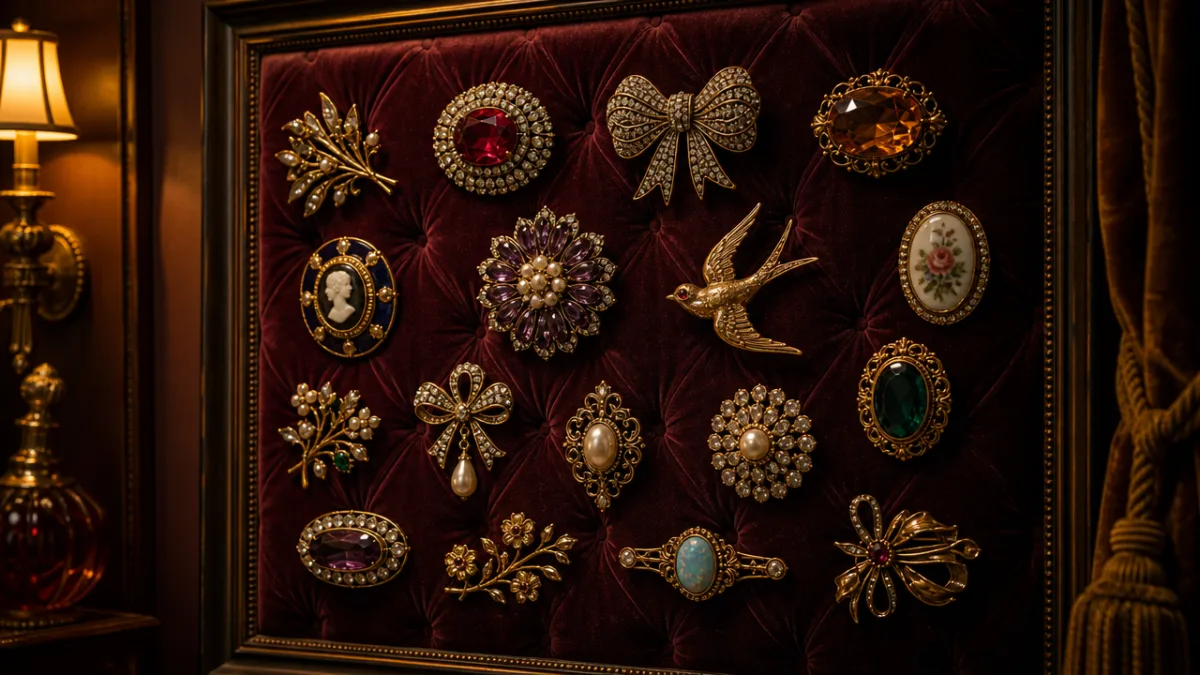
Brooches are perhaps the most versatile of all vintage jewelry pieces when it comes to repurposing, and it is easy to understand why. They already come equipped with a pin back — a built-in fastening mechanism that makes them ideal for attaching to fabric, foam, ribbon, and an impressive variety of other surfaces. A collection of mismatched vintage brooches can be pinned onto a velvet-covered frame to create a gallery-worthy piece of wall art that draws the eye and sparks conversation. Choose brooches in complementary color families, or embrace the eclectic and mix metals, stones, and eras for a more maximalist effect that truly celebrates the diversity of vintage design.
Curtain tiebacks are another incredibly practical application for statement brooches. Simply wrap a length of velvet ribbon or thick satin cord around a gathered curtain panel and secure it with a large vintage brooch. The result is instantly elegant and adds a layer of visual texture that store-bought tiebacks simply cannot replicate. For bedrooms, this idea adds a romantic, slightly theatrical quality; for living rooms, it introduces an unexpected detail that elevates the entire space. You can swap the brooches seasonally, using jeweled pieces for the holidays and floral enamel designs for spring and summer.
Brooches also make extraordinary embellishments for throw pillows, picture frames, and lampshades. Hot glue a cluster of smaller brooches onto the corner of a plain linen pillow cover to create a one-of-a-kind accent piece. Arrange them in a floral pattern or a geometric cluster — either approach yields a result that looks far more expensive and intentional than the effort required. When applied to a plain photo frame, a grouping of vintage brooches transforms an ordinary display into something that looks like it belongs in a boutique interior design shop. The key is to embrace asymmetry and abundance, layering pieces freely rather than spacing them with rigid uniformity.
Creating Wearable Art From Broken and Mismatched Pieces
Not all jewelry repurposing has to end up on a wall or a cushion. Some of the most exciting transformations happen when you take broken, incomplete, or mismatched pieces and reassemble them into entirely new wearable jewelry. A single orphaned earring, for example, can be converted into a pendant by attaching a bail — a small finding available at any craft or bead supply store — and stringing it on a delicate chain. The result is a necklace with genuine vintage character that feels genuinely unique because, of course, it is. No one else owns exactly this piece.
Charm bracelets offer another brilliant avenue for creative repurposing. Scour your collection for small vintage pendants, broken brooch components, interesting clasps, and decorative beads. Attach them to a simple chain using jump rings, alternating styles and materials to build a bracelet that tells a layered, personal story. There is something particularly appealing about wearing jewelry that has been assembled from multiple previous lives — it carries a sense of history and richness that new jewelry rarely achieves regardless of its price point. This kind of project also makes for an incredibly thoughtful and personalized gift for someone who appreciates craft and sentiment.
Collar necklaces, or statement bib pieces, can be constructed by arranging vintage beads, rhinestones, and small pendants onto a fabric or ribbon base. This is a slightly more involved project but the results can be genuinely spectacular. Use a piece of felt or interfacing as your foundation, arranging and rearranging pieces before committing to any adhesive. Layer elements by size, placing larger statement pieces at the center and graduating to smaller details at the edges. Add a simple ribbon closure at the back for an adjustable, comfortable fit. These handmade collars look extraordinary with simple, clean clothing and have the kind of visual impact that commands attention without effort.
Functional Furniture and Object Transformations
Some of the most surprising and delightful repurposing ideas involve incorporating vintage jewelry into functional objects — pieces you interact with every day rather than simply admire from a distance. Drawer pulls and cabinet knobs are an excellent starting point for this category. Large vintage buttons, dome-shaped brooches, or chunky cocktail rings can all be affixed to cabinet fronts to create one-of-a-kind hardware that transforms ordinary furniture into a conversation piece. Many vintage rings and brooches have flat backs that adhere beautifully with strong epoxy, while others can be adapted with the help of a small bolt and washer arrangement.
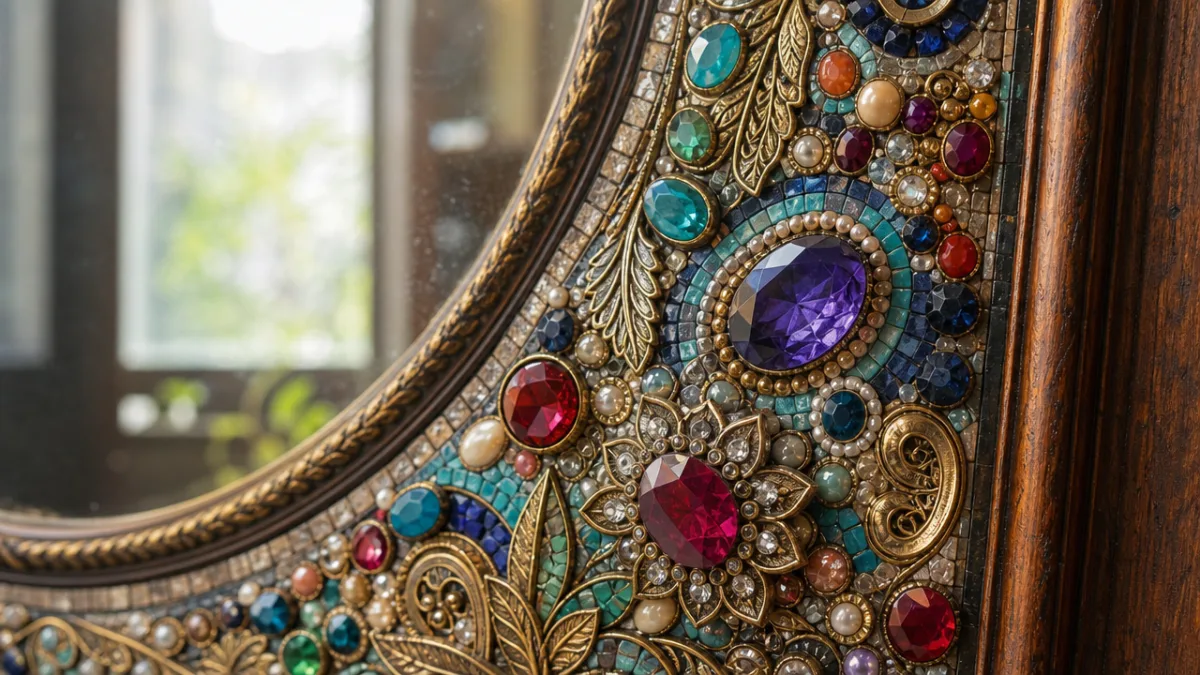
A truly show-stopping application is the creation of mosaic-style decorative surfaces using broken or unmatched jewelry components. Coat an old mirror frame, a plain wooden tray, or the top of a small side table with broken rhinestones, colorful beads, vintage cameos, and fragments of enamel brooches set into tile grout or strong adhesive. The effect is Byzantine in its richness and completely individual in its character. This is an ideal project for pieces that are too damaged to wear or display in any other format — even a brooch with a broken pin or a necklace with a faulty clasp contributes its stones and structure to the whole.
Vintage jewelry can also be incorporated beautifully into lighting. String chandelier-style crystals removed from broken necklaces or bracelets around the base of a lamp or across the bottom of a pendant light shade. Old beaded necklaces can be wrapped around a plain drum lampshade in horizontal rows and secured with thin wire or strong thread, creating a shimmering, textured shade that casts beautifully dappled light across the room. Even a simple bedside lamp becomes a statement object with this treatment, and the project requires very little technical skill — just patience, a steady hand, and a willingness to experiment with layout before committing your beads permanently in place.
Garden and Outdoor Repurposing Ideas That Defy Expectations
Taking vintage jewelry outdoors might seem counterintuitive — after all, metal tarnishes and finishes fade when exposed to the elements. But with a coat of waterproof sealant and a little strategic placement, vintage jewelry pieces can create magical moments in a garden, on a porch, or along a balcony railing. Wind chimes assembled from dangling earrings, pendants, and beaded strands create a delicate, musical presence that shifts in the breeze and catches light in ways that manufactured wind chimes rarely manage. The asymmetry of vintage pieces, their varying weights and shapes, actually enhances the randomness and musical quality of the chime.
Garden stakes and plant markers offer another wonderful outdoor use. Attach vintage brooches or large pendants to the tops of thin wooden dowels or metal rods using strong adhesive or wire wrapping, then seal thoroughly with outdoor-grade varnish. Inserted into garden beds or potted plants, these decorative markers add a whimsical, enchanted quality to any outdoor space. A garden filled with these glittering markers at various heights — catching the morning sun, peeking through foliage — has the quality of something from a storybook. This is particularly effective in cottage gardens, wildflower patches, and any planting scheme that already leans toward the romantic and informal.
Vintage jewelry can also be worked into outdoor wreaths and seasonal decorations with beautiful effect. A wreath base covered in greenery, berries, or dried flowers becomes extraordinary when adorned with clusters of sparkling brooches, looping strands of beads, or carefully positioned vintage cameos. For holiday wreaths, rhinestone brooches catch and scatter light in a way that is genuinely festive. For year-round door decorations, use weather-sealed pieces in botanical or animal motifs — bee brooches nestled among lavender sprigs, butterfly pendants hovering over dried eucalyptus — to create a welcome display that feels curated and personal rather than seasonal and disposable.
Personalized Gifts and Keepsake Projects
Perhaps the most emotionally resonant category of vintage jewelry repurposing involves creating personalized gifts and keepsakes from pieces that carry family meaning. If you have inherited a collection of jewelry from a grandparent or other loved one, transforming individual pieces into gifts for other family members is a way of distributing both the objects themselves and the memories they carry. A brooch from a grandmother’s collection can be set into a simple resin pendant so that it becomes wearable in a modern context. A collection of inherited charms can be distributed among siblings, each one mounted on a different style of chain to suit individual tastes.
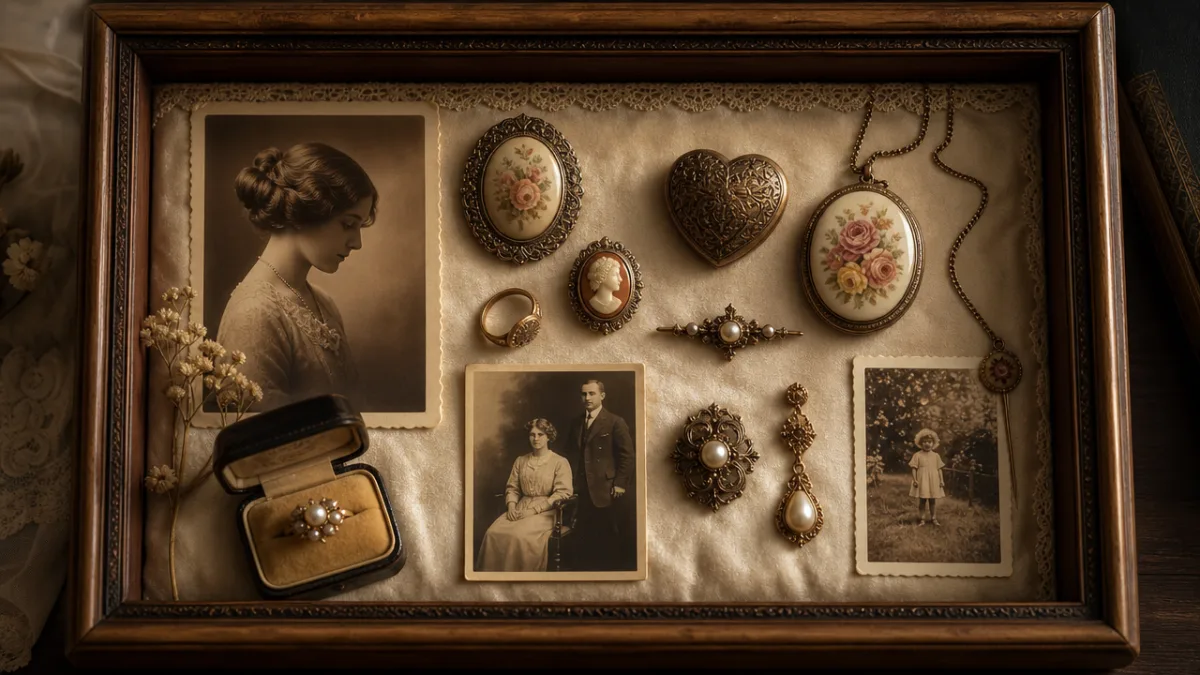
Shadow boxes and display frames offer a more overtly memorial approach to repurposing sentimental pieces. Arrange a loved one’s jewelry collection within a deep-set frame alongside a photograph, a handwritten note, or small objects that carry additional meaning. Back the frame with velvet in a color the person loved, and label individual pieces with small handwritten tags if the provenance of specific items is known and worth preserving. This kind of display is not simply decoration — it is a functional act of memory, a way of keeping someone’s presence in a room long after they are gone, and it is one of the most meaningful gifts you can give to a family member who might otherwise have received a drawer full of forgotten pieces.
For those who enjoy mixed-media art, vintage jewelry can be incorporated into altered books, scrapbook pages, and collage artwork to create deeply personal creative works. Adhere small pendants or charms to journal covers. Press beaded strands across the borders of an altered book page alongside photographs, fabric swatches, and handwritten text. The three-dimensionality of jewelry components adds a tactile richness to flat artwork that draws viewers closer and invites touch. These projects are also wonderfully therapeutic — the act of sorting, arranging, and placing objects that once belonged to someone you love is a form of gentle, creative mourning that many people find comforting and meaningful in equal measure.
Tips for Getting Started and Sourcing the Best Materials
Beginning your vintage jewelry repurposing journey is easier than it might initially seem, particularly once you know where to look for materials and what to prioritize when evaluating potential pieces. Estate sales are consistently the richest source of vintage jewelry in quantity, often offering entire collections at prices that reflect the seller’s desire to clear space rather than the intrinsic value of individual pieces. Thrift stores, flea markets, and online marketplaces like eBay and Etsy are also excellent hunting grounds, particularly if you set searches for terms like “lot of vintage jewelry,” “broken jewelry for crafts,” or “costume jewelry bulk.” You are not looking for pristine collector pieces — you are looking for interesting shapes, textures, colors, and materials.
When evaluating pieces for repurposing projects, train yourself to look past surface condition and focus on structural elements. A brooch with a broken pin is still perfectly usable for glue-based projects. A necklace with a faulty clasp is simply a strand of beautiful beads waiting to be restrung or incorporated into something new. Rhinestones with missing facets can be turned face-down in mosaic work. The only pieces that are genuinely unusable are those that have disintegrated beyond recognition, and even then, individual components — a single bead, a metal finding, a surviving stone — can often be salvaged. Approach each piece with the question “what is still beautiful here?” rather than focusing on what is broken.
The tools and supplies needed for most vintage jewelry repurposing projects are minimal and affordable. A good quality hot glue gun, strong two-part epoxy, a set of jewelry pliers (round-nose, flat-nose, and wire cutters), jump rings in several sizes, bails, chain in various weights, and a selection of findings will cover the vast majority of projects described in this article. Velvet and felt in neutral colors make excellent backing materials. Waterproof sealant is essential for any outdoor applications. Beyond these basics, each project will suggest its own additional materials as you develop it, and part of the pleasure is the ongoing discovery of new techniques and tools that expand what becomes possible with every piece you encounter.
- Estate sales and auctions — best for large quantities of mixed vintage pieces at reasonable prices, often including broken or incomplete sets ideal for repurposing.
- Thrift stores — require more frequent visits but yield excellent finds, particularly in areas with affluent donor demographics.
- Online bulk lots — platforms like eBay offer “junk jewelry” lots that provide tremendous variety for a single purchase price, perfect for mosaic and mixed-media projects.
- Family collections — inherited pieces carry emotional weight that elevates any repurposing project from decorative to deeply meaningful.
- Craft supply stores — for findings, chains, adhesives, and tools that support the transformation process without overwhelming your budget.
Finally, approach every project with patience and a willingness to revise your initial vision. The best repurposed jewelry projects tend to evolve organically — you begin with one idea and discover, midway through, that the materials are suggesting something entirely different and even better. Keep your arrangements loose and experimental for as long as possible before committing to any permanent adhesive or fastening. Photograph your layouts as you go so that promising arrangements are never lost, and do not be afraid to set a project aside and return to it with fresh eyes after a day or two. The vintage pieces you are working with have already waited decades to find their new purpose — they can afford to wait a little longer for the right vision to emerge.








What do you think?
It is nice to know your opinion. Leave a comment.