










Use Newspaper or Brown Paper Bags to Wrap Gifts: A Simple, Eco-Friendly Alternative to Traditional Wrapping Paper
Why Traditional Gift Wrapping Paper Is a Problem Worth Solving
Every holiday season, every birthday, every “just because” occasion — we wrap gifts, tear them open, and toss the paper without a second thought. But that cheerful, glossy wrapping paper is actually one of the more quietly problematic things we buy. In the US alone, roughly 4.6 million pounds of it ends up in landfills every holiday season. That’s a lot of waste for something people spend about three minutes looking at before ripping apart.
And the environmental problem runs deeper than just the sheer volume. Most commercial wrapping paper is made from virgin wood pulp that gets heavily processed, dyed, and often coated in plastic or metallic finishes — which is exactly why you can’t recycle most of it through your regular curbside bin. You’re essentially buying a product designed for a single use, and not even a long one at that. The resources that went into making it, shipping it, and eventually dealing with it in a landfill far outweigh the few seconds of pretty it provides.
There’s also the money side of things. The average American household drops somewhere between $50 and $100 a year just on wrapping paper, ribbon, bows, and tape. Over a lifetime, that adds up to thousands of dollars spent on stuff that gets thrown away immediately. Once you start thinking about wrapping paper that way — as an expensive, wasteful, totally optional tradition — the idea of doing something different starts to sound a lot more appealing.
The Beauty and Practicality of Newspaper as Gift Wrap
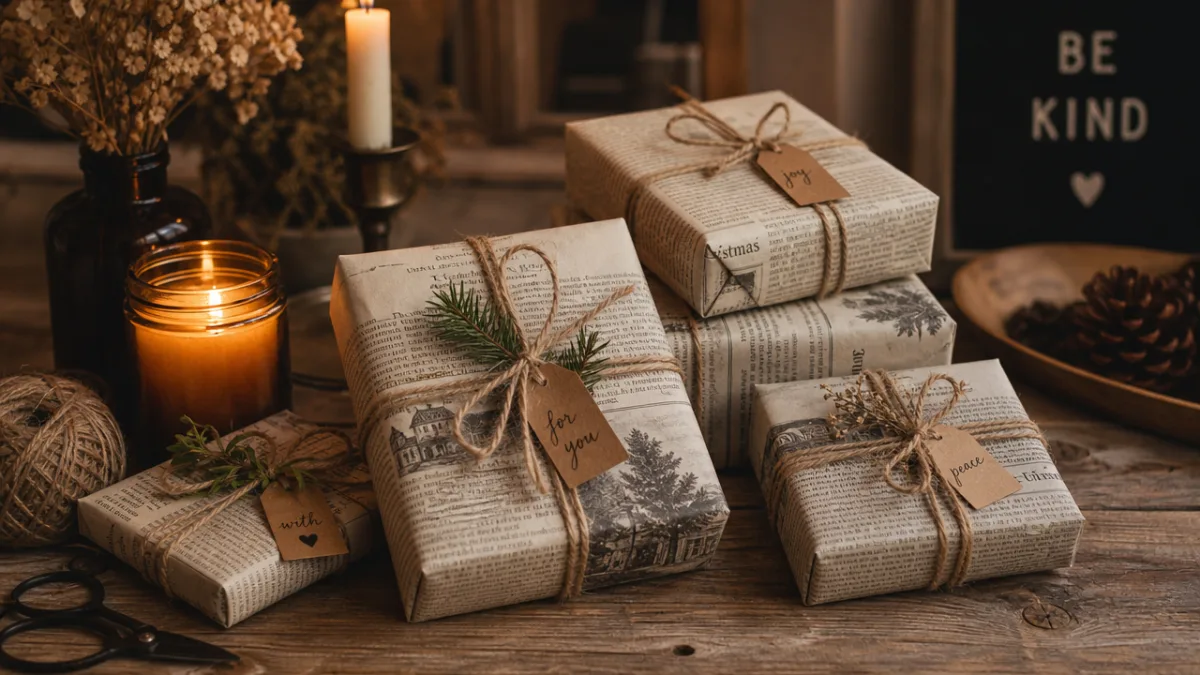
Newspaper has been wrapping things for over a century, and honestly, it’s having a well-deserved moment right now. A single broadsheet page is big enough to cover most standard gifts, holds up better than you’d expect when folded properly, and has this graphic, black-and-white aesthetic that looks genuinely intentional — not like you ran out of “real” wrapping paper and improvised.
What a lot of people don’t realize is how good newsprint is as a decorating surface. Because it costs nothing, you can go wild with it — stamps, watercolor washes, crayon rubbings, hand-lettered names, pressed flowers, twine, whatever you feel like. The texture of newsprint makes all of it look surprisingly beautiful. And here’s something that happens pretty consistently: recipients end up commenting on the newspaper wrapping more than they ever would on a standard store-bought roll.
Practically speaking, newspaper might be the most accessible wrapping material out there. If you get a print newspaper, great. If not, back issues are easy to find for free — neighbors, libraries, coffee shops, recycling bins, community swap groups. Wrapping in newspaper is genuinely free, which makes it especially appealing when you’ve got a stack of gifts to wrap and a budget you’d rather not blow on paper that’s just going to get torn up anyway.
Brown Paper Bags: A Surprisingly Elegant Wrapping Solution
Brown paper bags — whether they’re grocery bags, lunch bags, or kraft bags from a specialty shop — manage to pull off something most wrapping materials can’t: they feel both no-fuss and genuinely elegant at the same time. Kraft paper has become synonymous with artisan goods, handmade things, and thoughtful choices, so a gift wrapped in it immediately reads as intentional. And unlike newspaper, brown paper gives you a clean, unprinted surface that works beautifully on its own or as a blank canvas.
Structurally, brown paper bags are a step above most commercial wrapping paper. Grocery bags especially are built to carry weight and resist tearing, which means they wrap smoothly, hold a clean fold at the corners, and don’t fall apart before the gift even reaches its destination. If you’ve ever had wrapping paper split at the corners of a tricky box, you’ll immediately appreciate how much more forgiving a grocery bag is to work with.
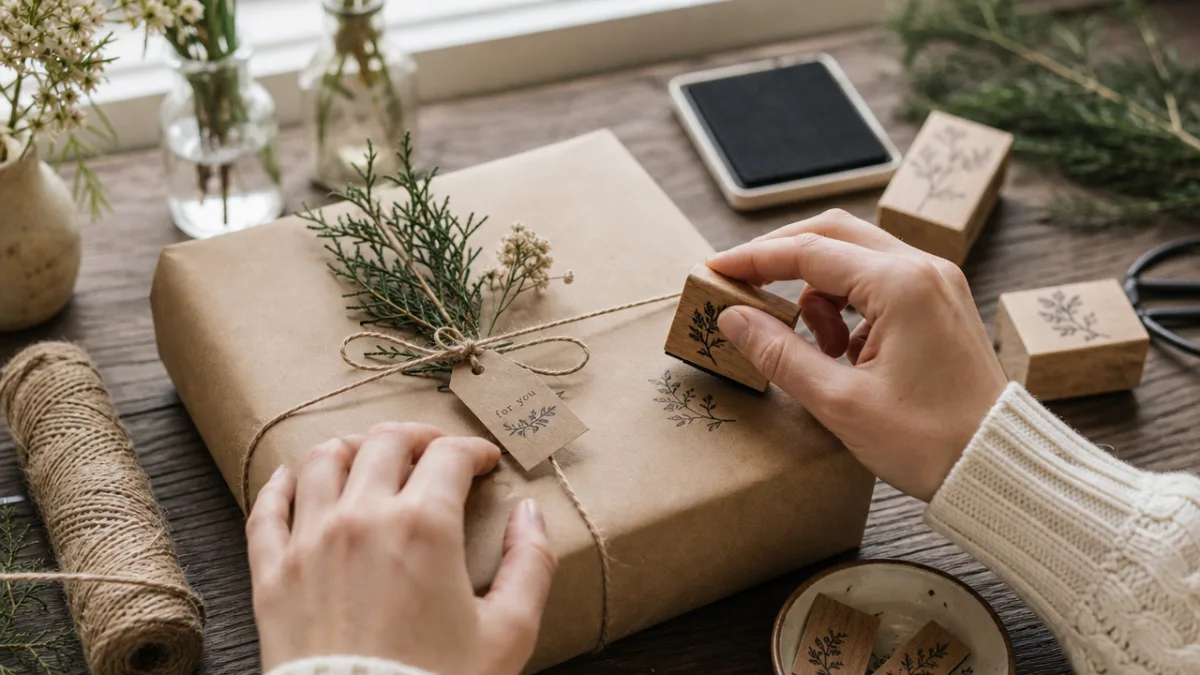
Brown paper also takes decoration really well. Rubber stamps produce crisp, clean prints on it. Watercolor paints bloom across it beautifully. Washi tape looks clean and modern against the kraft texture. A gold or silver metallic marker can turn a simple wrapped box into something that looks like it came from a boutique. Plenty of people who’ve tried it find that a thoughtfully decorated brown paper bag gift ends up looking more impressive than anything wrapped in commercial paper.
Techniques for Working With Brown Paper Bags
To use a grocery bag as flat wrap, just cut down the side seam and remove the bottom, and you’ve got a large rectangle of kraft paper ready to go. It’s usually plenty big for a shoebox-sized gift with room to spare. Need more coverage? Tape two bags together along the edges before you start wrapping. The surface is smooth, sturdy, and ready for decorating — or perfectly presentable on its own with a good ribbon.
For smaller gifts, you don’t even need to cut anything. Put the gift in the bag, fold the top down two or three times into neat creases, and seal it with a sticker, wax seal, or decorative tape. Punch a couple of holes through the folded top, thread some ribbon or twine through, and you’ve got a gift bag in under two minutes that honestly looks better than most of what you’d find on the retail shelf.
Creative Decorating Techniques for Eco-Friendly Wrapping
Switching to newspaper or brown paper doesn’t mean settling for a less impressive presentation. If anything, a lot of people find the opposite — once they’re working with a plain surface instead of a pre-printed pattern, they have the creative freedom to make something that feels far more personal and beautiful than anything off a roll. The shift that helps most is treating the wrapping as a small creative project rather than a box to check off before moving on.
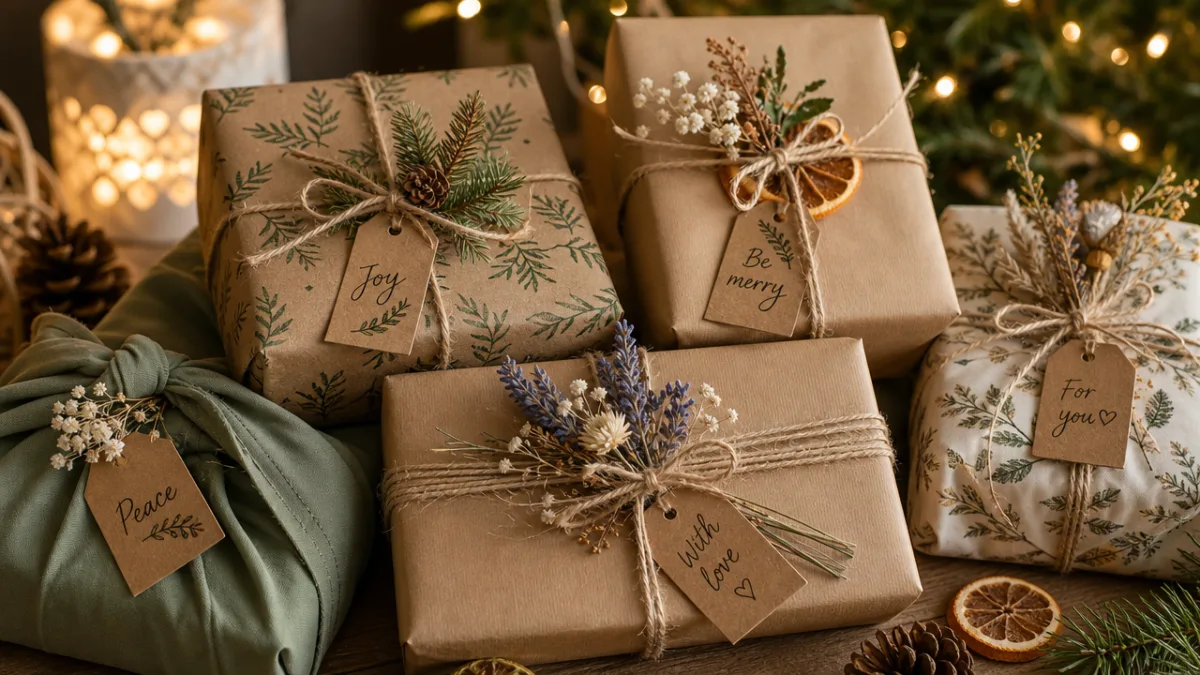
Natural elements are one of the easiest ways to make these gifts look stunning. A sprig of fresh rosemary, a cinnamon stick, a dried orange slice, a pinecone, a few seed pods — any of these tied onto a kraft paper package with jute twine creates something that looks and smells wonderful. These additions are often free if you have a garden or live near any kind of natural area, they’re completely biodegradable, and people tend to hang onto them long after the gift is opened. The wrapping becomes part of the gift.
Stamping is another approach that doesn’t require much and produces results that look genuinely professional. A few rubber stamps and some coordinating ink pads can make plain brown paper look like it came from a high-end stationery shop. Geometric shapes, botanicals, stars, and simple abstract patterns all translate beautifully. If you enjoy hand lettering, writing the recipient’s name directly on the paper with a brush pen or fine-tip marker turns the label into a design element rather than an afterthought.
Color and Texture Combinations That Work
When your base material is neutral — newsprint or kraft — your color choices for ribbon, twine, and accents matter more than usual, and certain combinations just work really well. Deep forest green twine against brown paper has a natural, earthy quality that suits handmade or rustic gifts perfectly. Black and white baker’s twine against newsprint creates a graphic, modern look that feels considered. Red and white on brown paper reads as festive without leaning too hard into any specific holiday imagery.
Texture mixing is what really makes these presentations pop. Pair the rough surface of brown paper with smooth satin ribbon, the organic feel of jute twine, some dried botanicals, and the crisp impression of a wax seal, and you’ve got something that engages all the senses in a way that shiny commercial paper just doesn’t. The contrast between rough and smooth, matte and glossy, wild and refined — that’s what makes a simply wrapped gift feel genuinely luxurious, even when the materials cost next to nothing.
Environmental and Economic Benefits Worth Celebrating
The environmental impact of this switch is real, even at the scale of just one household. Pull commercial wrapping paper out of your holiday routine and you’re not just keeping paper out of the landfill — you’re cutting demand for an energy-intensive manufacturing process that involves bleaching, dyeing, printing, laminating, and packaging, each step with its own footprint. It adds up.
And the end-of-life story for newspaper and plain kraft paper is a good one. Unlike glossy or metallic wrapping papers, both can go straight into your home compost bin, into curbside recycling without any prep, or be repurposed as packing material for future shipping. The material keeps on being useful instead of just sitting in a landfill. That’s a pretty meaningful difference from the typical outcome for commercial wrapping paper.
The financial savings are modest per year but real, and they tend to grow over time. A family wrapping ten gifts a year using newspaper and brown bags instead of store-bought paper saves a tangible amount annually, and over a decade that’s genuinely meaningful. More than the dollar amount, though, making this shift tends to open up a broader conversation about what you actually need to buy versus what you’ve just been buying out of habit — and that mindset can ripple into other spending decisions in ways that add up to something much larger.
Teaching Children About Sustainability Through Gift Wrapping
One of the nicest side effects of switching to eco-friendly wrapping is how naturally it invites kids into the process. Children are already drawn to the idea that something ordinary can become something special, so handing a kid a brown paper bag, some stamps, and a sprig of dried lavender and saying “make it beautiful” is genuinely exciting for them. They’re learning a skill, but they’re also absorbing something bigger — that creativity and care mean more than a shiny purchased product.
When a child stamps a pattern onto brown paper, ties a twine bow, or carefully writes a grandparent’s name in their best handwriting on newsprint, they’re building a relationship with making things that has implications far beyond gift wrapping. The kid who learns to see a newspaper as a beautiful material is also learning to see creative potential in everyday objects everywhere. That’s a pretty valuable thing to pick up alongside the bow-tying.
Getting Started: A Practical Guide to Making the Switch
The good news is that getting started requires almost nothing. The main thing is just to start saving materials you’d otherwise toss. Set aside newspaper pages that have interesting layouts, bold headlines, or great photos — they’ll look striking as wrapping. Keep a bag or box somewhere convenient where grocery bags can accumulate between shopping trips. Within a few weeks, you’ll have a solid stash of wrapping materials ready to go without spending a thing.
Building a small kit of decorating supplies makes the whole process more fun and the results more polished. Here’s a good starting collection:
- Natural jute twine and baker’s twine in two or three coordinating colors for tying bows and securing packages
- A small selection of rubber stamps and ink pads in versatile colors such as forest green, deep red, navy, and black
- Washi tape in several patterns for adding color and securing folds without traditional tape
- A fine-tipped permanent marker and a metallic marker for writing names and adding decorative details
- Dried botanicals, pressed flowers, or sprigs of fresh herbs for natural embellishment
- A wax seal kit for creating an elegant, professional-looking closure on folded bag-style packages
The most important thing, though, is letting go of the idea that the wrapping needs to look perfect. That’s actually one of the best parts of this approach — the slightly handmade quality is the point, not a flaw to apologize for. A gift wrapped in newspaper with visible care and a personal touch tells the recipient something that a perfectly executed commercial wrap never could. The imperfections are what make it feel like it came from a person rather than a store.
Overcoming Common Hesitations
The most common worry people have is about how the gifts will come across — will newspaper wrapping seem cheap? Will the recipient think you didn’t put in any effort? It’s a reasonable concern, but in practice it almost never plays out that way. People consistently respond to newspaper and brown paper gifts with genuine enthusiasm, often saying the wrapping itself felt like an extra layer of thoughtfulness. The fear that plain materials signal a lack of care tends to evaporate the first time someone unwraps one of your gifts and lights up.
Another hesitation is that it seems technically harder — like without the printed guidelines and pre-cut edges of commercial paper, something will go wrong. But newspaper and brown paper are actually more forgiving to work with, not less. The extra thickness means you can smooth and refold without tearing. If you cut a piece a little too small, you can add another without it being noticeable. Most people feel completely comfortable with the technique after wrapping two or three gifts. The learning curve is genuinely gentle.








What do you think?
It is nice to know your opinion. Leave a comment.