










Eco-Friendly Fabric Wrapped Presents: The Art of Sustainable Gift Giving
The Problem with Traditional Gift Wrapping
Every year, the holiday season and special occasions generate an enormous amount of waste, and a surprisingly large portion of it comes from gift wrapping. In the United States alone, an estimated 4.6 million pounds of wrapping paper ends up in landfills each year during the winter holidays. Much of this paper is laminated, dyed, or embedded with glitter, making it impossible to recycle through standard municipal programs. The environmental toll of this single tradition is staggering when you consider that it repeats itself for birthdays, weddings, baby showers, and countless other celebrations throughout the calendar year.
Traditional wrapping paper is far more resource-intensive to produce than most people realize. The process involves cutting down trees, pulping the wood, bleaching the pulp with chemicals, and then printing vivid colors using inks that may contain heavy metals or volatile organic compounds. Add to this the plastic tape used to hold it all together, the synthetic ribbons and bows made from petroleum-based materials, and the tissue paper stuffed inside gift bags, and you have a gift-giving culture that is deeply at odds with environmental responsibility. The beautiful presentation lasts mere seconds before being torn apart and discarded.
What makes this particularly troubling is that there are elegant, creative, and often more beautiful alternatives that have existed for centuries. The problem is not a lack of solutions but a lack of awareness and cultural momentum. As more people become conscious of their ecological footprint, the question shifts from whether to change this tradition to how to do it in a way that is practical, attractive, and meaningful. Fabric wrapping offers a compelling answer to all three of those demands, and it does so with a style and intentionality that disposable paper simply cannot match.
The Ancient Tradition of Furoshiki and Fabric Wrapping
Long before disposable wrapping paper became the global norm, cultures around the world were wrapping objects in cloth. The most celebrated and refined of these traditions is the Japanese practice of furoshiki, which dates back over 1,200 years. The word furoshiki literally translates to “bath spread,” a reference to its early use in public bathhouses where people would bundle their clothing and belongings in a square of cloth. Over the centuries, furoshiki evolved into a sophisticated art form, with specific folding techniques developed for differently shaped objects, from flat books to round melons to irregularly shaped bottles.
In Japan, furoshiki cloths became highly decorative objects in their own right. Families would commission or purchase silk furoshiki printed with seasonal motifs, family crests, or artistic patterns. The wrapping itself conveyed messages about the giver’s taste, social status, and relationship to the recipient. Receiving a beautifully wrapped furoshiki package was to receive two gifts at once: the item inside and the cloth itself, which would then be used, admired, and perhaps passed along in another wrapping. This circular economy of gifting fabric was sustainable by design long before sustainability was a concept anyone felt the need to articulate.
Similar traditions existed independently across many other cultures. In Korea, pojagi wrapping uses colorful patchwork cloth that itself becomes a cherished textile. In parts of Africa and South Asia, wrapping gifts in handwoven or hand-dyed fabric has long been a marker of care and ceremonial importance. Western traditions, too, historically used reusable wrapping: hatboxes, wooden crates, woven baskets, and fabric-lined trunks were all forms of packaging meant to be kept and reused. Returning to these older, wiser practices is not a step backward but a homecoming to a more thoughtful relationship with objects and celebration.
Choosing the Right Fabrics for Eco-Friendly Wrapping
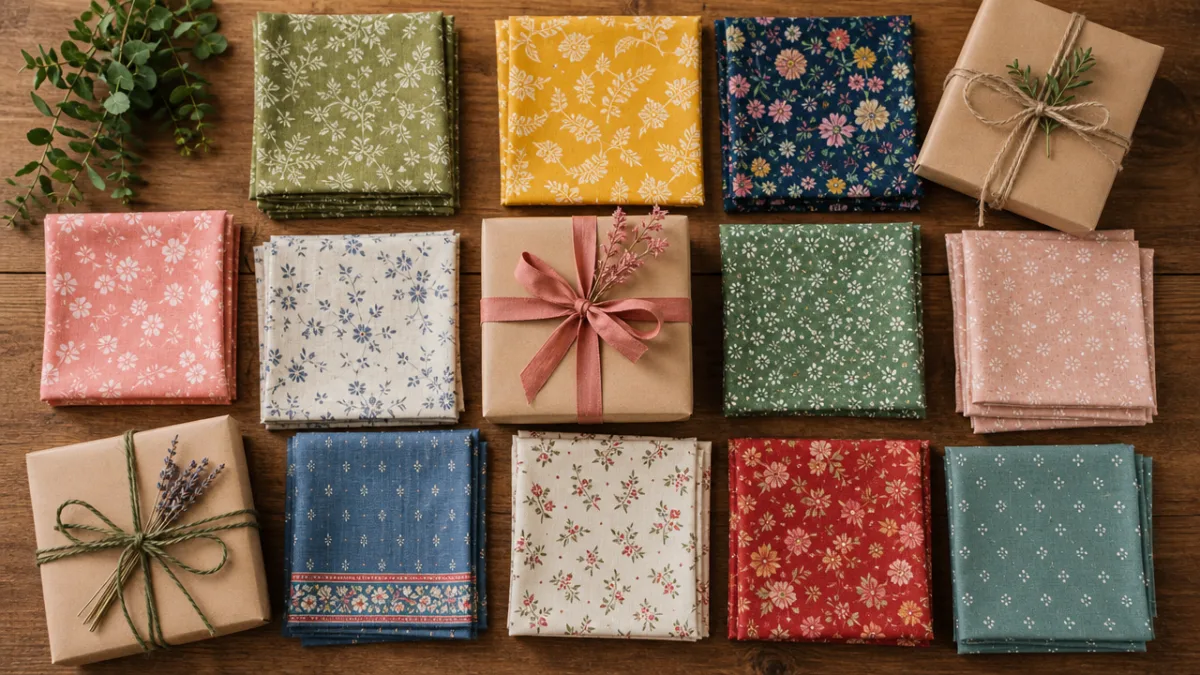
The choice of fabric matters enormously when it comes to truly eco-friendly wrapping. Not all textiles are created equal from an environmental standpoint, and selecting the right material is the foundation of a sustainable practice. Organic cotton is one of the most accessible and versatile choices: it is soft, easy to fold into clean shapes, comes in an endless variety of colors and prints, and can be washed and reused dozens of times. Look for certifications like GOTS (Global Organic Textile Standard) to ensure the cotton was grown without synthetic pesticides and processed without harmful chemicals.
Linen is another outstanding option, particularly for gifts that deserve an elevated, artisanal presentation. Linen is made from the flax plant, which requires significantly less water and pesticide than conventional cotton, and the resulting fabric is extraordinarily durable. A piece of linen used as wrapping can last decades, eventually transitioning into use as a kitchen towel, a napkin, or even a handkerchief. The natural, undyed tones of raw linen give wrapped packages an effortlessly sophisticated look that pairs beautifully with dried flowers, sprigs of rosemary, or a simple wax seal in place of a conventional tag.
Beyond purchasing new fabric, there is a whole world of reclaimed and repurposed textiles that make ideal wrapping materials. Consider the following sources when building your fabric wrapping collection:
- Vintage scarves and handkerchiefs sourced from thrift stores or estate sales, which often feature beautiful patterns unavailable in new fabric
- Old shirts, skirts, or pillowcases cut into squares, giving worn-out clothing a purposeful second life
- Fabric remnants from local sewing shops or online destash communities, often sold for very little cost
- Dish towels and tea towels, especially those with interesting prints, which serve double duty as a practical gift component
- Baby blankets and receiving cloths when wrapping gifts for new parents, adding a layer of thoughtful utility
It is worth noting that synthetic fabrics like polyester and nylon should generally be avoided, even if they are secondhand. These materials shed microplastics when washed and are not biodegradable at end of life. If a synthetic fabric is all that is available, using it is still preferable to buying new wrapping paper, but the goal should be to gravitate toward natural fibers whenever possible. Hemp fabric, bamboo-derived cloth, and Tencel (lyocell) are excellent emerging options that combine impressive sustainability credentials with beautiful drape and texture.
Basic and Advanced Folding Techniques
One of the most common hesitations people have about fabric wrapping is the perceived difficulty of the folding techniques. In reality, the most fundamental approach requires no particular skill and can be learned in under five minutes. The basic bundle wrap, sometimes called the market wrap, involves laying the fabric flat, placing the gift in the center, gathering all four corners upward, and tying them in a simple knot at the top. This works for boxes, books, jars, and almost any regularly shaped item and produces a charming, rustic look that looks intentional rather than improvised.
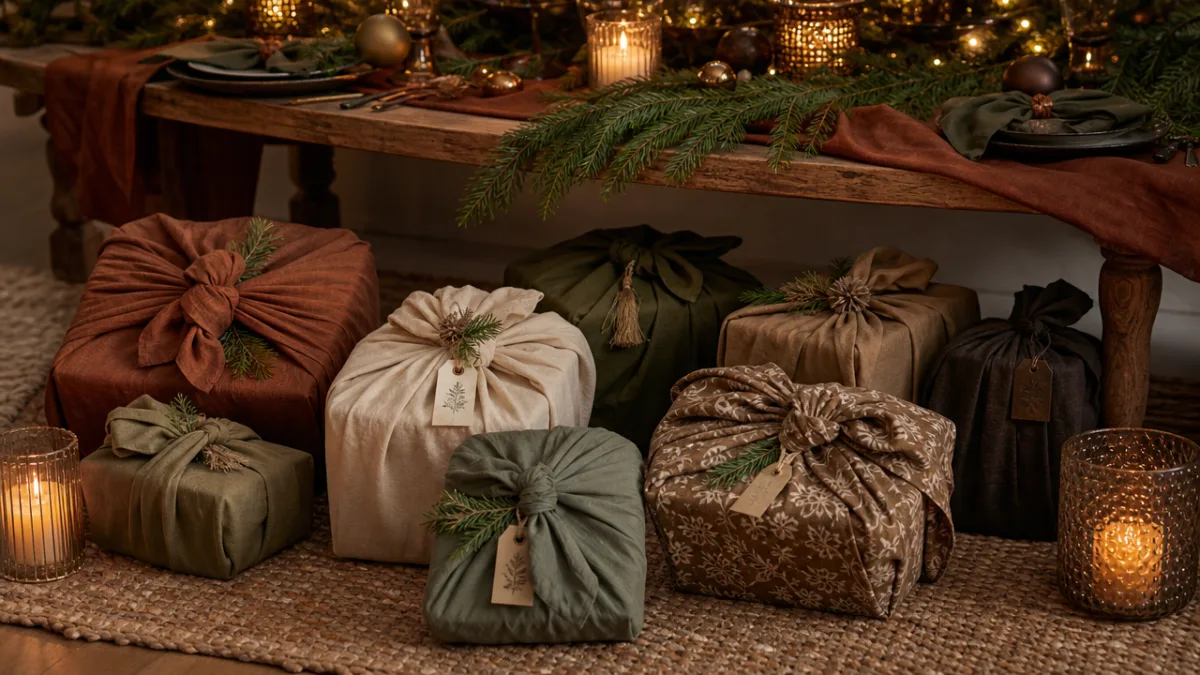
Once you are comfortable with the basic bundle, a wider range of techniques opens up. The diagonal wrap, borrowed directly from furoshiki tradition, is ideal for square or rectangular boxes and produces clean, geometric folds that closely resemble the look of traditional wrapping paper. For bottles, there is a dedicated bottle wrap technique that involves rolling the bottle diagonally across the fabric and twisting the ends, creating an elegant spiral presentation. For oddly shaped gifts, the gathered pouch method allows you to cinch the fabric shut with ribbon or twine, concealing the shape entirely and building anticipation for the reveal.
Embellishments transform fabric-wrapped gifts from simple to spectacular, and the options for sustainable decoration are plentiful. Rather than plastic bows or synthetic ribbon, consider these natural alternatives:
- Lengths of jute twine or raffia tied in loose bows or sailor’s knots
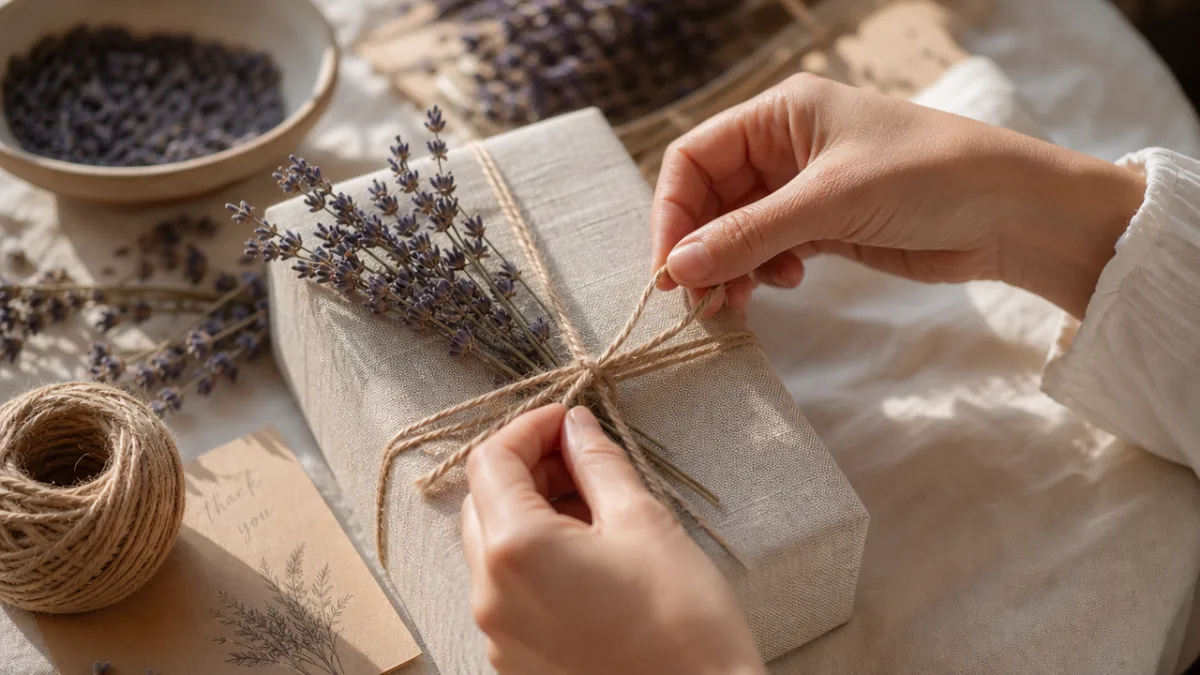
- Fresh or dried botanical elements like eucalyptus, lavender, pine cones, or cinnamon sticks tucked under the knot
- Small pieces of natural beeswax candle or a handwritten tag made from kraft paper
- A sprig of holly or rosemary for seasonal presentations
- A small secondary gift item used as decoration, such as a packet of seeds or a tiny jar of honey
For those who want to deepen their practice, there are numerous books and video tutorials dedicated entirely to furoshiki technique. The Japanese Ministry of the Environment has even published official guides promoting furoshiki as part of its ecological initiatives, and many of these resources are freely available online. Taking the time to learn even three or four techniques gives you the flexibility to wrap virtually any gift beautifully and efficiently, no matter its size or shape. The investment of an afternoon’s practice yields a skill that will serve every celebration for the rest of your life.
Making Fabric Wrapping Part of a Broader Gifting Philosophy
Switching to fabric wrapping is most powerful when it is understood not as a standalone swap but as part of a broader reorientation toward intentional, values-aligned gifting. The wrapping is the outer expression of a gift culture that prioritizes meaning over spectacle, longevity over novelty, and relationships over consumerism. When a recipient unwraps a gift and finds it enclosed in a piece of beautiful cloth rather than paper, it immediately signals that thought and care went into every layer of the giving experience. That impression sets the tone for how the gift itself will be received and remembered.
Communicating the practice to friends and family is an important step in making it feel natural rather than eccentric. A simple note tucked into the gift explaining the fabric wrapping tradition and inviting the recipient to keep the cloth and use it themselves can make all the difference. Some givers include a small card with basic folding instructions, turning the wrapping into a sort of secondary gift that introduces the recipient to a new skill. When children grow up seeing fabric wrapping at family celebrations, they absorb it as a normal and beautiful part of how gifts are given, and the practice propagates organically across social networks.
It is also worth thinking about how to handle fabric wrapping in situations where the gift will be shipped by mail or courier. In these cases, the fabric-wrapped item can be placed inside a recycled cardboard box or mailed in a reusable fabric mailer, with a note asking the recipient to return the outer packaging if convenient or to repurpose it locally. For truly committed practitioners, establishing a gentle expectation among close friends and family that wrapping cloths will be returned or exchanged creates a small, living circulation of textiles that everyone in the circle benefits from. This mirrors how furoshiki cloths were historically managed in Japanese households.
The Emotional and Aesthetic Value of Fabric Gifts
Beyond the environmental benefits, fabric-wrapped gifts carry a distinctive emotional resonance that disposable wrapping simply cannot replicate. There is something inherently tactile and warm about receiving a gift that has been folded and tied by hand in soft, textured cloth. Before the gift is even opened, the recipient has already had a sensory experience: the weight of the fabric, the texture against their fingers, the beauty of the pattern or the simplicity of an undyed linen. This heightened anticipation and sensory engagement is part of what makes giving and receiving gifts feel meaningful rather than transactional.
Fabric wrapping also photographs extraordinarily well, which matters in an age where people routinely document and share gift exchanges on social media. The natural textures of cotton, linen, and silk catch light in ways that are warm and inviting, and the handmade quality of the folding and knotting conveys authenticity. At a time when many people feel overwhelmed by the performative excess of gift-giving culture, fabric wrapping offers an aesthetic of thoughtful restraint that resonates deeply. It tells a visual story about the giver’s values without requiring a single word of explanation.
There is also a meaningful dimension to the fact that the wrapping itself can become an heirloom. A grandmother’s silk scarf used to wrap a birthday gift, then returned or kept, carries memory and sentimentality that no amount of shimmering foil paper could approximate. Over years and decades, a family might accumulate a collection of wrapping cloths, each with a history: the indigo-dyed cotton used for a wedding gift, the vintage floral square that wrapped every Christmas present for a decade, the hand-embroidered piece brought back from a trip abroad. These cloths become artifacts of a family’s story, imbued with meaning that grows rather than diminishes with use.
Ultimately, the shift to fabric wrapping is an invitation to slow down and bring intention to one of life’s most universal social rituals. It asks us to reconsider what celebration looks like when it is decoupled from disposability, and to discover that the answer is often more beautiful, more personal, and more meaningful than what we had before. The cloth you choose, the way you fold it, the decorations you select: each of these small decisions becomes an expression of care that the recipient will feel, even if they cannot fully articulate why. In that way, sustainable gifting is not a sacrifice of beauty or joy. It is a deepening of both.
Getting Started: A Practical Guide to Building Your Fabric Wrapping Kit
Beginning a fabric wrapping practice does not require a significant investment or a complete overhaul of your current approach. The most sensible entry point is to look through your own home first. Almost every household contains fabrics that are underused, worn, or waiting to be repurposed: old tablecloths, mismatched pillow covers, flannel shirts that no longer fit, cotton napkins from a discontinued set. Cutting these into squares of roughly 50×50 cm, 70×70 cm, and 90×90 cm gives you a starter kit that covers most common gift sizes, from small jewelry boxes up to large clothing items or board games.
If you decide to purchase fabric specifically for wrapping, a half-yard or full-yard cut from a local fabric store is a very economical investment. Many fabric stores sell end-of-bolt remnants at steep discounts, and these are perfect for wrapping. You do not need to hem the edges for wrapping purposes, though a simple folded hem sewn on a machine or even finished with pinking shears will extend the life of the cloth and give it a cleaner appearance. Cotton quilting fabric, in particular, offers an almost limitless variety of prints, from bold geometric patterns to delicate botanicals, and is available at virtually every fabric retailer.
Once you have assembled even a modest collection of wrapping cloths, storage and organization become important. A dedicated basket or drawer where all your wrapping fabrics live keeps them accessible and means you will actually use them rather than reaching for paper out of habit. Folding the cloths neatly and organizing them by size makes it easy to grab the right piece quickly. Some people like to keep a small basket of natural embellishments alongside the fabric: a roll of jute twine, a bundle of dried lavender, a collection of pine cones, and a set of kraft paper tags. Having everything in one place turns the wrapping of a gift from a last-minute scramble into a small, pleasurable ritual.
The practice of eco-friendly fabric wrapping rewards patience and creativity, and it grows more satisfying the longer you engage with it. Over time, you will develop your own signature style, preferred techniques, and favorite fabric combinations. You will start to notice beautiful textiles in thrift stores and think immediately of their potential as wrapping. You will find yourself looking forward to wrapping gifts rather than viewing it as a chore. And perhaps most importantly, you will feel the quiet satisfaction of knowing that every gift you give leaves a little less waste in the world, and a little more beauty in its place.








What do you think?
It is nice to know your opinion. Leave a comment.