










The Art of DIY Fabric Gift Wrap: A Sustainable and Beautiful Alternative
In a world increasingly aware of waste and environmental impact, the tradition of wrapping gifts in single-use paper has started to feel at odds with our values. Every holiday season, billions of rolls of wrapping paper end up in landfills within minutes of a gift being opened. DIY fabric gift wrap offers a meaningful, beautiful, and reusable alternative that transforms the act of giving into something even more intentional and personal. Whether you are a seasoned crafter or a complete beginner, fabric wrapping is one of those skills that is far easier to learn than it looks.
The concept of wrapping gifts in fabric is far from new. The Japanese have practiced a textile wrapping art called Furoshiki for centuries, using a single square of cloth to elegantly wrap everything from bottles of wine to stacked boxes. This ancient tradition has found new relevance in modern sustainable living movements, and crafters around the world have embraced it with creative enthusiasm. Today, DIY fabric gift wrap blends this timeless technique with contemporary fabrics, patterns, and personal touches that make every wrapped present feel like a small work of art in its own right.
What makes fabric gift wrap particularly compelling is its dual nature as both packaging and secondary gift. When you wrap a present in a beautiful piece of fabric, you are essentially giving two gifts at once — the item inside and the textile itself. The recipient can reuse the fabric as a scarf, a kitchen towel, a decorative piece, or save it to wrap their own future gifts. This creates a lovely ripple effect of thoughtfulness and sustainability that paper wrapping simply cannot replicate. Once you start giving fabric-wrapped gifts, it quickly becomes difficult to go back to the disposable alternative.
Choosing the Right Fabric for Your Gift
The foundation of any beautiful fabric gift wrap is choosing the right material. Not all fabrics behave the same way when folded and tied, and understanding the characteristics of different textiles will help you achieve the polished, generous-looking folds that make fabric wrapping so visually appealing. Lightweight fabrics such as cotton muslin, linen, and silk are among the easiest to work with because they fold cleanly, hold knots well, and drape beautifully without adding bulk to the finished package. Heavier fabrics like canvas or thick wool can work for larger items but may become unwieldy for delicate or small gifts.
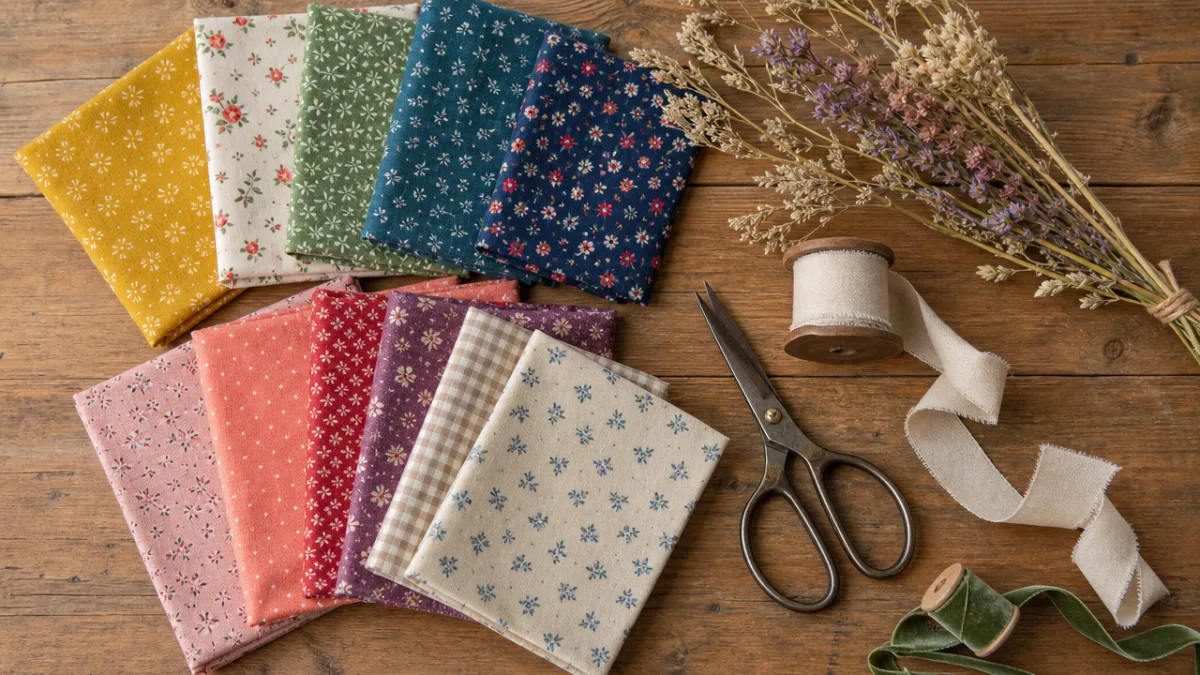
Pattern and color selection is where the fun really begins. Fabric stores offer an extraordinary range of options, from classic florals and geometric prints to novelty designs and festive seasonal patterns. Solid-colored fabrics in rich jewel tones can feel luxurious and modern, while vintage-inspired prints bring warmth and nostalgia. When choosing a pattern, it helps to consider who will receive the gift and whether they might actually want to keep and use the fabric afterward. A bold geometric print might thrill a design-forward friend, while a soft botanical linen could be perfect for someone who loves natural aesthetics in their home.
Repurposing fabric you already own is one of the most satisfying aspects of this craft. Old scarves, remnants from sewing projects, thrifted pillowcases, and even worn-out clothing with beautiful prints can all find new purpose as gift wrap. This approach is not only economical but deeply sustainable, giving existing materials a second life rather than sending them to waste. Before purchasing new fabric, spend a few minutes sorting through your fabric stash or linen closet — you may be surprised by the treasures waiting there, perfectly suited for wrapping a gift with character and charm.
Essential Tools and Materials You Will Need
One of the great advantages of DIY fabric gift wrap is that it requires very little in the way of specialized tools or materials. In its simplest form, all you need is a square or rectangular piece of fabric and the gift itself. However, having a few additional supplies on hand allows you to create more polished, professional-looking results and opens up a wider range of wrapping styles. Gathering your materials before you begin makes the whole process smoother and more enjoyable, turning gift wrapping from a last-minute chore into a genuinely pleasurable creative activity.
The basic toolkit for fabric gift wrapping includes fabric scissors or a rotary cutter and cutting mat for trimming fabric to size, a ruler or measuring tape, and an iron for pressing out stubborn wrinkles before you begin. Beyond these basics, you may want to collect ribbons, twine, raffia, or decorative cord for tying off your wrapped packages with an extra flourish. Dried flowers, sprigs of herbs, small ornaments, or handwritten gift tags tucked into a knot add personality and make the presentation feel truly considered. A simple glue gun can also be useful for securing decorative elements that you want to stay precisely in place.
Fabric sizing is one of the most important practical considerations to get right from the start. As a general rule of thumb, you want a piece of fabric that is approximately three times the size of the item you are wrapping — this gives you enough material to achieve full, graceful folds without running short. A square is the most versatile shape for many standard wrapping techniques, while a long rectangle works particularly well for cylindrical objects like wine bottles or rolled canvases. Cutting your fabric slightly larger than you think you need is always a wiser choice than cutting it too small and struggling to make the ends meet neatly.
- Cotton muslin or quilting cotton for lightweight, clean folds
- Linen for a natural, textured look with excellent drape
- Silk or satin for an elegant, luxurious finish on special gifts
- Repurposed scarves, handkerchiefs, or fabric remnants for sustainable gifting
- Furoshiki-style cotton squares specifically designed for gift wrapping
Step-by-Step Wrapping Techniques for Every Gift Shape
The most fundamental fabric wrapping technique, often called the basic wrap or the diagonal wrap, works beautifully for boxes and rectangular items of almost any size. To begin, place your fabric square on a flat surface with one corner pointing toward you, creating a diamond orientation. Set the gift in the center of the fabric, then fold the corner nearest to you up and over the gift. Pull it firmly but gently, tucking the edge under the far side of the box if possible. Bring the far corner up and over the gift in the same manner, smoothing the fabric as you go to eliminate any bunching or unevenness.
Next, work on the two remaining side corners, one at a time. Pick up the left corner and fold it inward toward the center of the gift, creating a neat diagonal fold along the left side that mimics the look of traditional paper gift wrapping. Do the same with the right corner, folding it neatly across the left. Bring both side corners up and over the top of the gift, and tie them together in a square knot or bow at the center top. The result is a tidy, elegant package with a decorative knot accent that doubles as a handle. With just a little practice, this technique becomes second nature and takes only a minute or two to execute.
For cylindrical gifts like wine bottles, candles, or tubes, a different approach works best. Lay your fabric flat and place the bottle on one edge, then roll the bottle across the fabric until it is fully wrapped. Gather the fabric at each end, twisting it lightly to create a cracker or bon-bon shape, then tie each end off with ribbon or twine. Alternatively, you can set a bottle upright in the center of a fabric square, gather all the edges up around the bottle, and tie them off just above the neck with a ribbon — a method that works especially well with tall, elegant bottles and flowing fabrics like silk or chiffon. The gathered fabric fans out above the tie like a decorative bloom.
Creative Variations and Decorative Finishing Touches
Once you have mastered the basic techniques, the possibilities for creative variation are essentially limitless. Layering two different fabrics — perhaps a sheer organza over a solid cotton — creates a dimensional effect with real visual depth and interest. You can also cut fabric into unconventional shapes for specific gifts; long strips work wonderfully as wrapping for narrow items like umbrellas or rolled yoga mats, while an oversized square of fabric can wrap a large, oddly shaped gift that would be a nightmare to cover neatly in paper. The flexibility of fabric as a wrapping medium means that almost no gift is too difficult to wrap beautifully.
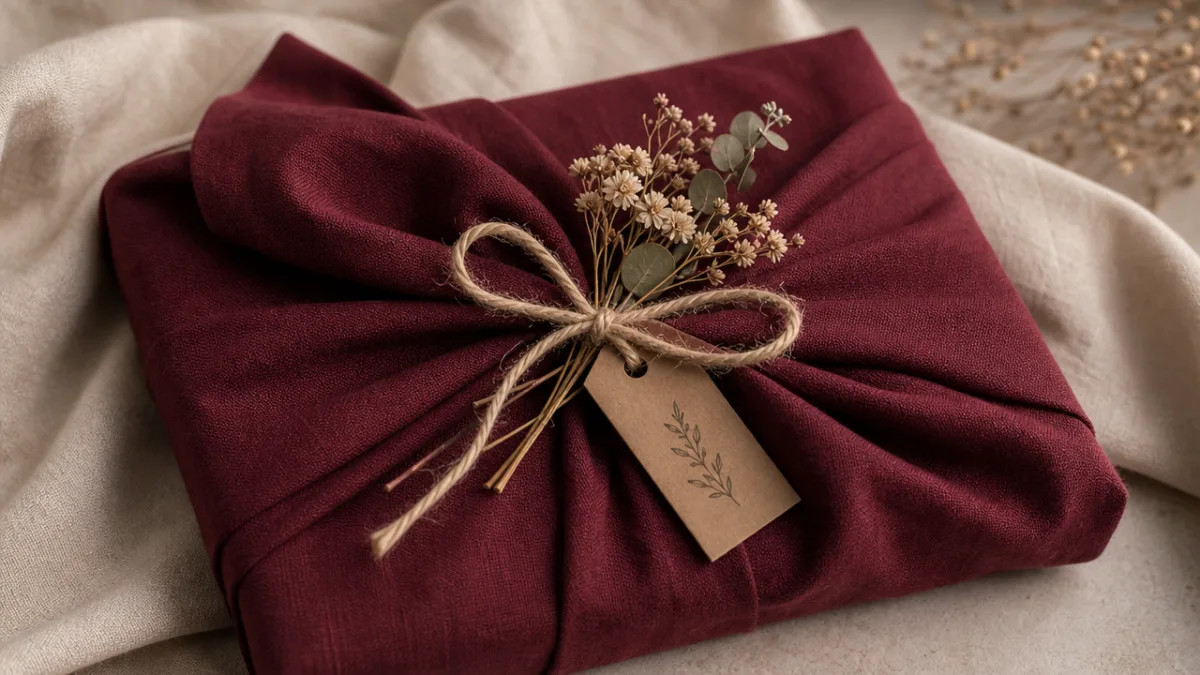
Decorative finishing touches elevate a fabric-wrapped gift from lovely to truly memorable. Tucking a small stem of dried lavender, a sprig of rosemary, or a cinnamon stick into the knot at the top of a package adds fragrance and natural beauty that feels seasonal and thoughtful. Fresh flowers can also work for gifts being given immediately, though they are less practical for anything that needs to be transported or stored for more than a few hours. Handwritten gift tags made from kraft paper or card stock tied on with twine add a personal, artisan quality that printed tags simply cannot match. These small details communicate care and attention in a way that recipients genuinely notice and appreciate.
Embellishing the fabric itself before wrapping is another dimension worth exploring. Fabric stamps and textile ink allow you to print custom patterns, monograms, or seasonal motifs directly onto plain fabric, creating a truly one-of-a-kind wrapping that no one else will have. Iron-on transfers, fabric paint, and even simple hand-stitching can add personalized elements that make the wrapping feel as special as the gift inside. For birthdays, you might stamp the recipient’s initial in gold ink on ivory linen. For the winter holidays, a simple geometric pattern in deep red on natural cotton creates something festive without veering into commercial cliché.
Making Fabric Gift Wrap a Year-Round Practice
One of the barriers people encounter when first exploring fabric gift wrap is the sense that it requires a significant upfront investment of time and money. In reality, building a fabric gift wrapping practice is something that develops naturally over time, growing richer as your collection of fabrics and your skill with different techniques both expand. Starting small — perhaps wrapping just one or two gifts in fabric for an upcoming birthday or holiday — allows you to learn without pressure and discover which fabrics and methods you enjoy most. Most people find that once they have wrapped a few gifts in fabric, the satisfaction it brings makes them genuinely reluctant to return to paper.
Building a fabric wrap stash throughout the year is one of the most practical strategies for making this practice sustainable and affordable. Keep an eye out for beautiful fabric remnants at fabric stores, where offcuts are frequently sold at significant discounts. Thrift stores are goldmines for vintage scarves, table runners, and interesting textiles that cost very little and can be repurposed beautifully. Online secondhand marketplaces often have lots of fabric sold cheaply by people clearing out craft supplies. Over time, you will accumulate a thoughtfully curated collection that means you always have exactly the right fabric on hand when a gifting occasion arises, without any last-minute scrambling or unnecessary spending.
Involving children in fabric gift wrapping is a wonderful way to introduce young people to both creative crafting and sustainable thinking from an early age. Children are often delighted by the process of choosing a fabric, learning a simple wrapping technique, and seeing a beautifully finished gift emerge from their own hands. The skills involved — careful folding, tying knots, making considered aesthetic choices — are satisfying for children to develop and genuinely useful in life. A family tradition of fabric gift wrapping, where even the youngest members contribute to preparing holiday or birthday presents, creates memories and instills values around sustainability and handcraft that can last a lifetime.
Gifting and Receiving: Encouraging the Cycle of Reuse
A key aspect of making fabric gift wrapping truly sustainable rather than merely an aesthetic choice is encouraging recipients to continue the cycle of reuse rather than discarding the fabric after opening their gift. A small card tucked into the wrapping that explains the tradition and invites the recipient to rewrap a future gift with the same fabric can be a charming and effective way to pass on the practice. Many people are simply unaware that fabric wrapping is meant to be kept and reused, and a brief, warm note demystifying the concept makes a significant difference in whether the fabric gets saved or casually thrown away alongside other packaging materials.
When you give a fabric-wrapped gift, you are implicitly sharing your values around sustainability and thoughtful consumption, but doing so in a way that is joyful and beautiful rather than preachy or didactic. The gift speaks for itself — the soft texture of linen, the elegant drape of a silk knot, the warmth of a botanical print — communicating care and intentionality without a word being said. Over time, as more of your friends and family receive fabric-wrapped gifts and adopt the practice themselves, the environmental impact compounds in a genuinely meaningful way. Each piece of fabric that replaces a roll of disposable paper represents waste that never enters the landfill.
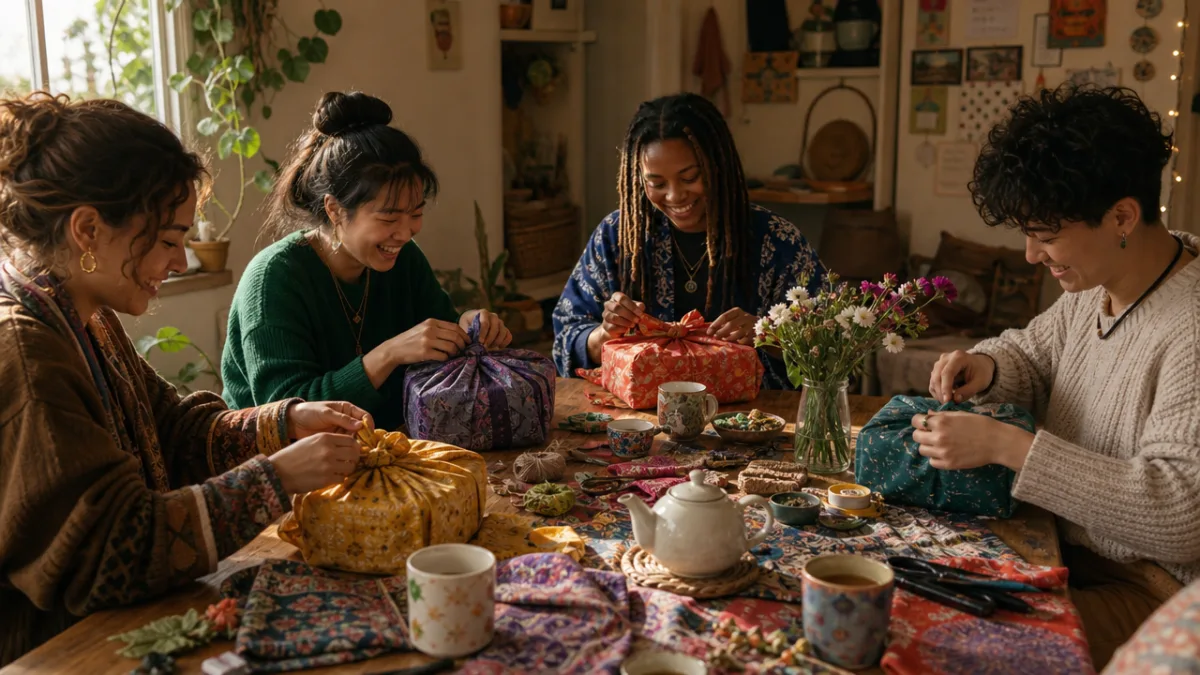
The social dimension of fabric gift wrapping adds another layer of richness to the practice. Hosting a fabric gift wrap workshop — even an informal one with a few friends, some fabric scraps, and cups of tea — is a wonderfully convivial way to share the skill and spread enthusiasm for sustainable gifting. People who learn to wrap in fabric from a friend rather than from a tutorial often feel a stronger personal connection to the practice and are more likely to continue it. These kinds of small, domestic knowledge-sharing moments are also simply enjoyable: an afternoon of crafting, conversation, and collective creativity that leaves everyone with new skills and beautifully wrapped gifts ready for the next occasion.
Environmental Impact and the Case for Sustainable Gifting
The environmental argument for fabric gift wrapping is compelling when you look at the numbers. In the United States alone, an estimated 2.3 million pounds of wrapping paper is produced each year, and a significant portion of it is not recyclable due to metallic inks, glitter coatings, and lamination. Most of that paper ends up in landfill. When you consider that a single piece of fabric can replace dozens or even hundreds of pieces of wrapping paper over its lifetime, the cumulative impact of switching even a fraction of your gift-giving to fabric wrapping becomes significant. This is not a token gesture — it is a meaningful behavioral change with measurable environmental consequences.
Beyond the paper itself, conventional gift wrapping often involves plastic tape, synthetic ribbon, Styrofoam pellets, and plastic bags — all materials with their own substantial environmental footprints. Fabric gift wrapping, by contrast, can be entirely plastic-free. Natural fiber fabrics, cotton or jute twine, dried natural decorations, and paper tags create a gifting experience that is beautiful precisely because it draws on natural materials with minimal processing. The aesthetic that emerges from this constraint — warm, organic, textured, and handmade-feeling — happens to be exactly the kind of aesthetic that resonates deeply with contemporary sensibilities around authenticity and craft.
It is also worth recognizing that sustainable gifting practices exist within a broader cultural shift toward conscious consumption and intentional living. Fabric gift wrapping is one small but visible part of that shift — a daily practice where personal values and material choices align in a way that is both satisfying and genuinely impactful. Every time someone opens a gift wrapped in fabric and pauses to appreciate both the wrapping and the thoughtfulness behind it, a small but meaningful conversation about consumption and sustainability takes place. These individual moments, multiplied across communities and occasions, contribute to the gradual but profound cultural change that a more sustainable future will require.
- Start with one or two fabric pieces from your existing linen collection to avoid any upfront cost.
- Practice the basic diagonal wrap technique on a box at home before wrapping an actual gift.
- Include a small note with each fabric-wrapped gift inviting the recipient to reuse the fabric for their own gifting.
- Gradually build a dedicated fabric wrap collection by saving remnants and thrifting beautiful textiles throughout the year.
- Experiment with one new wrapping technique each season to steadily expand your skills and repertoire.
- Share the practice with friends and family by hosting an informal fabric wrapping gathering before a major gift-giving occasion.
Ultimately, DIY fabric gift wrap is far more than a crafting trend or a sustainability strategy — it is a practice that enriches the entire experience of giving. It slows down the ritual of preparing a gift, inviting you to be present and intentional rather than hurried and automatic. It gives the recipient something beautiful and tactile before they even know what lies inside. And it connects you to a long human tradition of caring for one another through handmade gestures and thoughtful material choices. In a world that often feels rushed and disposable, a gift wrapped with time, skill, and a piece of beautiful fabric carries a quiet but unmistakable message: you are worth the effort.








What do you think?
It is nice to know your opinion. Leave a comment.