










10 Creative Ways to Use Peel-and-Stick Wallpaper in Dollhouses
Why Peel-and-Stick Wallpaper Is a Game-Changer for Dollhouse Decorating
If you’ve ever tried wallpapering a dollhouse the old-fashioned way, you know exactly how frustrating it can be. Paste-based wallpapers are a nightmare at miniature scale — one small mistake and you’re dealing with bubbles, tears, or a wall panel that’s hopelessly crooked. Peel-and-stick wallpaper has honestly changed everything. It’s forgiving, repositionable, and opens up so many creative possibilities that both beginners and longtime miniaturists have fallen in love with it. Just the fact that you can peel it off and start over is enough to make it worth trying.
What really makes it exciting, though, is the sheer variety. You can find peel-and-stick wallpaper in practically every pattern, texture, and color palette you could want — delicate florals that feel straight out of a Victorian parlor, bold geometric designs for a mid-century modern vibe, you name it. Plenty of crafters have also figured out that scaling down full-sized interior design wallpaper samples produces a surprisingly authentic look for way less money than specialty miniature supplies. It’s become one of those tools that, once you try it, you can’t imagine working without.
There’s also something really freeing about using a material you can remove without any damage. If a pattern feels off once it’s up, you just peel it back and try something else. For collectors who like to redecorate seasonally, or for crafters who are still figuring out their own style, that flexibility is genuinely priceless. It makes you bolder. You’ll reach for patterns you’d never risk with a permanent adhesive, and more often than not, they work beautifully.
Scaling and Cutting Techniques for a Perfect Miniature Fit
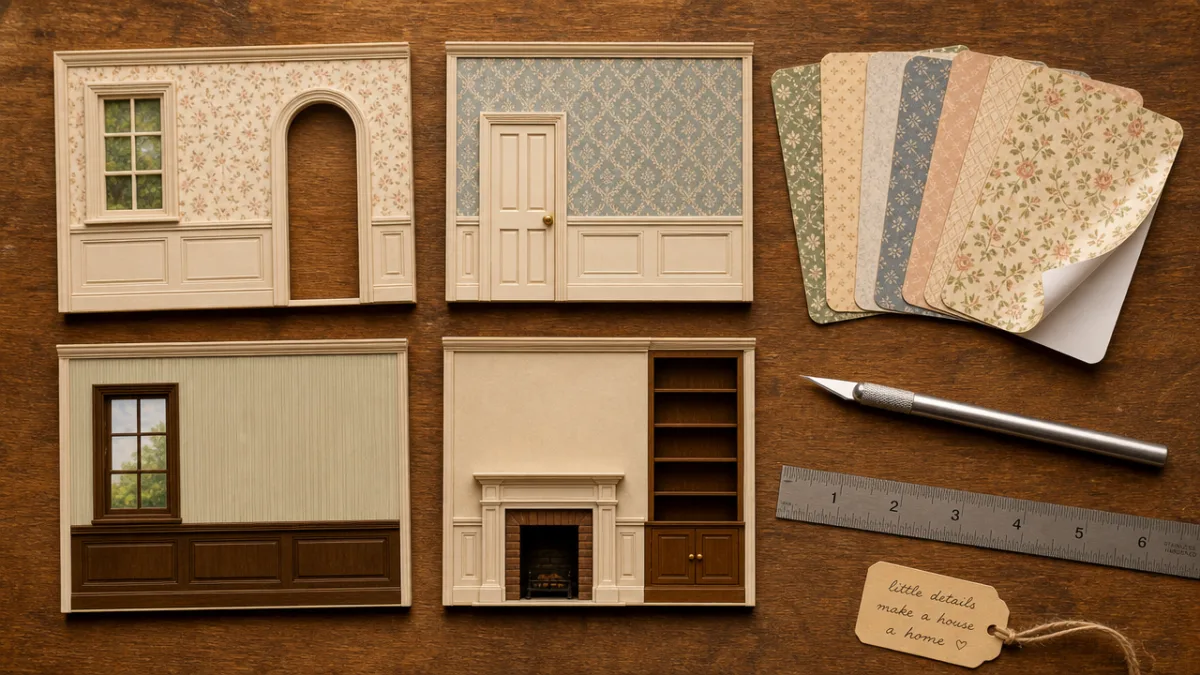
Getting your scale right is really the most important skill to nail when using peel-and-stick wallpaper for dollhouses. The standard dollhouse scale is 1:12, which means one inch stands in for one real-world foot. Before you buy or cut anything, take the time to measure each wall panel in your dollhouse and write those dimensions down. That way you can plan exactly how much material you need and cut as efficiently as possible. A sharp craft knife and a self-healing cutting mat aren’t optional here — they’re essential.
When you’re cutting for tight spaces, slow down and be deliberate. Run a metal ruler along your cut lines so your edges come out perfectly straight, and do a light score first before committing to a full cut. For any wall that has a window or doorway, trace the opening onto the back of the paper before you cut, so you end up with a clean, precise negative space. Trust me, it’s so much easier to cut a window opening before the paper goes up than to try trimming around the frame after the fact — plan your sequence and save yourself the headache.
Pattern matching is something a lot of dollhouse crafters don’t think about until it’s too late, but it really does matter. Even at small scale, a floral or geometric repeat that doesn’t line up properly looks noticeably off. When you’re working with a repeating pattern, treat each wall panel as part of one continuous surface and line up the repeat before you make any cuts. If you have a room where three or four walls are visible at once, the extra effort of matching the pattern pays off enormously — the finished space looks polished and intentional, which makes the whole miniature scene so much more convincing.
Living Rooms and Parlors: Creating Atmosphere Through Pattern
The living room or parlor tends to be the heart of any dollhouse, so the wallpaper you choose here does a lot of heavy lifting. For a classic Victorian parlor, rich damask or toile patterns in deep burgundy, forest green, or navy create that layered, ornate feeling perfectly. They pair beautifully with miniature upholstered furniture, tiny oil paintings, and gilded accessories. Scaled-down damask from a full-sized wallpaper sample — or even good-quality gift wrap — can look absolutely stunning and costs next to nothing.
If you’re going for a more contemporary living room, bold geometric or abstract patterns in a restrained color palette make a real statement. Hexagonal tiles, chevron stripes, and large-scale botanical prints all translate surprisingly well to miniature walls when you choose them thoughtfully. One trick worth trying: use patterned peel-and-stick paper on just one accent wall and keep the rest in a complementary solid. It mirrors what real interior designers do and keeps the space from looking too busy at a small scale.
Textured peel-and-stick options — think faux brick, grasscloth, or linen weave — bring a tactile quality to dollhouse living rooms that flat papers just can’t match. A faux brick accent wall behind a miniature fireplace is one of those details that instantly makes a space feel cozy and real. These textures are especially wonderful in rustic, industrial, or farmhouse-style dollhouses where raw, natural surfaces are part of the whole look. Even from a few feet away, the visual depth is genuinely impressive.
Bedrooms and Nurseries: Soft, Story-Driven Spaces
Dollhouse bedrooms are such a great opportunity to tell a little story through wallpaper. A nursery with whimsical animal prints, soft watercolor florals, or vintage storybook illustrations can turn a tiny room into a fully realized miniature world with so much charm. When you’re picking patterns for a nursery, look for softer color palettes that feel gentle rather than visually hectic. Bunny rabbits, woodland creatures, vintage alphabet blocks — these kinds of motifs are popular for good reason, and they never really go out of style.
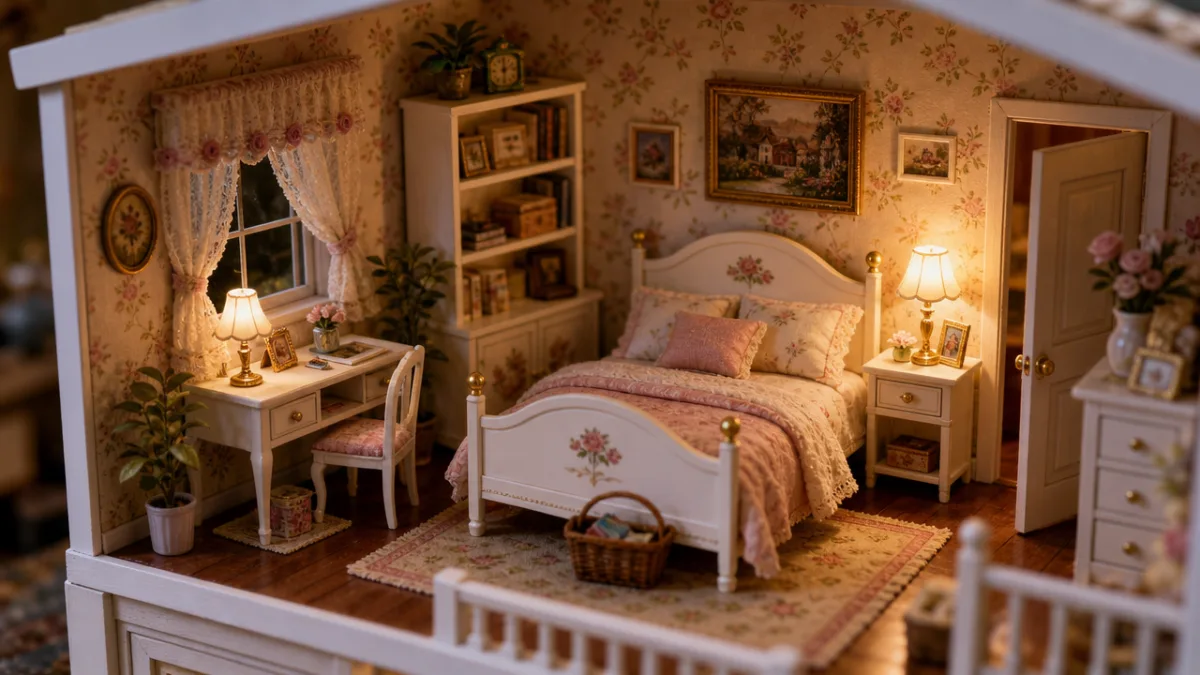
For adult bedrooms, you want wallpaper choices that feel a bit more sophisticated and suggest intimacy and comfort. Soft stripes in muted tones, subtle medallion patterns, and painterly florals all work beautifully at this scale. It’s also worth thinking about how your wallpaper will interact with the miniature bedding and window treatments you plan to use, because a room that tells one cohesive color story is always more convincing. A deep blush floral wallpaper with ivory bedding and tiny brass accents, for instance, creates something that feels genuinely aspirational rather than just decorative.
One technique that works especially well in bedrooms is using a different wallpaper pattern on the wall directly behind the bed, the way real designers use a headboard wall treatment. It immediately adds architectural interest to an otherwise plain room. You might use a bold botanical print on that one wall while keeping the other three in a quieter stripe or solid. That kind of thoughtful layering is honestly what separates a truly compelling dollhouse interior from one that just looks filled in.
Kitchens and Dining Rooms: Functional Beauty in Small Spaces
Dollhouse kitchens and dining rooms are fun to wallpaper because these spaces have always balanced personality with practicality, and that tension translates perfectly to miniature scale. For kitchens, classic choices like small-scale gingham checks, vintage fruit and vegetable prints, or cheerful blue-and-white tile patterns all suggest a clean, lively cooking space. Faux subway tile and hex tile peel-and-stick papers work especially well as a miniature backsplash — just apply them to the section of wall above a tiny counter and the effect is remarkably realistic.
Dining rooms tend to call for something a little more formal, something that signals the space is meant for gathering and sitting down together. Stripes, toile, and classic florals in richer color palettes all work nicely here. In a Victorian or Edwardian dollhouse, try a deep teal or ochre wallpaper with a small repeating motif, then add a miniature picture rail and tiny framed artwork over the top. That combination of wallpaper and architectural detailing creates an incredible sense of depth and authenticity that’s hard to achieve any other way.
One technique that’s easy to overlook but makes a big difference: lining the inside of a miniature hutch or open cabinet with a small strip of coordinating wallpaper. Applying it to the back panel gives you a beautiful backdrop for tiny dishes, glasses, and decorative objects, and it takes almost no material at all. It’s also one of the best ways to put those small off-cuts and scraps to use rather than throwing them away. The visual sophistication it adds to the space is way out of proportion to the effort involved.
Hallways, Staircases, and Unexpected Surfaces
Some of the most beautiful dollhouse interiors I’ve seen are the ones that pay careful attention to spaces most crafters leave plain. Hallways and staircases are perfect examples. A narrow hallway with well-chosen wallpaper creates a sense of layered, carefully considered design that lifts the whole dollhouse. Vertical stripes are particularly effective here because they draw the eye upward and make the space feel taller — exactly what they do in a full-scale home.
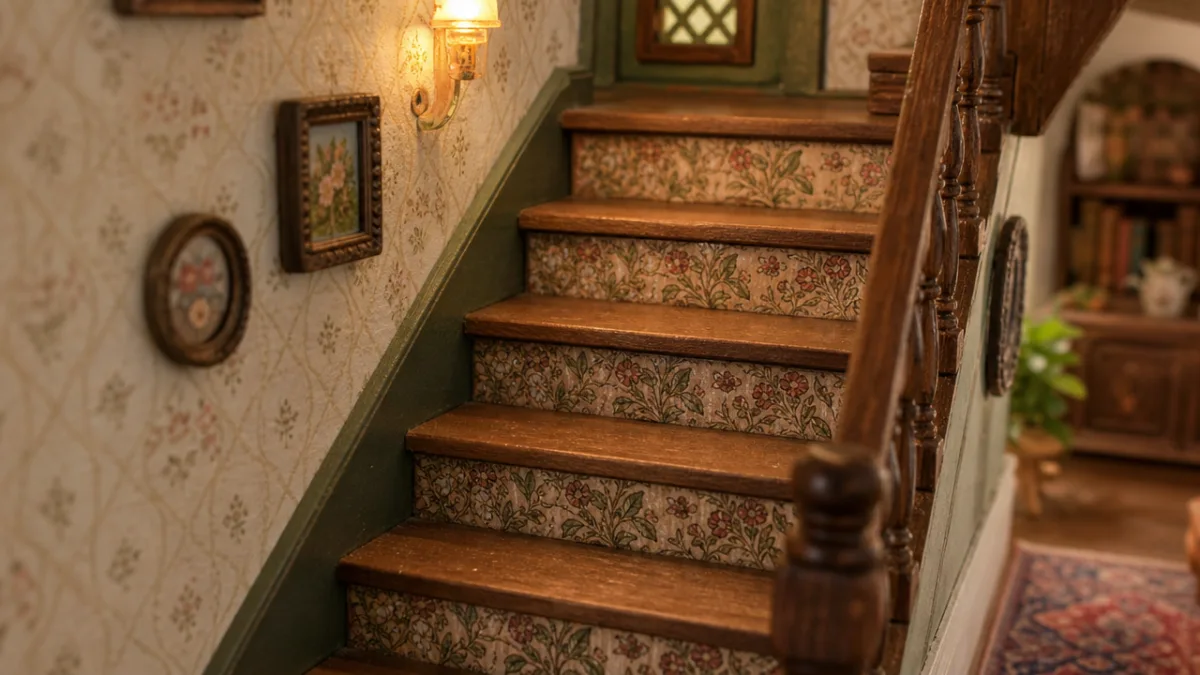
Staircases are also a surprisingly fun surface to work with. Covering the risers — the vertical face of each step — with small strips of patterned peel-and-stick paper is a popular technique in real home renovation, and it translates wonderfully to miniature scale. You barely need any material to do it, and alternating two coordinating patterns on the risers creates an especially lively, charming effect that looks like it was intentionally designed from the start.
Once you start thinking beyond walls, the possibilities really open up. Ceilings, floors, and furniture surfaces are all fair game for peel-and-stick wallpaper. You can simulate a ceiling medallion by cutting a circular or octagonal piece of patterned paper and centering it above a miniature light fixture. Tile and wood-grain peel-and-stick papers make incredibly convincing miniature floors. Drawer fronts, cabinet doors, even the backs of tiny chairs can all be covered with small coordinating pieces to create a unified, intentional design story that runs through every single room of the dollhouse.
Tips for Sourcing, Storing, and Finishing Your Wallpaper Projects
Finding the right peel-and-stick wallpaper for miniature work is part of the fun, and the options are more varied than you might think. Specialty miniature supply shops do carry papers made for dollhouse scale, but the selection can be pretty limited. A much more exciting approach is browsing full-sized interior design wallpaper sample books — home improvement stores often sell these cheaply or give them away entirely. Since you only need to cover a few square inches of surface, a single small sample can easily wallpaper several rooms.
Online marketplaces and digital design platforms have also opened things up in a really exciting way. Some crafters download high-resolution vintage wallpaper designs from the public domain and print them at home, scaling the repeat to fit a 1:12 dollhouse. Standard printer paper doesn’t have a pressure-sensitive backing, but a light coat of repositionable adhesive spray on the back gets you to basically the same place. This DIY approach gives you access to an almost unlimited library of patterns at very little cost, which is pretty hard to beat.
Storing your leftover scraps properly means you’ll always have something on hand for touch-ups, small projects, or the inevitable late-night creative impulse. Tuck cut pieces between sheets of parchment paper inside a flat folder or portfolio so the adhesive backing stays clean and doesn’t stick to itself. Label each piece with the pattern name or a quick description so you can find coordinating materials without digging through everything. Honestly, sorting through a well-organized scrap collection is one of the best ways to spark ideas for rooms and furniture treatments you haven’t thought of yet.
And finally, a few finishing details go a long way toward making your wallpaper application look truly polished. Trim any slightly uneven edges with a fresh craft knife blade for the cleanest possible cut. At corners, overlap the paper slightly from each side, then cut through both layers at once with a straight edge — that gives you a perfectly mitered seam every time. Then consider adding miniature molding, chair rails, or baseboards cut from thin balsa wood strips and painted to complement your wallpaper. Those small architectural details frame everything beautifully and take the project from a fun craft to something that genuinely looks like a work of art.








What do you think?
It is nice to know your opinion. Leave a comment.