










From Forlorn To Fabulous: The Art and Joy of Furniture Flipping
The Furniture Flipping Movement: Why It’s Capturing Hearts Everywhere
There’s something incredibly satisfying about rescuing a piece of furniture the rest of the world has written off. Furniture flipping — taking worn-out, outdated, or beat-up pieces and turning them into something beautiful and useful — has grown from a niche hobby into a full-on cultural phenomenon. Online communities built around these transformations have exploded over the past decade, with thousands of creators sharing their before-and-after photos every single day, inspiring everyone from total beginners to seasoned pros to pick up a paintbrush and see what they can make happen.
The appeal works on a few different levels, and honestly, it speaks to something pretty fundamental about people. For one thing, flipping is a creative outlet — a way for people who might not think of themselves as artists to make something genuinely beautiful with their own hands. It’s also incredibly practical, letting you furnish your home with real character and quality without paying anywhere close to retail. And then there’s the environmental angle — a quiet but meaningful way to push back against throwaway culture, which sends millions of perfectly fixable pieces to the landfill every single year.
The online groups that have formed around furniture flipping have turned into some of the warmest, most supportive corners of the internet. Beginners ask questions without any fear of judgment, and experienced flippers share hard-won tips like it’s nothing. These communities celebrate every skill level — from someone who repainted a wobbly thrift-store side table for the first time, to a professional restorer who spent weeks coaxing a Victorian secretary desk back to its former glory. What ties everyone together is that shared rush of the transformation — that electric moment when you step back and realize the sad, forgotten piece you started with has become something you’re genuinely proud of.
Finding the Right Candidate: Sourcing Furniture Worth Saving
Every great flip starts long before you ever open a can of paint. It starts with finding the right piece — and anyone who’s been doing this for a while will tell you that sourcing is genuinely half the battle. The best candidates are structurally solid pieces that have just fallen out of fashion, been neglected, or survived one too many questionable paint jobs. Thrift stores, estate sales, garage sales, Facebook Marketplace, and even the curb on trash day are all surprisingly good hunting grounds if you’re willing to look past a little surface ugliness.
Learning to size up a piece quickly takes practice, but it really comes down to a few reliable things to look for. Solid wood construction is almost always worth saving — it sands beautifully, takes paint and stain evenly, and will outlast basically any particle board alternative. Wobbling joints can usually be re-glued, and drawer slides can be swapped out if they’re past saving. Water damage that has actually warped the wood is generally a dealbreaker, but surface stains and even minor rot in non-structural spots can often be fixed. You’re looking for good bones and a story worth continuing.
Some of the most celebrated flips out there involve pieces that most people walked right past without a second glance. A china cabinet with peeling veneer, a dresser buried under seven layers of paint, a dining chair with a cracked cushion and a shaky leg — those are exactly the pieces that reward a closer look and a little imagination. A lot of experienced flippers talk about developing a kind of furniture intuition, where you start to see past the grime and damage to the elegant lines hiding underneath. That ability to see potential, more than any technical skill, is really what makes a great flip.

Tools, Supplies, and Techniques: Building Your Flipping Arsenal
One of the best things about furniture flipping is that you don’t need much to get started. A beginner can pull off a stunning result with just a sanding block, a decent brush, and a can of chalk paint — which has become a go-to for newcomers because of its thick, forgiving consistency, its minimal prep requirements, and its gorgeous matte finish. As your skills grow and your projects get more ambitious, so does your toolkit: orbital sanders, spray guns, wood fillers, milk paint, gel stains, glaze, and a growing collection of specialty brushes tend to accumulate pretty naturally over time.
Surface prep is where professionals and beginners really part ways, and it’s almost always the step people most want to skip. Proper sanding removes old finishes, smooths out imperfections, and gives your new paint or stain something to actually hold onto. Cleaning the piece thoroughly first — getting rid of grease, wax, and built-up residue — is just as important and gets overlooked surprisingly often. A lot of flippers love using a liquid deglosser before painting, which chemically etches the existing finish so you don’t have to sand as aggressively. Put in the time on this foundation work, and your results will look noticeably smoother, more durable, and more professional.
Beyond paint, there’s a whole world of techniques worth exploring. Decoupage lets you adhere decorative paper, fabric, or even maps to drawer fronts and tabletops for a whimsical, one-of-a-kind look. Wood burning adds intricate patterns to raw or lightly sanded surfaces. Stenciling creates the illusion of hand-painted detail with a fraction of the work. Gilding with gold or silver leaf brings old-world glamour to picture frames, chair legs, and drawer pulls. And the hardware — the knobs, pulls, and hinges — is often the finishing touch that takes a good flip to an unforgettable one. Think of it like the right piece of jewelry on a great outfit.
Popular Styles and Transformations Dominating the Community
Spend a few minutes scrolling through any active flipping community and you’ll start to notice which looks keep floating to the top. The modern farmhouse aesthetic — creamy white chalk paint, clean lines, maybe some shiplap-style detail, and black iron hardware — has been dominant for several years now and isn’t going anywhere. Coastal and beach-house style, with its whitewashed finishes, sea-glass blues, and nautical hardware, gets a ton of enthusiasm, especially from flippers in warmer climates. And the moody, jewel-toned look — think deep velvet upholstery paired with richly lacquered dark paint — is having a real moment right now, offering a bold counterpoint to years of all-white minimalism.
Some of the most talked-about projects involve pieces that go through a complete identity change. A heavy, ornate Victorian sideboard gets stripped of all its fussiness with a coat of deep forest green and minimal hardware, and suddenly it looks completely at home in a modern dining room. A mid-century dresser with great lines but a dated walnut veneer gets a two-tone treatment — painted body, stained top — that nods to its heritage while feeling fresh and current. These full-on identity-shift flips generate the most excitement in online communities because they really show just how far transformation can go.
At the same time, the community has developed a genuine appreciation for pieces transformed with restraint — flips where the goal isn’t dramatic reinvention but careful, respectful restoration. Stripping decades of paint from a solid oak library table to reveal the warm, honeyed grain underneath. Repairing and re-caning the seat of a worn bergère chair to bring back its original elegance. Replacing damaged veneer on a mid-century credenza with carefully matched new material. These more technically demanding projects earn deep respect from people who understand just how much skill and patience they take — and they’re a good reminder that sometimes the most fabulous outcome is simply letting a beautiful piece be seen clearly again.
The Economics of Flipping: From Passion Project to Profitable Business
For most people, furniture flipping starts as a way to furnish their own homes on a budget — with pieces that actually have personality and quality, which is pretty hard to find at big-box stores. But a lot of flippers discover, often genuinely by accident, that their finished pieces are things other people really want to buy. What started as a weekend hobby can turn into a real source of income, and the economics can be surprisingly compelling when you approach it with some intention.
A dresser picked up for fifteen dollars at a thrift store, transformed over a weekend with thirty dollars in supplies, and listed for two hundred and fifty dollars on Facebook Marketplace or Etsy represents a return that would make most investors do a double take. That math doesn’t factor in the time you put in, of course, which is where plenty of casual flippers decide the joy of the project is reward enough on its own. But for people who develop efficient systems, build a recognizable style that buyers come looking for, and figure out how to source pieces consistently, flipping as a business is genuinely viable — and offers a kind of personal satisfaction that most conventional jobs just don’t.
The flipping businesses that really succeed tend to have a few things in common. They develop a consistent look that makes their work instantly recognizable, building a loyal audience of repeat buyers. They track their costs carefully — materials, time, overhead — so every piece is priced to actually make money. They invest in good photography, because a beautiful flip shot with a bad photo will underperform every time, while a strong image can make even a modest transformation look incredible. And they connect genuinely with their followers, sharing the process and the story behind each piece in a way that builds real community and drives sales better than any ad campaign ever could.
Community, Creativity, and the Deeper Meaning of the Flip
At its core, furniture flipping is about a lot more than paint and profit. The communities that have grown up around it are genuinely rare on the modern internet — spaces built on encouragement rather than competition, generosity rather than gatekeeping, and a real celebration of creativity and effort at every skill level. Beginners post their imperfect first attempts and get actual warmth in return. Seasoned experts share their techniques openly, without hoarding what they know. The whole culture rewards authenticity and effort in a way that feels almost countercultural these days.
There’s also a sustainability dimension that resonates deeply with a lot of people who are thinking hard about the environmental cost of consumer culture. Every piece of furniture that gets transformed instead of tossed is one that didn’t go to the landfill. Every thrifted dresser that becomes someone’s showpiece is one that didn’t need to be manufactured, shipped, and wrapped in plastic. Furniture is one of the largest categories of waste in American landfills — millions of tons discarded every year — so when you multiply the work of thousands of dedicated flippers, the collective impact starts to feel genuinely meaningful.
Maybe most meaningfully, furniture flipping connects people to a long tradition of craft and care. For most of human history, things were repaired rather than replaced, maintained rather than tossed, and handed down through generations rather than traded in with the latest trend. A beautifully flipped piece carries that spirit forward — a tangible reminder that well-made things are worth the effort of preservation, and that the people who transform them are doing something genuinely worthwhile. That satisfaction of watching the forlorn become fabulous has deep roots, and a growing community of creative, resourceful, environmentally conscious people is rediscovering it with real joy.
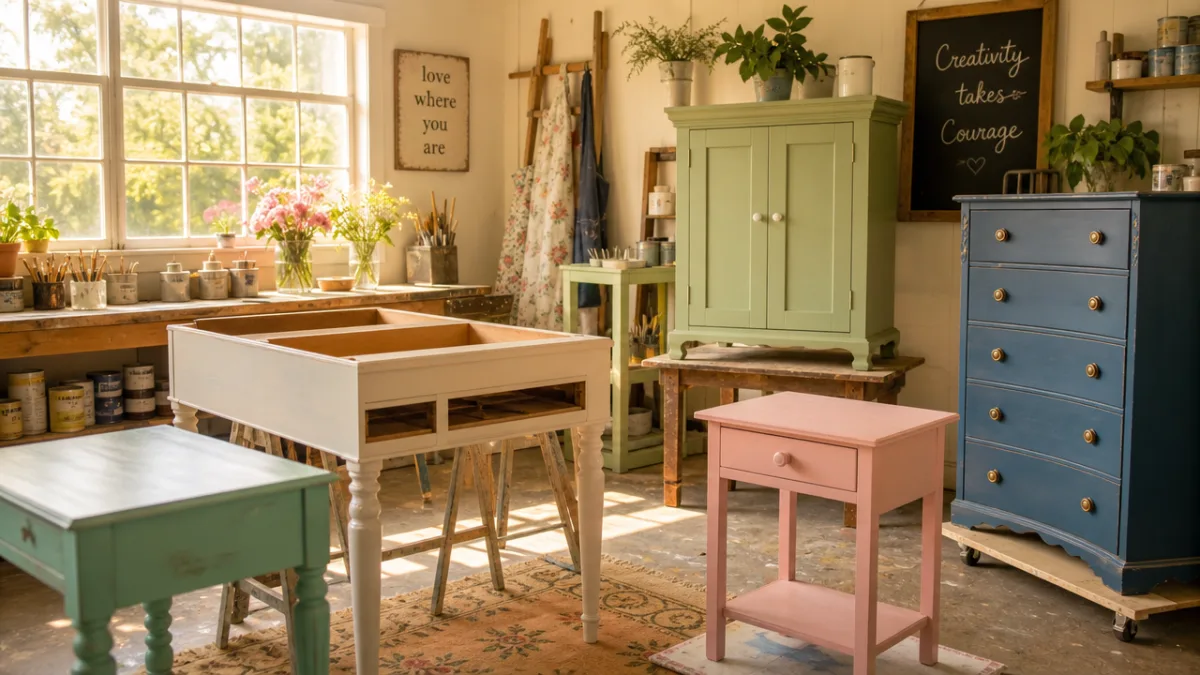
Getting Started: Your First Furniture Flip, Step by Step
If you’ve been eyeing those transformation photos on your feed and thinking about trying it yourself, here’s the most important thing anyone can tell you: just start. The biggest thing standing between most aspiring flippers and their first project isn’t a lack of skill — it’s waiting until everything feels perfectly ready. Pick something small and low-stakes — a side table, a picture frame, a little chair — and give yourself permission to learn by doing. A slightly imperfect first attempt will teach you more than any tutorial video, and the confidence you get from actually finishing something is genuinely hard to overstate.
A simple approach for a first project looks roughly like this. Start by cleaning the piece thoroughly with a degreaser or TSP substitute to remove all the dirt, wax, and grease. Sand lightly to scuff up the existing finish and give your paint something to grip. If you’re painting over a dark color or a high-gloss surface, apply a coat of primer first. Then put on your paint in thin, even coats, letting each one dry fully before adding the next — two or three thin coats will always look better than one thick one. Finish with a protective topcoat of wax or polycrylic, which will shield your work from daily wear and keep that finish looking good for years.
A few supplies that will really set any beginner up for success are worth calling out. Good brushes matter way more than people expect — cheap ones leave brush marks that no amount of technique can fix, while a quality synthetic bristle brush or foam roller produces a smooth, professional finish almost on its own. Chalk paint or milk paint are the most forgiving options for beginners, sticking well with minimal prep and giving you that beautiful, durable matte finish. Fine-grit sandpaper in 150 and 220 grit will cover most sanding situations. And a good paste wax or water-based polycrylic topcoat will protect everything and give the piece that finished, put-together look that’s the difference between something that looks homemade and something that looks like it belongs in a boutique. With these basics and a welcoming community cheering you on, all that’s left is to find your first forlorn piece — and get started on the fabulous transformation.








What do you think?
It is nice to know your opinion. Leave a comment.