










22 Brilliant Ways to Repurpose Old Neckties Into Something Beautiful
The Art of Necktie Upcycling: Why You Should Never Throw Away an Old Tie
Old neckties might just be the most underrated treasure hiding in closets everywhere. Maybe they belonged to your grandfather, or maybe you just spent years accumulating them for jobs that required “business formal.” Either way, those slender strips of fabric have both sentimental weight and serious creative potential. The silk, polyester, and wool blends that go into quality ties give you textures and patterns you simply can’t find at a craft store — not even close.
With so many of us thinking more carefully about what we throw away, it makes sense to look at old clothing with fresh eyes. Tossing a tie in the trash means adding to the mountain of textile waste that ends up in landfills every year — and honestly, that feels like a shame when you consider the craftsmanship that went into making it in the first place. These things were made to last. They deserve a second act.
What makes ties especially fun to work with is that they come pre-built with structure. There’s already a sewn shape, a lining, sometimes even an interlining that gives the fabric real body and weight. You’re not starting from scratch — you’re starting with something that already has dimension and form. That built-in construction makes it surprisingly easy to get polished, professional-looking results even if you’re not an experienced sewer. And the patterns? From classic stripes to wild paisleys to genuinely bizarre novelty prints, they add instant character to anything you make.
Home Décor Transformations: Turning Ties Into Stunning Interior Accents
Home décor is probably the most popular place people take their old ties, and it’s easy to see why. The rich colors and sophisticated patterns you find on neckties translate surprisingly well into interior accents that look curated and intentional — not like something you threw together from a thrift store haul (even if that’s exactly what happened). Arrange a collection of ties in complementary tones on a wall, and you’ve got a textile art piece that will genuinely make people stop and ask about it.
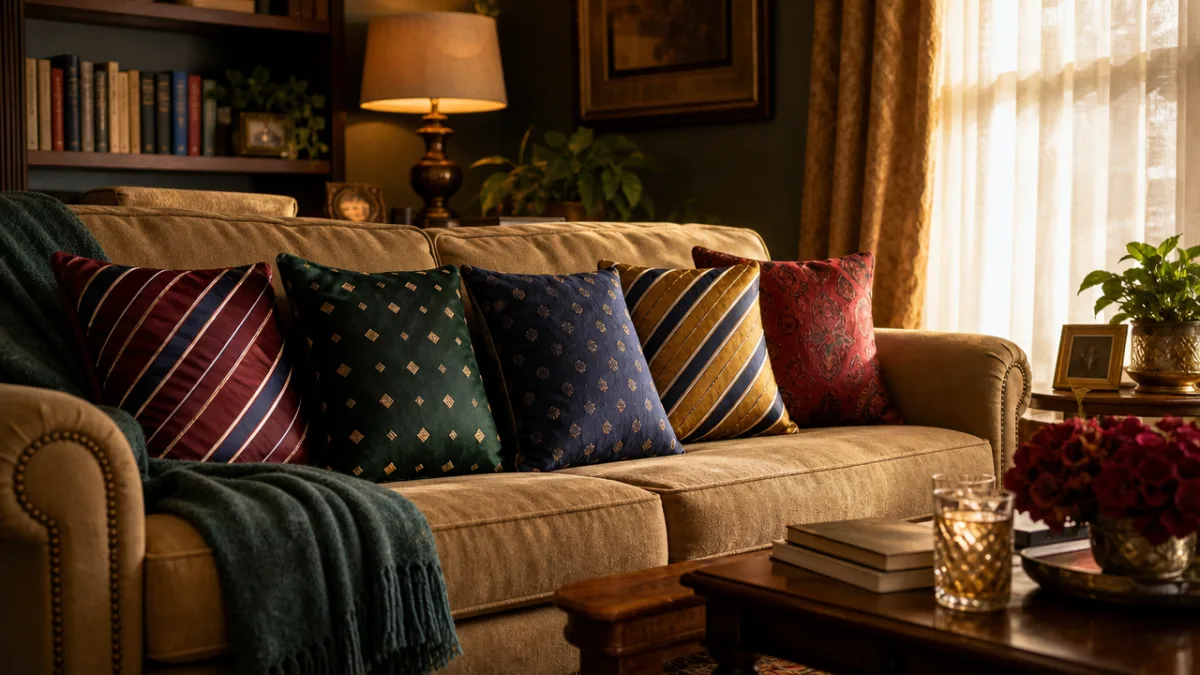
Necktie pillows are a favorite for crafters at every skill level. Line up several ties side by side, sew them together, and you’ve got a patchwork panel ready to become the front face of a throw pillow. The naturally varying widths of different ties create a visual rhythm all on their own, and the mix of patterns adds depth you’d never get from a single piece of fabric. These pillows are especially at home in living rooms and reading nooks where people actually get close enough to appreciate the texture.
Tie quilts are a bigger commitment, but the payoff is real. A lot of families have discovered that making a quilt from a loved one’s old tie collection is one of the most meaningful things they can do with those fabrics — you end up with something beautiful and functional that tells a whole personal story. The ties can be cut into squares or left in their original shape, arranged to bring out complementary colors, and sewn with backing fabric into something that could genuinely become a family heirloom.
Table runners are another elegant option worth trying. Sew several neckties end to end and you get a naturally tapered, decorative runner with a texture and character that store-bought versions just don’t have. With a little attention to color, these runners bring a sophisticated, slightly eclectic charm to a dining table, console, or sideboard. They work especially well in spaces that lean eclectic or bohemian, where mixing patterns is the whole point.
Fashion-Forward Accessories: Wearing Your Creativity
Fashion has always loved a good transformation, and necktie upcycling fits right in. Old ties can become a surprisingly wide range of wearable accessories that feel genuinely unique rather than cobbled together. Headbands are one of the most popular options — fold a tie lengthwise, secure it around your head in a way that shows off the pattern and drape, and you’ve got something that looks completely intentional. It’s one of those projects where the result is better than you’d expect going in.
Belts are another natural fit. The length and structure of a standard necktie make it almost ideal for conversion into a belt you can thread through trouser loops or tie around the waist of a dress. Silk ties in bold patterns work especially well here, adding a jolt of personality to an otherwise simple outfit. The technique barely requires any sewing skill, and you can take it in different directions — from something that reads formal and woven-looking to a loosely knotted fabric sash.
Tie-fabric jewelry has carved out its own little niche in the upcycling world. Patterned silk or polyester from neckties can be wrapped around wire frames, rolled tightly to create fabric beads, or layered into brooches and pendants. A necklace built from beads made by rolling small segments of tie fabric and securing them with wire can be genuinely stunning, especially when you choose ties with complementary colors and arrange them in a deliberate gradient. It’s the kind of thing people assume you bought somewhere interesting.
Wristbands and cuff bracelets offer an easier starting point for tie jewelry. Cut the narrow tip of a tie to the right length, add a snap closure, and you’ve got a bracelet that blends formal menswear heritage with a handmade, playful sensibility. These have found a real following in fashion communities that celebrate gender-fluid dressing and the idea of taking traditionally masculine garments and recontextualizing them into something entirely new.
Practical and Functional Projects: Beauty That Serves a Purpose
Old ties don’t have to become art — they can become genuinely useful things you reach for every day. Glasses cases are one of the cleverest functional repurposings out there. The narrow, elongated shape of a necktie is basically already the right dimensions for a soft eyeglass sleeve, and with minimal sewing you end up with something that looks far more distinguished than anything you’d pick up at a pharmacy.
Wine bottle gift bags made from neckties have become a real hit at dinner parties. Loosely fold a tie around a wine bottle, tie a simple knot, and you’ve got an instantly sophisticated presentation that also doubles as a bonus gift. No tape, no tissue paper, no waste — just a beautiful piece of fabric that the recipient can keep and use. It’s the kind of small touch that people actually remember.
Bookmarks might be the fastest and most satisfying tie project you’ll ever do. Cut the narrow end of a tie, seal the raw edge with a little fabric glue or a quick fold-and-press, and you’re done. The variety of tie patterns out there means you can match bookmarks to books, to readers, or just to whatever strikes your fancy. A classic striped tie becomes a sleek, elegant bookmark; a novelty tie covered in tiny cats becomes the perfect gift for the right person.
Phone and tablet cases are also very doable, either by wrapping an existing case in tie fabric or constructing a simple envelope-style sleeve from scratch. Most tie fabrics — especially quality silks and wool blends — hold up well to daily use while keeping their good looks. A phone case made from a vintage tie with a bold geometric pattern becomes a genuine conversation piece that says something real about who you are and how you think about the things you own.

Gift Ideas and Sentimental Projects: Crafting Meaning From Memories
Of all the reasons to repurpose old ties, this one hits the deepest. Transforming ties that belonged to someone you’ve lost into something you can hold, use, and pass on is a profoundly meaningful thing to do. Memorial quilts made from a father’s or grandfather’s tie collection have helped countless families process grief while creating something tangible that can travel down through generations. There’s something about handling those fabrics — cutting them, arranging them, sewing them into new shapes — that can be its own form of remembrance.
Teddy bears and stuffed animals made from beloved ties are a particularly touching tribute, especially for children who’ve lost a grandparent. Using the tie fabric for the bear’s outer shell, possibly mixing several ties for a patchwork effect, can capture something of a person’s whole personality through the fabrics they chose to wear. Some companies specialize in making these memorial bears from ties you send them, but a lot of people find that making one by hand — following a simple stuffed animal pattern — means even more.
Framed tie art is a wonderful option when the ties themselves are too meaningful to cut. Arrange them artfully in a shadow box, maybe alongside a photo or a handwritten note, and you’ve got a piece of wall art that celebrates someone’s life and personal style. You can arrange them chronologically, by color, or in patterns that reflect who they were — essentially a visual biography that hangs on the wall and naturally invites people to ask about the person behind the ties.
Tie-fabric gift wrapping goes well beyond wine bottles and extends into a whole way of thinking about how you give things to people. Ties can bundle small gifts, tie off fabric bags, or wrap boxes in the spirit of Japanese furoshiki cloth wrapping. When the wrapping itself is a beautiful piece of fabric, it becomes part of the gift — something with actual value that the recipient keeps. People who receive gifts wrapped this way tend to remember it as one of the best parts of the experience.
Getting Started: Tools, Tips, and Techniques for Necktie Crafting
The good news about getting into necktie upcycling is that you probably already have most of what you need. A basic toolkit covers almost everything: sharp fabric scissors, a seam ripper for opening ties you want to lay flat, fabric glue for no-sew projects, basic hand-sewing supplies, and an iron for pressing seams. If you’ve got a sewing kit at home, you’re essentially ready to start today.
You definitely don’t have to rely on your own closet for materials either. Thrift stores and charity shops are absolute goldmines for neckties in every color, pattern, and fabric you can imagine. Estate sales are especially worth hitting if you’re planning a quilt or other project that needs visual cohesion across a lot of pieces — you’ll often find entire collections from one person’s wardrobe, all tied together by a consistent era or taste. Online resale platforms are great for tracking down specific patterns or vintage ties from particular decades that might be hard to find locally.
It helps to understand what you’re actually working with before you start cutting. A standard necktie has three layers: the outer shell of decorative fabric, a lining, and usually an interlining that gives the tie its structure and weight. When you’re planning a project, you’ll need to decide whether to work with the tie as-is or open it up with a seam ripper to access the flat fabric panels inside. Both approaches are useful — whole ties work great for bookmarks and wine wrapping, while opened ties give you flat fabric perfect for pillows, quilts, and garments.
Some particularly well-suited projects for beginners include the following categories, arranged from simplest to more involved:
- No-sew bookmarks created by cutting the narrow end of a tie and sealing the raw edge with fabric glue or a quick fold-and-press technique
- Wine bottle gift wrapping that requires only the ability to make a simple knot and arrange the fabric attractively around the bottle
- Headbands fashioned from a single tie folded lengthwise and secured with a simple knot or small amount of sewing at the back
- Simple throw pillows created by sewing several ties together side by side to form a panel, then attaching backing fabric and stuffing
- Framed shadow box arrangements that require no sewing at all, only arrangement skills and a suitable frame
- Glasses sleeves that require two straight seams and basic measuring skills to create a functional and elegant eyewear case
Color coordination and pattern mixing get easier the more you work with ties, and the learning curve is genuinely fun. The helpful thing is that ties already come with their own internal color stories — two ties that share even a single color will usually play well together in a project. Sticking to two or three colors across a variety of patterns and textures tends to produce results that feel sophisticated and deliberate. On the other hand, leaning fully into a wild mix of patterns within a similar color family can create something with enormous visual energy. Both approaches work beautifully, and figuring out which one is yours is half the fun.

Whatever project you start with, remember that the process itself is worth something separate from whatever you end up making. Working with fabrics that have a history — that were worn by real people on real occasions — connects you to a long tradition of textile craft and resourcefulness. Every cut, every stitch, every transformation is a small act of creative conservation. Whether the finished piece is simple and practical or ambitious and artistic, turning these overlooked strips of fabric into something new is genuinely worth celebrating.








What do you think?
It is nice to know your opinion. Leave a comment.