










20+ Creative Office Wall Organizer Ideas to Transform Your Workspace
Why Wall Organization Matters for Productivity and Focus
The state of your workspace has a profound impact on your mental clarity and ability to focus. When surfaces are cluttered with papers, supplies, and miscellaneous items, your brain must constantly process visual noise that competes for attention. Researchers in cognitive science have consistently found that physical disorder translates into mental distraction, making it harder to prioritize tasks, stay on track, and feel genuinely in control of your workday. Wall organization solves this problem by moving essential items off your desk and into vertical space that is deliberately designed for easy access.
Beyond pure functionality, a well-organized office wall communicates intention. It signals to anyone who enters your workspace — including yourself — that this is a place where serious work happens in a thoughtful environment. The psychological benefit of walking into a room where everything has a designated home cannot be overstated. That small daily reassurance that things are in order lowers ambient stress levels and helps you transition into a focused mindset more quickly, whether you’re starting a long project or jumping between tasks throughout the day.
Wall organizers also solve one of the most persistent challenges of the modern home office: limited square footage. As more people work from home in spare bedrooms, studio apartments, or shared living spaces, desk real estate becomes precious. By utilizing vertical wall space, you effectively expand the functional footprint of your workspace without purchasing a larger desk or rearranging furniture. It’s one of the most efficient and cost-effective upgrades any worker — remote or in-office — can make to their environment.
Pegboard Systems: The Ultimate Flexible Wall Organizer
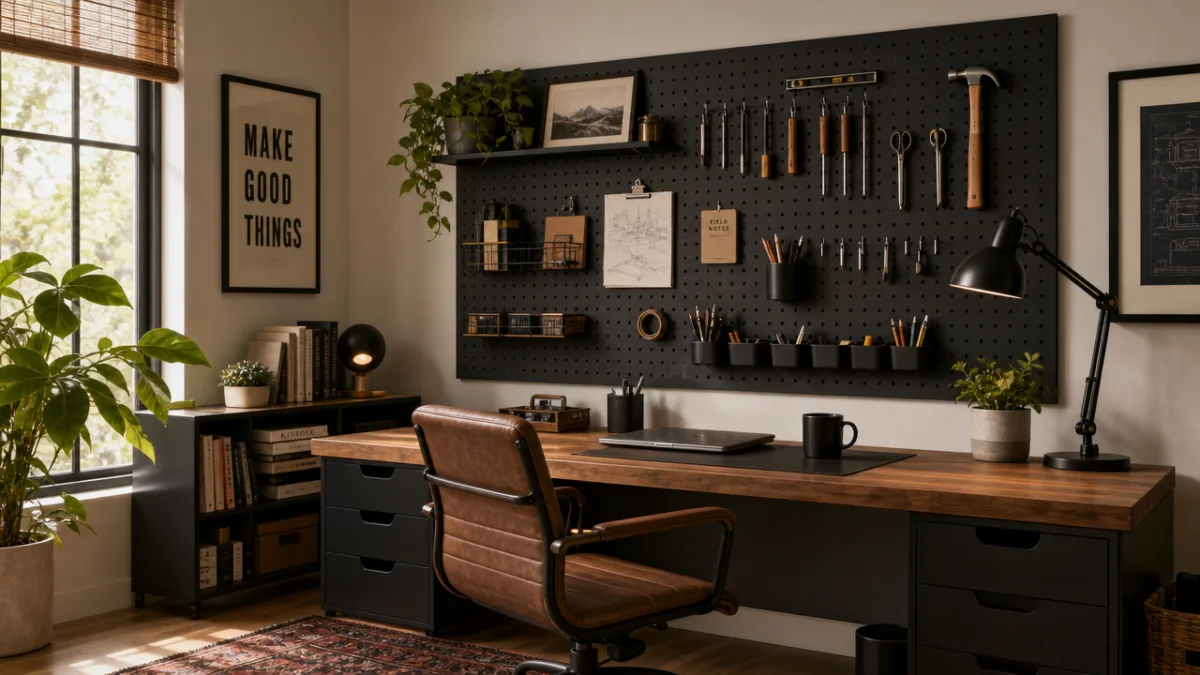
Pegboards have enjoyed a remarkable resurgence in popularity, and for good reason. Originally associated with garages and tool sheds, modern pegboard systems have been reimagined with clean lines, sophisticated finishes, and accessories specifically designed for office use. Available in wood, metal, and painted MDF, today’s pegboards can be styled to complement virtually any interior aesthetic — from the minimalist Scandinavian look to the warm, layered feel of a boho home office. The core appeal remains unchanged: an infinitely reconfigurable grid that grows and adapts with your needs.
The true power of a pegboard lies in the ecosystem of accessories available for it. Hooks of varying sizes hold scissors, headphones, and bags. Small shelves display plants or hold a wireless speaker. Bins and cups corral pens, markers, and sticky note pads. Magazine holders keep printed documents upright and accessible. You can rearrange every single element without tools, simply sliding hooks from one hole to another as your workflow evolves. This adaptability makes pegboards especially appealing for creative professionals whose organizational needs shift from project to project.
When installing a pegboard, spacing it at least one inch away from the wall using standoffs is essential. This gap allows hooks to insert properly and ensures the board sits flush and stable once loaded with items. Consider painting the pegboard a bold accent color before installation to make it a true design statement rather than a purely utilitarian fixture. Metallic paint finishes like brushed gold or matte black are particularly popular in contemporary office settings, adding a touch of sophistication to what might otherwise be a purely functional piece of equipment.
Grid Panels and Wire Mesh Organizers
Wire grid panels offer a sleek, industrial-chic alternative to traditional pegboards. These powder-coated metal grids mount directly to the wall and accept a wide range of compatible accessories including shelves, hooks, clips, and baskets. The open, airy design prevents the wall from feeling visually heavy, making grid panels an excellent choice for smaller offices where the last thing you want is to make the space feel more enclosed. The visual lightness of a wire grid means you can layer a significant amount of organization onto a wall without it overwhelming the room’s aesthetic.
One of the most popular applications for grid panels in a home office is creating a dedicated inspiration board combined with practical storage. By mixing functional accessories like pen cups and file holders with decorative clips for pinning mood board images, color swatches, project notes, and motivational quotes, you end up with a wall installation that serves double duty. It keeps your most important visual references constantly in view while also housing the everyday tools you reach for throughout your workday. This dual-purpose approach maximizes every square inch of wall space.
Grid panels are also ideal for small-business owners and freelancers who need to track multiple active projects simultaneously. Consider dedicating different zones of a large panel to different clients or project phases, using color-coded clips and tags to distinguish between them at a glance. This visual project management approach mimics the benefits of a physical Kanban board while integrating seamlessly into your existing wall organization setup. The result is a workspace where your organizational system supports your workflow rather than interrupting it.
Choosing the Right Grid Panel Size
Grid panels come in a range of sizes, from compact 12-by-12-inch squares to expansive panels measuring several feet in width. For most home office desks, a panel that spans the width of your workspace and rises to eye level offers the best balance of storage capacity and visual proportion. If your desk sits against a wall, consider installing two or three panels side by side to create a continuous grid surface that runs the full length of your workspace. This creates a cohesive, intentional look while maximizing the total storage area available to you.
Pairing Grid Panels with Other Organizer Types
Grid panels work particularly well when paired with floating shelves mounted at their sides or above them. While the grid handles small, frequently accessed items, the shelves can hold larger objects like binders, reference books, decorative storage boxes, and plants. Combining these two systems creates a layered, magazine-worthy wall that looks deliberately styled rather than randomly assembled. The key to making mixed systems feel cohesive is maintaining a consistent color palette across all elements, using finishes that complement one another throughout the arrangement.
Floating Shelves and Wall-Mounted Storage Boxes
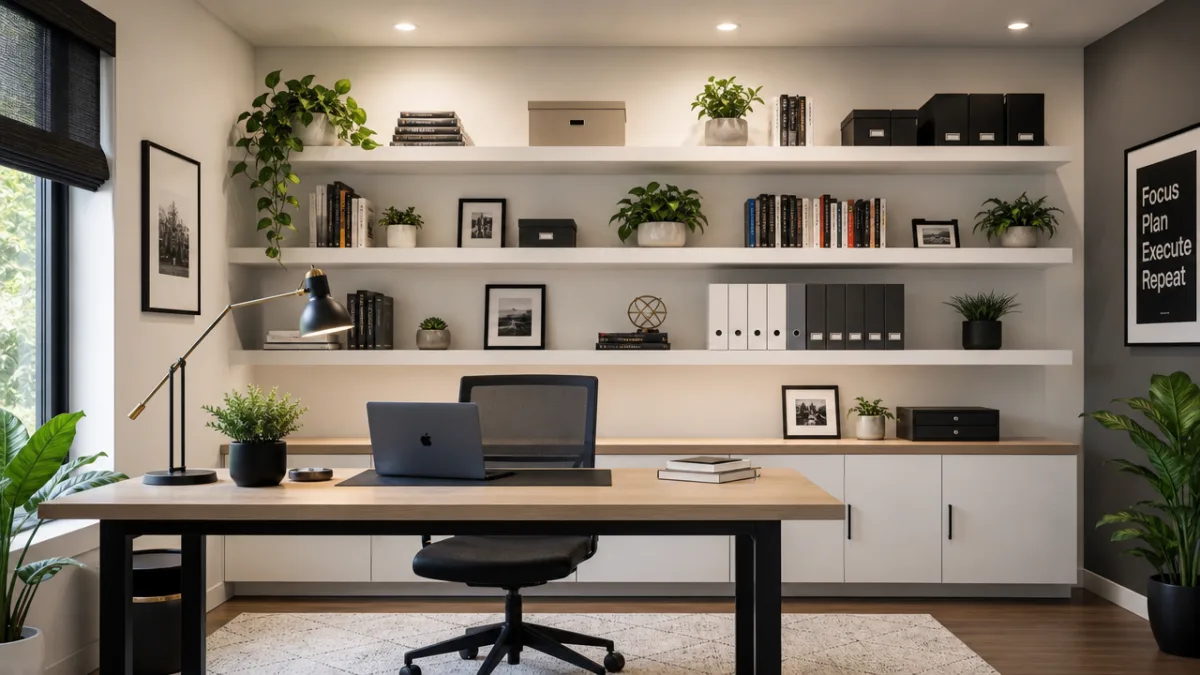
Floating shelves remain one of the most versatile and widely accessible wall organization solutions available. A simple set of well-placed shelves can hold an enormous amount of material — binders, books, decorative boxes, plants, small baskets, and display items — while adding architectural interest to an otherwise flat wall. The key to making floating shelves work in an office context is being intentional about what goes on each shelf. Rather than using them as a catch-all for everything that doesn’t have a home, assign each shelf a clear category of items to prevent visual clutter from simply migrating from the desk to the wall.
Wall-mounted storage boxes and cubbies take the floating shelf concept one step further by providing enclosed storage that hides visual clutter entirely. Deep shadow-box style shelves with integrated hooks or rods are perfect for storing items you need frequently but don’t necessarily want on display. Lidded wall boxes work beautifully for archiving reference materials, keeping batteries and tech accessories organized, or storing seasonal supplies that you only pull out occasionally. Because the contents are hidden, these enclosed solutions allow you to maintain a clean, minimal aesthetic on your office wall without sacrificing storage capacity.
The styling of your floating shelves is an opportunity to express personality while maintaining function. A good rule of thumb borrowed from interior designers is to group items in odd numbers and vary the height and texture of objects within each grouping. Place a tall plant next to a shorter stack of books next to a small decorative object. Tuck a practical pen cup or small organizer bin into the arrangement so that useful items are incorporated into the visual display naturally. This approach ensures your shelves look curated rather than cluttered, even when they are genuinely packed with useful things.
- Open shelves: Best for frequently accessed items, books, plants, and objects you want to display prominently in your workspace.
- Enclosed wall boxes: Ideal for hiding less attractive necessities like tech cables, batteries, charging equipment, and miscellaneous office supplies.
- Cubby-style units: Excellent for organizing items by category with a defined home for each type of supply, reducing time spent searching.
- Corner shelves: A creative solution for maximizing often-wasted corner wall space, particularly useful in small or irregularly shaped rooms.
Magnetic Boards, Chalkboards, and Writable Wall Surfaces
Magnetic boards bring together the functionality of a pinboard, the flexibility of a whiteboard, and the sleek look of a modern accent wall feature. Framed magnetic boards in finishes like black, white, or natural wood can be hung like artwork while serving as an active command center for your most current tasks and priorities. Use magnetic clips to hold printed documents, reference sheets, and to-do lists. Add magnetic pen holders and small trays to keep dry-erase markers and other supplies accessible directly on the board’s surface. A well-designed magnetic board becomes the operational heart of your workspace.
Chalkboard paint has transformed entire walls into functional, writable surfaces in offices and studios around the world. Unlike a framed board that limits your writing space, a chalkboard-painted accent wall gives you an enormous, completely customizable canvas for brainstorming, project planning, and note-taking. This approach works particularly well for visual thinkers who benefit from being able to see the full scope of a project laid out in front of them. Because chalk wipes away cleanly, the board resets completely at the end of each project, making it just as useful for the next challenge as it was for the last.
Dry-erase wall decals and writable wallpaper represent a more renter-friendly version of the same concept. These removable films apply directly to any smooth wall surface and can be written on with standard dry-erase markers. For people in rental apartments or temporary workspaces, these products offer a commitment-free way to enjoy the benefits of a writable wall without permanent paint or installation. They’re available in clear versions that are nearly invisible on the wall, in white for a classic whiteboard look, or even in printed designs that include calendars, grids, or planning templates pre-printed on the surface.
Combining Writable Surfaces with Other Systems
Some of the most functional office walls combine a writable surface with other storage solutions in a single cohesive installation. A central chalkboard or magnetic panel flanked by floating shelves and pegboard sections creates a wall that handles every organizational need in one place — active task management, reference storage, and supply access — without requiring you to turn away from your primary work surface. This kind of integrated wall system is often seen in creative studios and design offices but is entirely achievable in a home setting with thoughtful planning and consistent materials.
Vertical File Organizers, Mail Sorters, and Document Management
Paper management is one of the most persistent organizational challenges in any office environment. Even in an increasingly digital world, most people still accumulate a steady stream of printed documents, invoices, contracts, reference materials, and correspondence that needs to be organized and accessible without taking over the desk. Wall-mounted vertical file organizers and mail sorters address this problem elegantly by keeping paper off horizontal surfaces entirely. Available in metal, wood, acrylic, and leather, these wall files come in styles ranging from strictly utilitarian to genuinely beautiful.
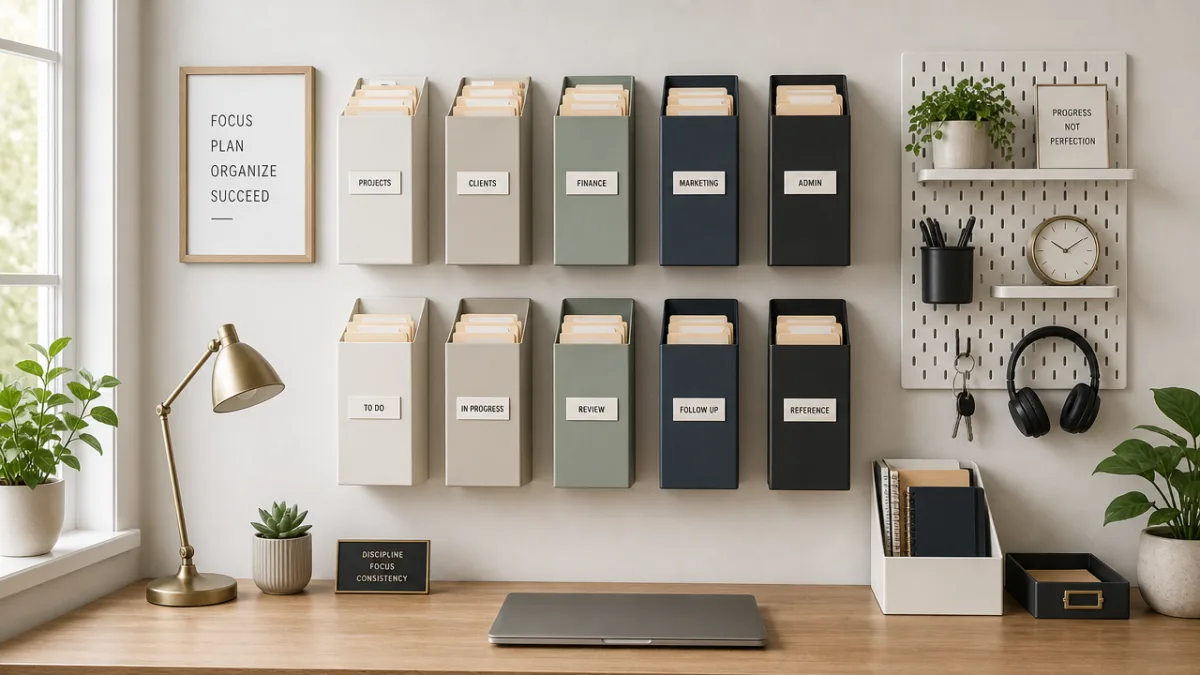
A tiered wall file system with labeled sections for different document categories — incoming, outgoing, active projects, reference, archive — creates a paper management workflow that operates almost on autopilot. When every piece of paper that enters your office immediately goes into the correct labeled slot rather than being placed on the desk with the intention of sorting it later, the chronic paper pile problem largely disappears. The key is establishing clear categories before you install the system and labeling each section prominently so that the act of filing becomes the obvious default rather than a task that requires decision-making.
For small offices where a full file cabinet is not practical, wall-mounted document boxes and magazine files mounted on a shelf or directly on the wall can provide surprising amounts of organized storage. Label each box with a broad category — financial documents, client files, creative reference, household records — and review the contents quarterly to archive or discard anything no longer needed. This simple rotation system prevents any single category from overflowing while ensuring that current, relevant materials are always within arm’s reach when you need them during an active work session.
- Label everything clearly before you begin using the system so that filing becomes an automatic, low-effort action rather than a decision.
- Assign one slot per category and commit to the rule that each category can only occupy its designated space to prevent gradual overflow.
- Schedule a monthly review to move completed project files to long-term storage and clear out documents that are no longer actively needed.
- Keep an “inbox” slot closest to your primary work position so that incoming paper has an immediate home before you’ve processed it.
- Use color-coded folders within each vertical file to further distinguish between subcategories at a glance and speed up retrieval time.
Putting It All Together: Designing Your Ideal Office Wall
The most effective office wall organization systems are the ones that feel tailored to the specific way you work rather than copied wholesale from a Pinterest board. Before purchasing any products or making any holes in the wall, spend some time honestly auditing your workflow. What types of items do you reach for most frequently throughout the day? What categories of clutter tend to accumulate on your desk? Which tasks require visual reference materials versus which ones are entirely screen-based? The answers to these questions will guide every decision you make about which organizer types to include and how much space to allocate to each function.
When planning the physical layout of your wall installation, consider arranging items according to their frequency of use. Items you reach for multiple times per day — pens, sticky notes, scissors, your most active project files — should be positioned closest to your primary work position and at roughly hand or eye level. Items you access weekly rather than daily can occupy higher shelves or less central positions on the wall. Items referenced monthly or less frequently can live in enclosed boxes or lower positions where they’re accessible when needed but not taking up prime real estate in your most-used zone.
Cohesion is the design principle that separates a purposeful, professional-looking office wall from a collection of mismatched organizers that happen to share the same surface. Choose two or three finishes and stick to them throughout the entire installation. A combination of matte black metal, natural wood tones, and white or off-white painted surfaces creates a timeless, versatile palette that works in almost any interior style. Add a single accent color through fabric bins, printed labels, or a painted backing board to inject personality without fragmenting the visual unity of the overall arrangement.
Finally, build flexibility into your system from the start. Your work evolves, your projects change, and the tools you rely on today may not be the ones you need six months from now. Systems built around pegboards, grid panels, and adjustable shelving can adapt to these changes with minimal effort, while rigidly fixed installations may need to be partially dismantled and rebuilt as your needs shift. Investing a little extra thought at the planning stage in modularity and adaptability will ensure that your office wall organizer remains genuinely useful — not just beautiful on the day it’s installed, but a functional, evolving system that continues to serve you well for years to come.








What do you think?
It is nice to know your opinion. Leave a comment.