










16 Creative PVC Pipe Planter Ideas: DIY Vertical Garden Projects for Small Spaces
Why PVC Pipe Planters Are the Ultimate Small-Space Gardening Solution
If you’ve ever dreamed of a lush, thriving garden but found yourself limited by a tiny balcony, a narrow patio, or even just a blank wall, PVC pipe planters might be exactly the creative solution you’ve been searching for. These lightweight, durable, and surprisingly affordable structures have transformed the way urban dwellers and apartment gardeners think about growing plants. Rather than spreading out horizontally across precious square footage, you build upward — turning any vertical surface into a productive, beautiful growing space that adds greenery without sacrificing room to move.
The beauty of PVC pipe as a planting material lies in its versatility. It comes in a wide range of diameters, can be cut to virtually any length, and is easy to drill, sand, and paint to match your aesthetic. Whether you’re going for a rustic farmhouse vibe with whitewashed pipes mounted on reclaimed wood, or a sleek modern look with matte black paint and geometric arrangements, PVC adapts effortlessly. It’s also inherently water-resistant and won’t rot or rust, giving your planter a lifespan that far exceeds most wood or metal alternatives when used outdoors.
Beyond aesthetics, there’s a deeply practical appeal to vertical PVC planters. When you grow herbs, strawberries, lettuce, or flowers in a vertical tower or wall-mounted row, you dramatically improve air circulation around each plant, reduce the risk of soil-borne disease, and make watering and harvesting far more ergonomic. Bending over rows of ground-level pots is a chore that wears on your back over time. With a vertical setup, your garden is literally at eye level — easier to tend, easier to enjoy, and infinitely more Instagrammable.
Essential Tools and Materials Before You Begin
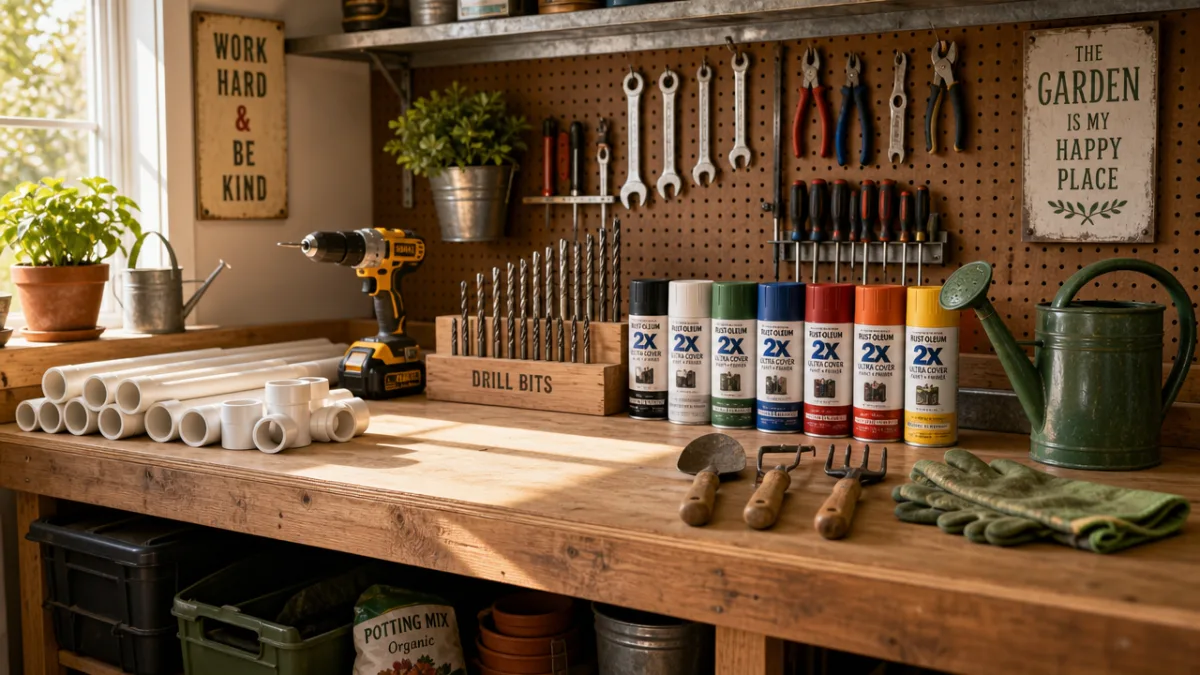
Before diving into any of the sixteen planter ideas described throughout this article, it pays to get organized. A successful PVC planter project doesn’t require a professional workshop or expensive power tools, but having the right supplies on hand before you start will save you multiple frustrating trips to the hardware store. At the core of most projects, you’ll need PVC pipe in at least two diameters — typically a wider pipe for the planting holes and a narrower inner pipe for irrigation — along with end caps, PVC cement or primer, and a drill with hole-saw attachments in various sizes.
For cutting, a miter saw makes clean, perpendicular cuts quickly, but a hand saw fitted with a fine-tooth blade works perfectly well and costs nothing if you already own one. After cutting, use sandpaper or a deburring tool to smooth any rough edges that could injure your hands or damage delicate plant roots. A tape measure, pencil, and level are essential for marking hole placement accurately, especially for wall-mounted designs where even a small misalignment becomes very noticeable once plants start growing in. A workbench or a pair of sawhorses will make the assembly phase much more comfortable.
For finishing and mounting, you’ll want exterior-grade spray paint if you plan to color your pipes, along with a primer designed to bond to plastic surfaces — standard spray paint tends to peel off PVC without this step. Wall anchors, lag bolts, and pipe clamps or brackets will be necessary for any design that attaches to a fence, wall, or post. For free-standing towers, you’ll need a sturdy base or ground anchor depending on whether the planter lives indoors or out. Finally, stock up on quality potting mix, slow-release fertilizer, and landscape fabric or coffee filters to line the holes and prevent soil from washing out during watering.
- PVC pipes in 3-inch and 4-inch diameters for standard herb and flower planters
- 6-inch diameter pipe for larger vegetables like lettuce, kale, or peppers
- Hole-saw drill bits in 2-inch and 3-inch sizes for cutting planting pockets
- PVC cement and purple primer for permanent, watertight joints
- Exterior spray paint and plastic-bonding primer for a polished finish
- Pipe brackets, wall anchors, and appropriate fasteners for your surface type
- Landscape fabric or coconut coir liner to retain soil inside planting pockets
The Classic Vertical Tower Planter: A Step-by-Step Overview
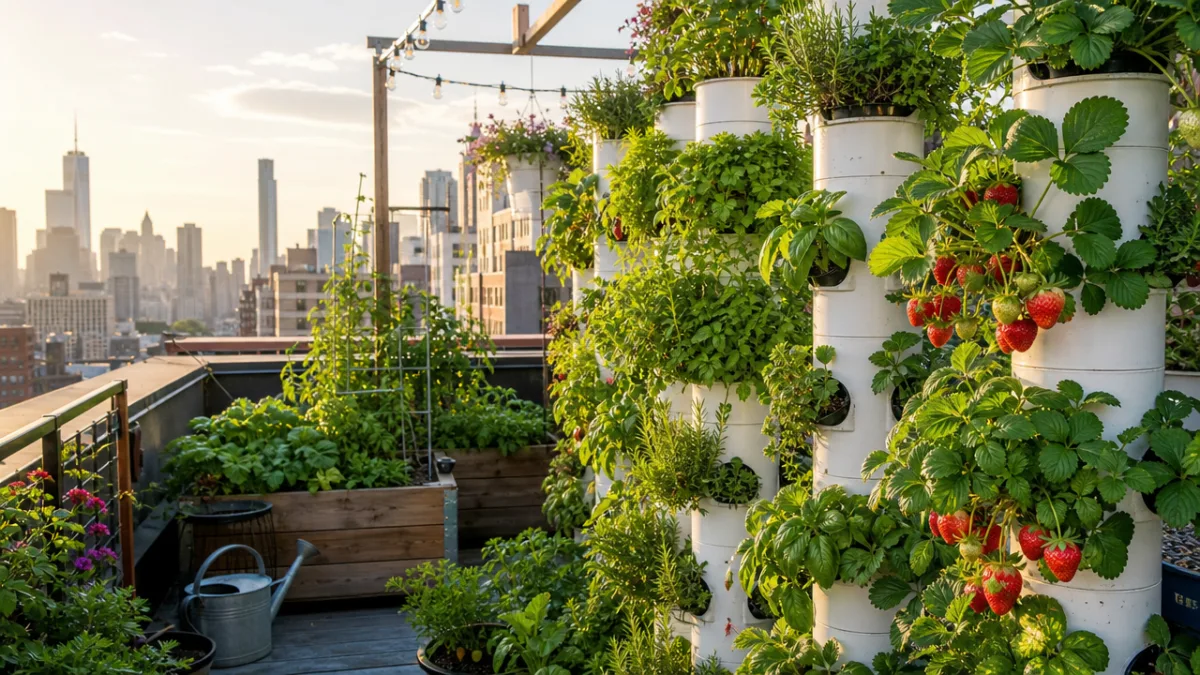
The vertical tower is the most iconic PVC pipe planter design, and for good reason — it packs an extraordinary number of plants into a single column that occupies almost no floor space. The basic concept involves a large-diameter outer pipe (typically 4 to 6 inches wide) with planting pockets cut into its sides at staggered intervals, and a narrower inner pipe drilled with small holes that acts as an internal irrigation channel. Water poured into the top of the inner pipe travels downward and seeps out through the drilled holes, distributing moisture evenly through the surrounding potting mix before excess drains from the bottom.
To build the tower, start by cutting your outer pipe to your desired height — anywhere from 3 feet for a tabletop version to 6 feet for a dramatic floor-to-ceiling statement piece. Using a 2-inch or 3-inch hole-saw bit, cut your planting pockets at roughly 8-inch vertical intervals, rotating around the pipe so that each row of holes is offset about 90 degrees from the last. This staggered arrangement ensures every plant gets adequate light exposure and that the structural integrity of the pipe is maintained. Once the holes are cut and smoothed, cap the bottom with a glued end cap, slide the inner irrigation pipe into place, and fill with a well-draining potting mix before installing your seedlings or plugs.
Strawberries are the classic choice for vertical towers and virtually synonymous with this style of planter. Their cascading runners and bright fruit look stunning draping down from the pockets, and the elevated position keeps the berries clean and away from ground-level pests. But herbs like parsley, cilantro, basil, and chives thrive just as well, as do compact flowering plants like petunias, impatiens, and trailing nasturtiums. If you want something more architectural, consider planting succulents or air plants in the pockets of a tower kept indoors or in a covered patio area, creating a living sculpture that requires almost no maintenance beyond the occasional misting.
Wall-Mounted Horizontal Pipe Planters: Turning Fences into Gardens
Horizontal wall-mounted PVC planters are among the most visually striking and spatially efficient designs you can build. Rather than standing independently on a surface, these planters attach directly to a fence, exterior wall, or a purpose-built frame, transforming an otherwise unused vertical surface into a ribbon of greenery. The basic unit is a length of PVC pipe — typically 4 inches in diameter and anywhere from 2 to 6 feet long — with planting holes drilled along the top face at regular intervals. Both ends are capped, and the pipe is secured to the wall using pipe clamps or custom-cut wooden brackets painted or stained to complement the overall design.
One of the most appealing variations of this design involves arranging multiple horizontal pipes at different heights to create a tiered or cascading effect. By spacing four or five pipes at roughly 10-inch vertical intervals, you create what essentially amounts to a living wall — a feature that has become enormously popular in commercial landscaping and high-end garden design but can be replicated at home for a fraction of the cost. Using pipes of slightly different lengths and staggering their horizontal positions adds a dynamic, organic quality to the arrangement rather than the rigid grid look that can feel institutional if not handled thoughtfully.
For the most successful results with wall-mounted horizontal planters, choose plants with relatively shallow root systems and a preference for excellent drainage. Herbs are almost universally ideal — rosemary, thyme, oregano, mint, and chives all flourish in the well-aerated environment of a horizontal pipe planter and benefit enormously from the full sun exposure that a south- or west-facing wall typically provides. Succulent varieties like sedums and echeverias are another outstanding choice, particularly for lower-maintenance situations or climates with hot, dry summers. For a burst of seasonal color, trailing annuals like million bells (calibrachoa) or sweet potato vine create a dramatic, overflowing effect that softens the industrial look of the PVC material beautifully.
- Measure and mark your wall or fence, ensuring the mounting surface is structurally sound and can support the weight of filled pipes.
- Cut your PVC pipes to length and drill planting holes along the top face at 6 to 8-inch intervals.
- Sand all cut edges smooth and apply plastic primer followed by your chosen exterior spray paint color.
- Attach pipe clamps or wooden brackets to the wall using appropriate anchors and fasteners for your surface material.
- Cap both ends of each pipe with glued PVC end caps to prevent soil from washing out of the sides.
- Fill each pipe with moistened, well-draining potting mix before inserting seedlings or transplants.
- Water thoroughly after planting and monitor moisture levels daily during the first two weeks while roots establish.
Creative Variations: Beyond the Basic Tower and Wall Mount
Once you’ve mastered the fundamental tower and wall-mount designs, a whole world of creative variations opens up. One of the most popular and visually arresting alternatives is the A-frame or ladder-style PVC planter, in which two vertical pipe columns are connected by a series of horizontal crossbars at regular intervals, each crossbar itself serving as a planting pipe. The resulting structure resembles a garden ladder that can lean against a wall or stand independently, and it offers an enormous number of planting positions in a shape that feels inherently organic and cottage-garden charming rather than rigid or industrial.
Another inventive design worth exploring is the rotating carousel planter, in which a central vertical pole — often a sturdy length of metal conduit or heavy-gauge PVC — supports a series of horizontal arms at different heights, each arm holding a length of pipe planter. The entire structure rotates on a simple bearing mechanism, allowing you to spin it periodically so that every plant receives equal sun exposure. This design is particularly brilliant for balcony gardens where sun angles are fixed by the building’s orientation, making it otherwise difficult to grow sun-loving plants without constantly moving individual pots by hand.
Hanging PVC planters offer yet another creative direction, particularly for covered patios, pergolas, or indoor spaces with exposed ceiling beams. Short lengths of wider PVC pipe — 4 to 6 inches in diameter and roughly 12 to 18 inches long — are capped on one end, drilled with drainage holes, and suspended vertically from strong hooks using rope, chain, or macramé cord. These hanging pipe planters work beautifully for trailing plants like string-of-pearls, pothos, or ivy, as well as for compact herbs and edible flowers. They create a wonderful layered canopy effect when grouped at different heights, bringing the garden overhead and making even a small covered area feel like an immersive green sanctuary.
Irrigation Strategies and Plant Care for Long-Term Success
The single most important factor determining the long-term success of any PVC pipe planter system is irrigation, and getting it right requires a little more thought than simply watering when the surface soil looks dry. Because PVC planters — especially vertical towers — have a relatively small soil volume relative to the number of plants they contain, they dry out faster than traditional ground beds or large container gardens. In warm weather, you may need to water a heavily planted tower once or even twice a day, and missing a watering during a heat wave can stress or kill your plants surprisingly quickly given how little soil buffer each plant has around its roots.
The inner irrigation pipe described earlier in the tower design section is one excellent solution, but even more reliable is integrating a simple drip irrigation system into your PVC planter setup. Thin emitter lines and drip stakes can be threaded through the planting holes and positioned right at the root zone of each plant, ensuring consistent, targeted moisture delivery regardless of whether you remember to water manually. Connecting these lines to a basic programmable timer — available for under twenty dollars at most garden centers or online — effectively automates one of the most time-consuming aspects of small-space gardening and dramatically improves plant survival rates during vacations or busy periods.
Beyond watering, fertilization deserves careful attention in PVC pipe planters because frequent watering inevitably leaches nutrients from the potting mix more quickly than in ground beds. Incorporating a slow-release granular fertilizer into your potting mix at planting time provides a steady baseline of nutrition for two to three months, but you should plan to supplement this with a liquid fertilizer applied through your irrigation water or as a foliar spray every two to four weeks throughout the growing season. For edible plants like herbs and vegetables, choosing an organic fertilizer rather than a synthetic one not only benefits soil microbiology but also gives you peace of mind about the food you’re growing. Pay attention to the specific nutritional needs of your chosen plants — leafy herbs and lettuces prefer nitrogen-forward formulas, while fruiting plants like strawberries and peppers benefit more from phosphorus and potassium.
- Check soil moisture daily during warm months by inserting a finger an inch into the potting mix — water when it feels dry at that depth.
- Elevate free-standing towers slightly off the ground to ensure proper drainage and prevent waterlogging at the base.
- Refresh potting mix each growing season as it compacts and loses drainage capacity over time.
- Rotate wall-mounted planters seasonally or periodically reposition them to ensure even sun exposure for all plants.
- Inspect regularly for pests like aphids and spider mites, which can spread rapidly in the close planting conditions of a vertical garden.
- Bring tender plants or entire portable planter units indoors before the first frost to extend the growing season.
Painting, Personalizing, and Integrating PVC Planters into Your Outdoor Décor
Raw, unpainted PVC pipe has a utilitarian, industrial appearance that many gardeners find unappealing, but with a little creativity it becomes an extraordinarily versatile design canvas. The most important step before painting is surface preparation: wipe the pipe clean with a cloth dampened with isopropyl alcohol to remove any mold-release agents from manufacturing, then apply a coat of plastic-bonding primer before your topcoat. Without this primer step, even the best exterior spray paint will begin peeling within a single growing season, especially where the pipe is subject to thermal expansion and contraction from outdoor temperature swings.
Color choice has an enormous impact on how your PVC planters integrate with the rest of your outdoor space. For a modern, minimalist aesthetic, matte black or charcoal gray paint makes the green foliage pop dramatically and pairs well with concrete, metal, and dark wood elements. For a cottage or farmhouse garden feel, chalk-white or cream tones with a deliberately distressed, weathered finish create a romantic, vintage look. If you want something more playful — perfect for a children’s garden or a brightly decorated balcony — a rainbow of bold colors like terracotta orange, cobalt blue, or sunflower yellow gives each planter its own personality. Geometric patterns, stenciled motifs, or even mosaic tile adhesives applied to the pipe surface can elevate a simple PVC planter into genuine garden art.
The supporting structures and frameworks for your PVC planters offer equally rich opportunities for personalization. A ladder planter built from natural bamboo lashed with jute twine has a very different character from the same design executed in painted steel conduit and industrial pipe clamps, yet both function identically. Backing a wall-mounted arrangement with a panel of cedar slats, galvanized wire mesh, or even a painted mural creates a cohesive installation that feels far more intentional and designed than a row of planters simply bolted to a bare wall. The most successful small-space gardens treat every element — containers, supports, plant choices, and layout — as part of a unified design vision, and PVC pipe’s extreme adaptability makes it one of the best tools available for realizing almost any aesthetic direction you can imagine.
Beginner-Friendly Projects to Start With This Weekend
If you’re feeling inspired but a little overwhelmed by the breadth of possibilities described throughout this article, the best approach is always to start small and build confidence before tackling larger, more complex installations. A single 4-foot vertical tower with eight to ten planting pockets is achievable in a single afternoon with basic tools, costs under twenty dollars in materials, and teaches you every fundamental skill you’ll need for more ambitious projects down the line. Choose a forgiving, fast-growing plant like basil, parsley, or strawberry runners for your first tower, so you’ll have the satisfaction of visible results within just a week or two of completing the build.
A pair of 3-foot horizontal pipe planters mounted side by side on a fence panel is another excellent starter project, requiring nothing more than a drill, a saw, two end caps, two pipe clamps per pipe, and wall anchors suited to your fence material. This project introduces you to the wall-mounting process without the complexity of building a free-standing structure, and the result is genuinely beautiful even at this modest scale. Planting it with a mixture of culinary herbs — say, thyme, oregano, and mint in one pipe, and basil, chives, and parsley in the other — gives you a functional kitchen garden that you’ll use every time you cook.
As your skills and confidence grow, you can expand and connect these initial projects into larger systems. A third horizontal pipe mounted above your original two turns a simple planter into a tiered wall garden. Converting your standalone tower to a drip irrigation system eliminates the daily watering chore and makes it possible to grow more water-demanding plants successfully. Adding a second, third, and fourth tower in a row, connected by a shared irrigation manifold, begins to create the truly dramatic vertical garden effect that first caught your eye on Pinterest. Every great garden starts with a single plant in a single container — and with PVC pipe, that container can be as creative, as functional, and as uniquely yours as you’re willing to make it.








What do you think?
It is nice to know your opinion. Leave a comment.