










27 DIY Home Decor Ideas on a Budget: Your Complete Save-Worthy Guide
Why DIY Home Decor Is the Smartest Investment You Can Make
There is a quiet revolution happening in homes across the country, and it does not require a contractor, a designer, or a five-figure renovation budget. DIY home decor has evolved from a hobbyist pastime into a genuinely powerful way to transform your living space while holding onto your hard-earned money. The gap between a home that feels intentional and curated and one that feels neglected is often not a matter of spending more — it is a matter of spending smarter and investing your own time and creativity into the process.
What makes DIY decor such a worthwhile pursuit is the compounding return on your effort. A single weekend project can dramatically shift the atmosphere of an entire room, and unlike purchasing mass-produced furnishings, handmade pieces carry a story and a personality that simply cannot be replicated. When guests ask about that beautifully textured wall hanging or the cleverly repurposed coffee table, you get to say you made it yourself — and that moment of quiet pride is worth more than any price tag.
Budget-conscious decorating also encourages a kind of creative problem-solving that sharpens over time. The more you engage with materials, textures, color combinations, and spatial arrangement on your own terms, the more confidently you approach future projects. You begin to see potential in thrift store finds, leftover lumber, and discount fabric bins rather than walking past them. This shift in perspective is genuinely life-changing, and it starts with a willingness to try something new.
Transforming Walls Without Breaking the Bank
Your walls are arguably the largest canvas in your home, and yet most people leave them severely underutilized. A fresh coat of paint remains one of the highest-return investments in all of home decor — for the price of a single can and an afternoon of effort, you can completely alter the emotional tone of a room. Deep, moody colors like forest green or navy create intimate, cozy atmospheres, while warm whites and creamy off-whites expand a space visually and invite natural light to bounce throughout the room.
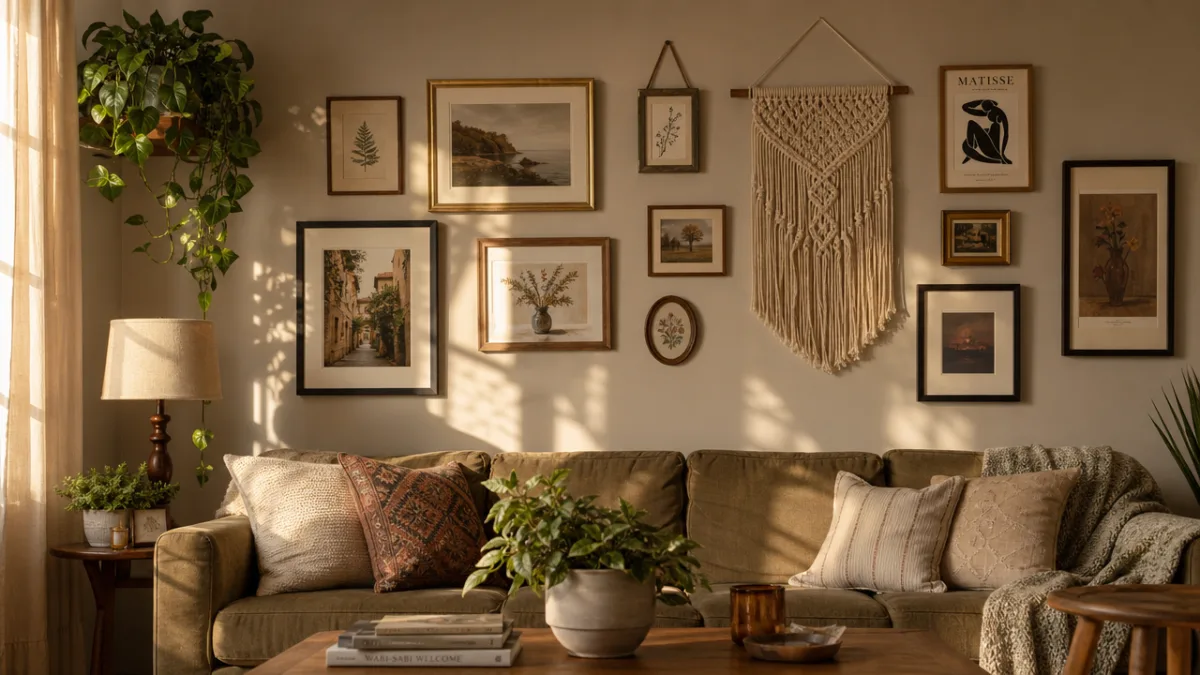
Beyond paint, there are dozens of creative wall treatments that cost very little and make an enormous visual impact. Peel-and-stick wallpaper has matured considerably as a product category, offering patterns that range from subtle linen textures to bold geometric prints, all removable without damaging your walls — a critical feature for renters. Washi tape can be used to create graphic accent walls or faux architectural detail like board-and-batten, and it removes cleanly when you are ready for a change. Gallery walls assembled from thrifted frames, personal photographs, and printed artwork download from free sites like Unsplash create a layered, collected look at virtually no cost.
Textile wall art is another deeply underrated option that adds warmth, texture, and dimension simultaneously. Macramé wall hangings, woven tapestries, and even stretched fabric panels can fill large expanses of wall beautifully without the permanence of paint or wallpaper. You can source inexpensive cotton rope, wooden dowels, and natural dyes to create macramé pieces with beginner-friendly tutorials widely available online. The organic, handcrafted quality of textile art brings a softness to rooms that no print or painting can quite replicate.
Furniture Refresh Projects That Look Professionally Done
Replacing furniture is one of the most expensive ways to update a home, and in most cases it is entirely unnecessary. The bones of most older furniture — the structural frames, the proportions, the craftsmanship — are often superior to what is available at contemporary price points. What has aged poorly is typically just the surface: a dated fabric, a scratched veneer, or a paint color that belongs firmly in a previous decade. Addressing that surface is almost always achievable with basic materials, a little patience, and a YouTube tutorial.
Chalk paint has become a DIY staple for good reason. It adheres to almost any surface without priming, dries quickly, and produces a matte, velvety finish that photographs beautifully and ages gracefully. A tired wooden dresser, a brass-hardware cabinet, or a scuffed side table can be completely transformed in a single afternoon with a quart of chalk paint and a natural bristle brush. Finish with clear or tinted wax for durability, and the result genuinely rivals pieces sold at boutique furniture stores for several times the cost of your materials.
Reupholstering dining chairs is another project with a dramatic payoff relative to its modest difficulty level. Most dining chair seats are simply padded boards attached with a handful of screws, and removing and replacing the fabric requires no special tools beyond a staple gun and a screwdriver. Fabric sold by the yard from discount craft stores, online remnant sellers, or even repurposed curtains from a thrift store can give an entire set of chairs a cohesive, refreshed look. Consider mixing a patterned seat fabric with a solid color on the chair frame for a designer-level contrast that looks far more intentional than a matched set.
- Chalk paint transformation: Apply two thin coats to wood, metal, or laminate surfaces for a flawless matte finish with zero prep sanding required in most cases.
- Hardware swap: Replacing drawer pulls and cabinet knobs with brushed brass, matte black, or ceramic alternatives instantly modernizes any piece of furniture.
- Decoupage accents: Apply torn pages from vintage books or botanical prints to tabletops and trays using Mod Podge for a unique, curated appearance.
- Limewashing wood: Thin white paint with water and rub it into raw or lightly sanded wood for a sun-bleached, Scandinavian-inspired finish that suits both modern and rustic interiors.
Lighting Upgrades That Change Everything
Lighting is the single element that most dramatically shapes how a room feels, and it is consistently the most overlooked aspect of budget decorating. The overhead fixtures that come standard in most homes and apartments produce a flat, shadowless light that flattens surfaces, washes out color, and generally makes spaces feel institutional rather than inviting. The solution is layering — introducing multiple light sources at different heights and intensities so that the room develops depth, warmth, and visual interest in the way that professionally designed spaces always do.
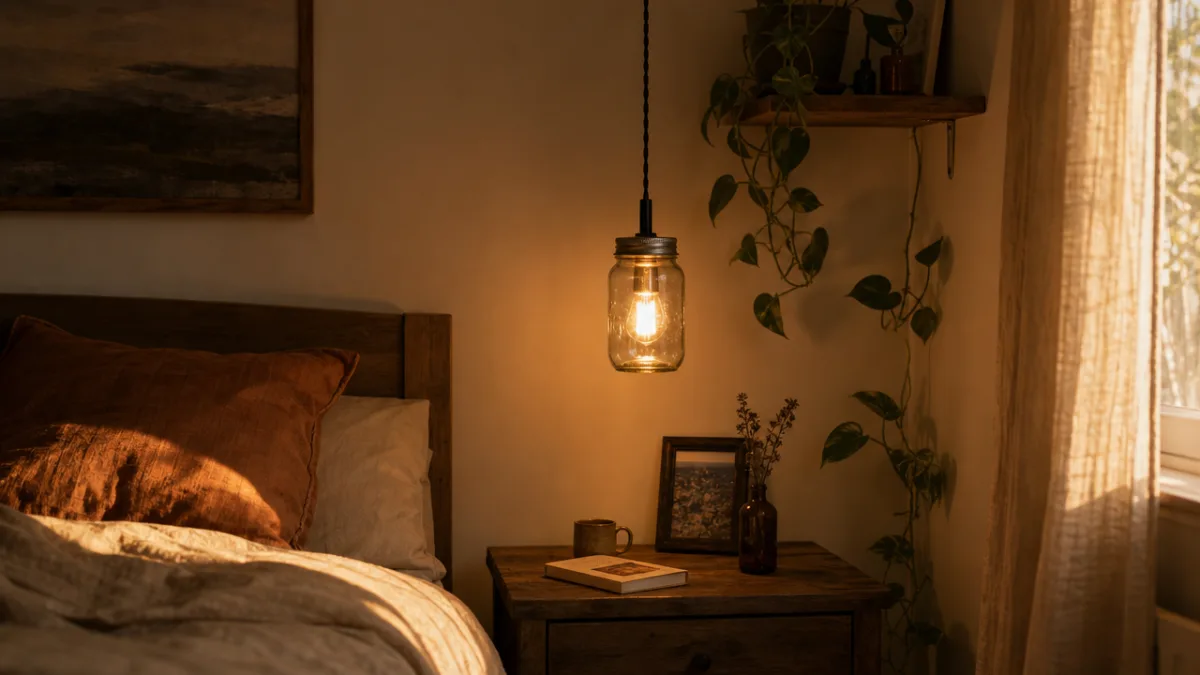
DIY pendant lights have become accessible to anyone comfortable with basic electrical connections, and the results can be stunning. Swag cord kits sold at hardware stores allow you to hang a pendant fixture from any ceiling hook without hardwiring, and the shade itself can be almost anything: a woven basket, a terracotta pot drilled with a single center hole, a paper lantern reinforced with decoupage medium, or a simple glass bottle fitted with a cord grip socket. These solutions cost between ten and thirty dollars total and produce the kind of moody, intimate lighting that defines a well-designed space.
Candles, fairy lights, and LED strip lighting offer additional layers of ambiance at minimal cost. A collection of pillar candles grouped on a wooden tray creates a focal point on a coffee table or fireplace mantel that feels both organic and deliberately styled. Warm-toned fairy lights draped behind sheer curtains, tucked into a glass vase filled with greenery, or strung along open shelving add an ethereal quality that transforms the room after dark. LED strip lighting installed under kitchen cabinets or behind a television creates dramatic uplighting or bias lighting that makes even modest spaces feel polished and contemporary.
Textiles, Soft Furnishings, and the Power of Layering
Interior designers universally agree that textiles are the fastest and most forgiving way to change a room’s character. Unlike paint or furniture, fabrics can be swapped seasonally, washed when they look tired, and layered over one another in ways that build richness and visual complexity over time. A sofa that felt drab and dated under a single solid throw looks entirely different — warmer, more curated, more considered — once it is dressed with a textured knit blanket, two or three throw pillows in complementary tones, and a woven cushion that introduces a subtle pattern.
Making your own throw pillow covers is one of the most beginner-friendly sewing projects available, and the cost difference between a handmade cover and a retail equivalent is genuinely remarkable. A half-yard of fabric from a discount bin can yield one or two pillow covers that match your specific color scheme in a way that browsing store shelves never quite achieves. For those who prefer not to sew, fabric can be folded and safety-pinned or glued with fabric adhesive into serviceable covers, and oversized scarves or fabric napkins can wrap pillow inserts in a no-sew envelope fold that looks surprisingly finished.
Window treatments are another high-impact, low-cost DIY opportunity that most people overlook. Curtain panels made from inexpensive drop cloth fabric — the canvas material used to protect floors during painting — produce a clean, linen-like drape that suits virtually every interior aesthetic. Hang them higher than the window frame and wider than the window opening to create the illusion of larger, taller windows, a classic designer trick that costs nothing beyond the hardware and fabric. Dyeing plain white curtains in an ombre or solid wash using RIT dye creates custom color curtains for a fraction of boutique pricing.
- Start with a neutral base — a solid-colored rug, sofa, or bedding — and layer in pattern and texture through throws and pillows.
- Use the 60-30-10 color rule: 60 percent dominant color, 30 percent secondary color, 10 percent accent for a balanced, professional result.
- Mix at least three different textures in any textile grouping — smooth, rough, and plush — to create visual and tactile depth.
- Introduce one unexpected pattern, whether geometric, botanical, or abstract, to prevent a room from feeling overly safe or flat.
- Wash new textiles before styling to soften them and allow them to drape naturally rather than holding a stiff, folded shape.
Bringing the Outside In: Plants, Greenery, and Natural Materials
No element of home decor is more universally flattering than living greenery, and no budget-friendly addition delivers more psychological and aesthetic return. Plants introduce organic shape, natural color variation, and a sense of vitality that manufactured objects simply cannot replicate. A well-placed fiddle leaf fig, a trailing pothos cascading from a high shelf, or a cluster of succulents arranged on a sunny windowsill each adds a dimension of life to a room that shifts its entire atmosphere. Beyond aesthetics, research consistently confirms that indoor plants improve air quality, reduce stress, and increase focus — a rare case where something beautiful is also genuinely good for you.
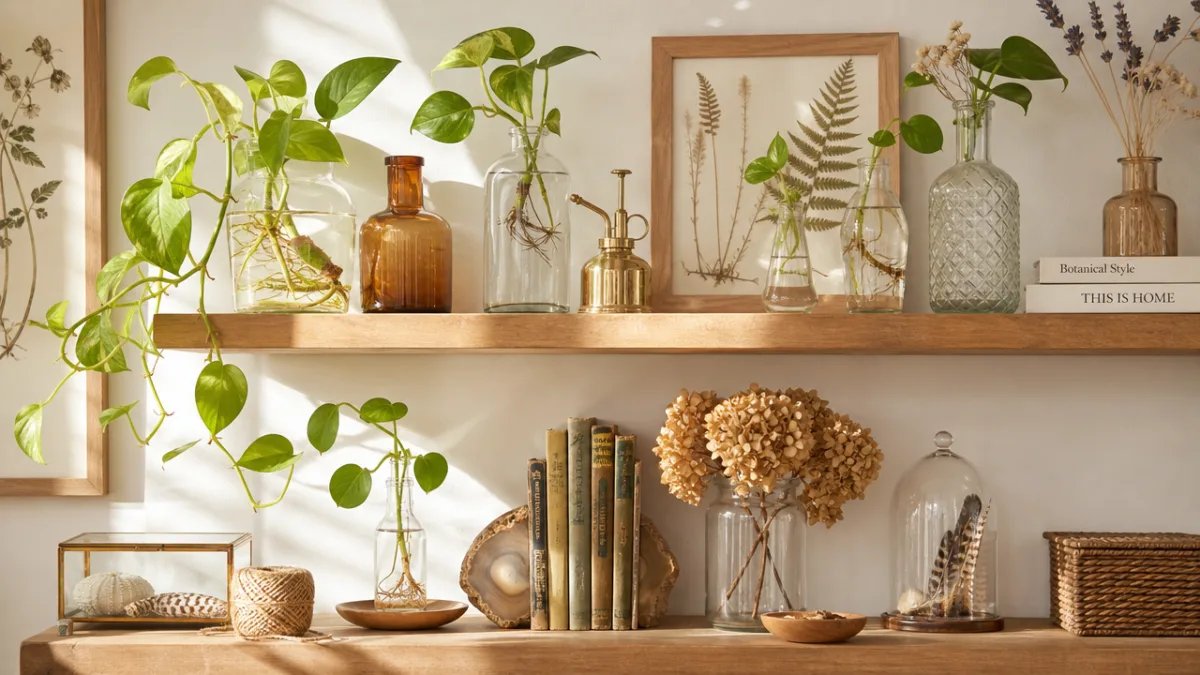
Propagating plants is one of the most satisfying budget hacks in all of home decorating. Many of the most popular indoor species — pothos, spider plants, snake plants, and heartleaf philodendrons — propagate effortlessly in water from simple stem cuttings. Within a few weeks, you have new plants ready to pot, give as gifts, or distribute throughout your home at no additional cost beyond the original purchase. Building a propagation station in a sunny window, with a collection of glass vessels holding cuttings at different stages, is itself a beautiful and evolving display.
Natural materials beyond plants add warmth, texture, and organic character that soften the hard edges of modern interiors. Driftwood collected from a beach or riverbank makes striking sculptural decor when displayed on a shelf or mounted on a wall. Dried pampas grass, eucalyptus branches, and cotton stems arranged in a tall vase provide softness and movement without the maintenance of fresh flowers. Stones, shells, and pinecones grouped in wooden bowls or glass terrariums create effortless, naturalistic vignettes that feel collected rather than purchased, bringing an authenticity to your decor that no retail product can fully manufacture.
Room-by-Room Quick Projects to Tackle This Weekend
The momentum of a successful DIY project is one of its most valuable byproducts. Completing one small, tangible improvement builds the confidence and enthusiasm to tackle the next, and before long the cumulative effect of many small changes produces a home that feels entirely transformed. The key is choosing projects that match your current skill level and available time, beginning with quick wins that deliver visible results without demanding significant investment or expertise. A single Saturday afternoon, properly focused, can produce changes that you will notice and enjoy every day for years.
In the kitchen, open shelving styled with intention creates the impression of a thoughtfully designed space regardless of the age or quality of your cabinets. Remove the doors from one or two upper cabinets, paint the interior a contrasting color, and style the shelves with a mixture of everyday items — stacks of white dishes, glass jars filled with dried goods, a small potted herb — and purely decorative objects. The result is a display that functions as both storage and art. Adding peel-and-stick tile to a backsplash area costs less than fifty dollars and requires no special tools or skills, yet produces a transformation that looks like a full renovation.
In the bedroom, the impact of a well-made, thoughtfully layered bed cannot be overstated. This is the largest visual element in most bedrooms, and investing time rather than money into styling it properly — with a mix of pillow sizes, a neatly folded throw at the foot, and a fitted sheet pulled smooth — immediately elevates the room’s overall impression. Hanging a length of sheer fabric from the ceiling above the headboard creates the effect of a canopy bed, a romantic and architecturally interesting addition that costs almost nothing. On the nightstand, a small stack of books, a single candle, and one live plant creates the kind of thoughtful vignette that makes a bedroom feel like a retreat rather than simply a room with a bed in it.
- Bathroom: Replace a basic builder mirror with a framed round or arched mirror, add a wooden bath tray across the tub, and group soap dispensers and candles on a small tray for an instant spa-like upgrade.
- Entryway: Hang a floating shelf above a bench or console table, add a mirror to visually expand the space, and style with a small plant, a tray for keys, and a single piece of art or a framed print.
- Living room: Style your coffee table with a tray, stacked books, a candle, and one small object of interest — a sculptural piece, a small plant, or a found natural object — for a polished, magazine-ready surface.
- Home office: Spray paint a corkboard frame, add a pegboard for organized storage, and introduce a desk plant and a table lamp with a warm bulb to transform a functional space into one you genuinely enjoy occupying.
The throughline connecting all of these projects is the understanding that a beautiful home is not built through a single large purchase or a sudden windfall of renovation funds. It is built incrementally, through sustained attention, creative problem-solving, and a willingness to try things with your own hands. Every thrifted frame you paint, every pillow cover you sew, every plant you propagate and pot, and every wall you refresh with color is a small act of authorship over your environment — and that sense of ownership and intention is what transforms a house into a home that genuinely reflects and supports the life you want to live inside it.








What do you think?
It is nice to know your opinion. Leave a comment.