










10 Simple DIY Projects for Cozy Home Decor Ambient Lighting Ideas
Why Ambient Lighting Transforms Your Living Space
Ambient lighting is honestly one of the most overlooked parts of decorating a home, and yet it can completely change how a room feels the moment you walk in. Overhead lighting has its place, but that harsh, flat brightness doesn’t do any space many favors. Ambient lighting is different — it’s the soft, layered glow that makes a room feel warm and lived-in, like somewhere you actually want to settle into after a long day.
Getting ambient lighting right isn’t just about sticking a lamp in the corner, though. It’s really about understanding how light plays with the colors, textures, and shapes already in your space. Bulbs in the 2700K to 3000K range — that warm, golden tone — mimic late afternoon sunlight, and there’s actual science behind why that helps us unwind. When you use several softer light sources instead of one glaring overhead fixture, the room starts to feel more dimensional, more alive.
The good news? You don’t need a big budget or any design credentials to pull this off. DIY ambient lighting lets you dial in exactly the size, color, and intensity you want, wherever you want it. Whether your style is cozy farmhouse, clean and modern, or full-on boho, there’s a project here that fits — and there’s a good chance you already have some of the materials at home.
Mason Jar Lanterns and Fairy Light Clusters
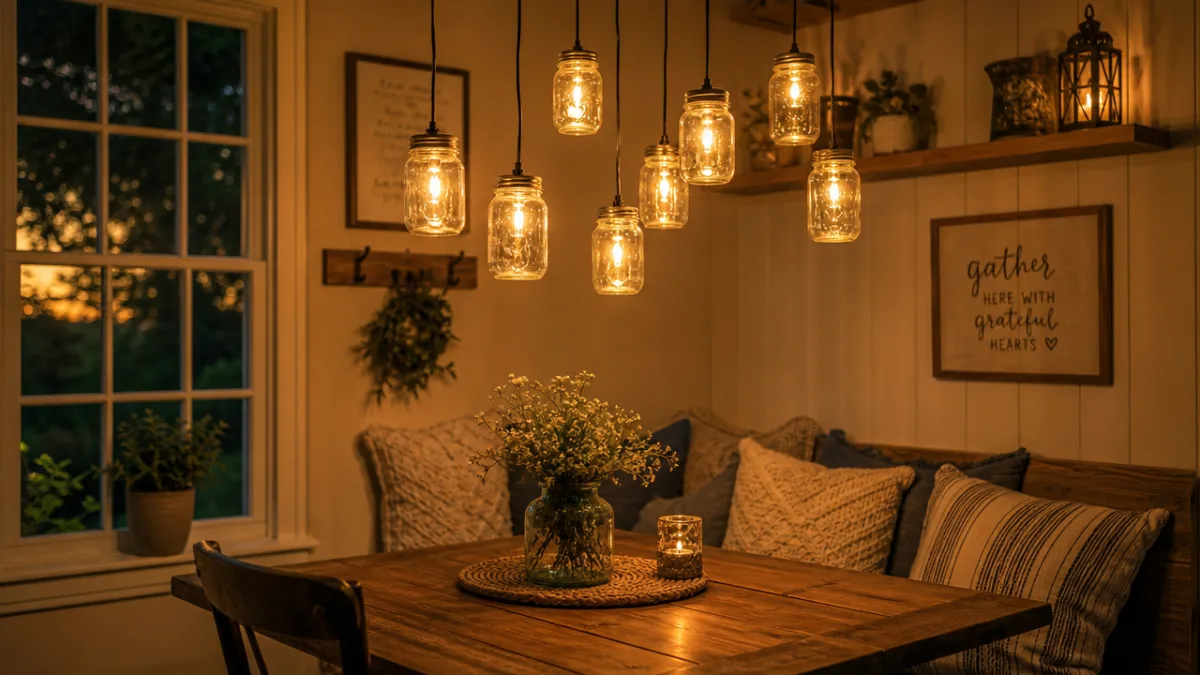
Mason jar lanterns have been a DIY go-to for years, and honestly, they’ve stuck around for good reason. They’re cheap, endlessly adaptable, and the light they give off has this lovely soft, dappled quality — almost like candlelight, but without any of the worry. The basic version is about as simple as it gets: drop a string of battery-powered fairy lights into a clean mason jar, seal the lid, and watch the glass do the work of scattering that light into the most beautiful overlapping patterns on your walls.
Once you’ve got the basics down, you can really start having fun with it. Frosted spray paint on the outside softens the glow even further without killing the light. Filling the bottom of the jar with sand, pebbles, dried moss, or even seasonal stuff like pinecones or dried orange slices adds another layer of visual interest. And when it comes to displaying them, grouping jars in odd numbers — three or five — at different heights on a shelf or mantle makes the whole arrangement feel intentional rather than thrown together.
If you want to go a step further, try suspending a cluster of mason jar lanterns at varying heights from a wooden dowel or a piece of driftwood hung from the ceiling. Twine, jute rope, or thin chain all work depending on the look you’re going for. The result is a genuine statement piece — the kind that draws your eye upward, makes the ceiling feel taller, and fills the room below with a warm, cascading glow. It’s especially stunning above a dining table, in a reading nook, or as the first thing guests see when they walk through the door.
DIY Rope and Wicker Pendant Lights
Rope and wicker pendants are everywhere in bohemian and coastal interiors right now, and making your own is much more doable than it looks. The classic method is wrapping thick nautical rope or jute twine around a balloon or foam ball that’s been coated in fabric stiffener or watered-down craft glue. Let it dry fully, pop the balloon, and you’ve got a rigid open-weave sphere ready to be fitted with a pendant cord and socket kit — something you can find at most hardware stores for just a few dollars.
What makes handmade rope pendants so appealing is that imperfection is actually the point. Every one comes out slightly different, and that’s what gives your space a sense of real craftsmanship — something a factory-made shade just can’t fake. You also get to decide how open or dense the weave is, which changes the whole character of the light. A looser weave throws dramatic patterns of light and shadow across the walls; a tighter one diffuses everything into a softer, more even glow. Both are gorgeous — it just depends on the mood you’re after.
Thrifted or discounted wicker and rattan lampshades are another great option if you’d rather skip the craft glue entirely. Swap out the old hardware for a pendant cord in whatever finish suits your space — black, brass, copper, white — and add a warm Edison-style bulb to nail that amber, artisanal feel. These work beautifully in pairs on either side of a bed or as a trio hanging above a kitchen island.
Candle Votives and Tea Light Displays
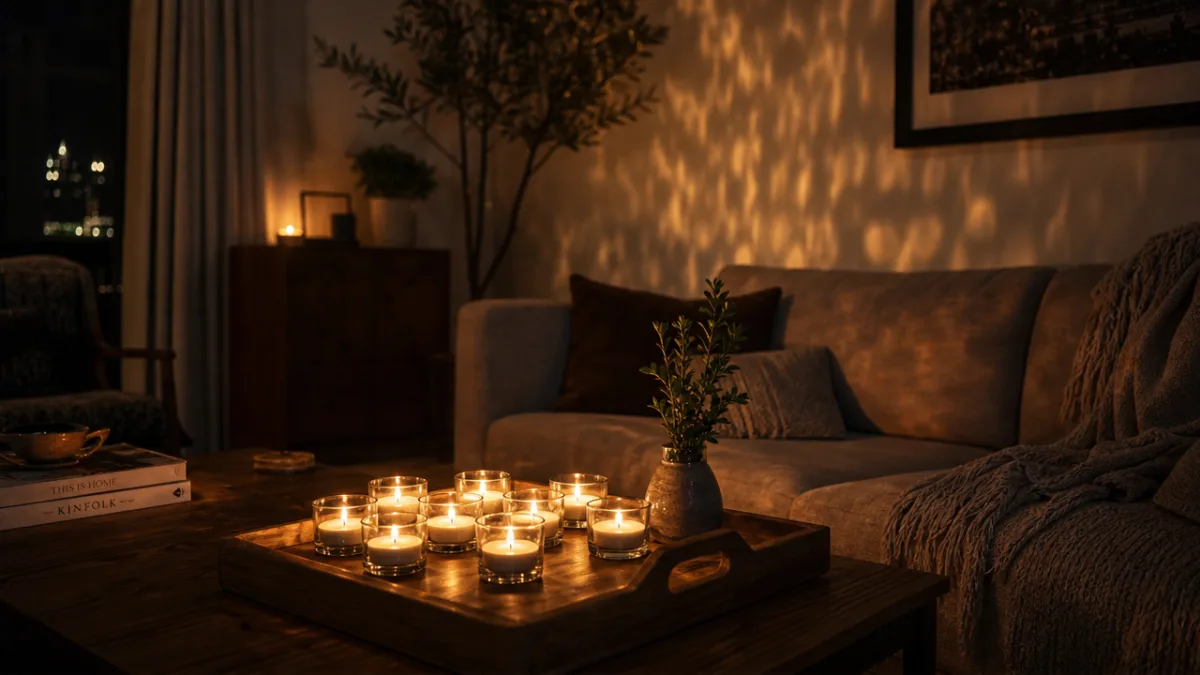
Candles might be the oldest ambient lighting trick in the book, but they’re still one of the most effective — and a thoughtful tea light display costs almost nothing to put together. The secret to making candles look deliberate rather than just plopped down is repetition and arrangement. Clustering a lot of small tea lights or votives together in one spot creates a collective warmth that a lone candle on a windowsill never quite manages. A wooden tray filled with sand and a couple dozen tea lights becomes a centerpiece that genuinely anchors a coffee table or dining surface.
If you’d rather skip the open flame — especially in a home with kids or pets — today’s battery-operated flameless candles are honestly impressive. Many have a flickering mode that looks remarkably close to the real thing. They’re perfect for high shelves, long dinner parties where you don’t want to babysit the candles, or anywhere you want that warm glow to last for hours without thinking about it. Mixing a few real candles into a display with flameless ones is a great middle ground — you get the authenticity of genuine flame alongside the ease of battery power.
You can also make your own candle holders from things you already have around the house. A wine bottle with a taper candle in the mouth, a glass hurricane vase filled with gravel holding a pillar candle, hollowed-out citrus halves as temporary tea light cups — these are all simple, beautiful ideas that cost almost nothing. Playing with different heights, materials, and light intensities within a single arrangement creates that layered, dynamic look that makes a room feel genuinely cozy rather than just well-lit.
LED Strip Lights for Architectural Glow
LED strip lights have come a long way from their early days as a gamer aesthetic staple. When you use them thoughtfully, they create this beautiful, subtle architectural glow — the kind that defines the shape of a room without you ever quite being able to pinpoint where the light is actually coming from. That’s the key idea behind using them well: hide the source. Tuck strips behind furniture, under floating shelves, along the inside edges of ceiling details, or behind a headboard, and suddenly surfaces just seem to glow from within.
Installation is approachable for pretty much anyone. Most strips come with adhesive backing and can be cut to exact lengths at marked intervals, so there’s no waste and no complicated wiring to deal with. Pair them with a smart dimmer or a simple remote-controlled module and you’ve got full control over brightness — handy when you want bright and functional during the day and soft and moody in the evening. For living spaces, warm white strips around 2700K are the most flattering; in bedrooms, a soft amber tone can feel even cozier.
One of the most practical and satisfying applications is running strips along the underside of a floating TV console. The backlight reduces eye strain when you’re watching in a dark room and adds a whole layer of indirect warmth to the space. Under kitchen cabinet overhangs is another great spot — it gives you useful task lighting while making the kitchen feel much more welcoming after dark. Either way, you’re usually looking at twenty to fifty dollars in materials and less than an hour of your time.
Window Sill String Lights and Curtain Drapes
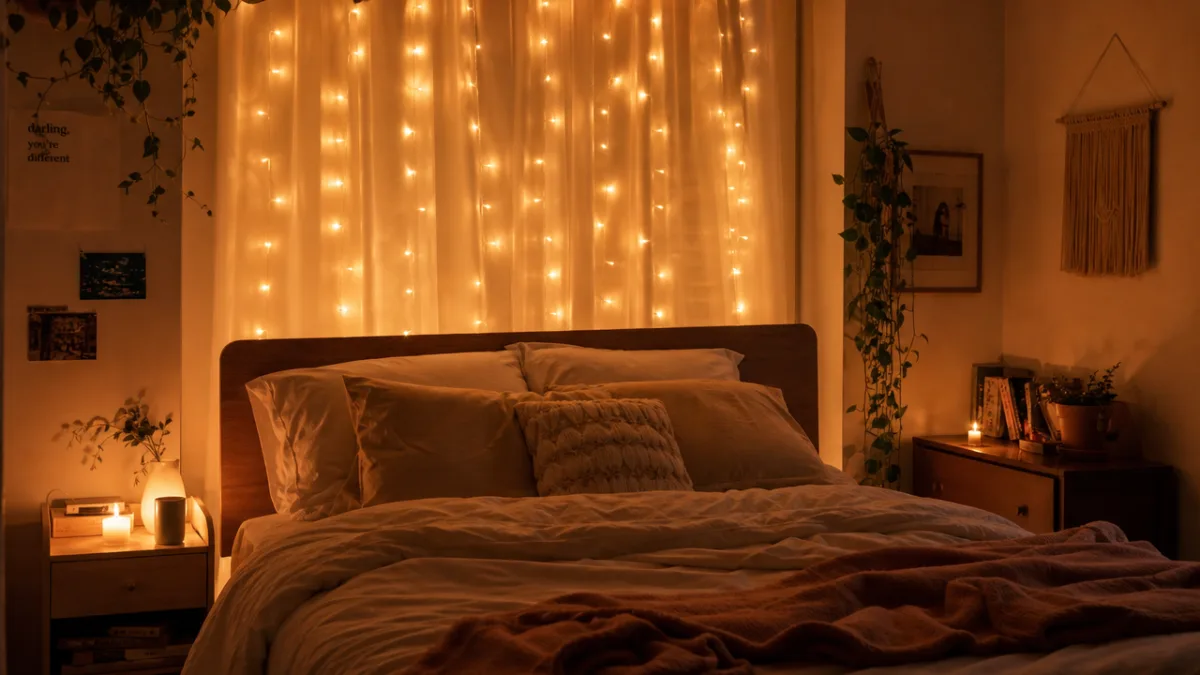
String lights along a window sill might be one of the simplest ambient lighting projects there is, and the payoff is completely disproportionate to the effort. A single warm white strand arranged along a window ledge creates a soft halo effect from outside and fills the room with a gentle, diffused glow that’s especially magical on dark winter evenings. Hang a sheer curtain in front of the lights and the effect gets even better — the fabric scatters the individual points of light into something that looks almost like a soft, glowing cloud.
Curtain lights — the kind designed to hang in vertical cascades from a rod — have become a bedroom staple for good reason. Hung behind a bed, they create a dreamy backdrop that makes even a simple setup feel like a proper retreat. The glow is soft enough to wind down by, flattering in that way good candlelight tends to be, and just bright enough to read without flipping on a harsher lamp. If you hang them in front of a mirror, the reflection doubles the warmth and fills the whole room with it.
Outside, string lights strung in a zigzag between hooks or posts across a patio or covered porch create that café or bistro feeling that makes outdoor evenings feel like an extension of being indoors. All you need is a drill, some screw-in hooks, outdoor-rated lights, and about an hour. Once it’s up, it completely changes how you use that space after dark — suddenly a balcony or backyard becomes somewhere you actually want to spend time on warm evenings.
Upcycled and Repurposed Light Fixtures
Some of the most interesting lighting ideas come from objects that were never meant to hold a bulb in the first place. Old colanders, wire baskets, vintage cheese graters, wooden crates, woven baskets — add a basic pendant cord kit and the right bulb, and you’ve got a one-of-a-kind shade that no one else has. The holes and gaps in these repurposed objects throw intricate patterns of light and shadow around the room that shift subtly as you move through the space. It’s the kind of thing you can’t really replicate with anything mass-produced.
Thrift stores, flea markets, and estate sales are genuinely great places to hunt for raw material. A mid-century ceramic vase can be drilled and wired into a table lamp. A row of colored glass bottles on a window sill with small LEDs inside creates a glowing stained-glass effect for almost nothing. Even paper lanterns — the kind that cost a dollar or two — can be painted, cut, and layered into a pendant with a totally custom look and feel.
The main thing to keep in mind with upcycled lighting is to use proper hardware and make sure everything is rated for what you’re asking it to do. Pendant cord kits with built-in sockets are designed to be safe and easy to work with, and pairing them with low-heat LED bulbs takes most of the fire risk off the table. Beyond that, the creative possibilities really are wide open. Every piece you make carries its own story and character — something you just can’t buy off a shelf — and that’s what makes your home feel like it’s actually yours.








What do you think?
It is nice to know your opinion. Leave a comment.