










10 Hidden Storage DIYs for the Home: Clever Solutions to Declutter Every Room
Why Hidden Storage Is the Secret to a Beautiful, Organized Home
Every home eventually runs into the same problem: we collect more stuff than we have places to put it. Shelves get packed, closets stop closing properly, and countertops slowly disappear under the daily pile-up. Before long, even a room you love starts to feel chaotic. Hidden storage is the answer a lot of people overlook — it lets you tuck away everything you need without giving up the clean, put-together look you’re actually going for.
But hidden storage is about more than just getting organized. It’s really about being intentional with your space — treating every wall, piece of furniture, and unused corner as an opportunity rather than dead space. When clutter is tucked away, your eye isn’t snagged by bins and boxes every time you walk into a room. Instead, you actually notice the things you want to show off. This is the reason professionally designed spaces always feel so calm and airy, even when the people who live in them have full, busy lives.
What makes DIY hidden storage projects so satisfying is that you get to build something that actually fits your home — your dimensions, your belongings, your style. A store-bought cabinet can help, but a custom under-stair system or a window seat with a lift-up lid can completely change a room. These projects run the full range from simple weekend builds to more involved undertakings, so there’s genuinely something workable for every skill level and budget. And the payoff, both in how a space functions and how it looks, is almost always worth it.
Under-Stair Storage: Turning Wasted Space Into a Design Feature
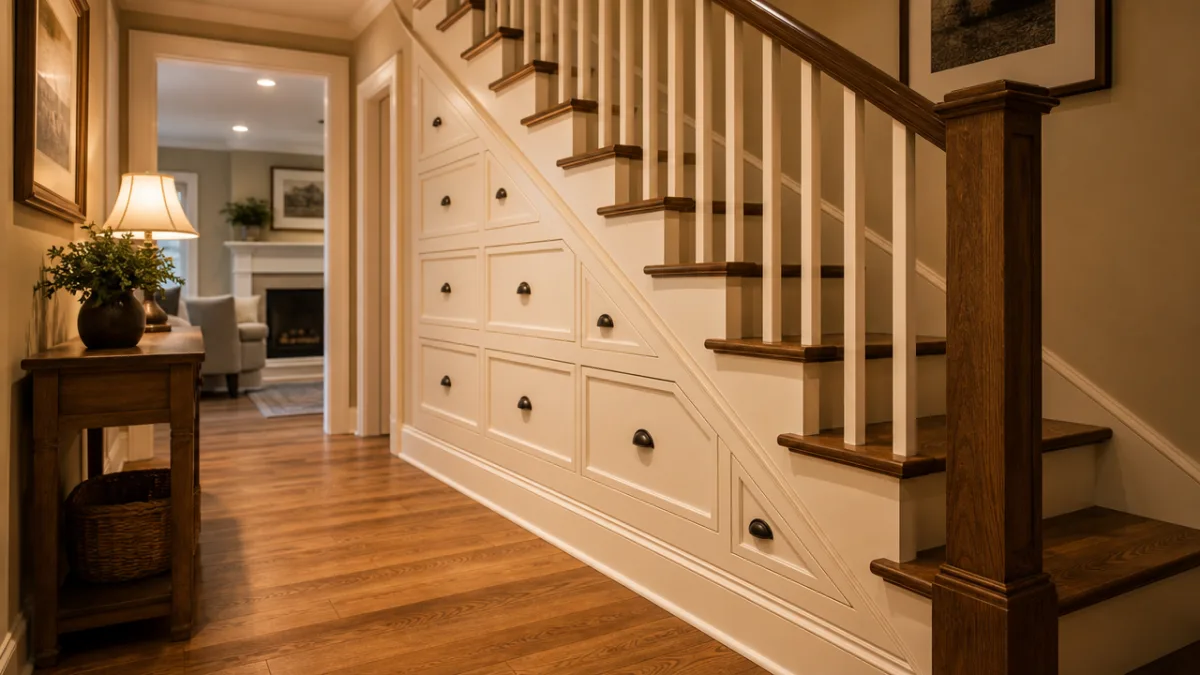
The space under a staircase is one of the most wasted spots in any multi-story home. In a lot of houses it’s basically a graveyard for the vacuum cleaner and a handful of forgotten umbrellas, sealed off by a door that doesn’t do the room any favors. With some planning and moderate carpentry skills, though, that awkward triangular void can become pull-out drawers, built-in bookshelves, a small home office nook, or a cozy reading corner. The transformation is genuinely dramatic, and the storage you gain can rival an entire closet.
A popular approach is to build a series of custom drawers that follow the angle of the stairs, each one a little shorter than the one below it. Fit them with full-extension drawer slides and suddenly every inch of that depth is actually usable — perfect for shoes, sports gear, gift wrap, or seasonal items. Paint the drawer fronts to match the surrounding wall for a seamless built-in look, or go the opposite direction and use a contrasting wood tone to make them a deliberate design statement. Either way, it looks considered and polished rather than patched together.
If you’d rather skip the heavy construction, prefabricated cube shelving units can be trimmed to fit the angled space with minimal tools. Add doors to the fronts and you instantly have something that looks architectural and finished. If the space is tall enough near the center of the staircase, you can even squeeze in hanging storage for coats and bags — essentially a second entryway closet in a home that didn’t have one to begin with.
Ottoman and Bench Storage: Functional Furniture That Hides in Plain Sight
Storage ottomans and benches are probably the friendliest entry point into hidden storage DIYs — they don’t require many tools, the materials are affordable, and the results look great. A basic storage ottoman is really just a plywood box with a hinged, padded lid. The inside can hold blankets, throw pillows, board games, remote controls, and all the other living room flotsam that never seems to have a home. Set it in front of the sofa and it reads as a stylish coffee table while secretly doing the work of a linen chest.
Entryway benches with storage are just as useful, especially in homes where the front hallway takes a daily beating from shoes, bags, and outdoor gear. Build a bench with a hinged seat over a deep box and you’ve got a place to sit while you put your shoes on and a place to hide the shoes you’re not wearing — at the same time. Add some hooks above and small cubbies on the sides and you’ve created a complete entryway system that looks like a real furniture piece rather than a storage hack.
The upholstery possibilities for these projects are almost endless, which means you can dial in the look for any style of room. Tufted velvet on the lid feels luxurious and traditional; outdoor fabric over simple foam is tough enough for a mudroom or a kids’ room. If you want a budget-friendly option that can actually change with the seasons, foam wrapped in batting and covered with a fitted slipcover works beautifully and costs very little to update. These builds typically come in at a fraction of what comparable pieces cost at retail, and you get something sized exactly right for your space.
Floating Wall Panels and False Fronts: Invisible Storage in Every Room
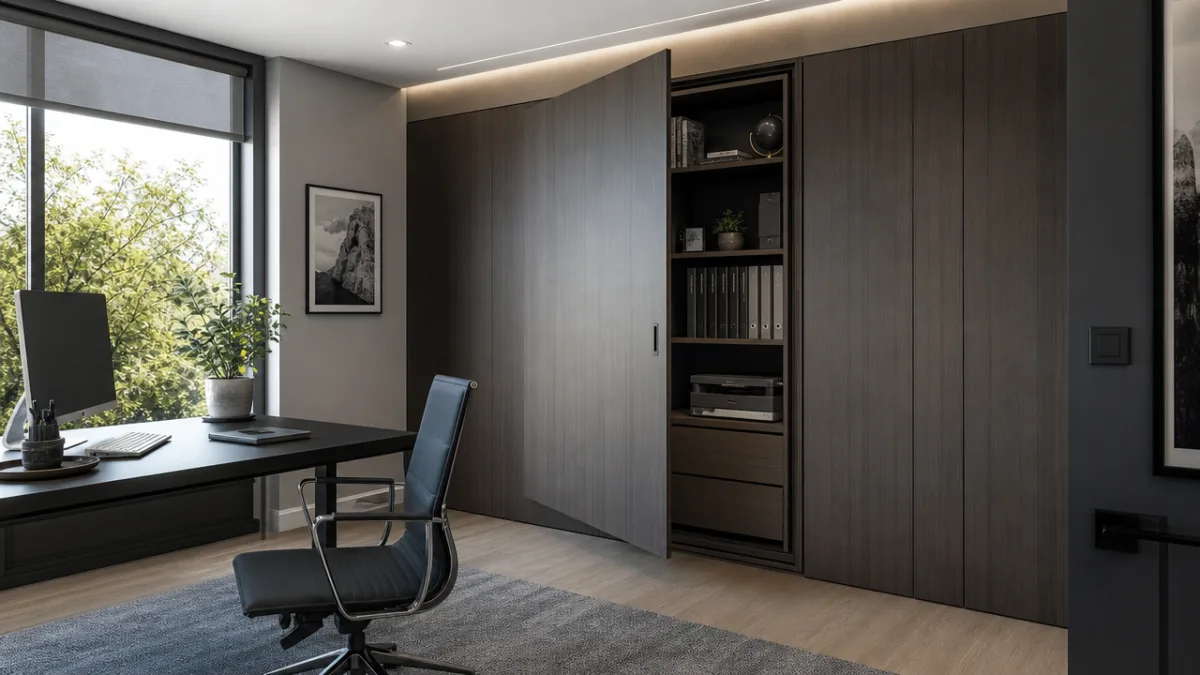
Some of the most satisfying hidden storage ideas involve walls that aren’t quite what they appear to be. Push-to-open panels, artwork that pivots open, and shallow cavities built between studs can all add real storage to a room without taking up any floor space. It sounds like something out of a movie set, but a lot of these techniques are completely achievable with basic carpentry skills — what they mostly require is careful planning before you pick up a saw.
The recessed medicine cabinet is the classic version of this idea in bathrooms, but it translates well to other rooms too. In a home office, a section of wall paneling can hide a charging station or router so you never have to look at that nest of cords again. In a bedroom, a framed piece of artwork on hinges can swing open to reveal jewelry storage, a small safe, or a bedside shelf positioned at exactly the right height for reading. There’s something genuinely delightful about these reveals — they have a theatrical quality that makes them fun to show off.
If you rent or just don’t want to cut into the walls, a freestanding version of this concept uses full-height bookcases or panels that look flush against the wall but swing outward to expose hidden space behind them. Yes, this is the “secret door” idea made practical for everyday life. The trick to making it convincing is careful attention to the trim and paint around the panel so it blends in seamlessly. A simple magnetic push latch keeps everything looking clean since there are no handles to give the game away.
Kitchen and Pantry Hidden Storage: Maximizing the Heart of the Home
The kitchen is where clutter tends to win. Between appliances, pantry stock, cookware, and the dozens of little accessories that seem to multiply on their own, it’s a constant battle to keep things from looking chaotic. Good hidden storage in this room pays off every single day — cooking feels easier, the space feels calmer, and you stop spending five minutes hunting for the lid to a pot. A lot of the most effective kitchen storage DIYs don’t take long at all and require nothing more than basic hardware and a free weekend afternoon.
Toe-kick drawers are one of the cleverest and most underappreciated options out there. That recessed strip at the base of your kitchen cabinets? It represents several inches of unused depth running along the entire length of your cabinet run. Shallow drawers fitted into that space can hold baking sheets, cutting boards, placemats, and foil wrap with surprising efficiency. You’ll need to cut out the existing toe-kick panel, fit some drawer slides, and build a shallow box — all tasks that are well within reach if you have a circular saw and a drill. When the drawer is closed, it’s nearly invisible.
Cabinet doors are another underused storage opportunity. Mount narrow shelves or organizer racks on the inside faces and you instantly have a home for spice jars, cleaning products, pot lids, or plastic wrap without eating up any shelf space inside the cabinet. This modification is completely reversible, which makes it great for renters, and the parts are cheap and easy to find at any hardware store. Combine this with pull-out drawers inside your base cabinets and a toe-kick system along the bottom, and a kitchen that always felt overcrowded can start to feel surprisingly spacious.
Bedroom Hidden Storage: Reclaiming Calm in Your Most Personal Space
Your bedroom should feel like a retreat, but it’s usually the room where clutter sneaks up on you most. It’s hidden from guests, so it’s easy to let things accumulate — and before you know it, the room that’s supposed to help you unwind is actually making you more stressed. Hidden storage solutions designed for the bedroom fix this by giving every category of stuff a discreet, easy-to-reach place to live. The goal is a room where you can find what you need, but when you just look around, you see only the things you’ve chosen to have there.
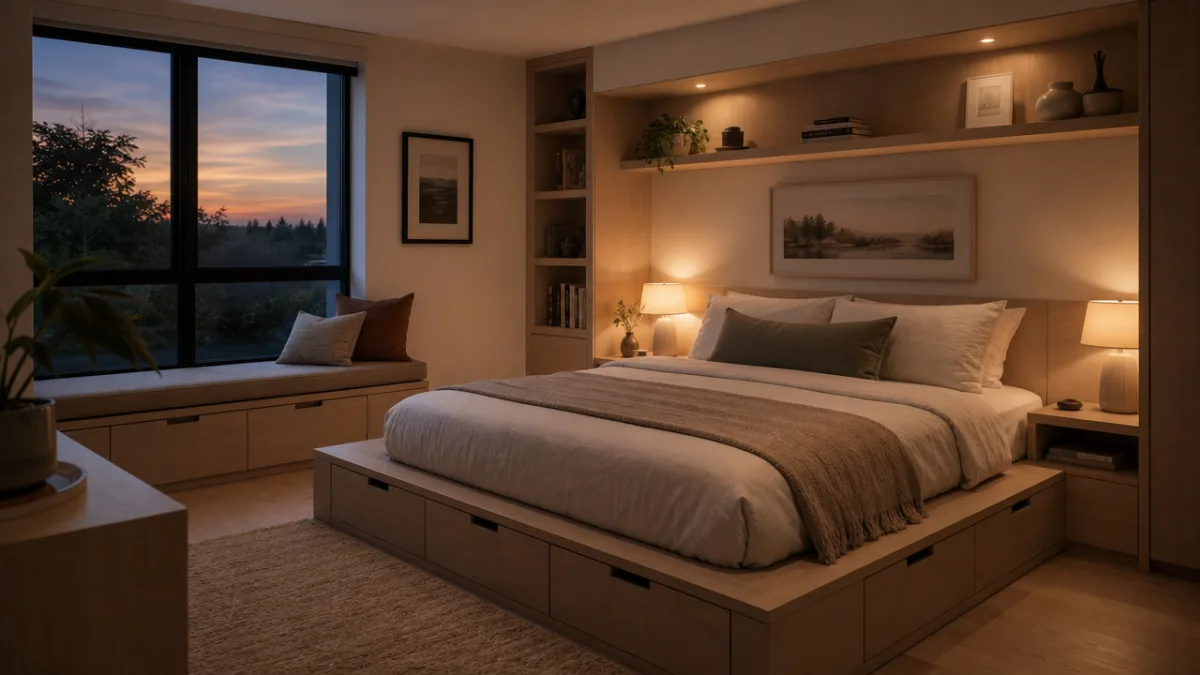
A platform bed with built-in storage drawers is probably the single biggest upgrade you can make to bedroom storage in one project. A queen-sized platform can fit four to six large drawers, each deep enough to hold a season’s worth of clothing, spare bedding, or other bulky things competing for closet space. Building it yourself means you can configure the drawers however makes sense for what you’re storing, and you can match the finish to your existing furniture. The low, clean profile of a platform bed also just makes a room feel more restful than one surrounded by visible storage solutions.
A storage headboard is another bedroom-specific idea that’s both functional and visually interesting. A headboard built from a simple plywood frame with shelves, cubbies, or small doors can replace one or both bedside tables, giving you a spot for books, glasses, a water bottle, your phone charger, and whatever else you like to keep close at night — all organized and off the floor. For something more dramatic, a floor-to-ceiling headboard wall with integrated storage creates the kind of custom, boutique-hotel look that makes a genuine statement and elevates the whole room.
Garage and Utility Space: Smart DIY Storage for the Most Overlooked Rooms
Garages and utility spaces tend to become the default dumping ground — the place things end up when there’s nowhere else for them to go. The result is usually a room that’s chronically disorganized and hard to actually use. Bringing the same hidden and built-in storage logic that works so well inside the house to these spaces can turn them into rooms that actually function. And since aesthetics are less of a concern here, these spaces are also ideal for anyone who wants to build up their DIY skills before tackling something more visible.
A wall-mounted pegboard with custom bins, hooks, and shelves is a garage storage classic, but adding a hinged cover panel that swings closed over the whole board takes it to another level. Suddenly you have a hidden storage wall that keeps tools and supplies completely out of sight when you don’t need them. This is especially useful in garages that double as a gym, workshop, or hobby space, where being able to close off one zone and focus on another makes the room feel more versatile. The panel itself can be painted or decorated to work as a backdrop for the other uses of the space.
Ceiling-mounted storage platforms are another highly effective option, moving boxes, holiday decorations, camping gear, and anything else you don’t reach for often up and completely out of the primary working area. These platforms are straightforward to build from dimensional lumber and plywood, supported by threaded rod or purpose-made hardware, and you can add a pulley or lift system if you want easier loading. Getting that bulk off the floor and walls frees the garage to actually serve its day-to-day purpose — whether that’s parking cars, riding bikes, or working on projects.
Bathroom Hidden Storage: Elegant Solutions for the Smallest Spaces
Bathrooms are a tricky organizational challenge. They’re among the smallest rooms in most homes, but they need to hold a surprisingly large amount of stuff for your daily routine. Open shelves and countertop organizers can help, but in a small bathroom they often just make the space feel even more cramped. Hidden storage keeps surfaces clear and contributes to that calm, spa-like atmosphere most of us want from our bathrooms — whether it’s a spacious master bath or a tiny powder room.
One of the most impactful bathroom DIYs is swapping out a flat mirror for a medicine cabinet, either recessed into the wall or mounted as a deep-framed unit that sits slightly proud of the surface. Fit the interior with adjustable shelves and it can hold everything from prescription bottles to your full skincare routine. Close the mirror door and it all disappears completely. Because this is something you use multiple times a day at eye level, even a modest improvement in organization here makes the daily experience of using the bathroom noticeably better.
The under-sink cabinet is another area that tends to be used less efficiently than it could be, mostly because the plumbing in the middle makes it awkward to access the full depth of the space. Adding pull-out drawers on either side of the pipes, a tilt-out panel at the front for small flat items, and organizer racks on the interior cabinet doors can multiply the usable storage in this zone dramatically. Round this out with built-in niches in the shower surround — little recessed shelves for shampoo and soap that are part of the wall itself — and you end up with a bathroom where the storage is part of the architecture rather than something hanging off the showerhead or cluttering the corner.








What do you think?
It is nice to know your opinion. Leave a comment.