










10 Budget-Friendly DIY Home Decor Ideas to Transform Your Space
Why DIY Home Decor Is the Smartest Way to Beautify Your Home
Honestly, there’s never been a better time to dive into DIY home decorating. Between the endless stream of tutorials online, affordable craft supplies at every corner, and communities of creative people sharing their best ideas on platforms like Pinterest, giving your space a serious makeover no longer means hiring an interior designer or maxing out a credit card. There’s something genuinely satisfying about making something beautiful with your own hands — and the fact that it saves you a ton of money? That’s just a bonus.
Budget-friendly DIY decor isn’t about settling — it’s about being clever, intentional, and creative with what you’ve got. A lot of the most gorgeous home interiors you see online came together through low-cost projects where personality won out over price tags. Thrift stores, dollar stores, craft shops, and stuff you already own around the house can all become the raw materials for something genuinely stunning that feels like you.
And beyond saving money, there’s something else DIY gives you that shopping never can: total control. You pick the colors, the textures, the sizes. You make it work with your furniture, your family, your style. Even the most expensive store-bought decor can’t offer that kind of customization — which is why, if you actually care about how your home feels, making things yourself is almost always the better move.
Repurposing and Upcycling: Giving Old Items New Life
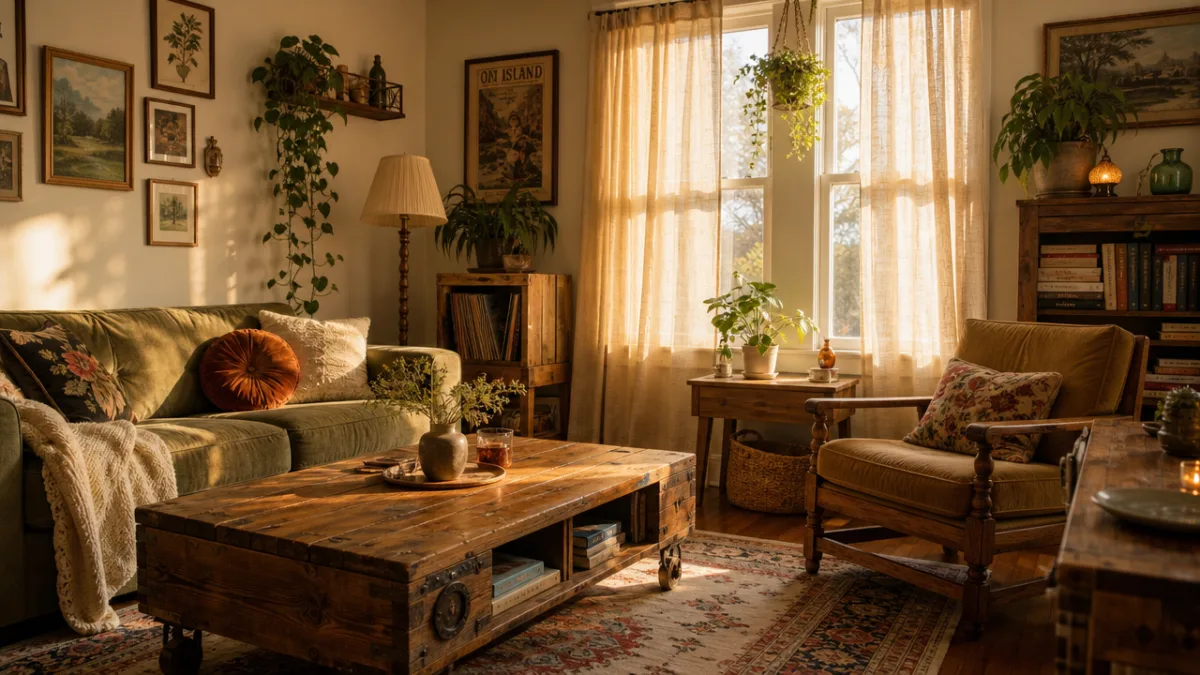
Upcycling might be the most satisfying corner of the DIY world — taking something that was headed for the trash and turning it into something you’re actually proud to display. An old wooden ladder propped against a wall becomes a charming blanket rack or a quirky bookshelf. A bunch of mismatched frames, all painted the same color, suddenly pull together into a cohesive gallery wall. Empty wine bottles wrapped in twine turn into elegant vases that look like they belong in a boutique hotel.
Thrift stores and garage sales are genuinely goldmines for this kind of thing. A beat-up wooden dresser that costs a few dollars can be sanded down, painted in a color you love, and fitted with new hardware until it’s a total showstopper. Old wooden crates stacked and secured together become a practical, industrial-style shelving unit. Even furniture that seems too far gone can often be saved with a little creativity and the right shade of paint.
The real skill in upcycling is learning to see potential instead of just what’s in front of you. When you’re walking through a thrift store or scrolling a marketplace listing, try looking past the grime or the outdated finish and asking yourself what this thing could become. Once that mental shift clicks, you start seeing budget-friendly decor opportunities everywhere — just waiting for a little time and imagination to bring them back to life.
Wall Art and Gallery Displays on a Shoestring Budget
Bare walls are probably the most common reason a home feels unfinished, and the good news is they’re also one of the easiest things to fix without spending much. You don’t need to be an artist to make your own wall art — you just need to be willing to play around. Abstract canvases made with a couple of tubes of acrylic paint and a wide brush can look genuinely breathtaking. Free printable artwork downloaded online, printed at your local copy shop, and dropped into cheap dollar-store frames? It looks every bit as polished as something from a gallery.
Gallery walls are especially powerful because they let you fill a whole area with visual interest by mixing frames, art styles, and even three-dimensional objects. A great gallery wall might include framed photos, hand-lettered quotes, small mirrors, botanical prints, and pieces of decorative fabric stretched over simple wooden frames. The variety is what makes it feel layered and personal — and because each individual piece is inexpensive, the combined effect ends up being way more impressive than what you’d expect from the total cost.
Washi tape, removable decals, and stencils are also worth knowing about, especially if you’re renting. A geometric pattern made with painter’s tape and two colors of paint can create a modern, architectural look that holds its own against anything from a designer showroom. It takes patience and a steady hand, but the results are consistently dramatic — and it’s the kind of thing that can completely transform a room for almost no money at all.
Textiles and Soft Furnishings: The Fastest Way to Change a Room’s Mood
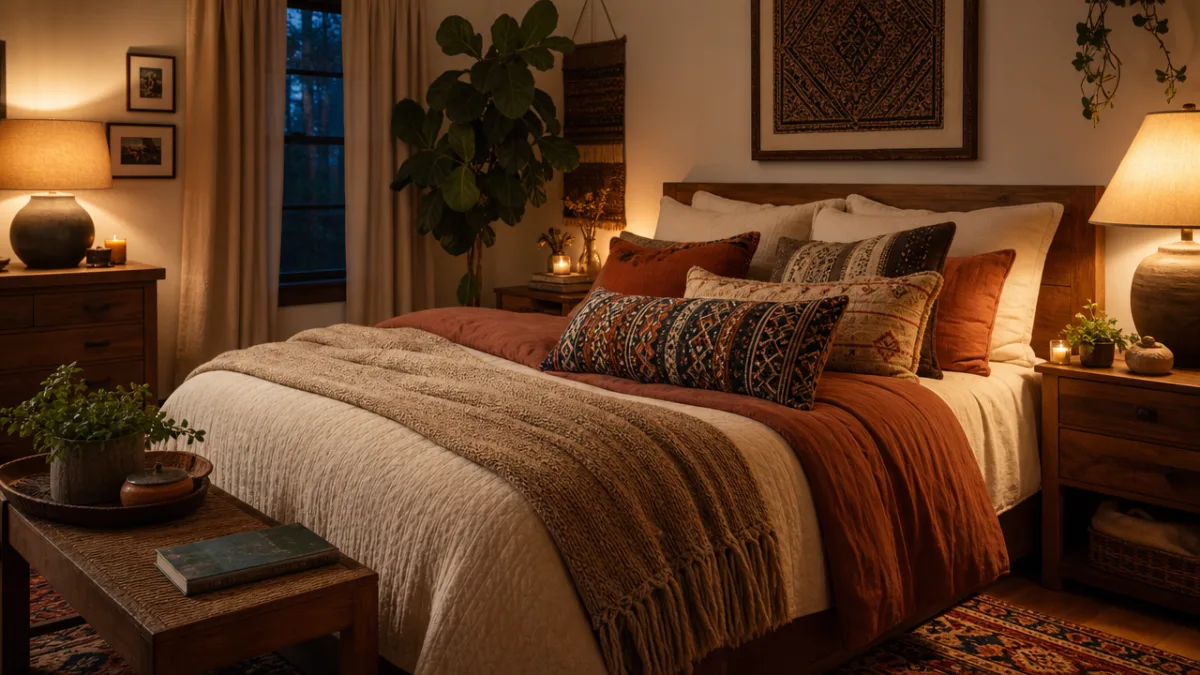
If you want to change how a room feels quickly, updating its textiles is your best move. Throw pillows, blankets, curtains, and rugs can shift a space’s entire mood in an afternoon — and when you make or customize them yourself, they become even more affordable and personal. Even just learning to use iron-on hem tape and fabric glue (no sewing machine required) opens up a whole world of custom cushion covers, no-sew curtains, and embellished throws in exactly the colors you want.
Dyeing fabric is another technique that’s way more accessible than people realize. Plain white curtains, pillowcases, and old bedsheets can be completely transformed with fabric dye from any craft store. Tie-dye and shibori techniques — where you fold, twist, or bunch the fabric before dyeing — create these gorgeous organic patterns that look artisanal and intentional. A set of shibori-dyed pillow covers in deep indigo blue, for example, can anchor an entire living room’s color scheme and give the space a sophisticated, curated look for just a few dollars in materials.
Rugs are notoriously expensive when bought new, but there are ways around that. Tufting kits require a bit of upfront investment, but they let you make completely custom rugs in any size, shape, and color you want. If that feels like too much, try layering smaller rugs — it’s a trick professional designers use all the time. A flat-woven rug from a discount store layered over jute or sisal creates a look that feels warm, textured, and very much on purpose, without the designer price tag.
- No-sew curtains using iron-on hem tape and discount fabric panels save serious money compared to pre-made drapes, and you get to choose exactly the color and pattern you want.
- Fabric paint and stencils can take a plain cushion cover from boring to custom in an hour, turning cheap basics into statement pieces that actually coordinate with your room.
- Those chunky knit blankets that cost a fortune at home stores? You can make them at home using arm-knitting techniques and affordable yarn from a craft store.
- Vintage tablecloths and fabric panels from thrift stores make fantastic curtain material — often with beautiful patterns and better-quality fabric than anything in the same price range new.
Plants and Natural Elements: Bringing the Outdoors Inside
Adding plants and natural materials to your home might be the single best thing you can do for how it looks and feels. Plants bring color, texture, and genuine life into a room, and a lot of the most popular houseplants are cheap, easy to find, and basically impossible to kill. Pothos, snake plants, spider plants, and heartleaf philodendrons are all great starting points — they’re nearly indestructible, they look lush and green pretty quickly, and they make any space feel more vibrant and welcoming without much financial commitment at all.
The containers you use matter just as much as the plants themselves, and this is where you can really have fun. Plain nursery pots can be painted with geometric designs, wrapped in rope, tucked inside woven baskets, or set into DIY wooden planters made from reclaimed wood. Displaying plants at different heights — with some on stacked books, decorative boxes, or simple plant stands made from wooden dowels and rope — creates a whole little installation that looks like something from a trendy plant shop.
Natural elements beyond living plants are also worth exploring. A large piece of driftwood mounted on a wall becomes a sculptural focal point. A glass vase full of dried pampas grass makes a soft, boho-luxe centerpiece that photographs beautifully and requires zero upkeep. Branches from the garden in a tall floor vase can be dressed up seasonally — string lights in winter, small hanging ornaments whenever the mood strikes — making them one of the most versatile, endlessly renewable decor elements out there. And they’re completely free.
- Propagate plants from cuttings that friends or neighbors share with you, build up a big collection for free, and then style them in creatively made containers.
- Pick up interesting stones, shells, and driftwood on walks and arrange them in shallow bowls or on wooden trays for easy, zero-cost naturalistic vignettes.
- Dry flowers from your garden or from cheap grocery store bouquets and arrange them in vintage vessels for botanical displays that last for months.
- Make a macrame plant hanger using simple knotting techniques and inexpensive cotton rope — a great way to display trailing plants at different heights around a room.
- Press flowers and leaves between heavy books, then frame them under glass for elegant botanical wall art that costs almost nothing to put together.
Lighting Transformations: The Most Underrated DIY Upgrade
Lighting might be the most transformative element in any room, and it’s almost always the thing people overlook when decorating on a budget. Here’s the thing though — dramatic lighting upgrades don’t require expensive fixtures or an electrician. Simple plug-in pendant lights from a hardware store can be hung at any height in any configuration to create a custom look that would run hundreds of dollars in a lighting showroom. Fairy lights, string lights, and LED strips are incredibly flexible and can add ambient glow, highlight architectural features, or give a warm, dreamy quality to shelves, headboards, and window frames.
Lampshade makeovers are a surprisingly powerful DIY project that doesn’t get nearly enough credit. An old, tired lampshade can be recovered in new fabric, painted with geometric patterns, trimmed with fringe, or wrapped in decorative paper to become something completely custom. Even just swapping a bulb — going from a harsh cool-white to a warm Edison-style — can dramatically shift the mood of a room and make even the most basic fixtures look intentional and considered. That kind of small change costs almost nothing but makes a noticeable difference in how a space feels throughout the day.
And don’t underestimate candles. DIY candle-making requires only wax, wicks, fragrance oil, and containers, and it lets you create custom candles in any size, scent, and color combination you want. Grouped together on a coffee table, mantelpiece, or dining table, handmade candles create an intimate, luxurious atmosphere that overhead lighting simply can’t match. If you’d rather skip open flames, battery-operated LED candles in beautiful holders or lanterns get you that same warm glow with the added bonus of timers and remotes.
Small Details That Make a Big Difference: Finishing Touches and Vignettes
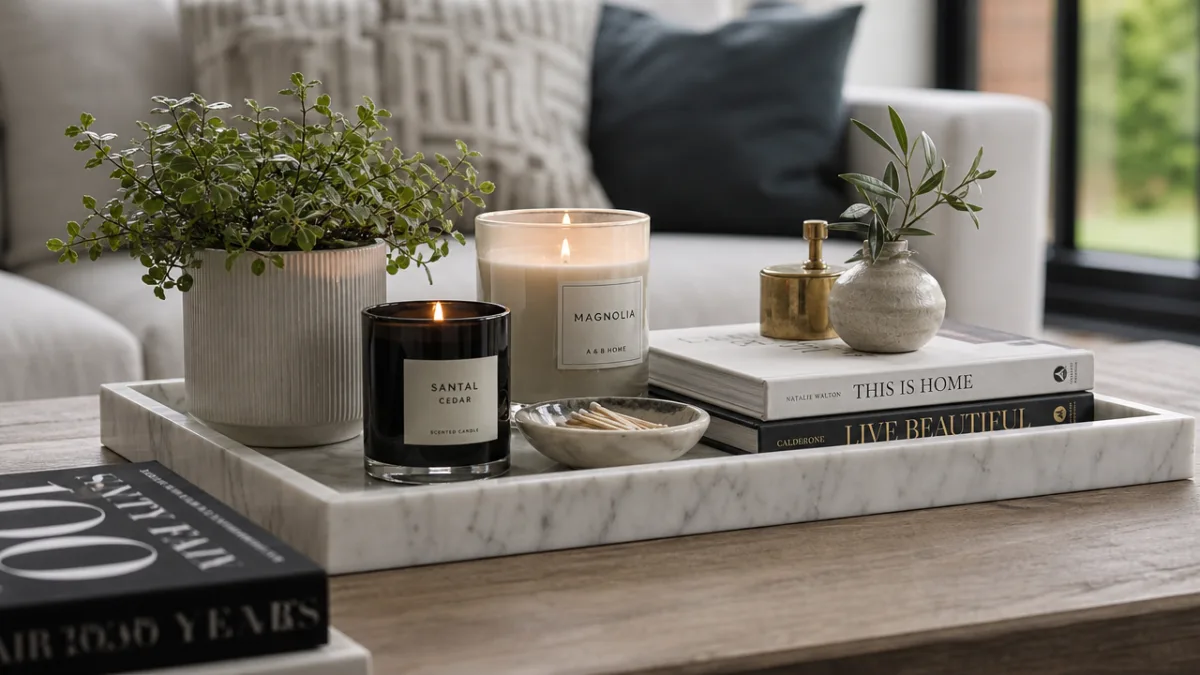
The gap between a room that looks pulled-together and one that feels somehow off usually isn’t about the big stuff — it’s the small details that make the difference. Vignettes are one of the best tools for this: carefully arranged groupings of objects on a tray, shelf, or side table that turn a collection of random things into something that looks curated and intentional. A simple wooden tray holding a candle, a small plant, a stack of beautiful books, and one sculptural object creates a little tableau that just feels right in a way that scattered objects never do.
Updating hardware is another high-impact, low-cost move that people consistently overlook. Swapping the knobs and pulls on kitchen cabinets, bathroom vanities, or bedroom furniture takes an afternoon and doesn’t cost much — but it can modernize or completely change the style of a whole room. Brass hardware on white painted cabinets gives a timeless, elegant feel. Black matte hardware on natural wood tones reads as more contemporary and edgy. These choices signal that someone made a deliberate decision, and they elevate the whole space in a way that’s wildly out of proportion to the effort involved.
Finally, one of the most impactful things you can do for your home doesn’t involve buying or making anything at all: edit ruthlessly. Clutter — even beautiful clutter — creates visual noise that makes a room feel smaller, noisier, and less intentional. Take time to really look at what you have, store what you don’t use regularly, and arrange what’s left with care. A few meaningful, beautiful objects displayed with breathing room around them will always make more of an impression than a crowded room full of things competing for attention.
At its heart, transforming your home through DIY projects is really just an act of self-expression. Every project you finish adds another layer of personality and meaning to your space — something that can’t be bought or replicated. Whether you start with a single upcycled piece of furniture, a gallery wall of homemade art, or a cluster of propagated plants in hand-painted pots, the whole point is to build a home you genuinely love without stressing about the cost. Start small, stay curious, and let your space grow with you as your skills and confidence do the same.








What do you think?
It is nice to know your opinion. Leave a comment.