










Stunning Garden Steps and Stairs Ideas That Elevate Backyard Pathways
Why Garden Steps Transform Your Outdoor Space
Garden steps and stairs do a lot more than just help you get from one level of your backyard to another. They’re architectural moments — they guide your eye, carve out distinct outdoor zones, and give your garden a real sense of journey. When you get the design right, a staircase can easily become the most striking thing in your entire outdoor space, pulling visitors along a path and offering up fresh views with every step they take.
Proportion and scale matter a lot here. Steps that are too steep feel unwelcoming — and frankly a bit dangerous — while ones that are too shallow end up looking oddly tentative. Most landscape designers will tell you that garden steps should be noticeably gentler than what you’d find indoors. That slower pace is intentional; it encourages you to actually stop, look around, and enjoy being outside rather than rushing through.
Beyond the practical stuff, your steps say something about who you are as a gardener. Rough natural stone disappearing into a cottage garden tells a completely different story than clean concrete paired with steel railings. Getting that choice right early on saves you a lot of headaches later and keeps your garden feeling like a cohesive whole rather than a bunch of nice things that don’t quite belong together.
Choosing the Right Materials for Your Garden Steps
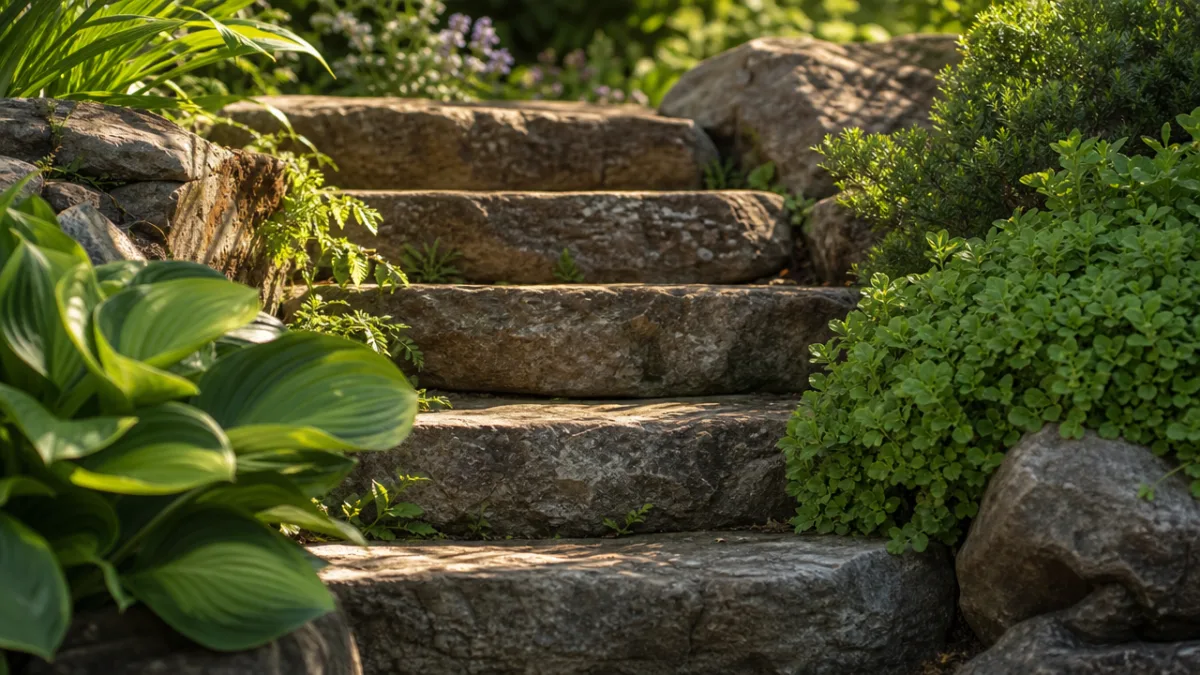
The material you go with will shape pretty much everything — how your steps look, how they hold up over the years, how much work they need, and how slippery they get when it’s wet. Natural stone like bluestone, flagstone, limestone, and granite is perennially popular for good reason: it ages beautifully, sits naturally among garden planting, and has a solidity that’s hard to fake. Each slab is one of a kind, which gives handlaid stone steps a character that manufactured alternatives really struggle to match.
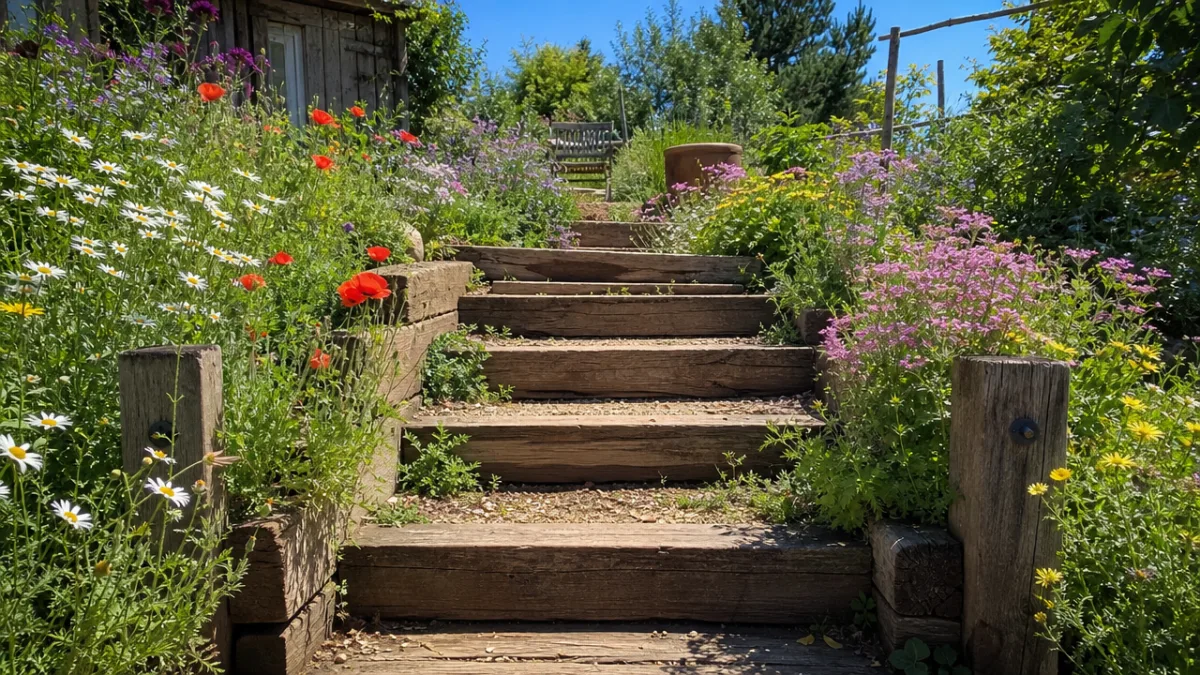
Timber brings a completely different warmth to the equation, especially in woodland or cottage-style settings. Hardwoods like ipe, teak, and cedar hold up well outdoors with the right treatment. Railway sleepers — reclaimed ones in particular — have had a big resurgence, and it’s easy to see why. Their chunky, honest profile settles naturally into sloped ground, and they look especially good paired with gravel or bark chip infill that softens everything around them.
For a more contemporary feel, poured concrete, porcelain tile, and composite materials deliver the clean lines and low-maintenance finish that modern gardens tend to call for. Concrete is surprisingly versatile — you can stamp it, stain it, expose the aggregate, or board-form it to get a huge range of looks. Porcelain pavers that mimic stone or timber have really taken off in recent years too, and it’s not hard to see the appeal: you get the look of natural materials with the added bonus of frost resistance and almost no upkeep.
- Natural stone: bluestone, flagstone, limestone, granite — timeless appeal with natural variation
- Timber: hardwoods, sleepers, composite decking boards — warm and organic in character
- Concrete: poured, stamped, or exposed aggregate — versatile and cost-effective
- Porcelain pavers: frost-resistant, low maintenance, available in stone and timber effects
- Brick: classic and durable, suits traditional and cottage-style gardens
Design Styles for Every Garden Aesthetic
The style of your steps should feel like a natural extension of the rest of your garden — and ideally, of your home too. In formal gardens that draw on classical European traditions, symmetrical stone staircases flanked by topiary and finished with balustrades create a proper sense of arrival. These are gardens where steps feel almost ceremonial, marking the transition between one carefully composed space and another — a terrace giving way to a parterre, say, or a formal lawn opening up below.
Naturalistic and cottage gardens call for something altogether more relaxed. Irregular stepping stones that look like they’ve always been there, slowly claimed by the earth around them, work far better than precision-cut slabs. Leaving gaps between stones and planting them with creeping thyme, mind-your-own-business, or moss blurs the line between what’s been built and what’s grown. The effect is lovely — gentle and unhurried, as if the garden has simply absorbed the steps over time.
Contemporary and minimalist gardens tend to go bold and geometric. Cantilevered stone treads stepping out from a rendered wall, timber steps floating above a dry pebble riverbed, or a sweeping curved concrete staircase that moonlights as a retaining wall — these are all about form being just as important as function. Lighting really earns its keep in these spaces, with recessed LED strips under treads casting dramatic shadows that turn the steps into something genuinely sculptural once the sun goes down.
Incorporating Planting into Your Stair Design
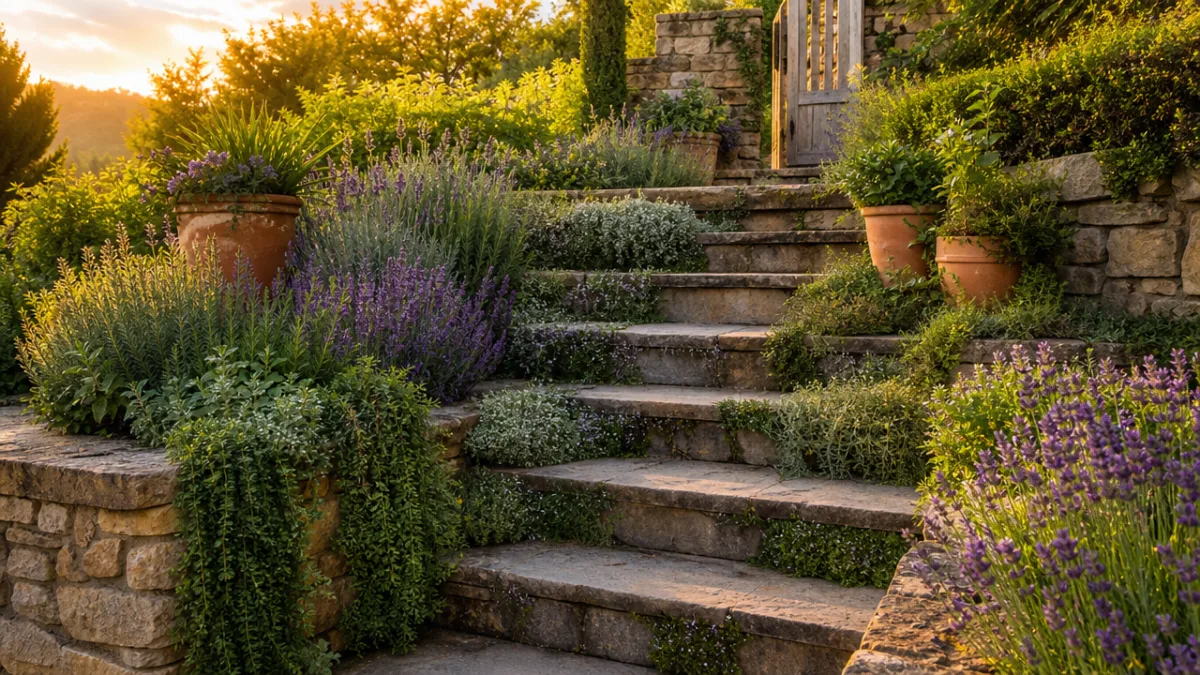
One of the most enjoyable parts of designing garden steps is figuring out how to weave planting directly into the structure. Raised beds or simple soil pockets built into the sides of a staircase let trailing plants, ornamental grasses, and flowering perennials spill over the edges of the treads, softening hard lines and making the whole thing feel genuinely alive. That blending of built and grown is really what separates a garden that’s been installed from one that’s been loved.
Thinking carefully about which plants go where pays off. For the treads themselves, low-growing, drought-tolerant species that can handle the occasional knock from a passing foot are your best bet. Lavender, catmint, rock rose, sedum, and lamb’s ears all do brilliantly in sunny, well-drained spots. In shadier, damper positions at the base of a flight — ferns, hostas, and astilbe bring a quieter kind of elegance that suits the mood perfectly.
Don’t overlook the walls and risers either. Training a rose, wisteria, or clematis up a retaining wall beside your steps adds height, fragrance, and that wonderful seasonal theatre that makes a garden feel different every time you walk through it. For year-round backbone, evergreen climbers like trachelospermum or climbing hydrangea keep things interesting even in the depths of winter, so your staircase never looks bare or forgotten.
- Choose plants that suit the light and moisture conditions of your specific staircase location.
- Use trailing plants on upper levels to cascade down over risers for a lush, layered effect.
- Plant fragrant species such as lavender or thyme near treads to release scent when brushed.
- Incorporate evergreen species to maintain structure and interest through winter months.
- Leave deliberate planting pockets in mortar joints for self-seeding or placed annuals.
Safety, Lighting, and Practical Considerations
However beautiful your steps turn out, safety has to come first in every decision you make. Treads should be generous — at least 300mm deep is the standard guidance — so there’s enough room for a comfortable, confident footfall. Non-slip surfaces are non-negotiable, especially anywhere that moss, algae, or wet leaves are likely to build up. Sandblasted, brushed, or sawn stone gives you much better grip than polished or honed finishes, and it’s really the only sensible choice for outdoor use.
Lighting deserves to be thought about from the very beginning, not bolted on at the end. A well-lit staircase isn’t just safer after dark — it can be genuinely beautiful. Low-voltage LEDs recessed into risers cast a soft, directional light across each tread without any harsh glare that might kill the atmosphere of an evening outside. Solar-powered bollard lights dotted along the path leading up to your steps are a warmer, more rustic option that needs no electrical work and can be moved around whenever you fancy a change.
The structural side of things needs proper attention at the planning stage, particularly if you’re building against a slope that might shift, take on water, or be affected by frost heave. Good drainage beneath and around the steps is essential — water pooling under treads will quietly undermine the foundations over time. A well-compacted hardcore base, the right depth of footings for whatever material you’re using, and a slight forward fall on each tread to shed water away from the riser — these are the details that determine whether your steps are still looking good in twenty years.
Budget-Friendly Ideas and DIY Approaches
Beautiful garden steps really don’t have to cost a fortune. Some of the most characterful staircases out there are built from reclaimed and salvaged materials picked up cheaply from demolition yards, online marketplaces, and even the occasional skip. Old granite kerb stones, reclaimed brick pavers, salvaged railway sleepers, and second-hand York stone all carry that lovely patina of age that brand-new materials simply can’t replicate. Their slightly uneven dimensions and weathered surfaces aren’t flaws — they’re the whole point.
If you’re a fairly confident DIYer, building a simple flight of steps from timber sleepers or large flat stones is a very achievable weekend project with modest tools. The real key is in the groundwork: taking time to dig out the slope properly, compact a solid base under each tread, and pack enough crushed stone or hardcore behind to prevent any movement. There’s plenty of solid guidance online, and many garden centres now stock step-building kits that make the whole process a lot more approachable if it’s your first time.
Small creative touches can also go a surprisingly long way. Painting the risers of plain concrete steps in a bold or earthy colour immediately gives them personality without spending much at all. Tucking creeping herbs between the treads of a simple stepping stone path costs next to nothing but adds a wonderful sensory dimension. Collecting smooth river pebbles to fill the gaps between rough-cut stone steps creates a really appealing textural contrast that looks far more considered than the modest time and effort it actually takes.
Trends and Inspirations for Contemporary Garden Stairs
Garden and landscape design keeps moving, and the way people think about steps is moving with it. Sustainability is probably the biggest theme right now, with designers and homeowners increasingly reaching for reclaimed, recycled, and locally sourced materials rather than imported stone or energy-heavy manufactured products. Permeable surfaces that let rainwater drain naturally through or around steps are also becoming more popular as part of a broader shift toward reducing runoff and making gardens work harder for wildlife.
Biophilic design — the idea of strengthening the connection between people and the natural world — is also having a real influence on how steps fit into a garden. It’s an approach that leans into blurred edges, natural imperfection, and the deliberate creation of habitat within garden structures. Steps with open sides planted with wildflowers, dry stone retaining walls with gaps for solitary bees, or timber treads with intentional spaces for ground beetles to move through — these are all practical expressions of that thinking in action.
And then there’s the way our appetite for outdoor living has completely changed what we expect steps to do. Wide, shallow steps that double as casual seating, landings big enough to hold a bench or a small table, built-in planters that serve as armrests — all of these reflect a desire for outdoor spaces that genuinely extend the home rather than sitting apart from it. In that sense, the garden step has really come into its own as a design element that deserves just as much thought and creativity as any room inside the house.








What do you think?
It is nice to know your opinion. Leave a comment.