










Gothic Arch Garden Arbor and Trellis: A Complete Guide to Beauty and Function
The Timeless Appeal of Gothic Arch Design in the Garden
Few garden structures carry the same quiet drama as a gothic arch arbor. Borrowed from centuries of cathedral architecture, the pointed arch form brings a sense of verticality and elegance that rounds and flat-topped structures simply cannot match. When translated into a garden setting, this design creates a living frame for plants, a passage between garden rooms, and a focal point that anchors the entire outdoor space. Whether your garden leans toward the romantic and wild or the structured and formal, a gothic arch arbor integrates beautifully into almost any aesthetic vision.
The distinctive pointed apex of the gothic arch is not merely decorative. Unlike a rounded pergola arch, the sharper angle channels the eye upward, making even a modest garden feel taller and more expansive. This vertical emphasis is especially valuable in smaller plots where horizontal space is at a premium. By drawing attention skyward, the gothic arch creates a sense of depth and dimension that transforms a simple backyard into something that feels genuinely designed and intentional. Gardeners who have installed one often report that it becomes the most-photographed feature of their entire outdoor space.
Historically, the pointed arch emerged in medieval European architecture as a structural solution that also happened to be breathtakingly beautiful. Garden designers of the Victorian era, enchanted by Gothic Revival aesthetics, began incorporating these forms into ornamental ironwork, garden gates, and trellised walkways. That same romantic tradition continues today, with modern gardeners rediscovering the pleasure of structures that feel rooted in history while remaining completely functional. A gothic arch arbor is, in the truest sense, a piece of architectural garden art that pays homage to a rich and storied design legacy.
Choosing the Right Materials for Your Gothic Arch Arbor
The material you select for a gothic arch arbor will determine not only its appearance but also its longevity, maintenance requirements, and overall cost. The three most common choices are wood, metal, and vinyl, each offering a distinct combination of strengths and trade-offs. Understanding these differences before making a purchase or beginning a DIY build will save you considerable time, money, and frustration down the road. The best material for your project depends heavily on your climate, your budget, and the visual character you want to achieve in your garden.
Wood remains the most popular choice for garden arbors because it is warm, natural, and relatively easy to work with. Cedar and redwood are particularly prized for their natural resistance to rot and insect damage, making them excellent long-term investments even without chemical treatment. Pressure-treated pine offers a more affordable alternative, though it requires careful finishing to prevent warping and should be sealed regularly to extend its lifespan. Wood arbors can be painted, stained, or left to weather naturally to a silvery grey, giving gardeners tremendous flexibility in matching the structure to their existing outdoor décor.
Wrought iron and powder-coated steel bring a completely different character to the gothic arch form. Metal arbors tend to have a more intricate, delicate appearance, with slender bars and decorative scrollwork that would be impossible to replicate in timber. They are exceptionally durable, often lasting decades with minimal maintenance beyond an occasional coat of rust-inhibiting paint. For gardeners who want to evoke the look of a Victorian kitchen garden or a formal English estate, a metal gothic arch trellis is often the most authentic and visually compelling choice. Vinyl arbors, meanwhile, offer the lowest maintenance profile of all, resisting rot, insects, and fading without any painting or sealing required.

Best Plants for Growing on a Gothic Arch Trellis
One of the greatest joys of a gothic arch trellis is the opportunity it provides for growing climbing and vining plants in a visually spectacular way. The structure itself is beautiful, but when draped in foliage and flowers, it becomes something truly extraordinary. The choice of plant matters enormously, as different species have different growth habits, weights, and support requirements. Selecting the right plants for your arbor ensures that both the structure and the plants will thrive together over time, creating a living partnership that improves with each passing season.
For ornamental purposes, climbing roses are perhaps the single most iconic choice for a gothic arch arbor. Varieties such as Climbing Iceberg, New Dawn, and Zephirine Drouhin are particularly well-suited because they produce abundant flowers, have long, pliable canes that train easily onto a trellis, and bloom repeatedly throughout the season. Clematis is another outstanding option, often planted in combination with roses to create layered blooms at different heights. Wisteria, honeysuckle, and jasmine all bring beautiful flowers and intoxicating fragrance, though they can be vigorous growers that require regular pruning to prevent them from overwhelming the structure.
A gothic arch trellis is equally valuable in the vegetable garden, where it serves as an efficient and attractive support system for a wide range of food crops. Vertical growing is one of the most space-efficient strategies available to home gardeners, and an arched trellis allows plants to climb freely while keeping fruit off the ground and improving air circulation to reduce disease pressure. The following crops perform exceptionally well on a gothic arch trellis in the kitchen garden:
- Pole beans — Fast-growing and prolific, they cover a trellis quickly and produce abundantly throughout the season.
- Cucumbers — Vertical growing produces straighter fruit and significantly reduces slug damage compared to ground-grown plants.
- Sugar snap and snow peas — Natural climbers that thrive on the support of a trellis, especially in cooler spring and autumn weather.
- Squash and small pumpkins — With appropriate sling supports for the developing fruit, even heavier crops can be trained successfully upward.
- Indeterminate tomatoes — Tied and trained carefully, they benefit enormously from the airflow and sun exposure that vertical growing provides.
- Luffa and bitter melon — Vigorous tropical vines that become spectacular, highly productive features when given an arched structure to climb.
When mixing ornamental and edible plantings on a gothic arch trellis, consider the visual effect of interplanting flowering plants with productive crops. Nasturtiums and sweet peas can be grown alongside beans and cucumbers to create a trellis that is both beautiful and productive. This approach, sometimes called edible landscaping or potager gardening, treats the kitchen garden as an aesthetic space rather than a purely utilitarian one. The gothic arch structure provides the architectural backbone for this kind of planting, giving the entire composition a sense of order and intention that elevates it from a simple vegetable patch into a genuine garden feature.
Planning and Siting Your Gothic Arch Arbor
Careful planning before installation will make a significant difference in both the visual impact and the practical usefulness of your gothic arch arbor. The most common mistake gardeners make is choosing a location based purely on aesthetics without considering the growing requirements of the plants they intend to train onto the structure. Before you commit to a position, spend time observing how sunlight moves across your garden throughout the day. Most flowering climbers and vegetable crops require a minimum of six hours of direct sunlight daily, and some, such as tomatoes and cucumbers, perform best with eight hours or more.
The arbor’s relationship to existing garden paths, beds, and structures is equally important. A gothic arch placed at the entrance to a garden path creates a natural threshold that invites visitors forward and defines separate spaces within the garden. When positioned over a path, the arbor should be wide enough to walk through comfortably, typically at least four feet in interior width, and tall enough to accommodate the height of the tallest person in your household plus the additional clearance needed for hanging plant growth. An arbor that people must duck or squeeze through quickly becomes more inconvenient than charming.
Soil preparation beneath and around the arbor deserves serious attention, particularly if you intend to grow productive crops on the trellis. The vertical growing surface dramatically increases planting density in a small footprint, which means the soil must be rich, well-draining, and capable of supporting vigorous root systems. Before installation, dig deeply and amend the soil with generous quantities of compost or aged manure. Consider irrigation needs as well, since plants growing against a structure are often sheltered from rainfall by the canopy of foliage above them and may require supplemental watering more frequently than open-ground plantings. Installing a simple drip irrigation system at the base of the arbor before planting will save considerable time and effort in subsequent seasons.
Step-by-Step Installation Guide for a Gothic Arch Arbor
Installing a gothic arch arbor is a project that most capable DIY gardeners can complete successfully over a weekend, provided they have the right tools and prepare carefully in advance. Whether you are working from a kit purchased from a garden supplier or building from scratch using timber or metal, the fundamental installation process follows the same logical sequence. Taking time to do each step correctly, rather than rushing toward the finished result, will ensure that your arbor stands plumb, level, and secure for many years of use and enjoyment.
Begin by marking the precise footprint of your arbor on the ground using stakes and string. Check that the layout is square by measuring diagonally from corner to corner; if both diagonal measurements are equal, your layout is square. Dig post holes to a depth of at least one-third the total post length, or a minimum of two feet in most climates. In areas with significant ground frost, deeper holes may be necessary to prevent frost heave from lifting the posts over winter. Use a post-hole digger or rented auger for this work rather than attempting to dig by hand, as clean, straight-sided holes produce far more stable post settings than hand-dug alternatives.
Once the posts are set in concrete or gravel and allowed to cure fully, the arch components can be assembled according to the following general sequence:
- Allow concrete footings to cure for a minimum of 48 hours before applying any load or stress to the posts.
- Attach horizontal crossbars or rails at the appropriate heights, checking level carefully as you work.
- Position the arch or curved roof sections, securing them firmly at both the peak and the points where they meet the uprights.
- Install trellis panels, lattice, or wire supports on the sides and within the arch frame to provide climbing surfaces for plants.
- Sand all cut edges on wooden structures and apply your chosen finish — paint, stain, or sealant — before introducing any plants to the structure.
- Allow all finishes to cure completely before tying or attaching any plant material to the structure.
After installation, take time to inspect every joint and connection point, tightening any hardware that may have loosened during assembly. Check that the entire structure moves as a single rigid unit when pushed gently from different angles; any wobble or flex indicates that additional bracing or deeper post setting may be required. A well-installed gothic arch arbor should feel genuinely solid and immovable, capable of bearing the substantial weight of mature climbing plants loaded with foliage, flowers, and fruit without any flexing or shifting. Addressing any structural concerns before planting is far easier than doing so once an established plant is growing through and around the frame.
Seasonal Care and Maintenance of Your Gothic Arch Trellis
A gothic arch arbor and trellis represents a meaningful investment of time and money, and a consistent seasonal maintenance routine will protect that investment for decades. The specific tasks required vary depending on the materials your structure is made from and the plants growing on it, but certain core principles apply universally. Regular inspection, prompt attention to any signs of deterioration, and thoughtful pruning of the plants on the structure will keep your arbor looking beautiful and functioning effectively through every season of the year.
In early spring, before growth resumes in earnest, conduct a thorough inspection of the entire structure. Check wooden components for any signs of rot, paying particular attention to the areas at and just below ground level where post bases are most vulnerable to moisture damage. Look for loose or missing fasteners, cracked boards, and any areas where paint or sealant has peeled or flaked away. Address all of these issues before the growing season begins, when access to the structure is easiest and the impact of repairs on established plants is minimal. Apply fresh sealant or paint to any bare wood surfaces, and replace any fasteners that show signs of corrosion.
Pruning the plants on your trellis is both an art and a science, and the timing and technique depend entirely on the species you are growing. Climbing roses should be pruned in late winter or early spring before new growth begins, removing dead, damaged, or crossing canes and training remaining growth along the trellis in a fan pattern to encourage maximum flowering. Clematis pruning timing depends on the group to which the variety belongs, so it is worth identifying your specific plant before cutting anything. Annual vegetable crops require end-of-season removal and soil replenishment rather than pruning, with complete clearance of all plant debris helping to reduce the carryover of pests and diseases from one season to the next.
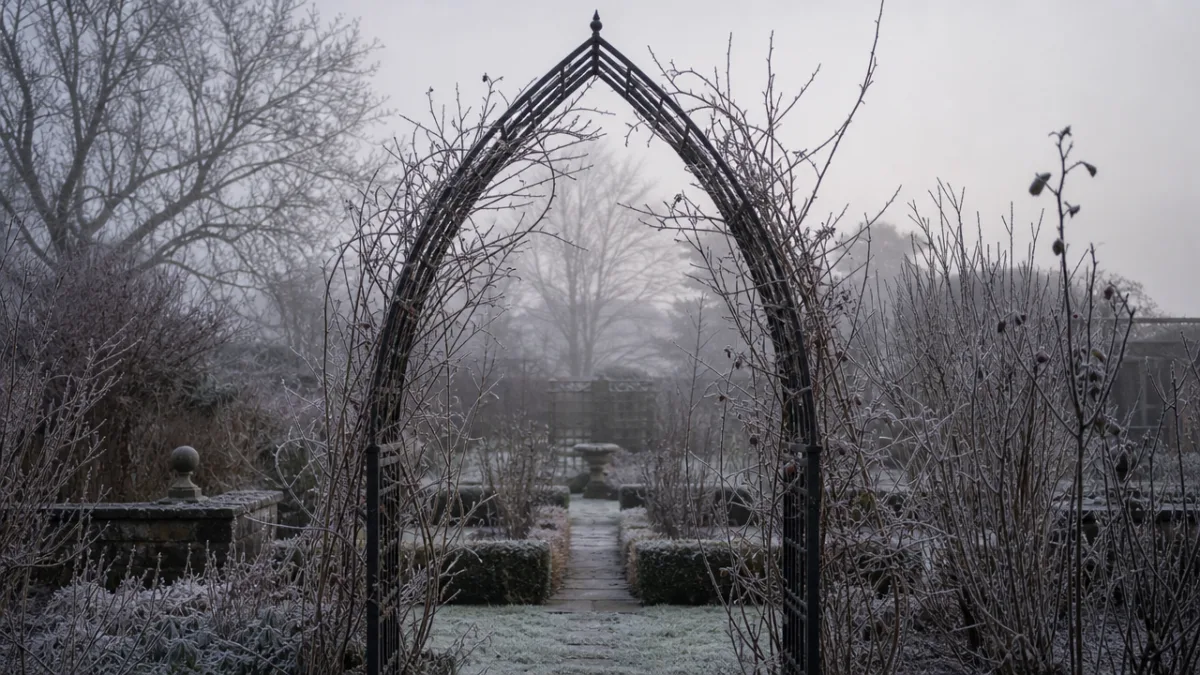
Design Inspiration and Creative Ideas for Gothic Arch Gardens
The gothic arch arbor is a remarkably versatile structure that adapts beautifully to a wide range of garden styles and creative visions. Rather than treating it as a purely functional element, consider how it might serve as the centerpiece of a broader design scheme that reflects your personal aesthetic and the unique character of your outdoor space. The most memorable garden features are those that feel genuinely integrated into their surroundings rather than simply dropped into position, and the gothic arch offers tremendous opportunity for this kind of thoughtful, holistic design thinking.
For a romantic cottage garden atmosphere, consider positioning your gothic arch at the junction of two informal paths, flanked by billowing plantings of lavender, catmint, and alliums that spill gently onto the gravel below. Train a combination of climbing roses and clematis over the arch itself, selecting varieties that bloom in complementary colors and at overlapping times to ensure the display continues from late spring through early autumn. Underplant with shade-tolerant herbs such as mint and sweet woodruff, which will thrive in the dappled shade created by the mature canopy above. The overall effect should feel abundant, layered, and slightly wild, as though the garden has grown into the structure over many happy years.
In a more contemporary or minimalist garden setting, a gothic arch can provide an unexpected and striking focal point when treated with restraint. Consider a single-arch structure painted in a deep, saturated color — forest green, charcoal, or inky black — planted with a single species of climber chosen for its graphic foliage rather than its flowers. Japanese wisteria, with its elegant compound leaves, or the bold, tropical-looking leaves of Actinidia kolomikta make excellent choices for this kind of restrained, sculptural approach. The gothic arch form, so strongly associated with historical ornament, takes on an almost contemporary quality when simplified in this way, demonstrating the enduring versatility of a design that has captivated gardeners for well over a century.








What do you think?
It is nice to know your opinion. Leave a comment.