










Charming DIY Garden Privacy & Planter Ideas: Transform Your Outdoor Space
There’s something really special about stepping into a garden that feels like it belongs entirely to you. Whether you’ve got a sprawling backyard or a tiny urban balcony, adding some greenery and a sense of enclosure can completely change how that space feels. DIY privacy and planter projects let you build something beautiful and functional without hiring a landscaper or spending a fortune — and honestly, the process is half the fun.
From rustic wooden screens covered in climbing vines to clever upcycled planter walls, the ways you can transform a garden are pretty much endless. People are realizing that a few well-placed structures can make a garden feel bigger and lusher while quietly blocking the view from neighbors or a busy street. The trick is finding that sweet spot where practical and pretty overlap — where everything you build is doing two jobs at once.
This guide covers some of the most charming and doable DIY garden privacy and planter ideas out there, with material suggestions, planting tips, and plenty of inspiration along the way. Whether you’ve been gardening for years or you’re picking up a drill for the very first time, these projects are meant to be approachable and genuinely enjoyable. You might just fall in love with your garden all over again.
Building a DIY Lattice Privacy Screen
A lattice privacy screen is one of those classic garden additions that somehow never goes out of style. These interlocking panels of wood or PVC arranged in a diamond or square grid can be mounted to an existing fence, slotted between posts, or built into a freestanding frame you can reposition whenever the mood strikes. They instantly make a garden feel more defined and intimate, carving out cozy seating nooks or blocking a nosy neighbor’s sightline with minimal fuss.
One of the best things about building your own is how much you can customize it. Cedar, pine, redwood, and pressure-treated lumber are all solid choices — cedar and redwood naturally resist rot and insects, which is great in wetter climates, while sealed pine does the job perfectly well somewhere drier. You can paint or stain the whole thing whatever color you like to match your home’s exterior. Deep charcoal and sage green are having a real moment right now for that sleek, contemporary feel.
Once the screen is up, the real magic starts when climbing plants take over. Some of the best options include:
- Clematis — produces stunning blooms in purple, pink, and white and grows rapidly with the right support
- Climbing roses — offer fragrance, beauty, and a timeless cottage garden aesthetic
- Honeysuckle — extremely vigorous and produces sweetly scented flowers that attract pollinators
- Jasmine — a fragrant favourite that thrives in warmer climates and creates dense, lush coverage
- Wisteria — dramatic and fast-growing, though it requires a sturdy frame to support its weight
For installation, you’ll want pressure-treated 4×4 posts set 18 to 24 inches into the ground so they can handle wind without budging. Spacing them about six to eight feet apart means standard lattice panels fit neatly between them without awkward cutting. Finish it off with a top cap rail and a bottom rail and the whole thing looks intentional and polished rather than thrown together. Seal it properly and touch it up every few years and a good lattice screen can last fifteen years or more.
Creative Raised Planter Beds With Built-In Privacy
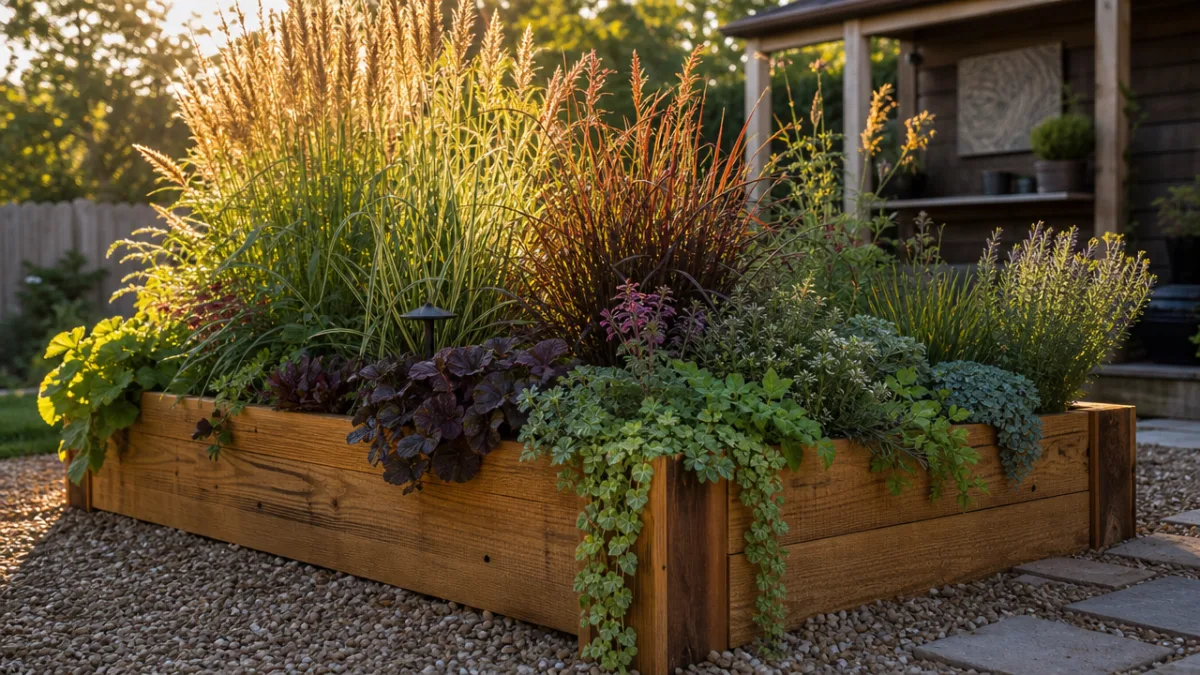
Raised planter beds are a garden staple for a reason — better drainage, warmer soil in spring, less back strain, and full control over your soil quality. But when you design them with privacy in mind, they become something much more exciting than a practical growing fix. A tall raised planter standing around 36 to 48 inches high can act as a natural visual barrier while still giving you a generous growing space for vegetables, herbs, flowers, or ornamental grasses.
One of the most impressive approaches is building an L-shaped or U-shaped bed configuration around a seating area, so you feel genuinely nestled within the garden with greenery rising up on multiple sides. You can use reclaimed timber, concrete blocks, corrugated steel, or even large galvanized water troughs — each material brings its own personality. Weathered wood feels warm and rustic, while corrugated steel has that modern industrial edge that looks brilliant in contemporary outdoor spaces.
To really make those planters work as privacy screens, go for tall-growing plants that create density at eye level. Ornamental grasses like Miscanthus or Karl Foerster feather reed grass shoot up dramatically and sway beautifully in the breeze, creating a soft, living screen. Bamboo planted within containment barriers can achieve an almost instant tropical effect, though you’ll need to manage it carefully to stop it spreading. For something more colorful, tall dahlias, sunflowers, and hollyhocks pack a raised bed with summer color while providing a surprising amount of coverage.
Pallet Wood Planter Walls and Vertical Gardens
Few materials offer as much potential as a reclaimed wooden pallet. You can often get them free or nearly free from warehouses, garden centers, and hardware stores, and they can be turned into vertical planter walls that combine privacy screening with growing space in one compact structure. A single pallet stood on its end and filled with trailing plants can block more of a sightline than you’d expect — and when you line up several side by side, the effect is genuinely impressive.
When you’re sourcing pallets, check the stamp on the wood before you take them home. You want ones marked HT, meaning heat-treated, not those treated with methyl bromide — a chemical you really don’t want anywhere near edible plants or bare skin. Once you’ve got safe pallets, sand them down, apply an exterior sealant or paint, and staple landscape fabric to the back and bottom to hold the growing medium in place while still letting water drain through.
What you plant depends on your climate and which direction the structure faces. For sunny, south-facing walls, consider:
- Strawberries — they trail beautifully and produce edible fruit throughout summer
- Herbs such as thyme, oregano, and basil — they thrive in heat and provide a practical, aromatic harvest
- Succulents and sedums — incredibly low-maintenance and visually striking in dry conditions
- Nasturtiums — bright, edible, and enthusiastically self-seeding for years of colour with minimal effort
For shadier spots, ferns, hostas, and trailing begonias do brilliantly in vertical pallet planters, creating a lush woodland feel even in the most urban of gardens. The one thing to stay on top of is watering — those shallow pockets of soil dry out much faster than ground-level beds. A simple drip irrigation system along the top of the structure is a small investment that makes a huge difference to plant health, and your own sanity, throughout the growing season.
Bamboo and Willow Privacy Screens
If you’re after something that looks more natural and organic, bamboo and willow screens are a great alternative to manufactured panels or rigid timber. Bamboo screening rolls are easy to find at garden centers and online, and you can attach them to existing fence posts, pergola uprights, or a freestanding frame in a couple of hours. Those dense golden-brown canes create an instantly warm and exotic atmosphere that makes even a plain garden boundary feel deliberate and beautiful.
Natural bamboo does need a little upkeep to stay looking its best. Without any treatment, it’ll start to grey and deteriorate after two or three seasons. A coat of UV-resistant sealant or exterior wood oil each spring goes a long way toward keeping it rich and vibrant. That said, plenty of gardeners actually love the silvery weathered look that develops over time — it can be even more characterful than the original golden tone. Pair bamboo screens with large terracotta pots of pampas grass or bold agave and you’ve got a really striking combination.
Willow hurdles have a slightly different feel — woven from young willow rods in a traditional craft technique, they have that unmistakable rustic, countryside charm that suits cottage gardens and naturalistic planting schemes perfectly. They’re surprisingly durable when kept off the ground and allowed to dry between wet spells. You can buy them pre-made, or if you’re up for a new skill, weave your own from freshly cut willow rods harvested in late winter. It’s a genuinely meditative process that connects you to a craft people have been practicing for centuries.

Upcycled and Repurposed Planter Privacy Ideas
One of the most exciting things happening in garden design right now is the creative repurposing of everyday objects into striking planters and privacy structures. An old wooden ladder propped against a wall and hung with trailing plants, a vintage wine barrel sawn in half and planted with lavender, an antique watering can drilled with drainage holes and stuffed with lobelia — these touches bring personality and a sense of history to a garden that no flat-packed fence panel ever could. And there’s something quietly satisfying about giving an old object a new and beautiful life rather than sending it to landfill.
Some of the most effective upcycled privacy structures involve stacking or clustering containers to build a living wall effect. Stacked wooden crates secured together and planted with trailing varieties, for instance, can create a tiered display that gradually blocks sightlines as the plants fill in. Large galvanized metal bins, old copper tanks, or even a cast-off bathtub can be positioned to create irregular, sculptural arrangements that look less like garden solutions and more like art installations. The mix of heights and textures adds a lot of visual interest.
When building these kinds of layered structures, think in terms of depth. Put your tallest elements at the back — maybe a repurposed wooden door frame fitted with wire mesh and planted with climbing beans or sweet peas — then work forward with progressively shorter containers, coming down through crates of herbs to low troughs of flowering annuals right at the front. This approach draws the eye through the display and creates a sense of enclosure that feels natural rather than like a wall that’s been plonked there.
Planting for Privacy: Choosing the Right Plants
Even the most beautifully built screen or planter only reaches its full potential with the right plants in it. Picking species that grow to the right height, density, and pace for what you actually need is probably the single most important decision in any privacy project. You’re balancing practical questions — how quickly you need coverage, how much maintenance you’re willing to take on, what your climate will support — with your preferences around color, texture, seasonal interest, and fragrance.
For fast, dense coverage, evergreens are your most reliable option because they keep on screening through winter when deciduous plants drop their leaves and leave gaps you weren’t counting on. Photinia x fraseri, with that brilliant red new growth and glossy dark mature foliage, makes an excellent hedge that you can keep at just about any height with regular trimming. Portuguese laurel and pittosporum are similarly versatile — you can clip them into formal shapes or leave them to do their own thing. In sheltered gardens, the bold architectural foliage of fatsia japonica adds a dramatically tropical note that’s hard to beat.
For a more relaxed, naturalistic look, mixing ornamental grasses with bold perennials creates privacy planting that moves in the breeze, shifts with the seasons, and does a lot for local wildlife. Some high-performing combinations worth trying:
- Miscanthus sinensis ‘Gracillimus’ paired with echinacea and rudbeckia for a prairie-inspired summer display
- Stipa gigantea (golden oats) combined with alliums and catmint for a dreamy, airy cottage garden effect
- Calamagrostis acutiflora with tall persicaria and verbena bonariensis for rich, late-season colour and structure
- Pennisetum alopecuroides with late-blooming salvias for a warm, rich autumn display that fades gracefully into winter
Whatever you end up planting, it’s worth spending a bit more on good quality compost and a slow-release granular fertilizer when you put plants in the ground — that initial boost makes a real difference to how quickly they establish. A generous mulch of bark chips around the base of each plant will suppress weeds, hold on to moisture during dry spells, and protect roots from temperature swings. All of that adds up to faster, healthier growth and quicker coverage. With the right choices and a little patience, a living screen will outperform any manufactured alternative in both looks and wildlife value.

Finishing Touches: Lighting, Decoration, and Maintenance Tips
Once your screens and planters are built and the plants are growing well, the finishing details are what take a good garden and make it feel genuinely magical. Outdoor lighting is probably the single most transformative thing you can add at this stage — it turns a daytime retreat into an enchanting evening one. Solar-powered fairy lights woven through a lattice screen, uplights at the base of tall planters casting dramatic shadows upward, or warm Edison-bulb festoon lights strung between posts all create atmosphere and give you more hours in the day to actually enjoy the space.
With decorative accessories, less is usually more. One well-chosen piece — a vintage iron lantern, a ceramic sculpture, or a beautiful glazed pot used as a focal point — will do far more for a garden than a crowded collection of mismatched bits and pieces. The same editing principle that works in interior design works outdoors too, and the restraint tends to make everything feel more thoughtful and put-together. Natural materials like stone, terracotta, and aged copper almost always sit well alongside living plants.
Keeping your DIY structures in good shape comes down to a seasonal routine that gets quicker and more intuitive every year. Each spring, go around and check all your timber for signs of rot or damage, apply fresh sealant where it’s needed, and make sure posts are still firmly anchored before the weight and wind of the growing season kicks in. In autumn, cut back perennials that have finished flowering, divide anything that’s become overcrowded, and top up planters with fresh compost to replace what the summer’s growth has used up. These simple, consistent habits will keep your garden looking its best for years — turning a weekend project into something you’re genuinely proud of every time you walk outside.








What do you think?
It is nice to know your opinion. Leave a comment.