










32 Amazing Secret garden Ideas For Magical Hideouts
The Timeless Allure of Secret Gardens
There is something profoundly captivating about the idea of a hidden garden — a tucked-away sanctuary where the rest of the world simply ceases to exist. Secret gardens have enchanted the human imagination for centuries, from the walled courtyards of ancient Persia to the romantic ivy-draped retreats of Victorian England. Today, the concept remains as compelling as ever, offering homeowners a deeply personal way to transform an overlooked corner of their outdoor space into something genuinely magical and restorative.
What makes a garden feel truly secret is not necessarily its physical concealment, but rather the sense of arrival — that moment when you pass through a gate, duck under an archway, or push through a curtain of climbing roses and suddenly find yourself somewhere entirely different. This psychological shift is what separates a secret garden from an ordinary backyard. It is a space designed to make you feel as though you have stepped out of everyday life and into a world governed by beauty, birdsong, and gentle shade.
The beauty of creating your own secret garden hideout is that it requires no grand estate or sprawling acreage. Even a modest suburban yard or a compact urban courtyard can be transformed with clever design choices. Whether you dream of a moss-covered stone alcove surrounded by ferns, a whimsical fairy-tale corner overflowing with wildflowers, or a sleek modern retreat defined by structured hedges and clean lines, the principles of creating a sense of seclusion and wonder remain remarkably consistent across every style and scale.
Choosing the Perfect Location and Layout
Selecting the right location for your secret garden is perhaps the single most important decision you will make in the entire design process. Look for existing features in your yard that already suggest enclosure or separation — a corner bounded by two walls or fences, a lower-lying area that feels naturally sheltered, or an awkward strip of land beside a garage or outbuilding that currently serves no real purpose. These neglected pockets are often ideal candidates because the architecture of the space is already working in your favor, and your interventions can focus on enhancement rather than wholesale creation.
Once you have identified your location, consider the orientation carefully. A secret garden that receives morning sunlight will feel different in character and mood from one bathed in warm afternoon rays. Think about what you intend to do in this space — if you plan to read, meditate, or take breakfast there, morning light might be ideal. If it is to be an evening retreat for entertaining or quiet reflection after work, western exposure will serve you better. The quality and direction of light will also determine which plants thrive, so this practical consideration and the aesthetic one are deeply intertwined from the very beginning.
The layout of your secret garden should reinforce the feeling of discovery and enclosure. Curved pathways rather than straight lines add a sense of mystery, encouraging visitors to move slowly and notice their surroundings rather than simply passing through. Consider creating distinct zones within the space even if it is small — a seating area here, a planting bed there, a small water feature tucked into one corner. These micro-zones give the garden depth and encourage lingering, ensuring that every square foot feels purposeful and richly detailed rather than empty or underused.
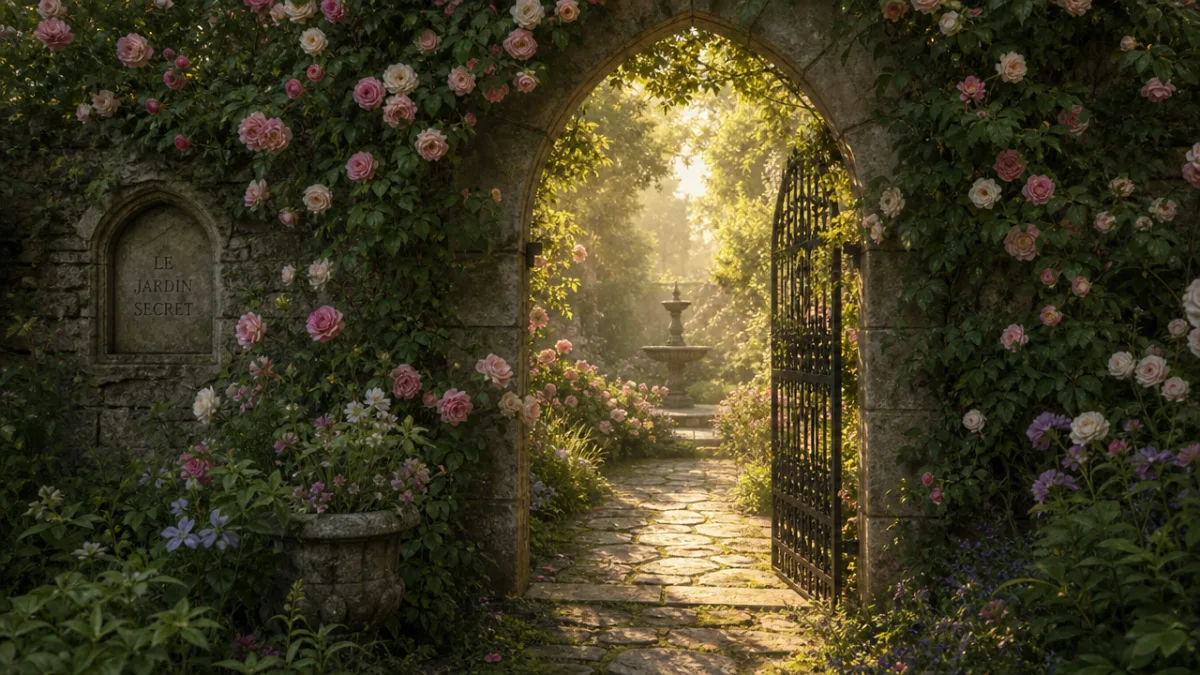
Creating Enclosure with Plants and Structures
The sense of enclosure is absolutely fundamental to the secret garden experience, and achieving it is largely a matter of layering plants and structures to create visual boundaries that feel organic and inviting rather than restrictive. Tall hedges are the classic choice — yew, hornbeam, beech, and boxwood have been used for centuries to define garden rooms with precision and permanence. However, for those who want a softer, more romantic effect, a mix of tall ornamental grasses, climbing roses trained over trellises, and espaliered fruit trees against a wall can create boundaries that feel alive and dynamic through all four seasons.
Archways and pergolas are among the most powerful structural tools available to the secret garden designer. A well-placed arch signals transition — it tells visitors that they are moving from one world into another — and when draped with wisteria, jasmine, or climbing hydrangea, it becomes a sensory threshold that engages sight, smell, and even sound as bees move through the blossoms overhead. Pergolas extend this idea into a more substantial overhead structure, casting dappled shade and creating a ceiling of living foliage that makes even an open garden feel beautifully intimate and protected.
Do not overlook the power of vertical layering in building your enclosure. The most immersive secret gardens work across multiple height levels simultaneously, from low ground covers and creeping thyme between stepping stones, through mid-height perennial borders and shrubs, up to tall climbers and eventually tree canopy overhead. This layering creates a sense that the garden has developed organically over time, and it ensures that every eye level offers something interesting to observe. Consider these layering elements as you plan your plantings:
- Ground layer: Moss, creeping thyme, ajuga, and low sedums that soften hard surfaces and fill gaps between stones.
- Border layer: Hostas, ferns, astilbes, and lavender that provide texture and seasonal color at knee to waist height.
- Mid-canopy layer: Roses, hydrangeas, tall ornamental grasses, and small flowering shrubs that anchor the planting scheme.
- Overhead canopy: Climbing wisteria, Virginia creeper, and mature trees that provide dappled shade and a sense of protective enclosure from above.
Water Features and Atmospheric Details
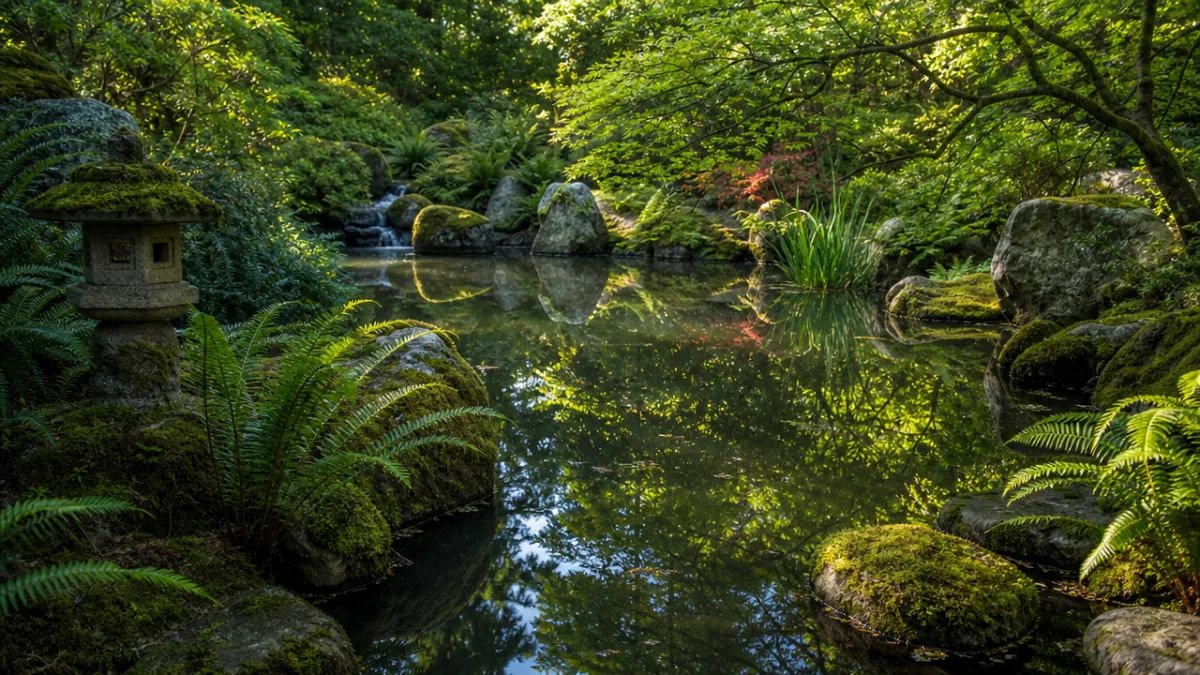
Few additions transform a garden space as completely and immediately as the introduction of water. The sound of gently moving water has a profoundly calming effect on the nervous system, masking urban noise and inviting a sense of mental stillness that is difficult to achieve through planting alone. In a secret garden, even a very modest water feature — a small wall-mounted fountain, a half-barrel pond edged with iris and water lilies, or a simple stone basin where birds come to drink — adds a layer of atmosphere and magic that elevates the entire space.
A still reflecting pool takes this concept in a more contemplative direction, creating a mirror-like surface that doubles the sky and surrounding foliage, making the garden feel simultaneously larger and more intimate. The ancient Islamic garden tradition, which gave us some of history’s most beautiful enclosed garden spaces, understood this principle intuitively, using long rectangular channels of still water to bring light deep into shaded courtyards. Even a small-scale version of this idea — a galvanized trough filled with water and a few floating candles — can create an extraordinary sense of magic on a warm summer evening.
Beyond water, a host of carefully chosen atmospheric details will distinguish a truly magical secret garden from one that is merely pleasant. Aged terracotta pots stained with moss and lichen, a weathered sundial half-hidden by creeping plants, old stone troughs overflowing with sempervivums, and antique garden furniture with peeling paint all contribute to the sense that this garden exists slightly outside of time. Wind chimes, lanterns, and hanging fairy lights introduce sound and light in the most enchanting way, ensuring that the space has a completely different character after dark and extending its usability well into the evening hours.
Planting Schemes for a Romantic and Wild Aesthetic
The planting in a secret garden should feel abundant, slightly untamed, and deeply layered — as though nature has been given just enough guidance to produce something extraordinary without being disciplined into strict formality. The cottage garden tradition offers a wonderful starting point, with its philosophy of generous planting, deliberate combinations of color and texture, and a tolerance for self-seeding and happy accidents. Plants like foxgloves, hollyhocks, alliums, and sweet peas have a natural exuberance that suggests wildness and romance, and they combine beautifully with more structured elements like clipped spheres of boxwood or a formal stone path.
For year-round interest in a secret garden, it is essential to think carefully about seasonal succession, ensuring that as one group of plants fades another rises to take its place. Spring might belong to hellebores, bulbs, and the first unfurling fronds of ferns. Early summer brings roses, peonies, and alliums. High summer is the moment for lavender, echinacea, and climbing clematis, while autumn offers the richly colored berries of pyracantha and the burnished foliage of deciduous shrubs. Even winter has its place, with the sculptural skeletons of seed heads, the gleaming bark of dogwood, and the unexpected charm of winter-flowering hellebores pushing through frosted soil.
Fragrance deserves particular attention in any secret garden design, as scent has a uniquely powerful ability to create atmosphere and trigger memory. A garden that smells wonderful is one that genuinely engages all the senses, transforming a beautiful space into an immersive experience. Consider incorporating these fragrant plants at key points throughout your design:
- Rosa ‘Gertrude Jekyll’ — a deeply fragrant English rose with full, quartered blooms in rich pink, perfect for training over archways and pergolas.
- Wisteria sinensis — its cascading racemes of violet-blue flowers produce one of the most intoxicating fragrances in the plant kingdom, ideal for covering structures.
- Lavandula angustifolia — classic English lavender that fills the air with its calming, honey-sweet scent through the height of summer.
- Jasminum officinale — common jasmine, whose starry white flowers release their most intense perfume in the evening, perfect near a seating area.
- Nicotiana sylvestris — tobacco plant that perfumes warm summer evenings with a rich, sweet scent, especially beautiful as the light fades.
Seating, Furniture, and the Art of Slow Living
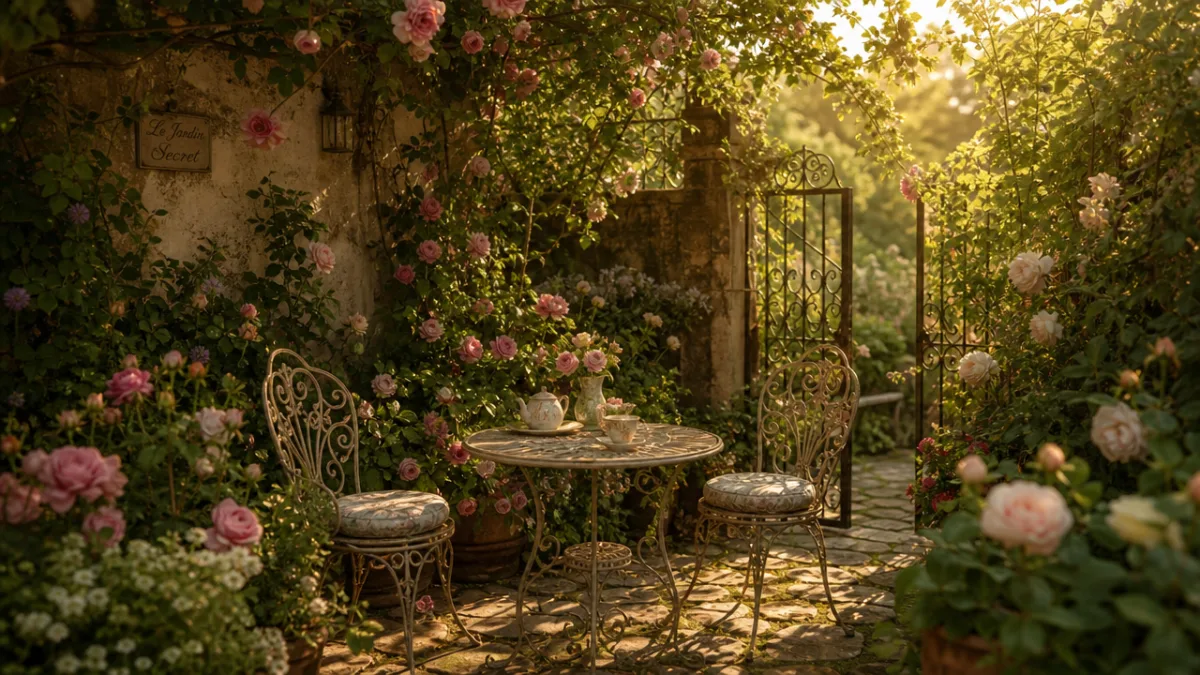
A secret garden without a place to sit is like a library without chairs — the whole point of the space is ultimately to invite you to stop, breathe, and be present. The choice of seating sets the tone for how the garden will be used and how it will feel. A simple wooden bench tucked beneath an arbor of climbing roses suggests solitary contemplation and quiet reading. A pair of weathered armchairs facing each other across a small table speaks to intimate conversation and shared afternoon tea. A hammock slung between two apple trees carries with it an entirely different energy — one of luxurious, horizontal surrender to the afternoon.
The materials you choose for furniture and hard landscaping will profoundly influence the character of your secret garden, so it is worth thinking about them with the same care you would devote to plant selection. Natural stone, aged timber, hand-thrown terracotta, and wrought iron all weather beautifully over time, developing patina and character that makes them feel as though they belong to the garden rather than having been placed in it. Synthetic materials, by contrast, tend to retain their original appearance without developing this quality of age, which can undermine the carefully cultivated atmosphere of a space designed to feel timeless and slightly mysterious.
Ultimately, the finest secret gardens are designed around the philosophy of slow living — the deliberate choice to spend time in a space without agenda, without a screen, without the relentless pressure of productivity. Every design decision, from the curved path that slows your pace to the fragrant rose that demands you stop and inhale, from the sound of falling water that quiets mental chatter to the dappled shade that makes sitting comfortable through the warmest part of the day, should serve this central purpose. A secret garden is not merely a landscaping project; it is an investment in a different way of inhabiting your life, one beautiful and unhurried moment at a time.
Lighting, Seasons, and Maintaining the Magic
No secret garden is truly complete without thoughtful lighting that extends its magic into the hours after sunset. Solar-powered lanterns tucked among the planting, string lights wound through the overhead pergola, candles in glass hurricane lamps placed on tabletops and low walls, and subtle spotlights aimed upward through the branches of a specimen tree can all work together to create a nighttime atmosphere of extraordinary enchantment. The key principle is to keep lighting warm in color temperature and low in intensity, avoiding the harsh brightness of security lighting in favor of a gentle glow that makes the space feel intimate and otherworldly.
Managing the seasonal transformation of your secret garden is one of the ongoing pleasures of the space, requiring attention and some practical care through the year. Spring is the time for cutting back the previous year’s dead growth, dividing congested perennials, and planting summer-flowering bulbs. Summer demands regular deadheading to keep roses and herbaceous plants blooming freely, along with attentive watering during dry spells and the tying-in of climbers as they extend their growth. Autumn brings the deeply satisfying work of planting spring bulbs — snowdrops, narcissus, alliums — that will surprise and delight you in the months ahead, while a light mulch of well-rotted compost protects plant roots through the coldest months.
The long-term maintenance of a secret garden is genuinely rewarding rather than burdensome when you approach it with the right mindset. Unlike a highly formal garden that demands constant attention to preserve its geometric precision, a secret garden is forgiving of a degree of wildness — in fact, it actively benefits from it. Self-seeded foxgloves appearing in unexpected spots, moss colonizing the spaces between paving stones, a clematis that has crept a little further than intended along its support — these unplanned developments rarely detract from the garden and frequently add to its sense of organic, living character. The gardener’s role in a secret garden is less that of a controller and more that of a thoughtful collaborator with nature, guiding rather than dictating, and remaining open to the beautiful surprises that every season inevitably brings.








What do you think?
It is nice to know your opinion. Leave a comment.