










Top Chef’s Kelsey Barnard Clark on How to Be an Imperfect Host
The Pressure to Be Perfect Is Ruining Your Dinner Parties
You know that sinking feeling you get about three hours before guests arrive? The living room suddenly looks tired, the appetizers feel like an afterthought, and the playlist you spent forty minutes building sounds all wrong. For a lot of people, that spiral has become so familiar — and so exhausting — that they just stop entertaining altogether. If you can’t do it right, why do it at all? Kelsey Barnard Clark, who won Top Chef Season 16 and has become one of the most beloved culinary voices in the South, thinks that attitude is a genuine tragedy. And a completely avoidable one.
Clark grew up in Dothan, Alabama, where hospitality wasn’t really a performance — it was just how people lived. Doors stayed unlocked, neighbors showed up without calling ahead, and there was always room at the table for one more person even when no one was expecting them. That easy, unguarded generosity shaped not just how she cooks but how she thinks about bringing people together entirely. “The best parties I’ve ever been to weren’t the ones where everything was perfect,” she’s said. “They were the ones where you could feel that the host actually wanted you there.” That gap — between putting on a show of hospitality and actually offering it — is really what her whole philosophy is about.
We live in an age of aspirational entertaining content, where every tablescape looks professionally styled and every menu reads like something from a Michelin tasting room. Against all that noise, Clark’s perspective lands like a breath of fresh air. She’s not telling you to lower your standards. She’s asking you to reconsider what those standards are actually for. A dinner party exists to create connection, warmth, and a good meal with people you care about. Perfection, she’ll tell you plainly, was never on the guest list to begin with.
Cooking Ahead Is the Secret Nobody Talks About Enough
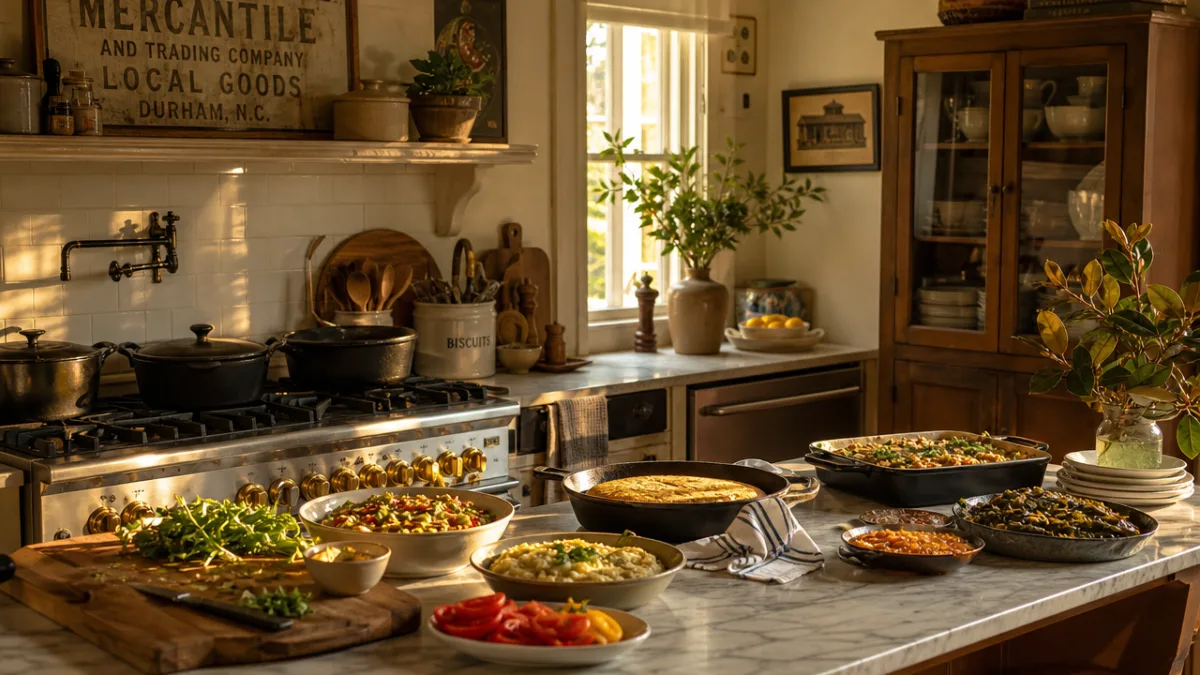
If there’s one piece of advice Clark gives more than any other, it’s this: cook as much as you possibly can before the day of the party. Which sounds obvious, right? Except that so many home cooks still try to pull together an entire three-course meal in real time while also answering the door, pouring drinks, and attempting to hold a conversation. What you end up with is a host who keeps vanishing into the kitchen while guests sit in the living room wondering whether they should offer to help or just quietly leave.
Clark’s approach comes straight from her professional training, where mise en place — having everything prepped and in its place before service starts — isn’t optional, it’s survival. Applied to home entertaining, that means braises made two days out, sauces already in the fridge, dessert baked that morning, vegetables chopped and sealed in containers. By the time guests arrive, the day-of work is mostly reheating, plating, and finishing touches. That shift in how you work doesn’t just save time — it actually changes how you feel. A calm host is a host who can enjoy the party they put all that effort into creating.
She’s especially enthusiastic about braises and slow-cooked dishes for entertaining, and it’s easy to see why. A short rib braised in red wine is genuinely better after a day or two in the refrigerator — the flavors settle and deepen in ways they can’t achieve fresh out of the pot. A pot of gumbo made on Friday is better Saturday than it was Friday night. These are dishes that reward planning and punish last-minute panic, which makes them perfect for entertaining. There’s no critical window to hit, no soufflé that needs to travel from oven to table in ninety seconds flat. The food does the heavy lifting while you focus on actually welcoming your guests.
Setting the Mood Without Spending a Fortune
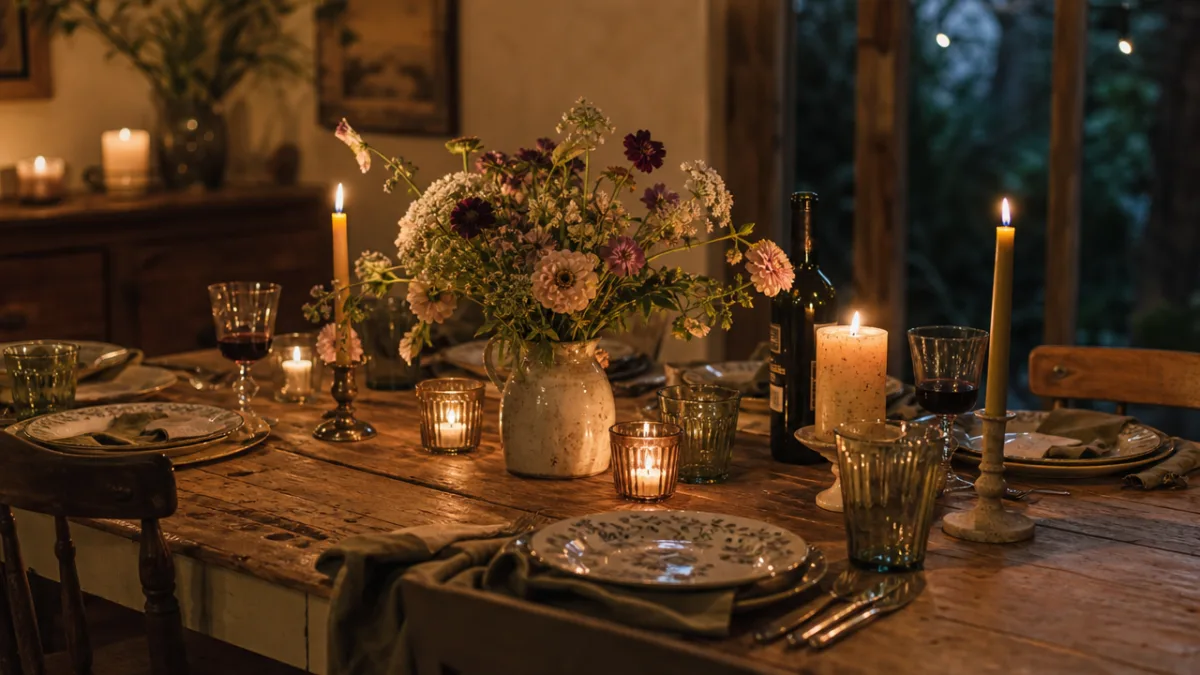
Clark will tell you, firmly, that atmosphere matters. She’ll also tell you, just as firmly, that creating it doesn’t require a big budget or any particular design talent. The things that make a space feel genuinely inviting are almost always simple and cheap: candles, grocery store flowers, a playlist someone actually thought about, and a table that looks like the host cared enough to set it. These small gestures communicate something important to your guests — that you were looking forward to having them, not just going through the motions.
Candles are something Clark considers non-negotiable, and not because they’re fancy. It’s because they do something overhead lighting simply can’t. They slow a room down. They soften faces, make everyone look a little more relaxed, a little more themselves. When you pair them with dimmer general lighting, you end up with an environment where people naturally lean in, speak more quietly, and somehow stay two hours longer than they planned to. That’s not manipulation — it’s just understanding how spaces shape the people inside them. And it costs about four dollars at the grocery store checkout.
For flowers, she encourages people to drop the idea that a centerpiece has to be elaborate. One variety of flower in a simple container — a mason jar, a wide-mouthed glass, whatever you have — is often more striking than a complicated arrangement anyway. Fresh herbs from the garden work beautifully. A bowl of lemons or limes does double duty as decoration and bar accessory. The goal is abundance without showing off: a table that looks like it belongs to someone who appreciates beautiful everyday things, not one that’s been assembled for a photo shoot.
How to Handle the Unexpected with Grace
Here’s the thing Clark won’t pretend otherwise about: something will go wrong. It always does. The roast finishes early. A guest mentions a dietary restriction you had no idea about. A child knocks red wine onto the white tablecloth. No amount of careful planning prevents these moments from happening, and she has no interest in offering you false comfort on that front. What she does argue — and this is where her thinking gets really interesting — is that how you respond to those moments is itself an act of hospitality. Possibly the most revealing one of the evening.
When something goes sideways at a gathering, everyone instinctively looks at the host. If you panic, your guests panic with you. If you laugh and reach for the salt to blot the stain, they laugh too, and the whole thing becomes a good story instead of a catastrophe. Clark speaks from real experience here — she’s had cooking disasters on national television, in front of camera crews and judges whose entire job is to find fault with her work. What those high-pressure moments taught her is that composure spreads just as readily as anxiety does, and that being willing to be imperfect in public is itself a form of grace.
Her practical suggestion is what she calls a “backup pantry” — a stash of shelf-stable things you can pull out when something fails or an unexpected guest shows up. It’s less a specific shopping list and more a way of thinking. Good crackers and a few cheeses. A bottle or two of something celebratory held in reserve. A handful of dishes you can throw together in twenty minutes from what’s already on your shelves. The backup pantry isn’t a contingency plan for disaster — it’s a sign of the kind of easy, ready generosity that Clark finds most admirable in a host.
The Art of Making Guests Feel Seen
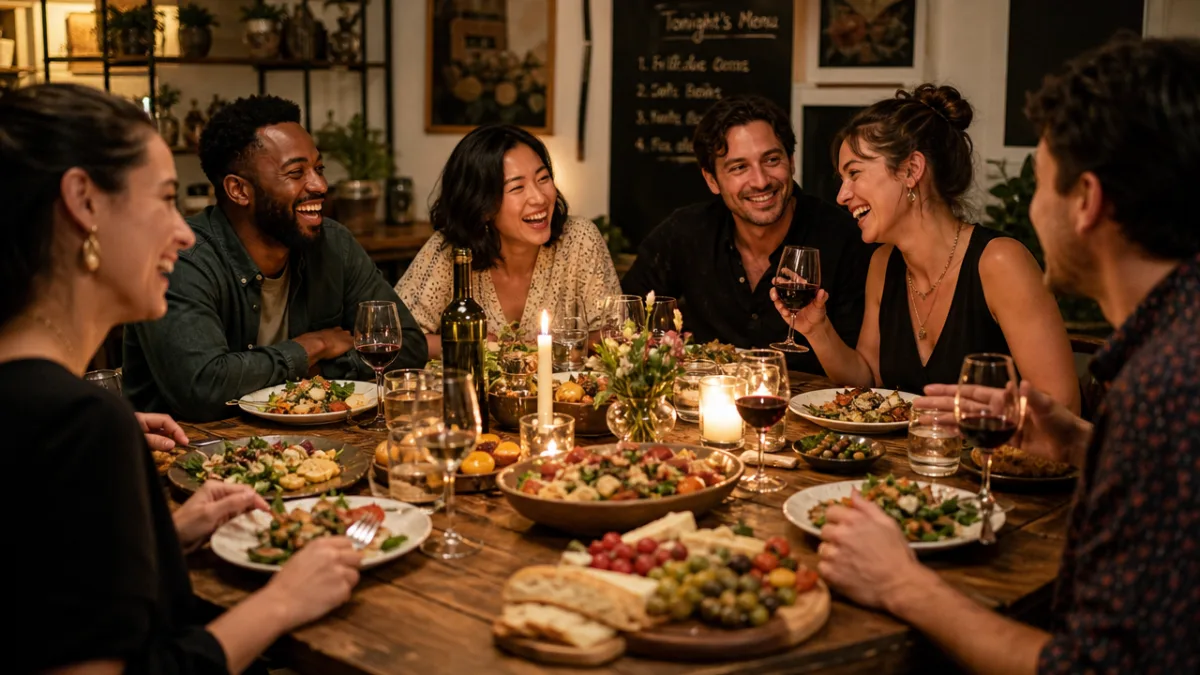
For Clark, everything else — the food, the flowers, the timing — is ultimately in service of one thing: making every person who walks through your door feel genuinely welcomed and seen. That sounds abstract until you look at the actual behaviors that create that feeling, which are concrete and specific and start well before anyone arrives. Think carefully about who’s coming and what they might need. If someone has a food allergy, make sure there’s something they can eat without having to flag it awkwardly. If someone’s going through a hard time, a quiet moment of acknowledgment at the door will mean more to them than anything on the menu.
During the party, Clark pays special attention to the quieter guests — the ones who’ve drifted to the edges, not because they’re unhappy but because they’re not naturally loud in group settings. A good host notices them and finds organic ways to bring them in: a natural introduction to someone they’d actually like, a few minutes of direct one-on-one conversation, a question that gives them a way into the room. This isn’t event coordination. It’s just genuine curiosity about the people you invited, acted on throughout the evening rather than just at the door.
She also has strong feelings about how a gathering ends. A host who visibly deflates with relief when guests leave — even after a long and genuinely lovely evening — sends a message that quietly erases a lot of the warmth that came before it. The goodbye should feel as real as the hello. Walk people to the door. Tell them specifically what you enjoyed about having them. And if there are leftovers, press them into someone’s hands on their way out — because there’s no more direct expression of generosity than sending someone home with a container of short ribs on a cold night.
Letting Go of Comparison and Finding Your Own Hosting Style
One of the most freeing things about Clark’s philosophy is that she genuinely believes there’s no single right way to host well. She’s had extraordinary meals served on mismatched plates at folding tables. She’s been bored stiff at lavish dinner parties where the host was too wound up to actually be present. The decorations are almost beside the point — what matters is the spirit behind them, and that spirit is available to anyone regardless of their kitchen size, their budget, or how many cooking classes they’ve taken.
Social media makes the comparison trap especially brutal. The most beautiful versions of other people’s gatherings are always visible; the burned appetizers and the awkward silences are carefully cropped out. Clark is clear-eyed about what that means. What you see on someone’s curated grid is not a standard — it’s a highlight reel built from dozens of attempts, some of which were lovely and some of which were genuine disasters. Measuring your real, imperfect, lived-in party against someone else’s most polished digital moment is a reliable path to misery, and it burns creative energy you could have spent actually making something good to eat.
Finding your own hosting style means leaning into what you’re genuinely good at and releasing what you’re not. If your pie crust is extraordinary, anchor your dessert around it and buy everything else. If your place is small but your garden is beautiful, take the party outside. If crowds energize you, throw big ones. If you do better in intimate settings, keep the list short and go deep. The best host is always the one who’s most authentically themselves — and Clark, who has cooked under more pressure than most of us will ever know, is living proof that warmth, authenticity, and a willingness to be imperfect in front of people are the only credentials that actually matter.
Practical Takeaways from Kelsey’s Hosting Philosophy
It’s worth pulling Clark’s approach down into something concrete — a set of ideas any home cook can actually use, whatever their experience level. These aren’t rigid rules so much as a framework that, once it clicks, quietly changes how you think about inviting people into your home. They come from years of professional discipline, but they’ve been translated into the language of real, everyday, genuinely enjoyable entertaining.
- Cook ahead whenever possible. Choose dishes that benefit from being made in advance and give yourself the gift of a calm day-of experience rather than a frantic one.
- Invest in atmosphere over abundance. Candlelight, simple flowers, and good music do more for a gathering than an overwhelming spread of food that no one has time to appreciate.
- Keep a backup pantry. Stock your shelves with the basics that allow you to feed unexpected guests or recover from a cooking setback without visible stress.
- Pay attention to the quiet guests. The mark of a great host is noticing who needs to be drawn in and finding natural ways to do it.
- Make the goodbye count. Send people home feeling valued, and they will carry that warmth long after the evening ends.
- Abandon the comparison trap. Your gathering is not competing with anyone else’s. It is an expression of your particular generosity, and that is more than enough.
What Clark is really offering isn’t a set of techniques — it’s a different way of thinking about what hosting is for. In her view, gathering people around a table is one of the most fundamentally human things we do. It’s a way of saying, plainly and without a lot of fuss, that the people in your life are worth showing up for. The food can be humble. The table can be imperfect. Something will probably spill. None of that matters nearly as much as the genuine intention behind the invitation — and that’s something every single one of us already has access to.
In a culture that’s managed to make entertaining feel like an extreme sport requiring professional equipment and years of training, Kelsey Barnard Clark’s voice is exactly the correction we need. She’s a world-class chef who could turn any gathering into a showcase of technical brilliance if she wanted to. She doesn’t want to. She chooses warmth instead. She chooses presence. She chooses the kind of imperfect, generous, deeply human hosting that makes people feel, at least for one evening, like they’re exactly where they’re supposed to be. That’s the real recipe — and it’s been within reach for all of us the whole time.








What do you think?
It is nice to know your opinion. Leave a comment.