










Plants NOT to Plant with Liatris: A Complete Companion Planting Guide
Understanding Liatris and Why Companion Planting Matters
Liatris — you might know it as blazing star or gayfeather — is one of those native wildflowers that just stops you in your tracks. Those tall, feathery purple or white spikes showing up in late summer and fall, absolutely covered in butterflies, bees, and hummingbirds? Pretty hard to beat. But getting liatris to really perform in the garden takes more than just sticking it in the ground. What you plant around it matters just as much as how you care for it.
Companion planting is really just the art of being thoughtful about which plants live next to each other. Get it right and you end up with a garden that practically takes care of itself — fewer weeds, fewer pests, healthier soil, and combinations that look like they belong on a magazine cover. Get it wrong and you’re dealing with stunted plants, disease problems, and neighbors fighting each other for every drop of water and every scrap of nutrient.
Liatris grows from corms and genuinely loves well-drained, even somewhat poor soil in full sun. Once it’s established, it shrugs off drought like a champ — and here’s the thing most people don’t realize: it actually does better in lean soil than in a richly amended bed. That quirky preference is exactly what makes it a tough match for so many popular garden plants. Knowing what not to plant with liatris is honestly just as valuable as knowing what does work.
Moisture-Loving Plants That Will Struggle or Cause Harm
One of the most common mistakes gardeners make with liatris is putting it next to plants that want consistently moist or boggy soil. Liatris corms are really prone to rot when they sit in wet, poorly drained ground. If you’ve got moisture-loving neighbors and you’re watering to keep them happy, you’re essentially creating the exact swampy conditions that will slowly kill your liatris.
Astilbe is probably the most classic example of a plant that just shouldn’t share a bed with liatris. It needs moist, humus-rich soil and wilts dramatically if things dry out — basically the opposite of what liatris wants. You can’t really win trying to satisfy both of them. Either the astilbe suffers from drought stress, or you water enough to make it happy and the liatris corms start rotting. Neither outcome is great.
Ligularia, cardinal flower (Lobelia cardinalis), and Louisiana iris run into the same problem. They’re gorgeous plants in the right spot — just not this spot. Japanese primrose and most ferns are in the same camp, needing rich, reliably moist, partially shaded conditions that are basically the opposite of what liatris needs. Putting any of these next to your liatris is pretty much setting yourself up for disappointment.
Aggressive Spreaders That Will Overwhelm Liatris
Liatris is not an aggressive plant. It spreads slowly and steadily over the years, forming polite little clumps that expand gradually without making a nuisance of themselves. That gentle nature is actually a vulnerability — it means liatris can easily get steamrolled by neighboring plants that spread through runners, rhizomes, or enthusiastic self-seeding. Once those plants get a foothold near your liatris, they can crowd out the corms and cut them off from the light, water, and nutrients they need.
Mint is the classic garden bully, and it has no business being anywhere near liatris. Even when you sink it into the ground in a container (yes, people try this), mint has an almost supernatural ability to escape and colonize everything around it. Its dense, shallow root network can take over the space a liatris corm needs surprisingly fast. On top of that, mint prefers moister conditions, so it’s incompatible in more than one way. Planting mint nearby is basically inviting a hostile takeover that you’ll spend years trying to undo.
Obedient plant (Physostegia virginiana) — which, ironically, is anything but — and gooseneck loosestrife (Lysimachia clethroides) are two more to keep well away. Chameleon plant (Houttuynia cordata), some varieties of bee balm (Monarda), and certain ornamental grasses like ribbon grass (Phalaris arundinacea) can cause the same kind of trouble. These aren’t just competitive — they can completely swallow a liatris planting within a season or two if you’re not watching.
Heavy Feeders and Plants That Require Rich, Amended Soil
Here’s something that surprises a lot of gardeners: liatris actually prefers poor to average soil over rich, heavily amended beds. When you give it too much fertility, it puts out lush, tall foliage that flops over and needs staking, all while producing fewer blooms. It evolved on the prairies of North America, where the soil is lean, and it’s genuinely adapted to those conditions in a way that many ornamental plants simply aren’t.
Roses are the obvious example of a plant with completely opposite needs. They need deeply amended, rich soil and regular, generous fertilization to put on their best show. If you enrich a shared bed to make your roses happy, your liatris will respond with weak, floppy stems and a disappointing flower display. These two plants require fundamentally different soil management, and there’s really no middle ground — no matter how nice the color combination might look on paper.
Dahlias have the same problem. Those spectacular blooms need rich, well-amended soil and consistent feeding all season long. Cannas, delphiniums, and many annuals like petunias and impatiens fall into this category too. Even garden phlox, which most people think of as an easy perennial, does best with regular fertilizer and moisture — which puts it at odds with liatris. The bottom line is that any plant that pushes you toward enriching your soil is going to inadvertently make things worse for your liatris.
Shade-Casting Plants and Trees That Block Sunlight
Liatris is a full-sun plant, full stop. It needs at least six hours of direct sun a day to bloom properly, and it really thrives with eight or more. In shade or even partial shade, it gets weak and leggy, reaching toward whatever light it can find instead of producing those upright spikes it’s known for. It might hang on in reduced light, but it won’t flower well and it’ll be more vulnerable to the fungal diseases that love cool, shady, poorly ventilated spots.
Large, spreading trees are therefore problematic neighbors, especially when liatris ends up in the canopy shadow or drip line. Silver maples, Norway maples, and other fast-growing shade trees can gradually eliminate liatris from a planting over a few years as the trees fill out. Even ornamental shrubs like lilac or forsythia can eventually grow large enough to shade out nearby liatris — they seem harmless enough when they’re young, but give them a few seasons.
Beyond the shade issue, trees and large shrubs also compete through their root systems, which are very good at finding water and nutrients and have no problem outcompeting the relatively modest roots of liatris. Black walnut is doubly problematic because on top of everything else, it produces juglone — a chemical compound that’s toxic to many plants. Even oversized ornamental grasses like large Miscanthus varieties can negatively affect liatris’s flowering if they’re planted right next to it and casting shade on it throughout the day.
Plants with Invasive Root Systems and Allelopathic Properties
Some plants don’t just compete with their neighbors for water and nutrients — they actually release chemicals into the soil that actively harm surrounding plants. This is called allelopathy, and it’s well documented in several common garden plants. Liatris, like a lot of native prairie species, can be sensitive to these compounds. Sometimes a liatris will start declining even though the water, light, and soil conditions all look fine, and an allelopathic neighbor might be the culprit.
Black walnut (Juglans nigra) is the most notorious example in North American gardens. It produces juglone throughout its roots, leaves, and husks, and that compound can linger in the soil even after the tree is long gone. Plenty of plants show sensitivity to juglone — tomatoes, apples, and various popular perennials among them. Liatris isn’t the most sensitive species out there, but planting it near or within the root zone of a black walnut is still a bad idea. Wilting, yellowing, and a slow decline are all possible.
Annual sunflowers (Helianthus annuus) are another one to watch. They release compounds from their roots and decomposing plant material that can inhibit germination and growth of nearby plants. Since liatris often spreads naturally by seed, having sunflowers nearby could interfere with new plants getting established. Some cover crops like certain sorghum and rye varieties have similar properties and should be kept away from established liatris beds.
Invasive and Non-Native Species to Absolutely Avoid
Since liatris is a native North American wildflower, it fits naturally into meadow gardens, naturalistic plantings, and pollinator habitats where native plants are the priority. In that kind of setting, pairing it with invasive non-native plants is particularly counterproductive. Invasives don’t just compete directly with liatris — they can spread beyond your garden and start causing real damage to the native ecosystems nearby, which kind of defeats the whole point of growing liatris in the first place.
Purple loosestrife (Lythrum salicaria) is one invasive that gardeners sometimes consider combining with liatris, because honestly, the look is tempting — both have tall purple flower spikes. But purple loosestrife is invasive across much of North America, spreading aggressively into wetlands and crowding out native plants. It has no place in a responsible garden, period. Some cultivars were marketed as sterile for a while, but research has shown that many aren’t reliably so, and it’s just not worth the risk.
Japanese knotweed, multiflora rose, and various invasive ornamental grasses should be kept out of the garden entirely — not just away from liatris. Burning bush (Euonymus alatus) is popular for its fall color but invasive in many regions. And goutweed or bishop’s weed (Aegopodium podagraria) is one of the most aggressive ground covers out there — it has wrecked many a carefully planned garden bed by spreading unchecked and smothering less competitive plants, liatris included. When you’re not sure about a plant, check with your local extension service for a list of invasive species in your area before you bring anything new into the neighborhood.
Practical Tips for Choosing the Right Companions
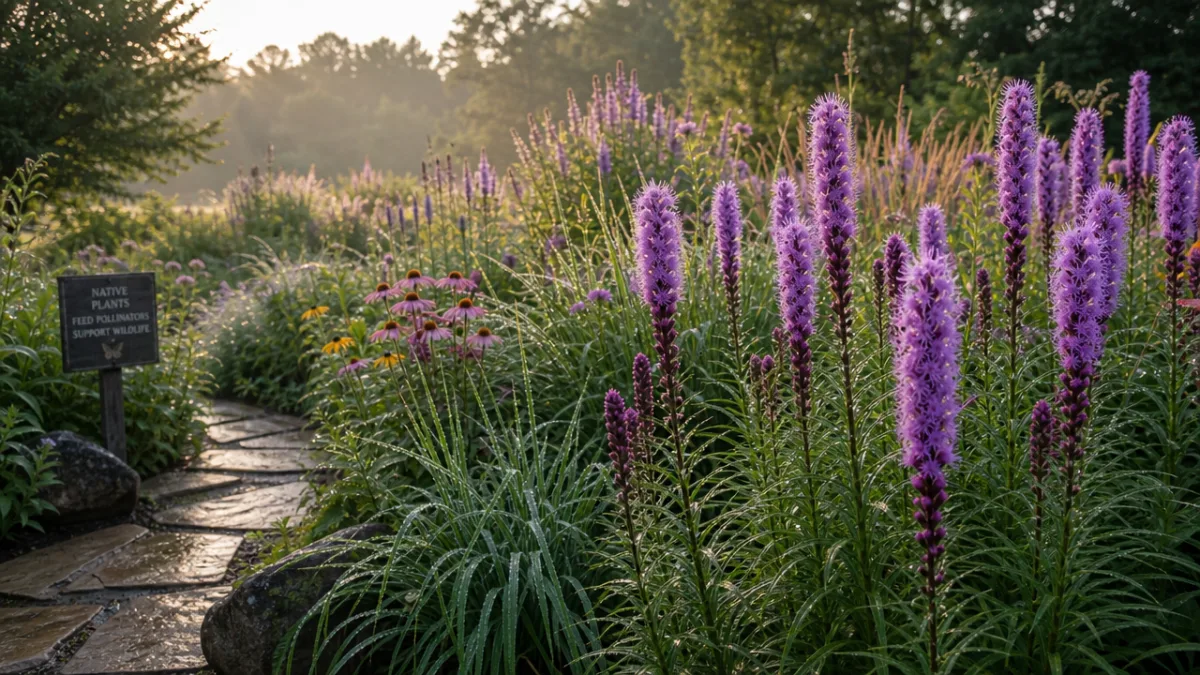
Now that you know what to avoid, picking companions for liatris gets a lot easier. The guiding principle is simple: look for plants that want the same things liatris wants — well-drained soil, full sun, and lean to average fertility. Prairie natives and meadow plants from similar ecosystems are your best starting point, because they’ve evolved under the same conditions and won’t create the resource conflicts that make companion planting go sideways.
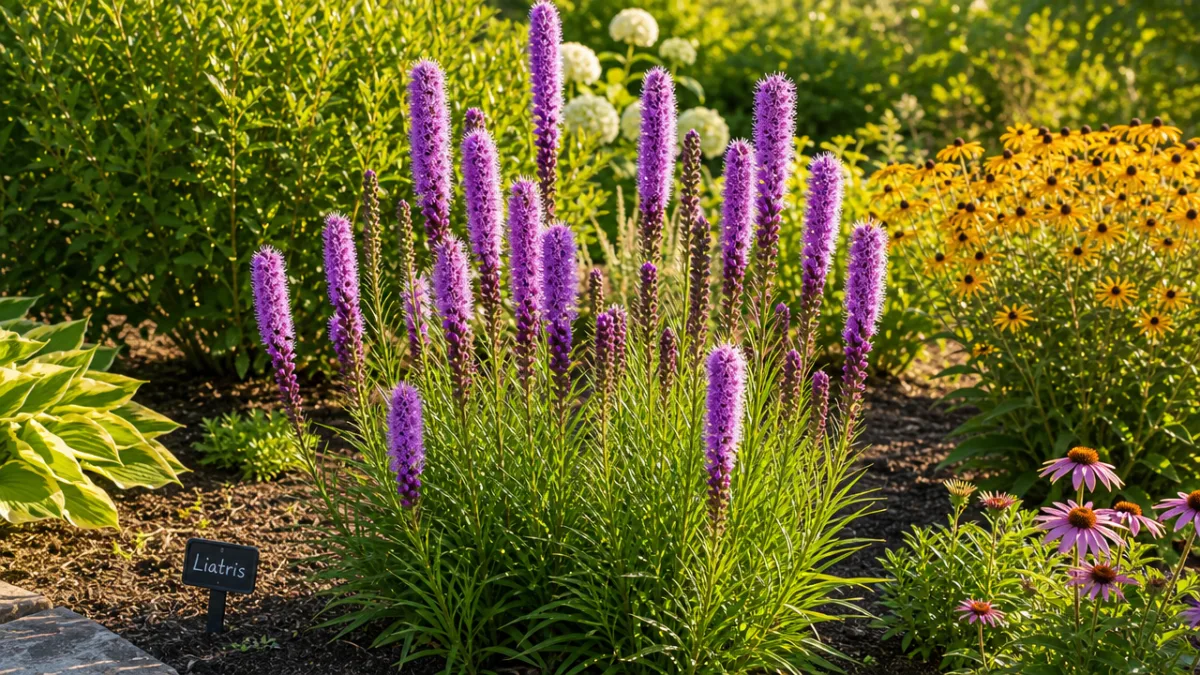
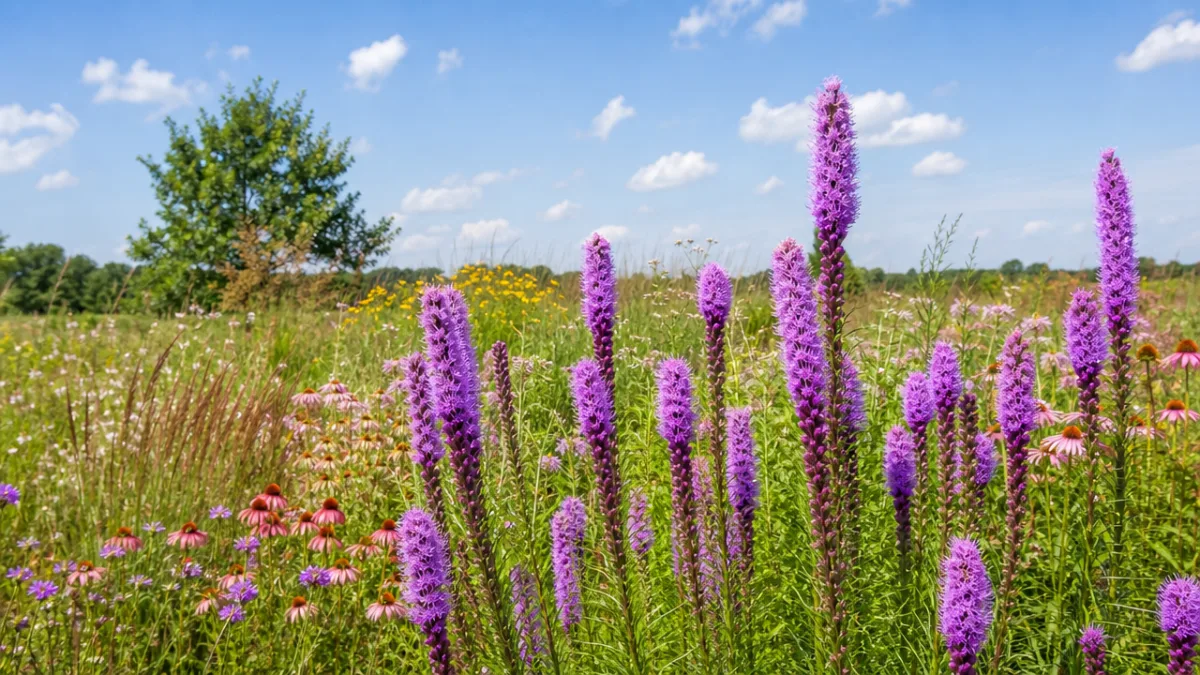
Some of the best companions for liatris include black-eyed Susan (Rudbeckia hirta), purple coneflower (Echinacea purpurea), little bluestem (Schizachyrium scoparium), prairie dropseed (Sporobolus heterolepis), rattlesnake master (Eryngium yuccifolium), and native asters. These all thrive in similar conditions, support wildlife in complementary ways, and create that loose, naturalistic look that makes a prairie-style garden so appealing. Honestly, the combinations are beautiful in a way that more formal pairings rarely are.
When you’re planning the bed, think beyond how a plant looks right now and consider what it will be doing in three or four years. Something perfectly well-mannered in its first season can become a serious bully by its third. Read labels carefully, check a few reliable references, and pay honest attention to what’s actually happening in your garden. If something is clearly crowding out the liatris, take it out — don’t wait and hope it works itself out. With a little thoughtful planning upfront and a willingness to make adjustments along the way, liatris can be a thriving centerpiece of your garden for decades.








What do you think?
It is nice to know your opinion. Leave a comment.