










The Art of Flower Photography: Capturing Nature’s Most Beautiful Subjects
Introduction to Flower Photography
Flower photography is one of those genres that welcomes just about everyone. Whether you’ve been shooting for decades or you just bought your first camera last week, flowers give you something genuinely rich to work with — they challenge your technical skills while still leaving plenty of room for creative expression. Nature essentially hands you a constantly rotating gallery of color, form, and texture, and flowers might be the best example of all that.
Part of what keeps this genre so compelling is the sheer variety available to anyone willing to slow down and look. You might spend a morning shooting a sunflower field stretching all the way to the horizon, then spend the next hour completely absorbed by a single dewdrop on a rose petal. Every species brings its own set of opportunities and quirks, and learning to work with those differences is honestly half the fun.
But beyond the technical side of things, flower photography offers something a little more meaningful: a genuine reason to stop and pay attention to beauty you’d normally walk right past. When you put your eye to a viewfinder and really start studying the architecture of a single blossom, something shifts. It becomes almost meditative. This article covers the techniques, equipment, compositional ideas, and creative approaches that can help you move from casual snapshots to images you’re actually proud of.
Essential Equipment for Flower Photography
The right gear really does make a difference in flower photography, even if a skilled photographer can make beautiful images with almost anything. That said, if there’s one piece of equipment worth investing in, it’s a dedicated macro lens. Being able to focus at extremely close distances opens up a whole world of detail — the delicate structure of stamens and pistils, the fine texture of a petal — that you simply can’t see with the naked eye. The 90mm to 105mm focal length range is a sweet spot for most flower photographers because you get excellent magnification while still keeping a comfortable distance from your subject.
A solid tripod is just as important, especially once you start shooting at close range. At high magnification, even the tiniest camera movement shows up in your final image, and trying to handhold will almost always give you something slightly soft. A good tripod with a smooth ball head keeps things sharp while still letting you get into interesting positions — low to the ground, tilted at odd angles, shooting straight down into a bloom. A lot of experienced flower photographers also keep a focusing rail in their bag, which lets you make tiny, precise adjustments to your camera position without knocking the whole tripod setup around.
Light modifiers are worth thinking about too, and they don’t have to be expensive. A simple reflector — either a collapsible commercial one or just a piece of white foam board — lets you bounce ambient light into the shadowy parts of your subject and recover detail that would otherwise disappear. A diffusion panel between your subject and direct sunlight can completely transform harsh midday light into something soft and even, which is much more flattering for the subtle color gradations in flower petals. If you’re interested in a more controlled setup, a small LED panel paired with a softbox lets you take charge of your light entirely, no matter what the weather is doing outside.
Understanding Light in Flower Photography
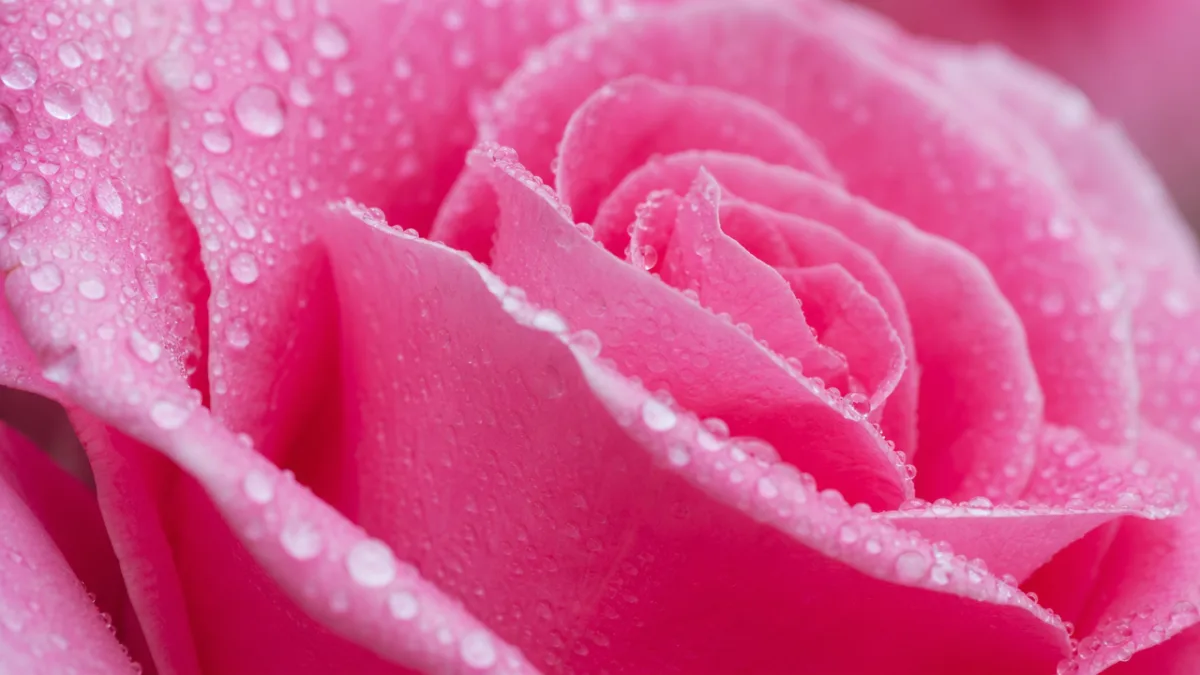
Light is everything in photography, but it plays an especially critical role with flowers because petals are translucent — they transmit light rather than just reflecting it. That means the angle, quality, and color of your light source don’t just affect the mood of your image; they completely transform it. Once you internalize this, you start thinking not only about how light falls on a flower from the outside, but about that warm inner glow that emerges when the sun backlights it from behind.
Golden hour — those first and last stretches of daylight — is beloved by outdoor photographers for good reason, and flower photographers benefit from it more than most. The low sun angle creates raking shadows that really bring out the three-dimensional structure of petals and leaves, and the warm color temperature does flattering things to just about every subject. Early morning shooting has an extra perk: the real possibility of finding dew or frost still clinging to petals, which can turn an otherwise ordinary composition into something a little magical.
Overcast days are actually a gift for flower photography, even if they don’t feel like it. When clouds diffuse the sun into a vast, soft, even light source, colors become more saturated, shadows soften, and you can finally see all those subtle tonal gradations across a petal’s surface. It’s particularly good for white and pale flowers, which tend to blow out their highlights and lose all detail in direct sun. Learning to work well across a range of lighting conditions — rather than holding out for perfect weather — will make you a more versatile photographer through every season.
Composition and Creative Vision
Technical skills and a solid understanding of light will get you quite far, but what ultimately separates a memorable flower photo from a merely competent one is compositional vision. It’s about deciding what belongs in the frame, how those elements relate to each other, and what feeling you’re trying to create. Flowers are naturally beautiful, which can actually work against you — it’s easy to just center the bloom and hit the shutter. But pushing yourself to think more deliberately about composition is what starts producing images that really hold up.
The rule of thirds is one of the most useful starting points: instead of placing your subject dead center, position it at one of the four intersection points of an imaginary three-by-three grid. For flowers, this often means letting your main bloom sit to one side while the rest of the frame breathes — whether that’s a secondary blossom, a complementary background element, or just open negative space. That asymmetry creates a visual tension that centered compositions rarely achieve. Of course, rules exist to be broken on purpose, and a precisely centered flower — especially a symmetrical one like a dahlia or sunflower — can deliver a graphic punch all its own.
Background management is one of the most consistently overlooked skills in flower photography, especially for beginners. You can have a beautifully composed, perfectly lit subject, and a cluttered background will still sink the whole image. Learning to use depth of field deliberately — opening up your aperture to create that smooth, creamy background blur — is one of the most powerful moves available to you. Even just shifting your camera position slightly to place your subject against a clean patch of sky, shadow, or distant foliage can make a huge difference. Before you press the shutter, take a moment to check every corner of the frame and ask whether anything there is pulling attention away from where you want it.
Creative experimentation should be a regular part of your practice. Here are some compositional approaches that experienced photographers lean on to keep their work interesting and varied:
- Shooting from directly above to create a flat, graphic image that plays up the geometric symmetry of the bloom
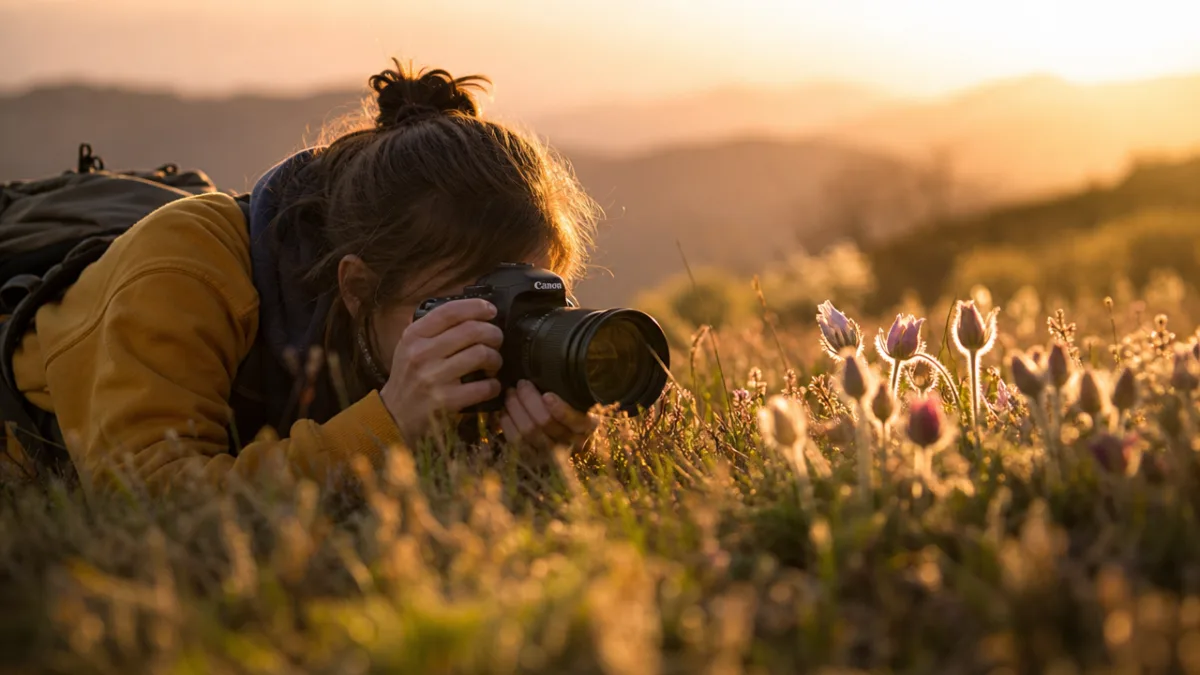
- Getting down to ground level and shooting upward through a flower against the sky or tree canopy
- Including environmental context like a garden wall, fence, or water feature to give the image a sense of place
- Using a second flower in the foreground to frame your primary subject and add depth
- Isolating a single petal or stamen for an extreme abstract composition that’s really about color and texture rather than the flower itself
Post-Processing Techniques for Flower Images
Pressing the shutter is only part of the process. Post-processing in software like Adobe Lightroom, Capture One, or the free alternative Darktable gives you powerful tools to refine your images and get them closer to what you actually envisioned. Shooting in RAW format is strongly worth doing for exactly this reason — it holds onto far more tonal and color information than JPEG, which gives you much more room to work with in editing without degrading the image.
Color grading is one of the most expressive parts of processing flower images. The HSL panel in Lightroom, for instance, lets you go after individual color channels with real precision — you can boost the warmth in a flower’s reds and oranges while simultaneously cooling the greens of surrounding foliage to create a more harmonious overall palette. Many experienced flower photographers build a distinctive color signature this way, and it’s one of the things that makes a body of work feel cohesive. The guiding principle here is to enhance what was genuinely present in the scene rather than fabricating something that doesn’t really reflect reality.
Sharpening and noise reduction are worth particular attention in macro work, where high magnification pushes your camera close to its limits. Thoughtful sharpening in post can really bring out fine details like stamens, pollen, and petal texture, but overdoing it creates ugly halo artifacts — so a gentle hand goes a long way. Careful noise reduction helps smooth out large open areas of petal without losing the fine detail you worked to capture. If you want to go further, focus stacking — combining multiple images shot at different focal points to get front-to-back sharpness in a single frame — is worth exploring. Dedicated apps like Helicon Focus or Zerene Stacker make the process pretty approachable and the results can be extraordinary.
Building a Personal Style in Flower Photography
At some point in your flower photography journey, the technical questions stop being the main challenge, and a more interesting one takes over: what do I actually want to say with these images? Developing a personal style isn’t something you can force or rush, but you can encourage it — by spending time with the work of photographers you admire, exploring the history of botanical illustration and flower painting, and most of all by shooting constantly and honestly reflecting on what you see in your own results. Over time, recurring preferences in light, color, mood, and subject matter start to surface naturally.
Some flower photographers gravitate toward clean, bright, high-key images that celebrate pure color and simple natural form. Others prefer something moodier — the Rembrandt approach, where flowers emerge dramatically from deep shadow. Still others love the Impressionistic quality you get from intentional camera movement or soft focus, where emotional resonance matters more than literal clarity. None of these approaches is better than the others; what matters is that you’re making deliberate choices in service of a real creative intention, rather than just accepting whatever happens to come out of the camera.
Building a meaningful body of work also means developing a real relationship with the places where you shoot. Coming back to the same garden or location across different seasons, weather conditions, and times of day lets you witness the full cycle of growth and change around a particular set of plants, and that kind of intimacy tends to produce more compelling work than brief visits scattered across many different places. Some of the most celebrated flower photographers have been returning to the same gardens for years, even decades, finding new perspectives and stories within subjects they know deeply. The flowers themselves don’t run out of things to offer — what develops is your own capacity to see them more clearly each time.
Keeping a photography journal is a simple habit that pays real dividends over time. After each session, it’s worth jotting down a few things:
- The specific equipment, settings, and techniques behind the images you’re happiest with
- The lighting conditions and time of day that gave you your best results
- Compositional ideas you want to try in future sessions
- The names of flower species you photographed — building that botanical knowledge genuinely informs your eye over time
- Images from other photographers or painters that sparked something for you during the session
At its heart, flower photography is a practice of sustained attention — a reason to keep looking carefully at the living world around you. Every session is a chance not just to make beautiful images, but to deepen your connection to natural things, to practice the patience that good seeing requires, and to develop a visual language that’s genuinely your own. The flowers will keep blooming. The question is just how fully you show up to meet them.








What do you think?
It is nice to know your opinion. Leave a comment.