










Ombelico di Venere: The Enchanting Navel of Venus Plant
Introduction to Ombelico di Venere
If you’ve ever wandered through the Italian countryside and spotted a small, perfectly round leaf tucked into a crack in an old stone wall, there’s a good chance you were looking at the Ombelico di Venere — or Umbilicus rupestris, to give it its scientific name. In English it goes by Navelwort or Wall Pennywort, but honestly, neither of those names quite captures the romance of the Italian. “Venus’s Navel” — because each fleshy, round leaf has a tiny dimple right at its center, so perfectly shaped that ancient botanists and poets couldn’t help but name it after the goddess of beauty herself. It’s a small succulent perennial, and people have been fascinated by it for centuries.
It’s native to western Europe and the Mediterranean basin, and it’s made itself at home in exactly the kinds of places you’d least expect a plant to thrive: rocky crevices, crumbling stone walls, shaded cliff faces. It belongs to the Crassulaceae family, which makes it a relative of sedums and houseleeks. And while it looks almost too delicate to survive in those conditions, it’s actually impressively tough — able to get by in thin soils and dry environments that would finish off far sturdier plants.
What really makes this plant special is the way it combines genuine beauty with a long, practical history. For thousands of years, people across Italy, France, Portugal, Spain, and the British Isles have been gathering its tender leaves for food and medicine. Today, the growing enthusiasm for foraging, wild food, and traditional herbal knowledge has brought Ombelico di Venere back into the conversation — celebrated by chefs, herbalists, and botanists who are rediscovering just how much this modest little plant has to offer.
Botanical Characteristics and Identification
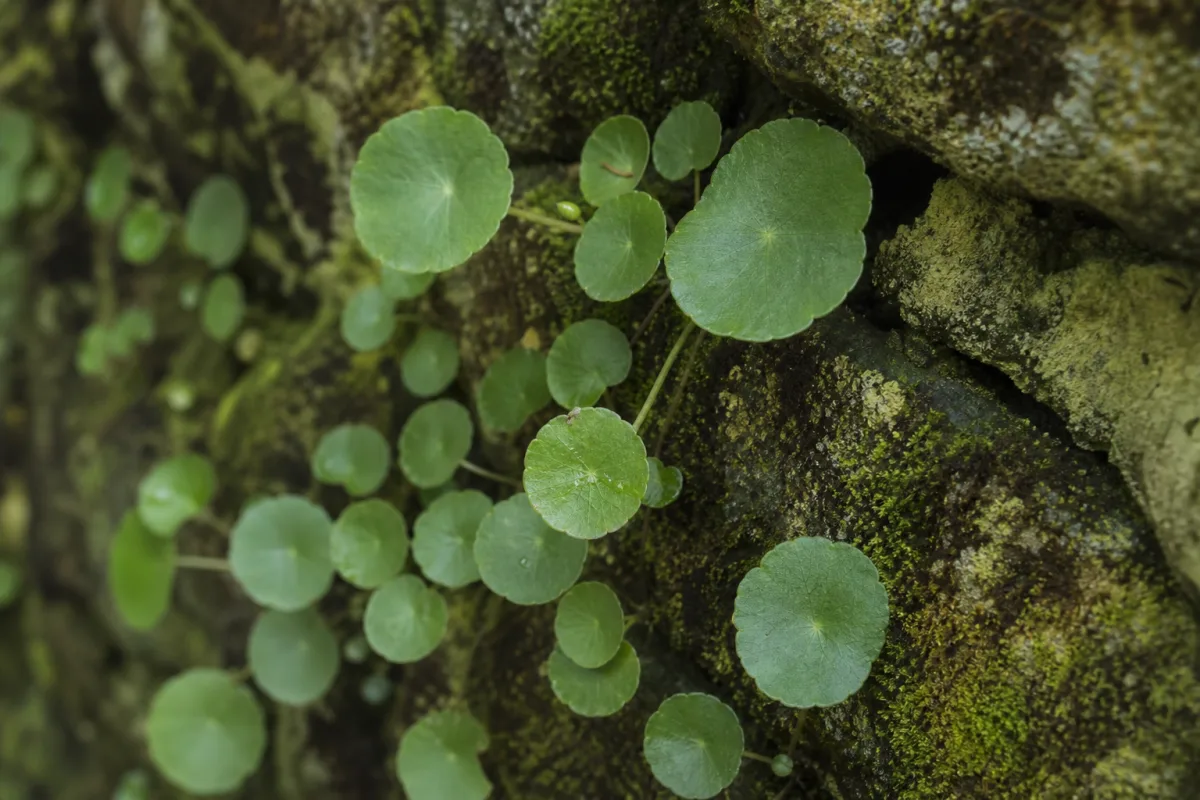
Spotting Ombelico di Venere in the wild is one of those genuinely satisfying foraging moments, because once you know it, you really can’t mistake it for anything else. The leaves are the giveaway: round to kidney-shaped, thick, and succulent, with a smooth, waxy surface that shifts from bright green to a deeper bluish-green depending on how much sun they get and what time of year it is. Each leaf attaches to a long, slender stalk right at its center, so it floats in the air like a tiny green shield — and right there at the attachment point is that famous little navel depression, clear as anything once you’re looking for it.
When the plant flowers in spring and early summer, it sends up slender stems anywhere from 10 to 40 centimeters tall, rising above the basal rosette of leaves. These stems carry long, densely packed clusters of small, tubular flowers that hang downward — pale greenish-white or creamy yellow, sometimes with a blush of pink. There’s something quietly lovely about a flowering Ombelico di Venere clinging to an old stone wall; it doesn’t shout for attention, but it rewards anyone who stops to look.
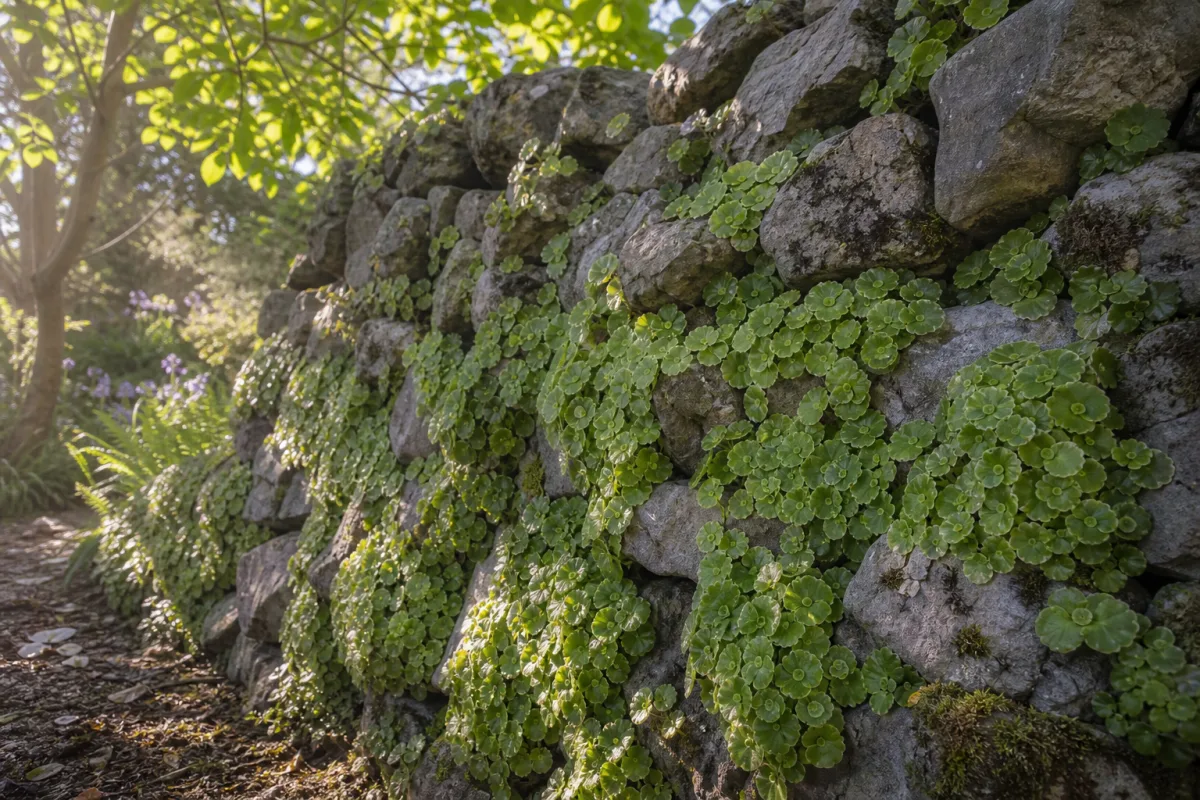
The plant’s succulence is a practical solution to the difficult places it calls home. Like other Crassulaceae, it stores water in its thick leaves, which lets it sit out dry spells that would wilt most plants without complaint. It gravitates toward the mortar joints of old walls, rocky outcrops, hedgebank bases, and shaded cliff ledges — places with mild, humid winters and dry summers. It has a particular affinity for ancient landscapes, and it’s not unusual to find it growing contentedly on Roman ruins, medieval churches, or the walls of centuries-old farmhouses, as if it’s been there just as long.
Historical and Cultural Significance
You can’t really tell the story of Ombelico di Venere without also telling the story of European herbalism, because the two are deeply tangled together. Ancient Greek and Roman physicians knew this plant well. Dioscorides, the first-century Greek physician whose De Materia Medica was essentially the bible of European herbalism for over fifteen centuries, described a round-leaved plant of rocky places with cooling and healing properties — used for skin inflammations and burns. That same application carried through virtually unchanged into the modern era, which is either a testament to the plant’s genuine effectiveness or to the enduring power of a good herbal tradition. Probably both.
In medieval Europe, the plant was seen as a true gift of Venus — not just for the shape of its leaves, but for what it was believed to do. It was associated with beauty, softness, and the cooling of inflammatory conditions, all of which mapped neatly onto the symbolic world of the goddess of love. Herbalists and apothecaries across Italy and the Iberian Peninsula kept it in their supplies, and it made regular appearances in the magnificent illustrated herbals of the Renaissance — those wonderful books that mixed careful botanical observation with mythology and storytelling in a way that feels charmingly human even now.
In Portugal, where it’s known as umbigo-de-vénus or conchelos, the plant has been woven into traditional medicine for generations, and it grows so reliably on the walls of old quintas and monasteries that it’s become part of the visual character of the countryside. In Sardinia and parts of Italy, folk remedies used the leaves for ear infections, and the plant shows up in local proverbs that pack centuries of practical observation into a single pithy phrase — the kind of knowledge that gets passed from parent to child without anyone ever writing it down.
Culinary Uses and Foraging
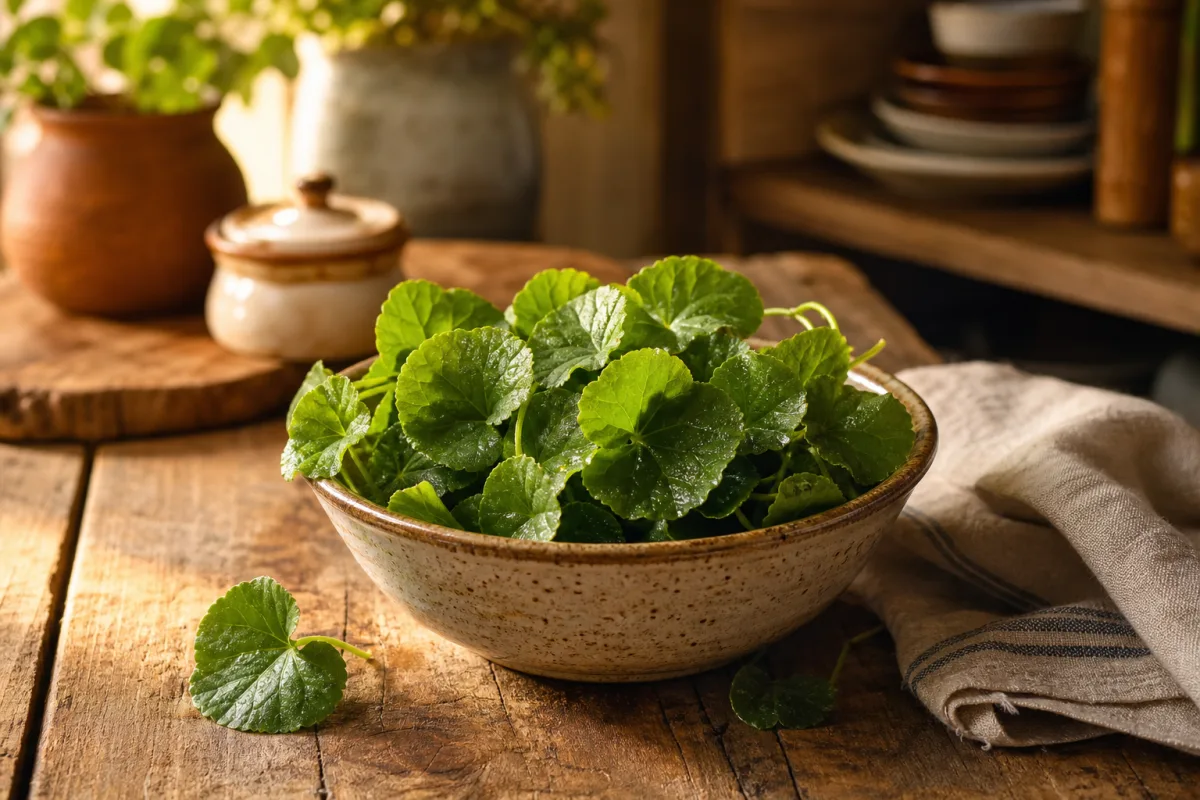
One of the nicest surprises in the recent foraging revival has been a proper rediscovery of just how good Ombelico di Venere tastes. The leaves are entirely edible, with a mild, fresh flavor and a slightly mucilaginous texture that works really well in salads and other fresh dishes. Eaten raw, young leaves have a refreshing crispness — think cucumber, with a subtle earthiness underneath — and they pair beautifully with bold flavors like aged cheese, cured meats, and sharp dressings. The best time to harvest is autumn and winter, when the leaves are at their most tender and succulent.
In recent years, chefs in Italy, Portugal, and the UK have started putting Ombelico di Venere on restaurant menus, attracted as much by its visual appeal as its flavor. A single perfect round leaf placed on a composed dish brings a touch of natural whimsy that’s hard to replicate with cultivated ingredients. Foraging guides and wild food cookbooks have increasingly given it space in their pages, and on social media, food photographers and foragers have amplified its profile considerably — sharing pictures of those beautiful circular leaves alongside harvesting tips and recipe ideas.
If you’re thinking about foraging it yourself, a few things are worth keeping in mind:
- Only harvest from uncontaminated sites — well away from roadsides and anywhere that might have been sprayed with pesticides or herbicides.
- Go for the young, fresh leaves at the base of the plant. Older leaves get tougher and more fibrous as the season goes on.
- Don’t strip an entire plant. Take a few leaves from each rosette and leave plenty behind for the plant to keep growing.
- The leaves are best used fresh on the day you pick them, but they’ll keep in the fridge wrapped in a damp cloth for a day or two without losing much quality.
- Make absolutely sure of your identification before eating anything. Ombelico di Venere is distinctive, but if you’re new to it, take your time and confirm what you’ve got.
Beyond salads, the leaves hold up surprisingly well to gentle cooking. A quick sauté in olive oil or butter works nicely, and they can be added to soups as a garnish or stirred into herb-forward sauces. Some traditional recipes from Sardinia and Corsica call for the leaves to be briefly blanched and dressed with lemon juice and good olive oil — simple and good, in the way that the best wild food recipes tend to be. Unlike some mucilaginous greens that turn unpleasant with heat, these leaves keep a pleasant texture when cooked gently, which makes them more versatile than you might expect.
Medicinal Properties and Traditional Remedies
The medicinal reputation of Ombelico di Venere is old, and what’s striking is how consistent it is across different cultures and centuries. Its main traditional use has always been topical: fresh leaves, bruised or lightly crushed between the fingers, applied directly to the skin for burns, scalds, chilblains, sunburn, insect bites, minor wounds, and general skin irritations. The cooling, soothing action seems to come from the sheer water content of those succulent leaves, along with various bioactive compounds — tannins, mucilaginous polysaccharides, and other phytochemicals that researchers are still working to fully understand.
In Wales, the plant had a particularly strong following and was known as Pennywort or Ceinlys. Nicholas Culpeper, the seventeenth-century English herbalist and astrologer whose influence lasted well into the eighteenth century, wrote warmly about it and attributed it to Venus — recommending it for cooling fevers, calming inflamed conditions, and soothing the kidneys. He noted its effectiveness as a topical treatment and suggested that small amounts of the juice could be taken internally for cooling and diuretic effects, a recommendation that echoes across many other European herbal traditions of the same period.
Modern phytochemical research has started to put some scientific flesh on those traditional claims. Studies have found flavonoids, phenolic compounds, and antioxidant molecules in the plant’s tissues, which may go some way toward explaining why it has such a consistent reputation for anti-inflammatory and soothing effects. It’s not exactly a mainstream focus of pharmacological research right now, but the growing academic interest in ethnobotany and traditional plant medicine has brought it more scientific attention than it got for most of the twentieth century. Several research groups in Italy and Portugal have published work examining its chemical composition and potential biological activity.
Traditional preparations recorded in historical herbal literature and oral traditions across the Mediterranean have included:
- Fresh leaf poultice: Leaves crushed or bruised between the fingers and applied directly to burns, bites, or skin irritations, held in place with a light bandage.
- Expressed juice: The juice squeezed from fresh leaves and applied topically or, in small amounts, taken internally for its diuretic and cooling properties.
- Decoction: Leaves simmered in water and used as a wash for skin conditions or as a soothing bath additive.
- Infused oil: Leaves macerated in a carrier oil like olive oil and used as a topical preparation for dry or inflamed skin.
Cultivation and Conservation
Ombelico di Venere isn’t considered a threatened species across most of its range, but the habitats it depends on — ancient stone walls, traditional rural structures, undisturbed rocky slopes — are under pressure in many parts of Europe. Old mortared walls being replaced with modern concrete, hedgebanks cleared away, land management practices shifting: all of these things have contributed to local declines in some areas. It’s a good reminder that biodiversity and traditional built environments are more connected than people often realize.
The good news for anyone who wants to grow it is that Ombelico di Venere isn’t especially difficult to establish if you give it what it needs. It wants partial to full shade and excellent drainage above everything else — a dry-stone wall or a well-drained rock garden are about as close to ideal as you can get in a garden setting. It actually does better in lean, gritty soil than in rich, fertile ground, so resist the urge to improve the conditions too much. In the right climate — mild and humid, with cool winters — it will settle in readily from seed or from a small section moved carefully from an existing colony.
Sow seeds on the surface of a gritty, low-nutrient compost in autumn and leave them outside over winter to experience natural cold stratification; they’ll germinate in spring. Once established, the plant will often self-seed, quietly colonizing nearby crevices and wall gaps on its own schedule. It’s a wonderful choice for naturalistic garden design, wildlife-friendly planting, or heritage garden restoration — a plant with genuine historical roots that looks every bit as at home on an old wall today as it would have centuries ago.
Ombelico di Venere in Art, Literature, and Modern Culture
The visual distinctiveness of Ombelico di Venere has made it a recurring subject in botanical illustration throughout history. From the woodcut prints of sixteenth-century herbals to the meticulous watercolors of Victorian botanical artists, the plant has attracted people who work in this exacting tradition. It’s easy to see why: the leaves are almost geometrically perfect, simple enough to depict clearly but interesting enough to reward careful attention. The combination of elegant form and rich symbolic history makes it an ideal subject.
In Italian and Iberian poetry, the plant has occasionally served as a symbol of natural beauty and resilience — the ability to find a foothold and flourish in unlikely places. There’s something inherently poetic about a plant named for the most beautiful of goddesses that chooses to grow in the cracks of crumbling walls and cliff faces. It suggests a kind of beauty that isn’t showy or demanding, just quiet and persistent, asking little of the world while offering quite a lot to anyone who takes the time to notice it. That quality has made it a natural metaphorical subject for poets writing about neglected or overlooked things.
In contemporary culture, Ombelico di Venere has found a genuinely enthusiastic new audience online. Plant lovers, foragers, botanical photographers, and herbalism enthusiasts have made it a popular subject on Instagram and Pinterest, where its photogenic qualities — those perfect circular leaves, the delicate pendant flowers, the picturesque stone wall settings — translate beautifully to the visual language of those platforms. That online visibility has done something meaningful: it’s introduced the plant to younger generations who might never have come across it through traditional channels, creating new routes for botanical knowledge and cultural heritage to travel forward into the future.








What do you think?
It is nice to know your opinion. Leave a comment.