










Neofinetia Falcata ‘Tamakongo’ 玉金剛: A Complete Guide to One of Japan’s Most Treasured Orchids
The History and Cultural Significance of Neofinetia Falcata in Japan
Neofinetia falcata, known in Japan as Fuukiran (風蘭), holds a place of extraordinary reverence in Japanese horticultural history that stretches back more than four centuries. Originally discovered growing as an epiphyte on rocky cliffs and in forest canopies across Japan, Korea, and parts of China, this miniature orchid captivated the Japanese aristocracy during the Edo period. Feudal lords, samurai, and eventually the imperial household itself became devoted collectors, elevating Fuukiran from a humble wildflower to a symbol of refinement, status, and aesthetic mastery. The tradition of cultivating named varieties became an art form unto itself, one passed down through generations with extraordinary care and precision.
The culture surrounding Fuukiran collecting is deeply intertwined with the Japanese concept of wabi-sabi — the appreciation of imperfect, transient beauty — as well as the broader tradition of bonsai and viewing stone artistry. Named cultivars, known as meika (名花), were often valued more highly than gold during the height of their popularity. Wealthy merchants and daimyo alike would spend fortunes acquiring a single prized plant, housing it in hand-painted ceramic pots and displaying it alongside treasured lacquerware and calligraphy scrolls. This cultural embeddedness gives Neofinetia falcata a significance that transcends mere botanical interest and enters the realm of living cultural heritage.
Today, the tradition of Fuukiran cultivation is maintained by a dedicated community of enthusiasts across Japan and increasingly around the world. Specialized nurseries continue to propagate named varieties using the same careful hand-division techniques practiced by collectors centuries ago. Annual exhibitions and competitions are held where judges evaluate plants not only on floral performance but on the overall presentation, including the choice of pot, the quality of the moss, and the elegance of the plant’s overall form. For anyone who encounters a blooming specimen like ‘Tamakongo’ 玉金剛 for the first time, it is immediately apparent why generations of collectors have been so thoroughly enchanted.
Understanding ‘Tamakongo’ 玉金剛: Characteristics and Identification
‘Tamakongo’ (玉金剛), whose name translates roughly to “Jeweled Vajra” or “Jeweled Diamond,” is one of the most celebrated cultivars within the already prestigious world of Fuukiran collecting. The name itself speaks to the plant’s physical qualities — a compact, densely growing form with leaves that carry a richness and solidity reminiscent of precious stone. Like all Neofinetia falcata cultivars, ‘Tamakongo’ is distinguished from the wild type by a combination of subtle but meaningful characteristics in leaf shape, texture, coloration, and overall growth habit that trained collectors can identify at a glance, even before the plant comes into bloom.
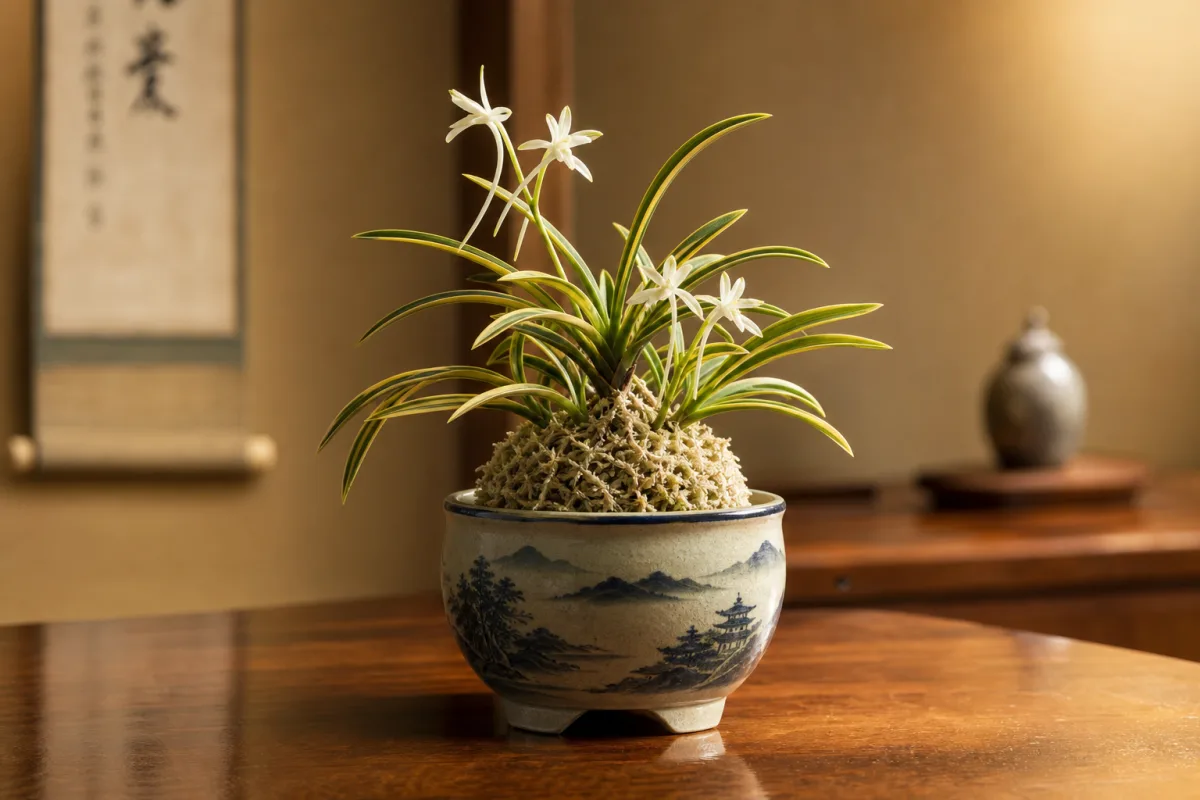
The foliage of ‘Tamakongo’ is notably thick and succulent in texture, with a deep, lustrous green that takes on warm golden undertones under bright light, contributing to the “jeweled” quality evoked by its name. The leaves themselves are arranged in a precise, fan-like pattern, a characteristic of the species as a whole, but in ‘Tamakongo’ this arrangement is particularly tidy and symmetrical, giving the plant an almost architectural quality. The leaf edges are clean and firm, and the overall habit of the plant tends toward the compact and upright rather than the sprawling growth sometimes seen in other cultivars. This refined structure makes it a particularly attractive display plant even when not in flower.
When ‘Tamakongo’ comes into bloom — typically in midsummer, as is common for the species — the flowers appear in arching sprays of brilliant white. Each individual bloom is a masterpiece of delicate engineering: a long nectar spur curves gracefully behind the flower, reaching lengths that have evolved to accommodate specific long-tongued moth pollinators in the wild. The fragrance is perhaps the most intoxicating aspect of the flowering experience, an intensely sweet, spicy, and almost otherworldly perfume that is strongest in the evening hours. A blooming specimen in a still room can perfume the entire space, a quality that traditional collectors valued immensely and referred to as the plant’s “evening voice.”
Cultivation Essentials: Light, Temperature, and Seasonal Care
Successfully cultivating Neofinetia falcata ‘Tamakongo’ requires an understanding of its natural origins and seasonal rhythms. In its native habitat, this orchid experiences warm, humid summers with bright but indirect light filtering through the forest canopy, followed by cooler, drier winters that trigger the hormonal changes necessary for robust spring and summer flowering. Replicating these conditions as faithfully as possible is the foundation of successful cultivation. Many growers find that understanding the plant’s annual cycle — rather than simply providing static conditions year-round — is the single most important step toward achieving consistent, healthy growth and reliable flowering.
Light is one of the most nuanced aspects of Fuukiran cultivation. ‘Tamakongo’ thrives in bright, indirect light, roughly equivalent to east- or west-facing windowsill conditions in the northern hemisphere. Direct midday sun, particularly during summer months, can scorch the thick leaves and cause irreversible yellowing and tip burn. However, insufficient light results in weak, elongated growth, reduced fragrance in the flowers, and a loss of the characteristic golden-green leaf coloration that makes this cultivar so visually distinctive. Many experienced growers use 30–50% shade cloth during peak summer and move plants to brighter positions in spring and autumn, carefully calibrating light exposure across the growing season.
Temperature management follows the plant’s natural seasonal rhythm closely. During the active growing season from late spring through summer, ‘Tamakongo’ appreciates daytime temperatures between 20°C and 28°C (68°F–82°F), with nighttime temperatures that drop at least 5–8°C to encourage metabolic rest and bud initiation. The winter rest period, during which watering is significantly reduced, should see temperatures maintained above 5°C (41°F) to prevent cold damage, with most experienced growers aiming for a minimum of 8–10°C for comfort. This cool, dry rest period is not optional — it is physiologically essential for triggering the flowering response the following season and for maintaining the plant’s long-term vigor.
Watering, Fertilizing, and the Art of the Traditional Mounting
Watering Neofinetia falcata ‘Tamakongo’ is where many beginners find themselves at odds with their instincts. The plant’s thick, succulent leaves and chunky aerial roots are adaptations to periods of both abundance and drought, and overwatering is consistently the most common cause of failure in cultivation. The traditional Japanese approach, using a coarse, open medium such as kanuma or a mixture of bark and perlite, is designed to provide excellent drainage while still retaining enough moisture to hydrate the roots between waterings. During the active growing season, watering every two to three days is typical, allowing the medium to approach dryness before watering again thoroughly.
Fertilization during the growing season supports the development of new fans, healthy root growth, and ultimately the production of vigorous flower spikes. A balanced, dilute orchid fertilizer applied at roughly one-quarter the recommended strength with every second or third watering is a widely practiced approach. Some collectors favor a lower-nitrogen formula as the season progresses into late summer, encouraging the hardening of new growth and preparation for winter. It is worth noting that traditional Japanese cultivation often relies on organic fertilizers placed on top of the moss surface, slowly releasing nutrients with each watering — a method that produces remarkably healthy plants in skilled hands.
The art of presenting ‘Tamakongo’ in the traditional manner is a discipline in itself. Japanese collectors have developed an entire vocabulary of pot styles, moss types, and display conventions specifically for Fuukiran. The most prized presentations feature the plant growing in a hand-thrown ceramic pot — often antique — with a living surface of fine green moss kept meticulously groomed. The choice of pot must harmonize with the character of the specific cultivar: a plant with the dense, jewel-like quality of ‘Tamakongo’ might be paired with a simply glazed pot in deep cobalt or warm ochre that complements rather than competes with the plant’s own beauty. This holistic approach to presentation reflects the broader Japanese aesthetic principle that a cultivated plant and its display are inseparable aspects of a single artistic creation.
- Spring: Resume regular watering as new growth emerges; begin light fertilization; gradually increase light exposure.
- Summer: Water every 2–3 days; provide bright indirect light with afternoon shade; enjoy flowering and fragrance.
- Autumn: Reduce watering frequency; taper fertilization; begin transitioning to cooler temperatures.
- Winter: Minimal watering (every 7–10 days); no fertilizer; maintain cool temperatures for essential dormancy.
Propagation, Acquiring Named Cultivars, and Building a Collection
Propagating Neofinetia falcata ‘Tamakongo’ and other named cultivars is a process governed by both horticultural necessity and cultural tradition. Because the characteristics that define a named cultivar are the product of specific genetic expression, these plants can only be reliably propagated by vegetative division — separating offsets, known as keikis or side growths, from the mother plant and establishing them individually. This process is slow and deliberate; a well-grown specimen may produce only one or two dividable offsets over several years, which is precisely why prized cultivars like ‘Tamakongo’ retain their value and why the plants available on the market are truly the result of generations of careful stewardship.
Acquiring genuine named cultivars requires some navigation of a marketplace that, particularly outside Japan, can be confusing for newcomers. In Japan, established nurseries and specialist collectors maintain verifiable lineages, and plants sold under a cultivar name carry with them a degree of accountability backed by reputation and community knowledge. Outside Japan, the situation is more variable, and buyers are well advised to purchase from reputable importers with direct relationships with Japanese nurseries, or from established collector communities where plants can be verified against known examples. Online orchid communities, particularly those dedicated specifically to Fuukiran, are invaluable resources for building the visual literacy needed to identify authentic specimens and avoid mislabeled plants.
Building a collection around Neofinetia falcata cultivars is a deeply rewarding long-term endeavor. Because the plants are compact — a mature specimen rarely exceeds 15–20 centimeters in its longest dimension — it is possible to maintain a significant collection even in a modest growing space. Many collectors choose to focus on a single category of cultivar, such as those with variegated foliage, those with unusual flower colors (pink and yellow forms exist, though they are rare), or those prized specifically for their leaf form as ‘Tamakongo’ is. This focused approach deepens the collector’s understanding of the subtleties within a category and allows for more meaningful comparisons and appreciations over time.
Pests, Diseases, and Long-Term Plant Health
Like all orchids, Neofinetia falcata ‘Tamakongo’ is susceptible to a range of pests and diseases, though its naturally tough constitution and compact form make it less vulnerable than many more delicate orchid genera. The most common pest threats include spider mites, which thrive in hot, dry indoor conditions and can cause stippling and yellowing of the characteristic thick leaves, and scale insects, which attach themselves to stems and leaf bases and weaken the plant by feeding on its sap. Regular inspection — ideally as part of the watering routine — is the most effective preventive measure, allowing early intervention before populations establish themselves firmly.
Fungal and bacterial rots pose the greatest disease risk, almost always as a consequence of overwatering, poor air circulation, or water sitting in the crown of the plant for extended periods. Root rot, caused by various Fusarium and Pythium species, can establish quietly below the surface of the growing medium, often going unnoticed until the plant begins to show above-ground symptoms such as yellowing lower leaves or a general loss of turgor. Preventive measures include ensuring excellent drainage at all times, using a sterile or well-prepared growing medium, and maintaining good air movement around the plants — a small fan running on a gentle setting in the growing area can dramatically reduce the incidence of fungal problems.
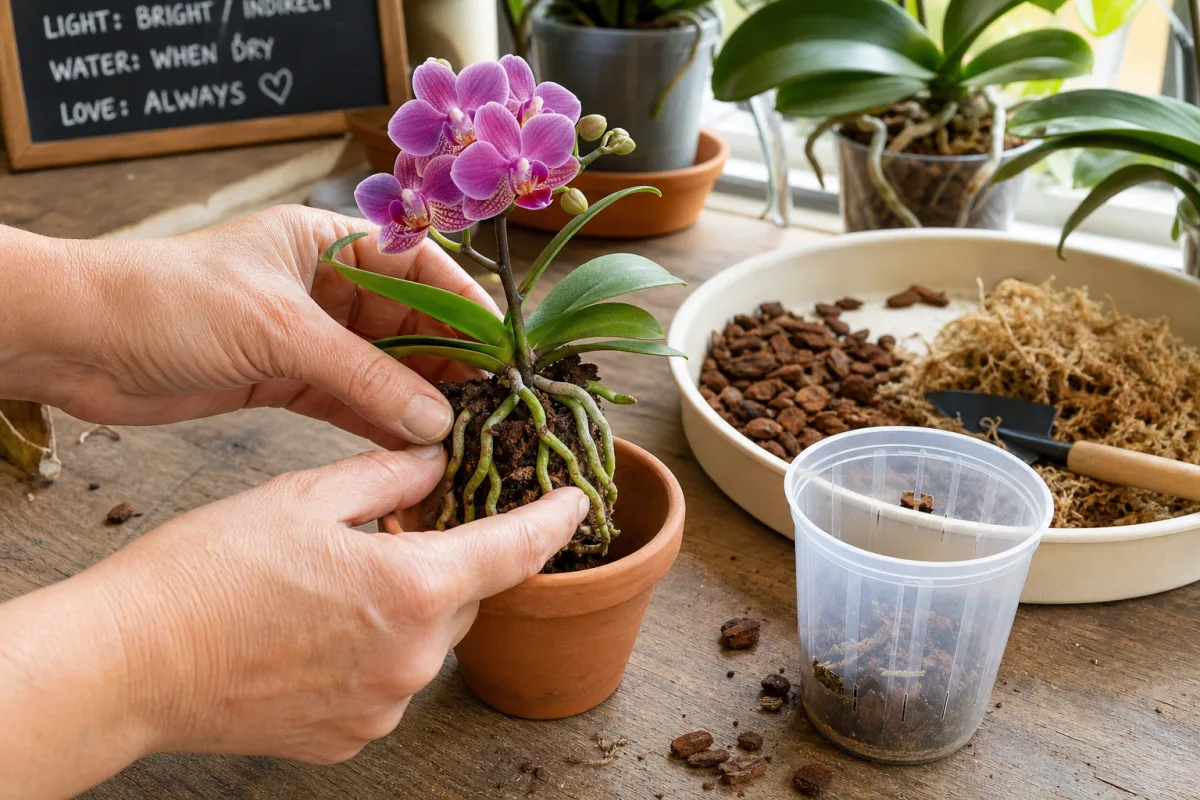
Long-term health in ‘Tamakongo’ and Fuukiran generally is closely tied to the quality of the root system, which in this epiphytic species is both functionally and aesthetically significant. Healthy roots are plump, with a silvery-white velamen (the outer root layer) that turns bright green when moistened — a sight that experienced Fuukiran collectors find deeply satisfying and use as a key indicator of plant vitality. Roots that are brown, shriveled, or mushy indicate problems that require immediate attention, including removal of affected tissue and adjustment of cultivation conditions. Repotting every two to three years into fresh medium is generally recommended to prevent the gradual breakdown of the substrate and the accumulation of mineral salts from fertilizer.
- Inspect plants weekly for signs of spider mites, scale, or unusual spotting on leaves.
- Ensure adequate air circulation around all plants in the collection at all times.
- Water in the morning so foliage and crowns dry fully before cooler evening temperatures arrive.
- Repot every 2–3 years using fresh, sterile, well-draining medium appropriate for epiphytic orchids.
- Quarantine all new acquisitions for a minimum of four weeks before introducing them to an existing collection.
The Enduring Appeal of ‘Tamakongo’ and the Future of Fuukiran Culture
‘Tamakongo’ 玉金剛 endures as a collector’s treasure not simply because of its beauty — though that beauty is real and remarkable — but because it embodies a relationship between human beings and the natural world that is patient, attentive, and deeply respectful. Growing this plant well demands the cultivation of qualities that are themselves valuable: careful observation, the willingness to learn from failure, an appreciation for subtlety, and the long view that understands a plant as a living thing whose best years may be decades ahead. In this sense, ‘Tamakongo’ is not merely an ornamental object but a practice, one that connects its modern cultivators to centuries of Japanese botanical tradition.
The global spread of Fuukiran culture through online communities, specialist importers, and international orchid societies has introduced these plants to enthusiasts who bring their own cultural contexts and horticultural backgrounds to the practice. This globalization is largely positive — it sustains demand that supports the specialist nurseries in Japan, brings new eyes and new ideas to the cultivation tradition, and ensures that knowledge about plants like ‘Tamakongo’ is documented and shared far more broadly than it was even two decades ago. At the same time, the most committed international collectors tend to deepen their engagement with the Japanese tradition over time, recognizing that the aesthetic and philosophical frameworks developed over centuries offer genuine insight that enriches the growing experience.
For anyone who has had the privilege of standing before a blooming specimen of ‘Tamakongo’ on a warm summer evening — watching the last light play across those jewel-like leaves while the fragrance of the flowers fills the air with something between jasmine and night-blooming cereus — the appeal requires no further argument. This is a plant that rewards every hour of careful attention with moments of genuine wonder, a living reminder that beauty cultivated with patience and knowledge is among the most sustaining pleasures available to us. The long story of Neofinetia falcata ‘Tamakongo’ 玉金剛 continues, carried forward by each new collector who takes a single plant into their care and begins the patient, joyful work of learning its language.








What do you think?
It is nice to know your opinion. Leave a comment.