










Melocactus: The Ancient Crown Cactus of the Americas
Introduction to Melocactus
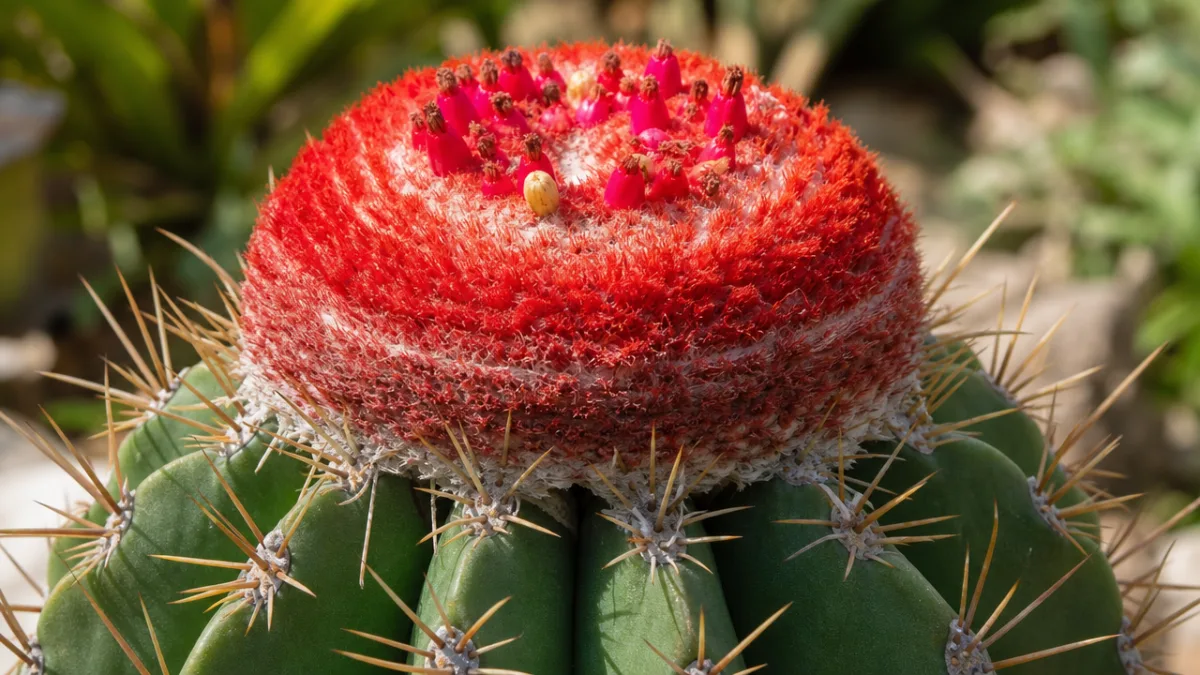
If you’ve ever come across a cactus that looks like it’s wearing a woolly hat, you’ve probably met a Melocactus. Known as the “Turk’s Cap Cactus” or “Melon Cactus,” this plant is one of the most recognizable in the entire cactus family — and for good reason. That fuzzy, bristly crown on top isn’t just for show. It’s called the cephalium, and it’s a structure the plant only develops once it reaches maturity. That alone makes Melocactus endlessly interesting to botanists, collectors, and curious plant lovers. There are around 40 recognized species in the genus, and every one of them has carved out a life in some pretty demanding conditions.
Native to the Caribbean, Central America, and South America, Melocactus has been turning heads for a very long time. Indigenous peoples knew this plant well before any European ever set foot in the Americas, and it has the rare distinction of being one of the very first New World cacti to show up in European botanical records. When Spanish and Portuguese explorers encountered it in the 1500s, they were struck by its round, melon-like body and that strange crown on top — so they called it “Melon Thistle” in their early writings. That kind of history gives the plant a depth that goes well beyond its unusual looks.
What really sets Melocactus apart from other cacti is the way it grows and ages. For years — sometimes more than a decade — it just sits there looking like any other round, spiny cactus, quietly building up energy. Then, at a certain point, something shifts. The plant stops adding new growth to its main body and starts constructing the cephalium instead. From that point on, the cephalium becomes the center of all the plant’s flowering and fruiting activity for the rest of its life. It’s a remarkable and irreversible transition, and it’s part of what makes this plant so captivating.
Anatomy and Distinctive Features
The body of a Melocactus is typically round to short and cylindrical, with clean vertical ribs running from the base up to the top. Along those ribs, at regular intervals, you’ll find areoles — the spine clusters that are standard equipment on any cactus. The number of ribs, the spine count, and the color of those spines all differ between species, which makes them useful clues for identification. In terms of size, Melocactus tends to stay fairly compact; most species top out well under 50 centimeters tall, which gives the whole plant a sturdy, almost stocky presence.
But the cephalium is really the star of the show. It’s not simply a spot where flowers happen to grow — it’s a fundamentally different structure, where the normal areoles have been replaced by a dense tangle of bristles and wool. The cephalium keeps growing taller as the plant ages, and on older specimens it can become quite dramatic relative to the body below it. Some Brazilian species develop cephalia that are nearly as tall as the rest of the plant, which gives the whole thing the look of a cactus that’s wearing an elaborate, oversized crown.
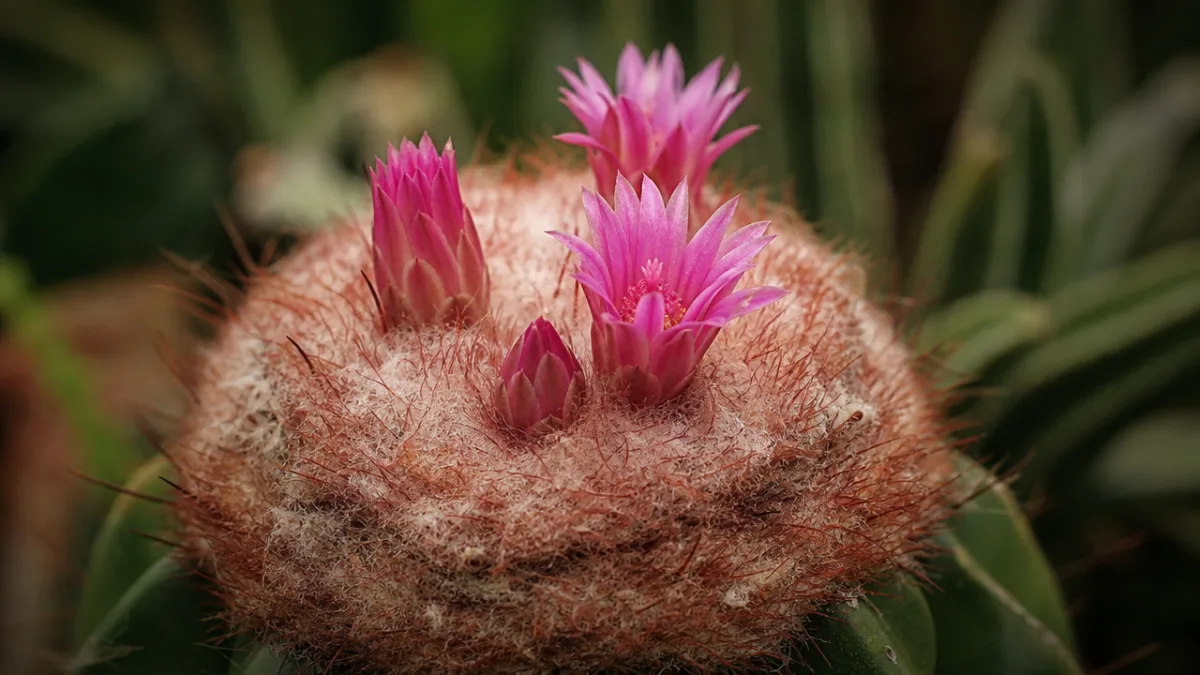
The flowers themselves emerge right from within that woolly mass. They’re small, typically pink to magenta, and tubular — and they tend to open only briefly or sometimes not fully at all. Once pollinated, the plant produces small, club-shaped fruits that ripen and get pushed out through the wool. These fruits are often bright pink or red, they’re edible, and indigenous communities throughout the plant’s range ate them regularly. Inside, the seeds are tiny and black, just waiting for the right conditions to germinate.
Native Habitat and Geographic Distribution
Melocactus species are spread across a specific band of tropical and subtropical environments throughout the Americas. Brazil is by far the heart of the genus — particularly the northeastern Caatinga, a vast region of seasonally dry scrubland and forest that endures intense heat, regular drought, and thin rocky soil. More than half of all recognized Melocactus species are found in Brazil alone. Beyond that, other South American countries including Venezuela, Colombia, Ecuador, and Peru have their own populations, typically in coastal and lowland areas.
The Caribbean islands tell another fascinating part of the story. Cuba, Hispaniola, Jamaica, and a string of smaller West Indian islands all have native Melocactus species, many of which evolved in isolation and developed traits you won’t find on the mainland. These island populations are often very localized, clinging to specific limestone outcrops or tucked into particular coastal ecosystems. That long isolation has added a lot to the overall diversity of the genus — but it’s also made many of these island species more fragile when habitat conditions change.
Look closely at where Melocactus actually grows, and a clear picture emerges: rocky, sun-drenched spots with excellent drainage and not much competition from other plants. Hillsides, cliff faces, coastal bluffs, stony plains — these are the places Melocactus calls home. Some species grow right at sea level in coastal scrub, while others are found at moderate elevations. What they all share is intense sunlight, high temperatures, and fast-draining soil with very little organic matter. Everything about this plant, from its compact shape to its drought tolerance, is a response to those conditions.
Cultivation and Care for Enthusiasts
Growing Melocactus well means really understanding where it comes from and doing your best to recreate those conditions at home. The single most important requirement is bright, direct sun for most of the day. If you’re growing in a temperate climate, that means the sunniest spot you can find — a south-facing windowsill, a heated greenhouse, or outdoors during summer. Too little light is probably the most common reason cultivated Melocactus plants struggle; it leads to weak, stretched growth, floppy spines, and a plant that may never develop a cephalium at all.
Getting the soil right is just as critical. The mix needs to drain fast, with a heavy mineral content and very little organic material. A typical recommended substrate might consist of:
- 50% coarse perlite or pumice for drainage and aeration
- 25% coarse sand or fine gravel to improve porosity
- 15% commercial cactus mix or loam for minimal nutrient retention
- 10% crushed limestone or oyster shell to replicate the alkaline rocky soils of the native habitat
Watering should follow the rhythm of the plant’s native climate. Through spring and into early autumn, you can water fairly generously, but always let the soil dry out almost completely before watering again. Come winter, pull back dramatically — or stop watering altogether. Cool temperatures plus wet soil is a near-certain path to root rot. Keep temperatures above 10°C at all times, and ideally above 15°C when you want the plant actively growing. These are tropical plants through and through, and they have no tolerance for cold.
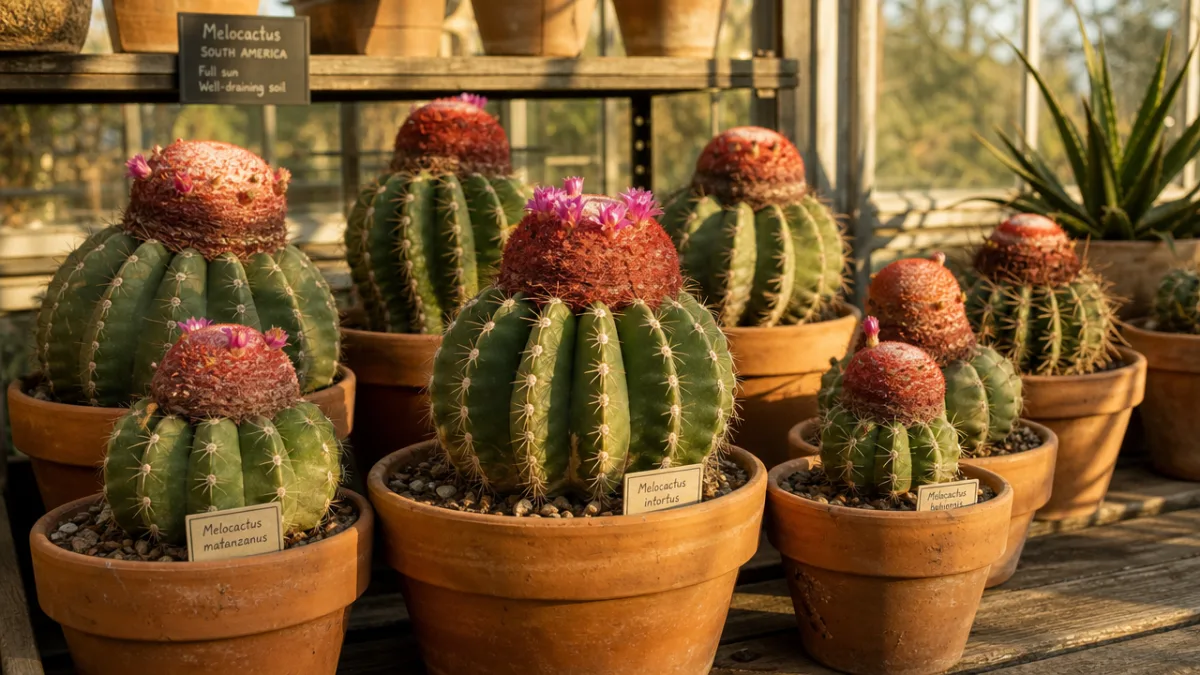
A bit of fertilizer during the growing season can give younger plants a helpful push toward developing their cephalium. Go with a low-nitrogen formula that’s heavier on phosphorus and potassium — too much nitrogen encourages the kind of soft, puffy growth that looks unhealthy and is more susceptible to damage. When it comes time to repot, handle the roots carefully, since Melocactus doesn’t love being disturbed. A clay or terracotta pot tends to work better than plastic, because it breathes and helps prevent moisture from sitting too long in the soil.
Conservation Status and Threats
The conservation picture for Melocactus is genuinely worrying. A significant number of species are currently listed as threatened, vulnerable, or endangered on the IUCN Red List, and the main culprit is habitat loss. Across Brazil’s Caatinga, large stretches of rocky scrubland have been cleared or degraded to make way for agriculture, roads, and urban expansion. In the Caribbean, coastal development and tourism have eaten away at the specific habitats many island species depend on. When a plant is as specialized as Melocactus — needing that particular combination of rock, sun, and drainage — losing its habitat usually means losing the population.
Illegal collection for the plant trade has also taken a serious toll on wild populations over the years. International protections like CITES exist, but enforcement is patchy in many of the countries where these plants grow. The slow pace of Melocactus growth makes this especially damaging. A plant that spent a decade reaching cephalium stage in the wild simply can’t be replaced quickly, and repeated poaching pressure can wipe out a local population entirely before anyone realizes what’s happening.
Climate change adds another layer of concern. Melocactus is built for heat and drought, yes — but it’s also highly specialized for specific microhabitats, and those habitats can be surprisingly sensitive to shifts in rainfall patterns, temperature extremes, or storm intensity. Island species face a particularly stark situation: if conditions in their small, fixed native range deteriorate, there’s nowhere else to go. On a more hopeful note, conservation work is actively underway, including seed banking, ex-situ cultivation at botanical gardens, and genetic research to identify which wild populations are most critical to protect.
Cultural History and Ethnobotany
Long before any European explorer arrived, indigenous communities throughout the Caribbean and South America had a well-established relationship with Melocactus. The fruits were eaten fresh — sweet, moisture-rich, and welcome during dry seasons when food and water were harder to come by. Archaeological evidence from Caribbean sites confirms that pre-Columbian island inhabitants consumed these fruits, and oral traditions from various indigenous groups include the plant in their understanding of the natural world around them.
When European explorers arrived in the late 1400s and 1500s, Melocactus was one of the first American cacti to catch their attention. It appeared in early botanical illustrations and natural history texts dealing with New World plants, described as the “Melon Thistle.” Renaissance botanists were particularly struck by the cephalium, which reminded them of a Turkish turban or Turk’s cap — and that’s where the common name comes from, a name that’s stuck around for centuries. That early documentation gives Melocactus one of the longest recorded histories of any cactus genus in Western botanical writing.
In folk medicine traditions across the Caribbean and parts of South America, different parts of the plant have been used in various ways. The gel-like flesh of the cactus body has been applied to minor burns and skin irritations in some traditions, while the fruits have served as a mild food remedy. These uses vary considerably from region to region and between cultural groups, and most haven’t been formally studied from a pharmacological standpoint. Even so, the fact that so many communities developed their own relationships with this plant over so many generations speaks to how deeply Melocactus has been woven into the human landscape of the Americas.
Melocactus in Modern Horticulture and Botanical Science
Among serious cactus collectors today, Melocactus holds a special place. People prize these plants for their striking appearance, their unusual developmental biology, and the genuine challenge they pose even to experienced growers. The moment a cultivated plant finally shows its first cephalium is a real milestone — proof that you’ve understood and met the plant’s needs consistently over many years, and that your specimen has genuinely reached maturity. That combination of beauty and patience-testing difficulty makes growing Melocactus particularly satisfying.
On the scientific side, Melocactus has kept taxonomists and botanists busy for decades. Sorting out the species boundaries within the genus has been tricky work, because there’s a lot of variability both within individual populations and between them. Molecular phylogenetic studies — looking at DNA sequence data — have helped untangle some longstanding questions about how species are related, and have occasionally revealed that what everyone assumed was one variable species is actually a cluster of distinct species with overlapping ranges. This ongoing work matters beyond academic interest, because you can’t effectively protect a species if you’re not sure what you’re actually looking at.
The developmental biology of Melocactus is also an active area of research, especially that fascinating — and irreversible — switch from growing a vegetative body to building a cephalium. Scientists are working to understand the hormonal and genetic signals that trigger this transition, and the questions it raises are interesting well beyond cactus biology. Melocactus is essentially a living case study in how plants weigh the trade-off between growing bigger and committing to reproduction, and what researchers learn from it could apply to much broader questions about plant development and resource strategy.
Whether you first encounter Melocactus growing wild on a sunbaked Caribbean hillside, on display in a botanical garden, or carefully tended on someone’s windowsill, it tends to leave an impression. There’s something genuinely memorable about a plant that grows a woolly hat on its own head, that was admired by both pre-Columbian farmers and Renaissance naturalists, and that rewards patient, attentive growers with one of the more spectacular sights in the cactus world. It’s a singular plant in every sense — and once you know it, it’s hard to forget.








What do you think?
It is nice to know your opinion. Leave a comment.