










Ilex crenata ‘Green Hedge’: The Ultimate Guide to Japanese Holly
Introduction to Ilex crenata ‘Green Hedge’
Ilex crenata ‘Green Hedge’, commonly known as Japanese Holly, is one of the most versatile and reliable evergreen shrubs available to the modern gardener. Native to Japan, Korea, and eastern China, this compact and densely branching plant has earned a firm place in gardens across Europe and beyond. Its ability to maintain a rich, deep green colour throughout the year makes it an outstanding choice for those seeking structure and year-round visual interest in their outdoor spaces.
Unlike many hedging plants that can become sparse or lose their appeal during winter months, Ilex crenata ‘Green Hedge’ remains robustly leafy and vibrant even in the coldest conditions. The small, glossy, oval-shaped leaves are densely packed along fine stems, creating a lush, almost luxurious texture that catches light beautifully in both summer sunshine and the softer glow of winter days. This particular cultivar has been selected and refined specifically for its suitability as a formal hedging and topiary plant.
The plant is also frequently recommended as a superior alternative to Buxus sempervirens, the traditional box hedge, which has suffered dramatically in recent decades due to the devastating spread of box blight and box tree caterpillar. Ilex crenata ‘Green Hedge’ offers a similarly tight, refined appearance without the vulnerability to these increasingly widespread diseases and pests, making it a future-proof investment for any garden design scheme that requires clean lines and dependable structure.
Growth Habits and Physical Characteristics
Understanding the natural growth habits of Ilex crenata ‘Green Hedge’ is essential to getting the most from this plant in your garden. It is a slow to moderate grower, typically adding around 10 to 15 centimetres of growth per year under good conditions. This controlled growth rate is actually one of its most celebrated attributes, as it means less frequent clipping is required to maintain a neat, formal shape compared to faster-growing alternatives like privet or laurel.
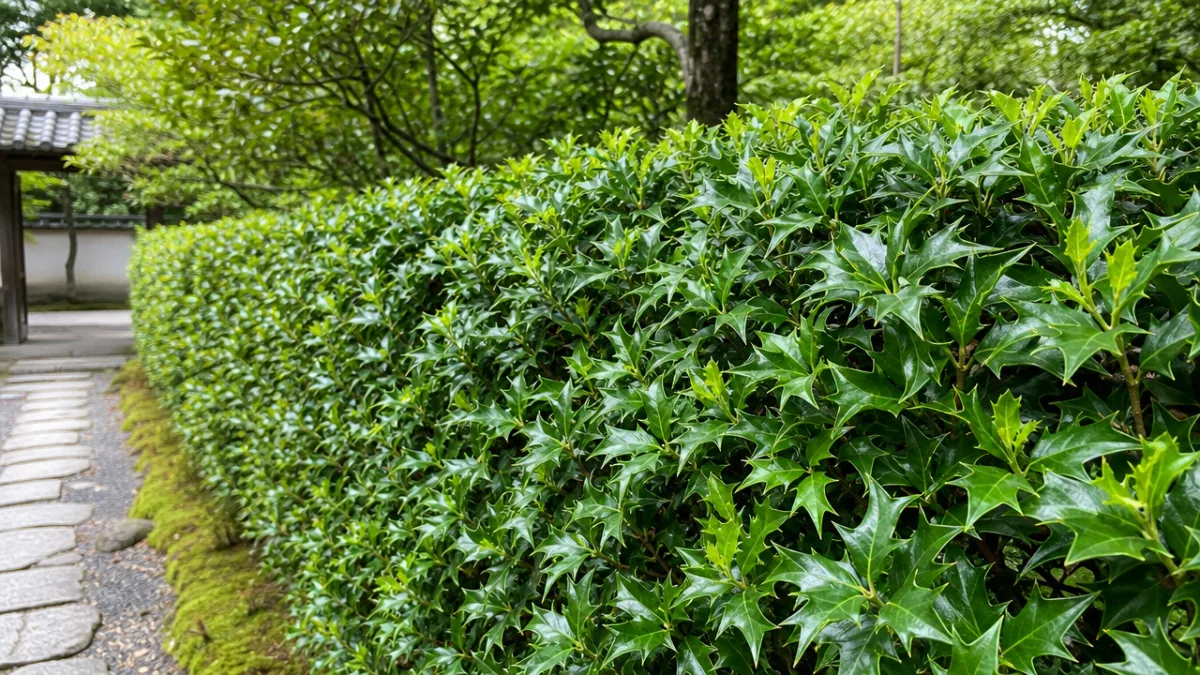
The foliage of this cultivar is distinctively fine and petite, with individual leaves measuring just one to two centimetres in length. They are a rich, dark green on their upper surface and slightly paler beneath, with a subtle gloss that gives the plant a clean, sophisticated appearance. In late spring and early summer, tiny white flowers appear among the foliage, though these are small and largely inconspicuous. Female plants may produce small black berries in autumn, adding a modest seasonal interest, although this cultivar is primarily grown for its foliage value.
At maturity, without clipping, Ilex crenata ‘Green Hedge’ will typically reach a height of around one to two metres, though this can vary depending on soil quality, climate, and the amount of pruning it receives. When maintained as a formal hedge, it can be kept at virtually any desired height, making it an extremely adaptable plant. Its naturally dense, upright branching structure means it forms a solid, impenetrable screen with minimal effort, perfect for defining boundaries, creating garden rooms, or framing pathways and entrances.
Planting and Soil Requirements
Getting the planting conditions right for Ilex crenata ‘Green Hedge’ is the single most important step in establishing a healthy, long-lived hedge. This plant thrives in well-drained, moderately fertile soil with a slightly acidic to neutral pH, ideally between 5.5 and 7.0. It is not well suited to heavy, waterlogged soils, which can cause root rot and rapid decline, so improving drainage before planting is a worthwhile investment on heavier clay soils.
Before planting, prepare the soil thoroughly by digging over the planting area to a depth of at least 30 to 40 centimetres and incorporating generous amounts of organic matter such as well-rotted garden compost or leaf mould. This improves both the drainage and moisture retention of the soil, creating the balanced, aerated root environment that Japanese Holly prefers. Adding a slow-release fertiliser at this stage will also give young plants an excellent nutritional foundation from which to establish themselves quickly and confidently.
For hedge planting, space individual plants approximately 30 to 40 centimetres apart to achieve a dense, gapless screen within two to three growing seasons. For a quicker result or in exposed positions where establishment might be slower, spacing plants 25 centimetres apart will create a solid hedge faster. When planting pot-grown specimens such as those supplied in 7/9cm pots from specialist nurseries, ensure the root ball is thoroughly watered before planting, placed at the same depth as it was in the pot, and firmed in well to remove air pockets around the roots.
Mulching around newly planted specimens is strongly advisable. A five to eight centimetre layer of bark chippings, compost, or well-rotted manure applied around the base of each plant, keeping it clear of the stems themselves, will help to conserve soil moisture, suppress competing weeds, and gradually improve the soil structure as it breaks down. This single step can make a significant difference to establishment rates, particularly during dry spells in the first season after planting when the root system is still developing.
Ongoing Care, Feeding, and Watering
Once established, Ilex crenata ‘Green Hedge’ is a remarkably low-maintenance plant, but some regular attention will ensure it remains at its most healthy and attractive over many years. Watering is the most critical consideration during the first one to two years after planting, while the root system is developing and the plant is not yet fully able to access deep soil moisture reserves. During dry periods, deep, thorough watering once or twice a week is far more beneficial than frequent shallow watering, as it encourages roots to grow downward into the soil rather than remaining near the surface.
Annual feeding will keep your Japanese Holly looking its very best. Apply a balanced slow-release granular fertiliser in early spring as growth begins to resume, following the manufacturer’s recommended application rate. For plants showing signs of yellowing foliage, which can indicate iron or manganese deficiency in alkaline soils, an application of sequestered iron or an ericaceous fertiliser formulated for acid-loving plants can quickly restore the rich green colour. Avoid feeding after midsummer, as this can encourage soft, frost-vulnerable growth that does not harden off before winter.
Ilex crenata ‘Green Hedge’ is notably hardy once established, tolerating temperatures down to around minus 15 degrees Celsius in most cases, making it suitable for the vast majority of UK gardens and many parts of northern Europe. In particularly exposed or cold gardens, however, providing some protection for young plants in their first winter can help ensure their survival. A temporary windbreak of horticultural fleece or hessian supported on canes around newly planted specimens will reduce the risk of desiccation and frost damage to young growth until the plants are well rooted.
Pruning and Shaping Techniques
One of the great pleasures of growing Ilex crenata ‘Green Hedge’ is the ease and precision with which it can be clipped and shaped. The plant responds exceptionally well to pruning, producing dense, compact regrowth that quickly fills any gaps and maintains crisp, defined outlines. For a formal hedge, the main annual clip is best carried out in late spring or early summer, once any risk of hard frost has passed and the first flush of new growth is beginning to firm up. A second light trim in late summer can be applied if necessary to keep the hedge tidy through to autumn.
When shaping a hedge of Ilex crenata ‘Green Hedge’, always aim for a profile that is very slightly wider at the base than at the top. This slight batter, as it is known in horticultural terminology, allows light to reach the lower branches and prevents the base of the hedge from becoming bare and leggy over time. Using a taut string line stretched between canes as a guide will help achieve straight, level tops, while a spirit level can be used to ensure vertical sides are truly perpendicular. Sharp, clean tools are essential to prevent tearing and bruising of the small leaves.
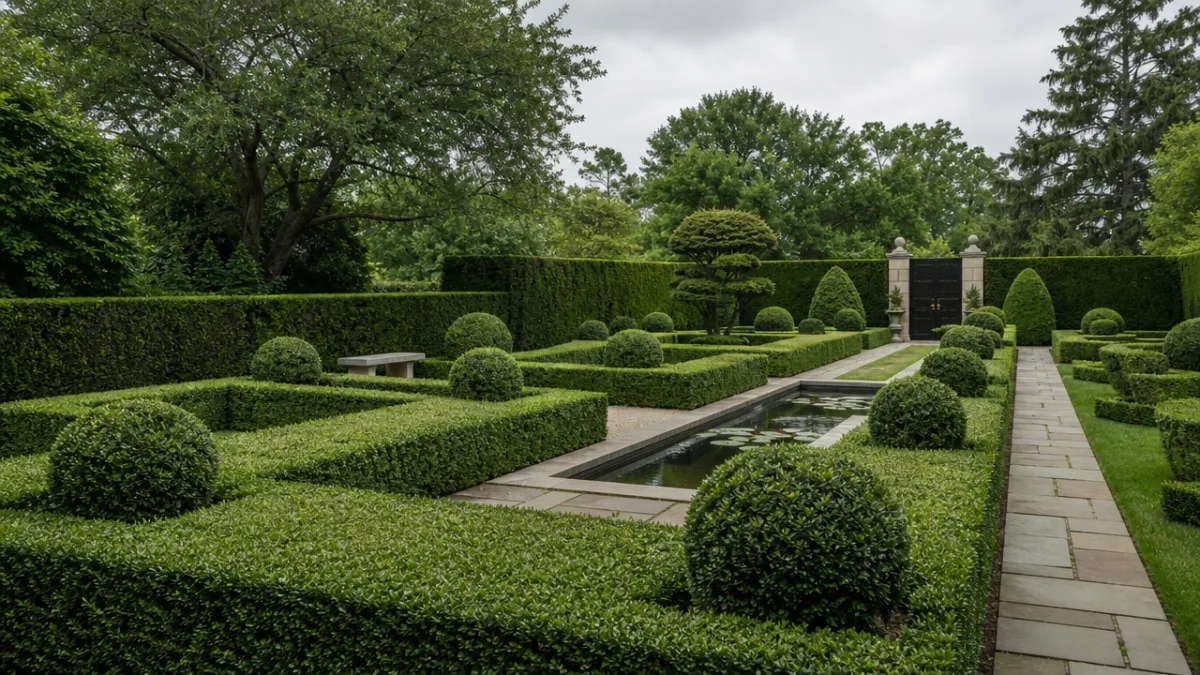
For topiary applications, Ilex crenata ‘Green Hedge’ is outstanding. Its small leaf size and dense branching structure make it ideally suited to the creation of balls, cones, lollipops, spirals, and other geometric or decorative shapes. Begin training topiary forms while plants are young and still flexible in their growth, using wire frames as guides if necessary. With patience and regular trimming during the growing season, remarkably precise and intricate shapes can be achieved and maintained with this impressive plant.
After any pruning session, it is good practice to remove all clippings from around the base of the plants. This reduces the risk of fungal disease taking hold in accumulated moist debris and keeps the area looking tidy. If you notice any dead or damaged branches during clipping, remove these cleanly back to healthy wood. While Ilex crenata ‘Green Hedge’ is far more disease-resistant than Buxus, maintaining good air circulation and hygiene around the plants is always sensible practice.
Landscaping Uses and Design Applications
The design applications of Ilex crenata ‘Green Hedge’ are remarkably wide-ranging, and this versatility is one of the key reasons for its growing popularity among both professional garden designers and enthusiastic home gardeners. At its most fundamental, it serves as an outstanding formal hedging plant, capable of creating elegantly manicured boundaries and screens that define spaces clearly and provide year-round privacy and structure. Whether used to enclose a vegetable garden, frame a lawn, or create a backdrop for colourful herbaceous planting, it performs this structural role with distinction.
In contemporary garden design, Ilex crenata ‘Green Hedge’ is frequently used to create geometric patterns and parterre-style planting schemes inspired by the formal gardens of the seventeenth and eighteenth centuries. Its ability to hold a precise shape makes it the ideal candidate for low, clipped edging around formal beds, knot garden designs, or the creation of low-growing mazes and labyrinths in larger garden spaces. The deep, rich green of its foliage provides a perfect foil for the bright colours of roses, lavender, agapanthus, and other ornamental flowering plants.
Japanese Holly is equally at home in container cultivation, making it an excellent choice for courtyard gardens, roof terraces, balconies, and other paved or hard-landscaped spaces where ground planting is not possible. Planted in large, weather-resistant containers and clipped into simple geometric shapes, a pair of matching specimens flanking a doorway or gateway creates a classic, formal welcome that suits both traditional and contemporary architectural styles. When growing in containers, use a good quality, peat-free compost mixed with some horticultural grit to ensure adequate drainage.
The following applications represent some of the most popular and effective uses of Ilex crenata ‘Green Hedge’ in garden design:
- Formal boundary hedging — creating clean, defined property or garden boundaries that require only one or two clips per year to maintain their elegant, manicured appearance.
- Topiary specimens — training into balls, cones, spirals, or more complex architectural forms as focal points or repeated structural elements throughout a planting scheme.
- Parterre edging — used as low, clipped edging within formal bedding or knot garden designs, providing year-round structure that persists through winter when other plants have died back.
- Container planting — growing in large decorative pots as entrance sentinels, terrace features, or mobile focal points in paved outdoor spaces.
- Backdrop planting — used as a dark green, textured background against which brightly coloured flowering perennials, ornamental grasses, or roses are displayed to striking effect.
Pest and Disease Resistance
One of the most compelling arguments for choosing Ilex crenata ‘Green Hedge’ over the traditional Buxus alternatives is its significantly superior resistance to the pest and disease pressures that have devastated box hedges across the UK and Europe in recent years. Box blight, caused by the fungal pathogens Cylindrocladium buxicola and Volutella buxi, and the box tree caterpillar, Cydalima perspectalis, have between them rendered the cultivation of traditional box hedging a deeply challenging and often heartbreaking experience for many gardeners who have lost established hedges of many years’ standing.
Ilex crenata ‘Green Hedge’ is not susceptible to either box blight or box tree caterpillar, as these pests and diseases are host-specific to Buxus species. This single characteristic represents a transformative advantage for gardeners who want to maintain formal, structured planting schemes without the constant anxiety of inspection, treatment, and potential loss that now accompanies the growing of Buxus. While no plant is entirely free of all potential pest or disease problems, the overall pest and disease profile of Japanese Holly in UK and European garden conditions is genuinely very low.
Occasionally, Ilex crenata may be affected by leaf miners, which create pale, winding trails within the leaves, or by holly aphids on young, soft growth. However, both of these issues are generally minor and rarely cause serious harm to established plants. In most cases, a healthy, well-established hedge will outgrow and resist minor insect infestations without any need for intervention. Where treatment is considered necessary, insecticidal soap or a neem oil-based spray applied to affected growth is usually sufficient to bring the problem under control without resorting to stronger chemical treatments.
Where to Buy and What to Expect
Ilex crenata ‘Green Hedge’ is increasingly widely available from specialist online nurseries and garden centres throughout the UK, reflecting the surge in demand as gardeners seek reliable alternatives to the increasingly problematic Buxus. Specialist suppliers such as YouGarden offer young plants in 7/9cm pots, which represent excellent value and are ideal for establishing large hedges or topiary schemes economically. While these smaller pot sizes require more patience than purchasing larger, more mature specimens, they establish quickly and often catch up with larger-planted alternatives within two to three growing seasons.
When purchasing Ilex crenata ‘Green Hedge’, look for plants with a good, compact, bushy habit, healthy dark green foliage, and no signs of yellowing, dieback, or pest damage. Plants grown in 7/9cm pots will typically be young, well-rooted specimens that are ready to be planted out or potted on into larger containers. Because of their relatively small size at this stage, they are easy to handle, transport, and plant in quantity, making them the most practical and economical choice for anyone establishing a new hedge of any significant length.
Before planting out young pot-grown specimens, it is advisable to pot them on into slightly larger containers for a season if they are purchased early in the year when the risk of late frosts remains, or if the intended planting site is not yet fully prepared. Growing them on in a sheltered position and hardening them off gradually before final planting will give them the best possible start. With the right preparation, establishment care, and ongoing maintenance, Ilex crenata ‘Green Hedge’ will reward the gardener with decades of immaculate, disease-free structure and lasting beauty.








What do you think?
It is nice to know your opinion. Leave a comment.