










How to Create a Naturalized Daffodil Planting
What Is Naturalized Planting and Why Daffodils Are Perfect for It
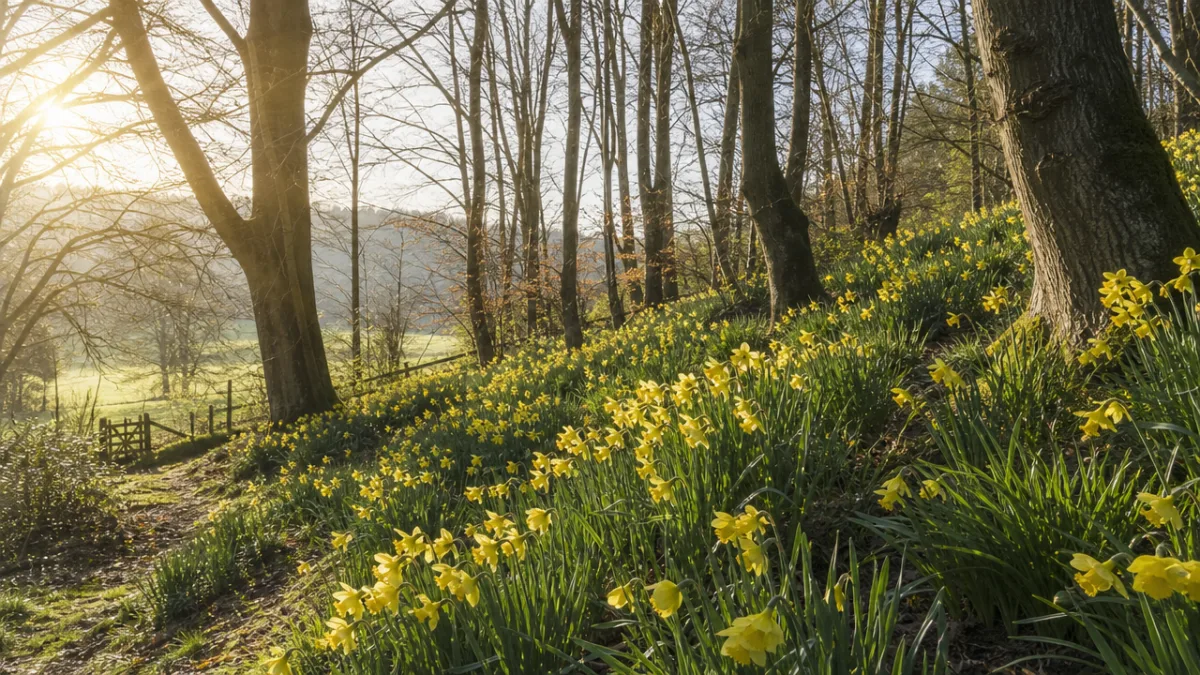
Naturalized planting is essentially about letting plants do their own thing — establishing them in a spot where they’ll spread, multiply, and keep coming back year after year without you constantly fussing over them. Instead of rigid formal beds that need replanting every season, a naturalized planting just keeps getting better on its own, growing denser and more beautiful over time. The whole idea is that it looks like nature arranged everything herself, with flowers drifting across a hillside or woodland floor as if they’d always been there.
Daffodils are honestly one of the best choices you can make for this kind of planting. Unlike a lot of spring bulbs, they’re remarkably long-lived perennials that come back and multiply without needing to be dug up and divided every few years. Once they’re happy in a spot, a single bulb can produce a clump of five or more flowering stems within just a few seasons. Give them a decade or two and a modest planting of a few dozen bulbs can quietly expand into a breathtaking sweep of hundreds of blooms that covers an entire slope or meadow edge.
There’s another big reason to choose daffodils: deer and squirrels won’t touch them. Tulips are basically gourmet snacks for wildlife, but daffodils contain lycorine and other alkaloids that make them toxic and unpalatable to most animals. Your carefully planted bulbs will actually survive long enough to bloom, rather than being dug up and eaten overnight. If you garden anywhere near deer or squirrel pressure — and honestly, who doesn’t — this alone makes daffodils the smart, rewarding choice for any large-scale naturalized planting.
Choosing the Right Location and Site Conditions
Picking the right site is probably the most important decision you’ll make for this whole project. Daffodils do well in full sun to partial shade, but here’s the thing: the timing of that light matters more than you might expect. Since daffodils bloom in early spring before most deciduous trees have leafed out, a spot that looks pretty shady in summer can actually give bulbs all the sun they need during their critical growing window. Woodland edges, the dappled shade under mature oaks or maples, and slopes that get bright indirect light are all great candidates.
Drainage is arguably even more important than light. Daffodil bulbs will rot surprisingly fast if they’re sitting in waterlogged soil, especially during summer dormancy when they’re essentially resting underground and vulnerable to fungal disease. Gently sloping ground is ideal because water naturally drains away from the bulbs. Steer clear of low spots where puddles form after rain, heavy clay areas that drain slowly, and anywhere near a downspout or seasonal stream. If your preferred site has clay-heavy soil, you can improve things significantly by working in plenty of coarse sand and organic matter before you plant.
It’s also worth thinking about the long-term visual picture of the site you choose. Naturalized plantings look most convincing when they flow naturally from one area into another — sweeping down a hillside, pooling around the base of a big tree, or washing along the edge where a lawn meets a wooded area. Hard, abrupt edges will immediately give the game away. The best naturalized plantings look like they have no edges at all, fading from dense drifts in some areas to scattered individual blooms in others in a way that feels genuinely unplanned.
Selecting the Best Daffodil Varieties for Naturalization
Not all daffodils are created equal when it comes to naturalizing. The best performers tend to be species daffodils and older heritage cultivars rather than the big, showy modern hybrids that are bred for spectacular single-season blooms rather than long-term staying power. When you’re shopping for bulbs, look for varieties that suppliers specifically describe as good naturalizers or suitable for meadow planting — these have a proven track record of multiplying reliably and coming back dependably for many years without needing extra fertilizer or special attention.
Among the most reliably naturalizing species, Narcissus pseudonarcissus — the wild Lenten lily native to Western Europe — is exceptional. It produces charming, slightly nodding yellow flowers with a deeper yellow trumpet and multiplies enthusiastically over time. Narcissus bulbocodium, the hoop petticoat daffodil, is a delightful little species with wide, flared trumpets that naturalizes beautifully in grassy areas and looks especially stunning when you plant it in large drifts of several hundred bulbs. For a longer show, mix early, mid-season, and late varieties so the display stretches over six to eight weeks rather than all peaking at once.
It’s also worth mixing trumpet daffodils with small-cupped and double varieties for some textural variety. Here are some excellent naturalizing cultivars that are widely available and have proven themselves across a wide range of garden conditions:
- ‘Tête-à-Tête’ — A miniature variety that produces clusters of cheerful yellow flowers and is one of the most reliable naturalizers you can buy.
- ‘February Gold’ — An early-blooming cyclamineus hybrid with swept-back petals and a long trumpet; extremely vigorous and very long-lived.
- ‘Thalia’ — An elegant white triandrus daffodil with multiple blooms per stem that thrives in light shade and multiplies well.
- ‘Ice Follies’ — A large-cupped white variety with excellent perennial performance and reliable return rates.
- ‘Jack Snipe’ — A small cyclamineus type that naturalizes beautifully in grassy settings and handles partial shade well.
- ‘Jetfire’ — A reflexed yellow and orange variety that blooms early and spreads steadily over time.
When buying bulbs for naturalization, order in large quantities — probably more than feels comfortable. A single clump of twenty-five bulbs will look charming but a bit tentative in the landscape. To create the impression of a true naturalized planting, you really need at least one to two hundred bulbs for a modest area, and ideally several hundred or even thousands for a larger slope or meadow. The good news is that bulbs bought in bulk are quite affordable, especially when you order early from specialist suppliers in late summer or early autumn.
The Art of Planting for a Natural Look
The biggest mistake people make with naturalized plantings is planting in straight lines, even grids, or symmetrical patterns. These layouts immediately reveal human intervention and completely undermine the wild, unplanned look you’re going for. Instead, you need to embrace a deliberately random mindset and use techniques that distribute bulbs in the kind of irregular, clumped patterns that nature actually produces through seed dispersal, animal activity, and vegetative spread.
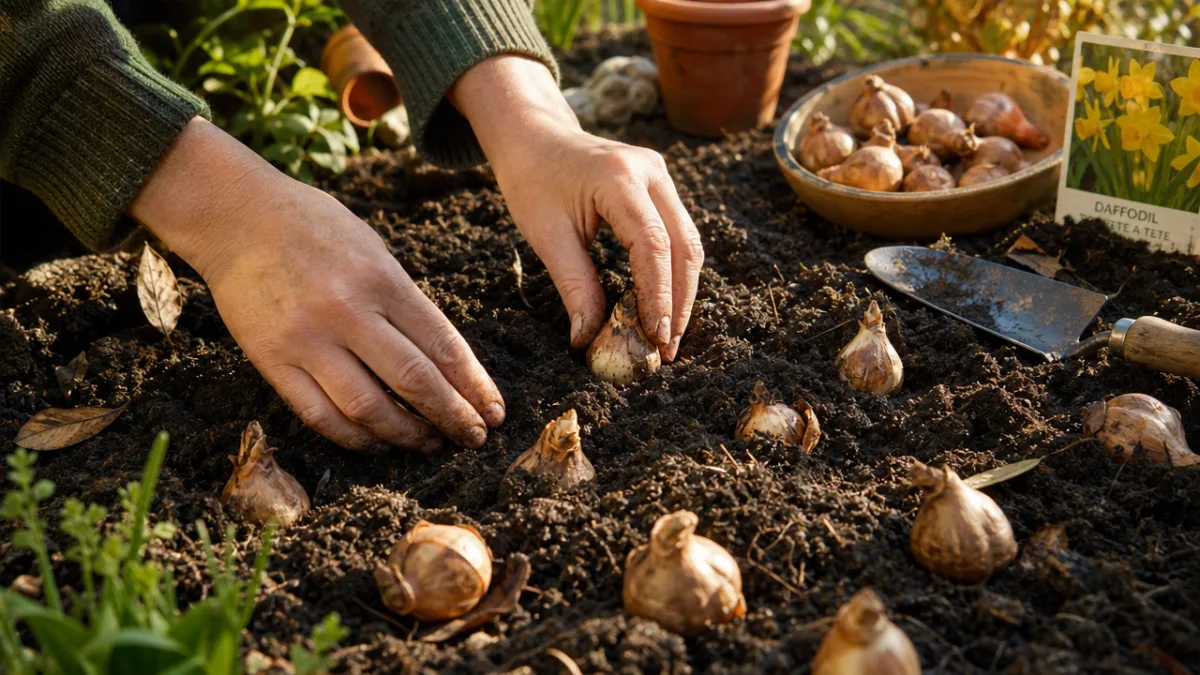
The most popular trick for getting a convincingly natural distribution is the scattering method: grab a handful of bulbs, stand in your planting area, and toss them gently across the ground. Then plant each bulb exactly where it lands — resist every urge to rearrange or neaten things up. This naturally creates the uneven spacing, occasional tight clusters, and isolated individual plants you find in genuinely wild populations. It can feel uncomfortably random while you’re doing it, but once the daffodils bloom, the distribution reads as completely natural and spontaneous, which is exactly what you want.
Planting depth really matters for long-term success. The general rule is to plant bulbs at a depth equal to roughly three times their diameter — usually seven to eight inches deep for standard large-flowered varieties and four to five inches for miniatures. Getting the depth right helps protect bulbs from temperature extremes, encourages strong root development, and slows the tendency of bulbs to split into lots of tiny non-flowering offsets too quickly. In areas where the ground freezes hard in winter, planting a little deeper provides extra insulation and noticeably improves overwintering success.
For large-scale plantings in lawn or meadow areas, a bulb planter or a bulb auger attachment for a cordless drill will save you a huge amount of time and effort. For very large projects covering hundreds of square feet, some gardeners bring in a tractor-mounted bulb planter or hire a landscaping crew with specialized equipment. However you plant, work methodically in a way that preserves the random distribution you’ve created, backfilling each hole carefully and firming the soil gently to eliminate air pockets that can dry out the roots.
Aftercare, Foliage Management, and Long-Term Maintenance
One of the genuinely great things about naturalized daffodil plantings is how little ongoing work they need once they’re established. That said, there is one non-negotiable rule every daffodil grower has to follow: the foliage must be allowed to die back completely and naturally before you remove it or mow over it. After the flowers fade, the leaves keep photosynthesizing actively, manufacturing and storing the carbohydrates the bulb needs to fuel next year’s growth and blooming. Cut the leaves off too early and you’re essentially starving the bulb for the following season.
In practice, that means waiting at least six weeks after the last flower has faded before you mow over a naturalized planting in a lawn or meadow. Many experienced daffodil growers suggest waiting until the foliage has turned fully yellow and started collapsing on its own, which typically takes eight to ten weeks after bloom depending on the weather and the variety. During this waiting period, the dying leaves can look a bit untidy, especially in a tidy lawn setting. You can soften this by planting daffodils where the foliage is partly hidden — in longer grass, at the base of hedgerows, or in spots where other perennials will grow up to cover the declining leaves.
Feeding your naturalized planting is worth doing, and it doesn’t have to be complicated. In a true naturalized woodland setting, falling leaves decompose over the bulbs each year and provide gentle, natural fertilization that mimics the nutrient cycling of a forest floor. In lawn or open meadow settings where that natural leaf mulch isn’t present, an application of a low-nitrogen, high-potassium fertilizer as the first shoots emerge in late winter or early spring will noticeably improve both flower size and multiplication rate over time. Avoid high-nitrogen fertilizers — they push lush leaf growth at the expense of flowers and can make bulbs more prone to disease.
Companion Planting to Extend the Season and Enhance Beauty
A planting of daffodils alone can be stunning during its three to six weeks of peak bloom, but adding some thoughtful companions can stretch the season of interest considerably while also helping to hide the unavoidable stretch of dying foliage that follows. The trick is to choose plants that will start growing vigorously and fill in the space just as the daffodil leaves are starting to look tired, creating a smooth visual handoff from one season to the next without any effort on your part.
In woodland or semi-shaded settings, hostas and ferns are among the best companions for naturalized daffodils. Both emerge relatively late in spring, right around the time daffodil foliage is starting to ripen, and their expanding leaves gently cover the declining bulb foliage. Native wildflowers like Virginia bluebells, trout lilies, and wild ginger also pair beautifully with daffodils in woodland settings, creating a layered tapestry of bloom that runs from late winter through early summer. In sunnier meadow settings, native grasses, blue-eyed grass, and wild geraniums make excellent companions — they let daffodils take center stage in spring, then grow up to create a full meadow tapestry through summer.
It’s also worth planting early spring bulbs like snowdrops, species crocuses, and Siberian squill in and around your daffodil planting to push the season back into late winter. These tiny bulbs coexist happily with daffodils since they bloom earlier and go dormant before the daffodils really get going. The visual progression from carpets of snowdrops in February, through drifts of crocuses in March, to sweeps of daffodils in April creates a genuinely remarkable extended spring display — one that makes the garden feel alive and dynamic for months rather than just a few weeks.
Troubleshooting Common Problems and Ensuring Long-Term Success
Even in the most carefully prepared sites, naturalized daffodil plantings can run into problems that reduce flowering or threaten the health of the planting over time. The most common complaint from gardeners with established naturalized plantings is a gradual decline in flowering, sometimes called “going blind.” This happens when bulbs have multiplied into very dense clumps and are competing intensely with each other for nutrients, water, and light. The fix is straightforward: lift and divide the congested clumps every five to seven years, then replant the divided bulbs at proper spacing and depth to restore strong flowering.
Narcissus bulb fly is the most significant insect pest of daffodils and can cause real damage in some regions. The adult fly looks a bit like a small bumblebee and lays its eggs at the base of daffodil leaves in late spring. The larvae burrow into the bulb and feed on it all summer, often destroying it entirely. You can reduce bulb fly damage by earthing up the base of the stems as the foliage starts to die back, making it harder for female flies to reach the soil to lay their eggs. In badly affected areas, planting through a fine mesh fabric or applying a physical barrier mulch around the planting can offer extra protection.
Basal rot, caused by the fungus Fusarium oxysporum, is the most damaging disease of daffodils and tends to show up in waterlogged soils or after unusually wet growing seasons. Affected bulbs develop a characteristic brown rot at their base and may produce stunted, yellowing foliage before failing to come up at all. The best prevention is good soil drainage, as covered in the site preparation section above. If basal rot turns up in your planting, remove and destroy all affected bulbs right away — don’t compost them — and avoid replanting daffodils in the same spot for several years to let the fungal population in the soil naturally decline.
With the right site, thoughtful variety selection, proper planting technique, and the simple aftercare described here, a naturalized daffodil planting will genuinely reward you with more beauty and abundance every year — decade after decade, eventually outlasting the gardener who planted it. There’s something deeply satisfying about creating something that’s truly self-sustaining, a planting that keeps spreading, multiplying, and heralding the arrival of spring long into the future with virtually no further input from you. Few things you can do in a garden offer such reliable, enduring, and spectacular returns.








What do you think?
It is nice to know your opinion. Leave a comment.