










Glycyrrhiza glabra L.: The Ancient Herb of Sweetness and Healing
Introduction to Glycyrrhiza glabra
Glycyrrhiza glabra L., commonly known as licorice or liquorice, is one of the oldest and most widely used medicinal plants in human history. Belonging to the family Fabaceae, this perennial herbaceous plant has captivated physicians, herbalists, and culinary artists for thousands of years. Its Latin name is derived from the Greek words “glykys,” meaning sweet, and “rhiza,” meaning root — a fitting description for a plant whose root extract can be up to fifty times sweeter than ordinary table sugar.
Native to southern Europe, the Middle East, and parts of Asia, Glycyrrhiza glabra thrives in deep, well-drained, fertile soils with access to adequate moisture. The plant typically grows to a height of one to one and a half meters, producing pinnate leaves, violet to pale bluish flowers, and smooth seed pods. It spreads through both seeds and underground rhizomes, forming dense colonies in suitable environments. The plant’s root system, which can penetrate several feet into the ground, is the primary part harvested for medicinal and commercial purposes.
The recorded use of licorice root dates back more than four thousand years, making it one of humanity’s oldest documented herbal remedies. Ancient Egyptians stored licorice root in the tombs of pharaohs, including Tutankhamun, believing it held restorative and life-sustaining properties. Chinese healers classified it as a “superior herb” in texts dating to approximately 2000 BCE, while Greek physician Theophrastus noted its remarkable ability to quench thirst and relieve respiratory complaints. This extraordinary legacy across diverse civilizations underscores the plant’s enduring significance in global herbal medicine traditions.
Botanical Characteristics and Taxonomy
From a taxonomic standpoint, Glycyrrhiza glabra belongs to the order Fabales, family Fabaceae (formerly Leguminosae), and the subfamily Papilionoideae. The genus Glycyrrhiza contains approximately thirty species worldwide, but Glycyrrhiza glabra is by far the most commercially and medicinally significant. It is closely related to Glycyrrhiza uralensis, the Chinese licorice species, and Glycyrrhiza inflate, both of which share many phytochemical and therapeutic properties, though Glycyrrhiza glabra remains the botanical standard in Western herbal pharmacopeias.
The plant’s morphological features are distinctive and well-documented. Its leaves are compound and pinnate, typically composed of nine to seventeen leaflets that are ovate to elliptical in shape and slightly sticky to the touch due to the presence of glandular secretions. The flowers, arranged in elongated racemes, display the characteristic butterfly shape common to the pea family, ranging in color from pale violet to lavender blue. The fruit is a smooth, oblong legume pod containing several seeds, distinguishing it from the spiny-podded Glycyrrhiza echinata species.
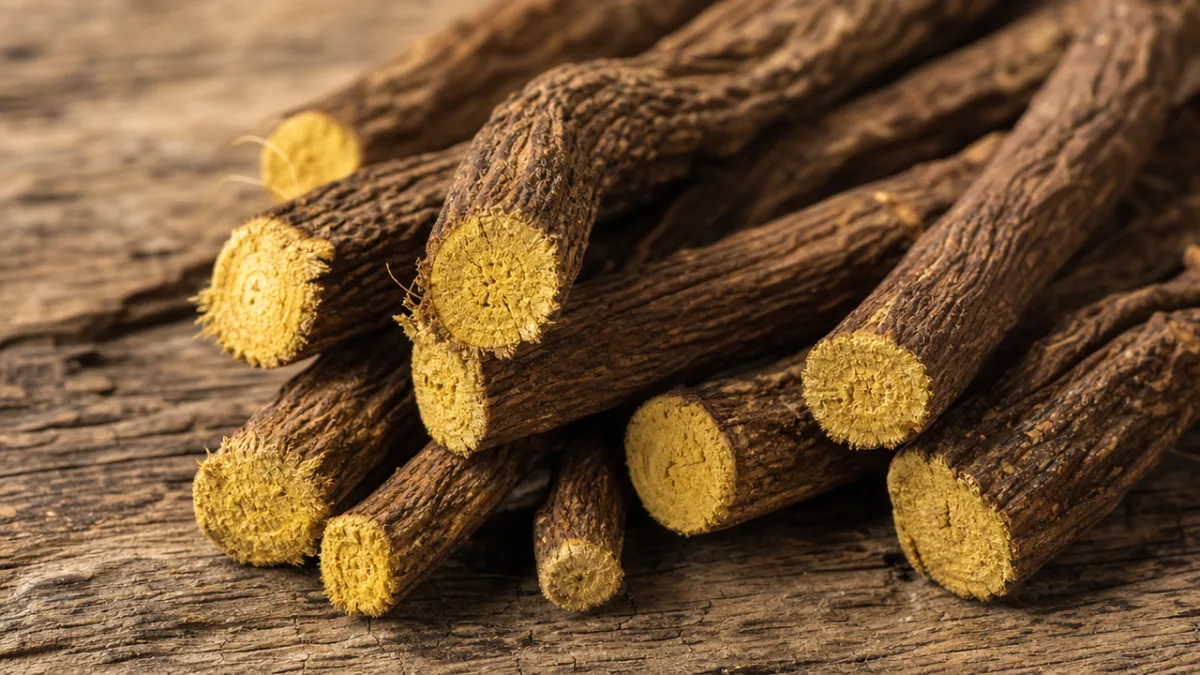
The root and rhizome of Glycyrrhiza glabra are brown and fibrous on the outside, with a distinctive yellow interior that reflects the high concentration of flavonoids and saponins within the tissue. Fresh roots emit a characteristic sweet, slightly earthy aroma, and when chewed, they release the intensely sweet compounds that have made the plant commercially valuable for centuries. Cultivated varieties may differ somewhat in their chemical profiles depending on soil type, climate, and agricultural practices, with plants grown in Mediterranean regions often yielding roots with particularly high glycyrrhizin concentrations.
Phytochemical Composition and Active Compounds
The remarkable pharmacological profile of Glycyrrhiza glabra is attributable to its rich and complex phytochemical composition. The most studied and significant compound found in licorice root is glycyrrhizin, also known as glycyrrhizinic acid, a triterpenoid saponin glycoside that accounts for the plant’s extraordinary sweetness. Glycyrrhizin typically comprises two to nine percent of the dry weight of the root and is responsible for many of the plant’s most potent biological activities, including its anti-inflammatory, antiviral, and hepatoprotective effects.
Upon ingestion, glycyrrhizin is hydrolyzed by intestinal bacteria to release glycyrrhetinic acid, the aglycone form of the compound, which exerts even more pronounced pharmacological effects on the body. Glycyrrhetinic acid has been extensively studied for its ability to inhibit the enzyme 11-beta-hydroxysteroid dehydrogenase, which regulates the conversion of cortisol to its inactive metabolite cortisone in various tissues. This mechanism underlies both some of the therapeutic benefits of licorice root and certain adverse effects associated with its excessive consumption, particularly regarding blood pressure regulation and electrolyte balance.
Beyond glycyrrhizin, Glycyrrhiza glabra contains a diverse array of biologically active secondary metabolites. These include numerous flavonoids such as liquiritigenin, isoliquiritigenin, glabridin, licochalcone A, and formononetin, each demonstrating unique pharmacological activities ranging from estrogenic and antimicrobial effects to antioxidant and anti-inflammatory properties. The root also contains polysaccharides with immunomodulatory activity, coumarins, sterols, and various volatile aromatic compounds that contribute to its distinctive flavor profile and therapeutic versatility.
- Glycyrrhizin (Glycyrrhizinic acid): Primary saponin responsible for sweetness and anti-inflammatory activity, comprising up to 9% of root dry weight.
- Glabridin: A potent isoflavan with antioxidant, anti-inflammatory, and skin-brightening properties, widely used in cosmeceutical formulations.
- Licochalcone A: A chalcone flavonoid with demonstrated antimicrobial, antioxidant, and antitumor activities in experimental studies.
- Liquiritigenin: A flavanone with significant estrogenic receptor-modulating activity and neuroprotective properties.
- Isoliquiritigenin: A chalcone with anti-allergic, anticancer, and cardioprotective biological activities.
- Glycyrrhetic acid (18β-glycyrrhetinic acid): Active metabolite of glycyrrhizin with pronounced cortisol-modulating and anti-inflammatory effects.
Traditional Medicinal Uses Across Cultures
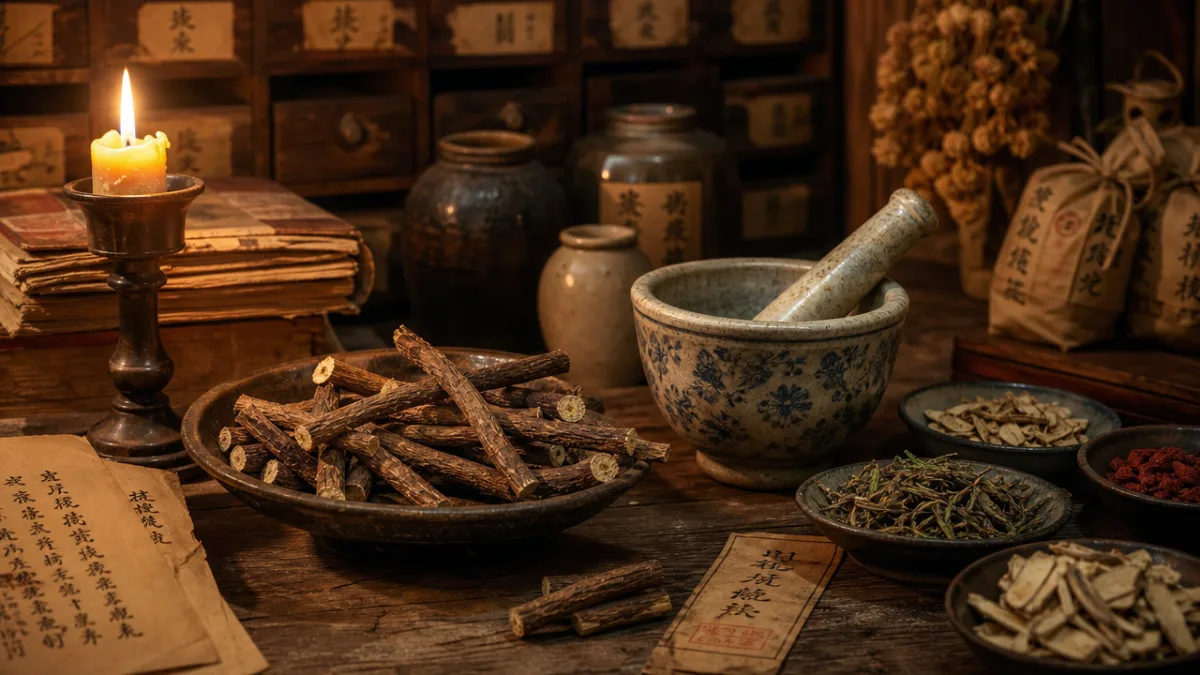
The cross-cultural medicinal history of Glycyrrhiza glabra is remarkably consistent, with healers from vastly different geographic regions and philosophical traditions converging on many of the same therapeutic applications. In Traditional Chinese Medicine (TCM), licorice root — known as “Gan Cao” — holds a uniquely honored position as the most frequently cited herb in classical formulas. TCM practitioners traditionally use it as a harmonizing agent that modulates the effects of other herbs in a formula, tonifies the spleen, replenishes vital energy or “qi,” clears heat and toxins, and soothes irritated mucous membranes throughout the respiratory and digestive systems.
In Ayurvedic medicine, licorice root is known as “Yashtimadhu” or “Madhuka,” terms that also translate to something akin to “sweet stick.” Ayurvedic physicians have long prescribed it as a rasayana, or rejuvenating tonic, believed to promote longevity, enhance mental clarity, strengthen the voice, and support reproductive health. It was traditionally used in formulations to treat coughs, gastric ulcers, skin disorders, and conditions of nervous exhaustion. The herb was considered particularly beneficial for pacifying the Pitta and Vata doshas, and was commonly prepared as a decoction, powder, or paste for various applications.
In European herbalism, licorice root was mentioned by Hippocrates and Dioscorides for its utility in treating dry coughs, hoarseness, and thirst. Medieval European herbalists employed it extensively for respiratory complaints, liver conditions, and as a sweetening agent to mask the bitter taste of other medicinal preparations. The Glycyrrhiza plant was cultivated in monastic gardens throughout medieval Europe, particularly in England where the city of Pontefract became famous for its licorice confections beginning in the sixteenth century. This dual role as both medicine and sweetener gave licorice root a uniquely broad cultural footprint across the continent.
Indigenous healing traditions in the Middle East and Central Asia also incorporated licorice root extensively. In ancient Mesopotamia, cuneiform tablets record its use as a component of medicinal formulas. In Persian medicine, the great physician Avicenna (Ibn Sina) documented licorice’s properties in his landmark medical encyclopedia “The Canon of Medicine,” recommending it for ailments ranging from kidney disease to eye inflammation. Throughout the Islamic Golden Age, licorice root remained a cornerstone of materia medica, a testament to its perceived efficacy and the high regard in which it was held by empirical medical traditions of the era.
Evidence-Based Pharmacological Properties
Modern pharmacological research has substantially validated many of the traditional therapeutic claims associated with Glycyrrhiza glabra, while also uncovering novel biological activities that ancient healers could not have anticipated. Extensive in vitro and in vivo studies have confirmed the plant’s significant anti-inflammatory properties, primarily attributed to glycyrrhizin and glycyrrhetinic acid, which inhibit multiple inflammatory pathways including the arachidonic acid cascade, prostaglandin synthesis, and the NF-κB signaling pathway. These mechanisms help explain the herb’s historical efficacy in treating inflammatory conditions of the respiratory tract, gastrointestinal system, and skin.
The antiviral activity of Glycyrrhiza glabra compounds has attracted considerable scientific interest, particularly in the context of emerging infectious diseases. Glycyrrhizin has demonstrated inhibitory activity against a range of clinically significant viruses, including herpes simplex virus types 1 and 2, hepatitis A and C viruses, HIV, SARS-CoV, and more recently SARS-CoV-2. The proposed mechanisms include interference with viral binding and entry into host cells, inhibition of viral replication enzymes, and modulation of host immune responses. While most evidence remains preclinical, these findings lend scientific credibility to the herb’s long historical use in managing viral respiratory illnesses.
Gastrointestinal protective effects represent one of the best-documented pharmacological properties of Glycyrrhiza glabra. Deglycyrrhizinated licorice (DGL), a specially processed form of licorice root with glycyrrhizin removed to minimize adverse endocrine effects, has been studied in clinical trials for the management of peptic ulcers, gastroesophageal reflux, and functional dyspepsia. DGL preparations appear to stimulate the secretion of protective mucus in the stomach lining, promote the growth of gastric mucosal cells, inhibit the growth of Helicobacter pylori, and reduce acid-induced irritation, offering a gentler alternative to conventional acid suppression therapies for certain patients.
Hepatoprotective effects of glycyrrhizin have been among the most thoroughly investigated in clinical medicine, particularly in Japan where intravenous glycyrrhizin formulations have been approved for the treatment of chronic hepatitis. Multiple clinical trials have demonstrated that glycyrrhizin administration can reduce serum liver enzyme levels, decrease hepatic inflammation, and slow the progression of liver fibrosis in patients with chronic viral hepatitis. The mechanisms appear to involve suppression of inflammatory cytokine production, antioxidant effects that reduce oxidative stress in hepatocytes, antiviral activity against hepatitis C virus, and modulation of immune cell activity within the liver.
Contemporary Applications in Medicine and Industry
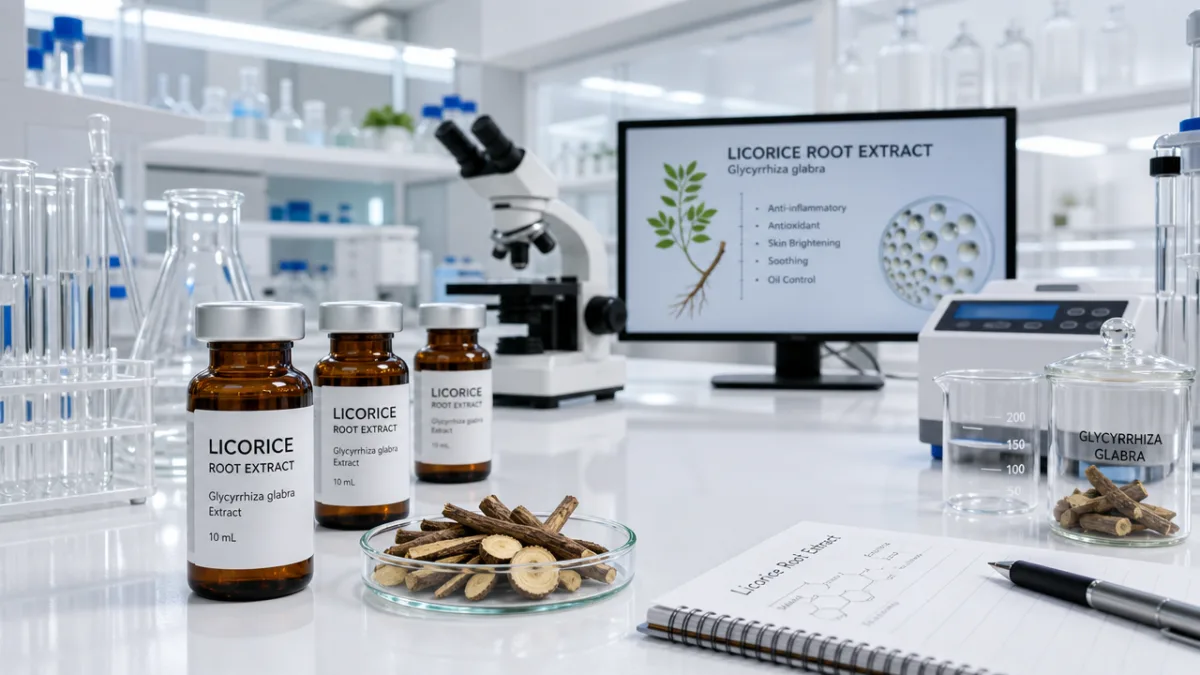
In contemporary pharmaceutical and nutraceutical contexts, Glycyrrhiza glabra extracts and isolated compounds occupy important niches across multiple product categories. Licorice root extract is a registered pharmacopoeial ingredient in many countries, listed in the European Pharmacopoeia, British Pharmacopoeia, and the United States Pharmacopeia. It serves as an active ingredient in numerous over-the-counter products for cough suppression, sore throat relief, and digestive support. Standardized extracts specifying minimum glycyrrhizin content are available in tablet, capsule, liquid, and lozenge formulations through pharmacy and health food retail channels worldwide.
The cosmetics and personal care industry has embraced Glycyrrhiza glabra, particularly its constituent glabridin, for its potent skin-brightening properties. Glabridin inhibits the enzyme tyrosinase, which is essential for melanin synthesis in the skin, making it an effective and well-tolerated active ingredient in formulations designed to reduce hyperpigmentation, age spots, and uneven skin tone. Unlike hydroquinone, the conventional pharmaceutical skin-brightening agent, glabridin is considered significantly safer for extended topical use, driving its popularity in premium skincare products targeted at consumers seeking natural alternatives. Additionally, licorice root’s anti-inflammatory and antioxidant properties make it a valued ingredient in formulations for sensitive, reactive, and acne-prone skin.
The food and beverage industry remains one of the largest consumers of Glycyrrhiza glabra derivatives globally. Beyond traditional licorice candy and confections, licorice root extract is widely used as a natural flavoring agent and sweetener in products ranging from herbal teas and soft drinks to tobacco products, chewing gum, and pharmaceutical tablets where its sweetness helps mask bitter active ingredients. The food industry also values licorice extract for its foaming properties, which are exploited in the production of certain beers and root beer beverages, as well as its emulsifying capabilities that can improve the texture and stability of processed foods.
- Pharmaceutical preparations: Cough syrups, throat lozenges, hepatoprotective injectables, antiviral formulations, and gastric ulcer remedies.
- Nutraceuticals and dietary supplements: Adrenal support formulas, immune-boosting supplements, adaptogenic blends, and digestive health products.
- Cosmeceuticals: Skin-brightening serums, anti-inflammatory moisturizers, acne treatments, and products targeting hyperpigmentation and rosacea.
- Food and flavoring industry: Candy and confections, herbal teas, soft drinks, beer and root beer, tobacco flavoring, and food-grade sweetener applications.
- Veterinary medicine: Anti-inflammatory and respiratory remedies for companion animals and livestock in some traditional and integrative veterinary practices.
Safety Considerations, Contraindications, and Sustainable Use
Despite its impressive therapeutic profile, Glycyrrhiza glabra is not without meaningful safety considerations that practitioners and consumers must understand thoroughly. The most well-documented adverse effect of excessive or prolonged licorice root consumption is a syndrome known as pseudohyperaldosteronism, caused by the ability of glycyrrhetinic acid to inhibit the enzyme responsible for inactivating cortisol in kidney tissue. This leads to cortisol acting on mineralocorticoid receptors, producing effects similar to excessive aldosterone: sodium and water retention, potassium loss, elevated blood pressure, muscle weakness, and in severe cases, potentially life-threatening cardiac arrhythmias and hypokalemic paralysis.
Populations with certain pre-existing conditions should exercise particular caution or avoid therapeutic doses of whole licorice root preparations entirely. Individuals with hypertension, heart failure, chronic kidney disease, liver cirrhosis, or hypokalemia face significantly elevated risk of adverse cardiovascular and metabolic effects. Pregnant women are typically advised to avoid medicinal licorice consumption, as some research suggests that high glycyrrhizin intake during pregnancy may be associated with adverse fetal outcomes including preterm birth, lower birth weight, and potentially long-term effects on cognitive development and stress hormone regulation in the offspring. Deglycyrrhizinated licorice (DGL) products, which have the problematic compound largely removed, represent a safer alternative for most of these populations.
The sustainability of Glycyrrhiza glabra cultivation and wild harvesting has emerged as a growing concern within the herbal medicine and botanical industries. Much of the world’s commercial licorice supply historically came from wild-harvested plants in Central Asia, particularly from countries including Afghanistan, Iran, Russia, and China. Overharvesting combined with habitat degradation has placed pressure on wild populations in several regions, leading to declining yields and growing interest in developing sustainable cultivation programs. Certified organic licorice cultivation has expanded in Europe, particularly in Italy, Spain, and the Netherlands, where Pontefract in England once maintained famous licorice gardens, offering a pathway toward more reliable and environmentally responsible supply chains.
For individuals seeking to incorporate Glycyrrhiza glabra into their wellness routines, consultation with a qualified healthcare provider is advisable, particularly for those taking prescription medications. Licorice root is known to interact with several drug classes, including corticosteroids (potentiating their effects), antihypertensive medications (opposing their action), diuretics (exacerbating potassium loss), and certain cardiac glycosides like digoxin. As with many powerful botanical medicines, the distinction between therapeutic and harmful lies substantially in dose, duration, individual physiology, and the presence or absence of relevant risk factors. Educated, informed use guided by professional advice remains the safest and most effective approach to harnessing the remarkable healing potential of this ancient plant.








What do you think?
It is nice to know your opinion. Leave a comment.