










Distinguishing Between Oriental and Asiatic Lilies: A Complete Guide for Gardeners
Introduction to Garden Lilies and Why Identification Matters
Lilies are some of the most beloved flowers you can grow — beautiful, dramatic, and steeped in history. If you’ve spent any time in the gardening world, you’ve probably run into two names that come up again and again: Oriental lilies and Asiatic lilies. Both belong to the genus Lilium, both produce jaw-dropping blooms, and both grow from bulbs you tuck into the ground each year. But they’re quite different from each other in ways that genuinely matter — for your planting decisions, your garden design, whether you’ll actually be able to smell anything, and how much fuss they’ll need from you.
The mix-up between these two groups is completely understandable. They look superficially similar, bloom around the same time of year, and nurseries don’t always label them clearly. There are even hybrids of the two — called Orienpet lilies — which muddies the waters even further. Standing in a garden center aisle trying to figure out what you’re actually buying can feel overwhelming, and it usually stays that way until the plants bloom and do something you weren’t expecting.
That’s exactly what this guide is here to help with. Whether you’re planting your first bulb bed or you’ve been gardening for years and want to be more intentional about what you’re growing, learning to tell these two types apart will save you a lot of guesswork. Once you know what to look for, the differences are actually pretty easy to spot — no botany degree required.
Physical Appearance: Flowers, Petals, and Overall Form
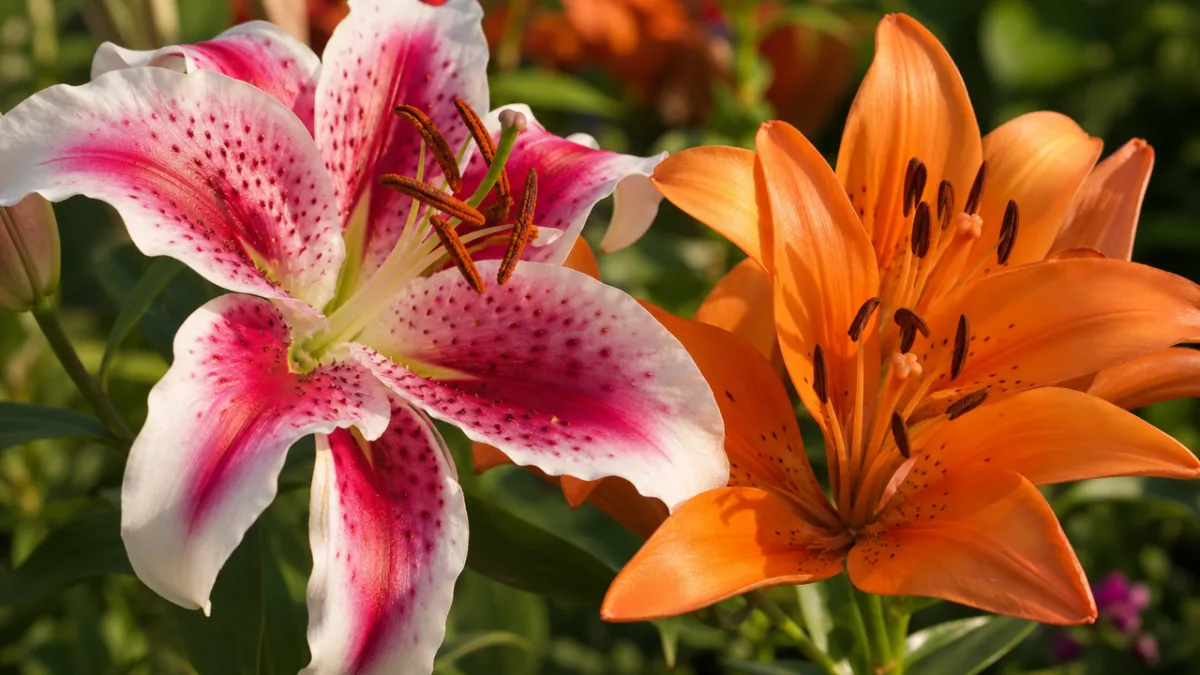
The most obvious place to start is the flowers themselves, and honestly, the differences here are pretty striking once you know what you’re looking at. Oriental lilies produce big, showy blooms — often six to eight inches across or more — with broad petals that curve gracefully backward at the tips. Up close, those petals have an almost textured, slightly rough surface, and they’re typically covered in intricate spots, streaks, and contrasting central stripes. The colors tend to run rich and saturated: deep pinks, pure whites, crimson reds, and dramatic bicolors that look almost too beautiful to be real.
Asiatic lilies tend to have somewhat smaller blooms, though breeders have pushed that boundary considerably over the years. Their petals are smoother, less dramatically curved, and the flowers usually face upward or outward rather than nodding. What Asiatics lack in petal drama, they more than make up for in color range — we’re talking vivid oranges, bright yellows, soft pastels, deep purples, and colors so dark they’re nearly black. It’s a spectrum that keeps expanding as breeders develop new cultivars. Many Asiatic varieties have spots near the flower’s center too, though they’re usually subtler than the bold markings on an Oriental bloom.
The overall plant shape tells a story as well. Asiatic lilies tend to be more compact and upright, usually topping out somewhere between two and five feet depending on the variety. Orientals grow taller and more dramatically — four to six feet is common, and you’ll often want to stake them if you garden anywhere with wind. Both types have lance-shaped leaves arranged alternately up the stem, but Oriental foliage tends to be a bit broader and deeper green, while Asiatic leaves often look slightly lighter and narrower.
Fragrance: The Scent Difference That Surprises Most Gardeners
If you’ve ever walked by a vase of lilies and felt like the scent practically knocked you over, those were almost certainly Orientals. The fragrance of Oriental lilies is one of the things gardeners talk about most — it’s rich, sweet, complex, and genuinely powerful. A single stem can fill an entire room. On a warm summer evening, it can drift right across your garden. Many people deliberately plant Orientals near patios, windows, and entryways just to catch that effect as they come and go.
Asiatic lilies, on the other hand, have essentially no scent at all. That’s not a criticism — it’s actually useful information that makes them the right choice in a surprising number of situations. If you’re sensitive to strong floral fragrances, if you’re putting together arrangements for a space where heavy perfume would be overwhelming, or if you’re planting near an outdoor dining area where you’d rather smell the food, Asiatics are your friend. They’re just as beautiful visually, and for some people, a stunning flower that doesn’t compete with everything else going on is genuinely preferable.
This fragrance gap matters in the cut flower world too. Oriental lilies fetch premium prices from florists largely because of their scent — it reads as luxurious and abundant, which is why you’ll find them in wedding arrangements, sympathy bouquets, and upscale centerpieces. You can actually use this as a quick identification trick at the grocery store flower display: lean in close. If you can smell them from several inches away, they’re almost certainly Orientals. If there’s nothing there, you’re looking at Asiatics — which are still lovely cut flowers, just for entirely different reasons.
Bloom Time and Seasonal Considerations
One of the most practically useful things to understand about these two lily types is when they actually bloom, because there’s a real gap between them — and that gap is something you can work with. Asiatic lilies are the early birds, typically flowering in early to midsummer, often June into July depending on your climate and the specific variety. They’re usually one of the first things to bring real color to the summer garden, popping up before a lot of other perennials have really hit their stride.
Oriental lilies come along later — midsummer to late summer, roughly July through September in most temperate climates. If you plant both types, you can essentially string together a lily season that runs across much of the summer rather than getting one concentrated burst and then waiting for fall. A lot of experienced gardeners do exactly this, deliberately mixing early, mid, and late bloomers to keep things interesting from June right up to the first frost.
There’s also a difference in how long individual flowers last. Asiatic blooms tend to open and fade relatively quickly — a week or two per bloom cycle. Oriental flowers open more slowly but often hang on longer, which makes them especially nice for cutting. If you’re growing lilies specifically for the house, it’s worth knowing that an Oriental stem can give you an impressive amount of vase time. Both types will come back the following year with proper care, though neither type will give you a second flush of blooms within the same season.

Growing Requirements, Hardiness, and Soil Preferences
Both types are true bulb plants that store energy underground and return year after year — but they don’t have identical needs, and knowing the differences can save you some frustration. Asiatic lilies are generally the tougher of the two. They handle a wider range of soil conditions, do well in USDA hardiness zones 3 through 8 (sometimes zone 9 with good drainage), and are fairly forgiving when conditions aren’t perfect — including heavier soils and less consistent watering.
Oriental lilies are a bit more particular. They perform best in zones 4 through 9 and have a real preference for acidic soil — ideally a pH somewhere between 5.5 and 6.5. Alkaline or chalky soil that an Asiatic might shrug off can genuinely cause an Oriental to struggle. They also need excellent drainage, because their bulbs are quite prone to rotting in wet conditions. If your native soil runs alkaline, getting Orientals to thrive may take some extra work — amending with sulfur, building raised beds with a customized soil mix, or growing them in containers where you control every variable.
Both types want full sun — at least six hours of direct sunlight daily — though both will tolerate some afternoon shade in very hot climates. And beyond those differences, they share quite a few of the same basic care requirements: well-draining soil to prevent bulb rot, which is fatal to both; planting depth of about three times the bulb’s height (usually four to six inches); regular watering during the growing season with reduced moisture once the foliage dies back; avoiding overhead watering, which invites fungal problems; and leaving the foliage in place after blooming so the bulb can recharge for next year.
On the feeding front, Asiatics are relatively light eaters and do fine with a modest application of balanced fertilizer in spring. Orientals, with their larger flowers and longer growing season, often benefit from a low-nitrogen, high-phosphorus fertilizer during bud development to support flower quality. Going heavy on nitrogen with Orientals is a common mistake — you’ll get beautiful leafy growth and disappointing blooms, which is a frustrating trade-off to discover mid-season.
Pest, Disease, and Common Problems by Type
Both lily types face their share of garden threats, but they don’t have identical vulnerabilities, and knowing which you’re dealing with helps you stay ahead of problems. The red lily beetle, Lilioceris lilii, is a serious pest for both groups and has spread considerably across North America and Europe in recent years. These vivid scarlet insects and their larvae can strip a plant bare surprisingly fast, and they don’t particularly favor one lily type over the other. For either group, checking the undersides of leaves regularly — where eggs and larvae hide — is just part of the routine during the growing season.
Viruses transmitted by aphids are a bigger concern for Asiatic lilies, which are more susceptible to certain strains of lily mosaic virus and tulip breaking virus than Orientals. Plants that get infected develop mottled, streaked, or distorted leaves and need to come out promptly to protect their neighbors. Controlling aphid populations — through insecticidal soap, encouraging beneficial insects, or targeted treatment — is an important part of keeping an Asiatic lily collection healthy. Orientals aren’t immune to viral disease, but they tend to show more resistance to the most common strains.
Fungal problems, especially botrytis blight and basal rot, can hit both groups, but they’re particularly rough on Orientals given that type’s somewhat fussier constitution. Botrytis shows up as brown spots on leaves and petals, often with gray fuzzy growth in humid conditions, and it spreads fast during cool, wet spells. Good air circulation through proper spacing, skipping overhead irrigation, and cleaning up dead plant material promptly are your best preventive tools. If you garden in a particularly humid climate and want fewer disease headaches, Asiatics are honestly the lower-stress choice — though good cultural habits make either type manageable just about anywhere.
Choosing the Right Lily for Your Garden Goals
Now that you know what actually separates these two lily types, you’re in a much better position to choose what’s right for your garden rather than just grabbing whatever looks prettiest at the nursery. If fragrance is high on your list — if you want that classic, enveloping lily scent drifting across your patio on a summer evening, or you love bringing scented arrangements indoors — Orientals belong at the top of your wish list. Their later bloom time, larger flowers, and extraordinary perfume make them genuinely spectacular, as long as you can give them the acidic, well-drained soil they want.
If you’d rather have something reliable, low-maintenance, and bursting with early-season color — or if you’re gardening somewhere cold, working with heavy soil, or just dealing with heavy lily beetle pressure — Asiatics are hard to beat. They’re compact enough for smaller gardens and containers, their color range is remarkable, and their toughness makes them a fantastic starting point for anyone new to growing lilies from bulbs.
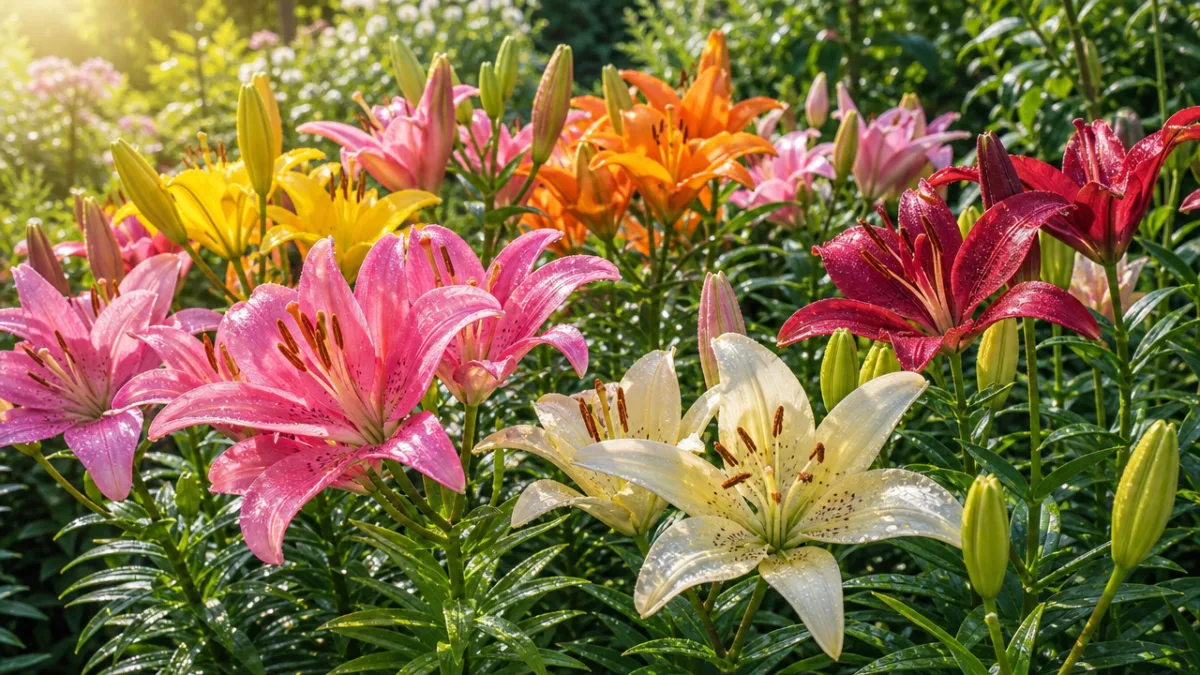
Of course, there’s no reason you have to pick just one. Planting a mix of early-blooming Asiatics and later-blooming Orientals is one of the smartest things you can do for your summer garden — you get months of lily interest instead of one concentrated burst that’s over before you know it. If you want to go even further, Orienpet hybrids are worth exploring: they combine the fragrance of Orientals with the vigor of Asiatics and bloom somewhere between the two parent groups, filling in the seasonal gap nicely. However you put it together, knowing these two iconic lily types well gives you a real foundation to grow them with confidence and get the most out of everything the genus Lilium has to offer.








What do you think?
It is nice to know your opinion. Leave a comment.