










Brazilian Grapetree: A Complete Guide to Myrciaria jaboticaba
Introduction to the Brazilian Grapetree
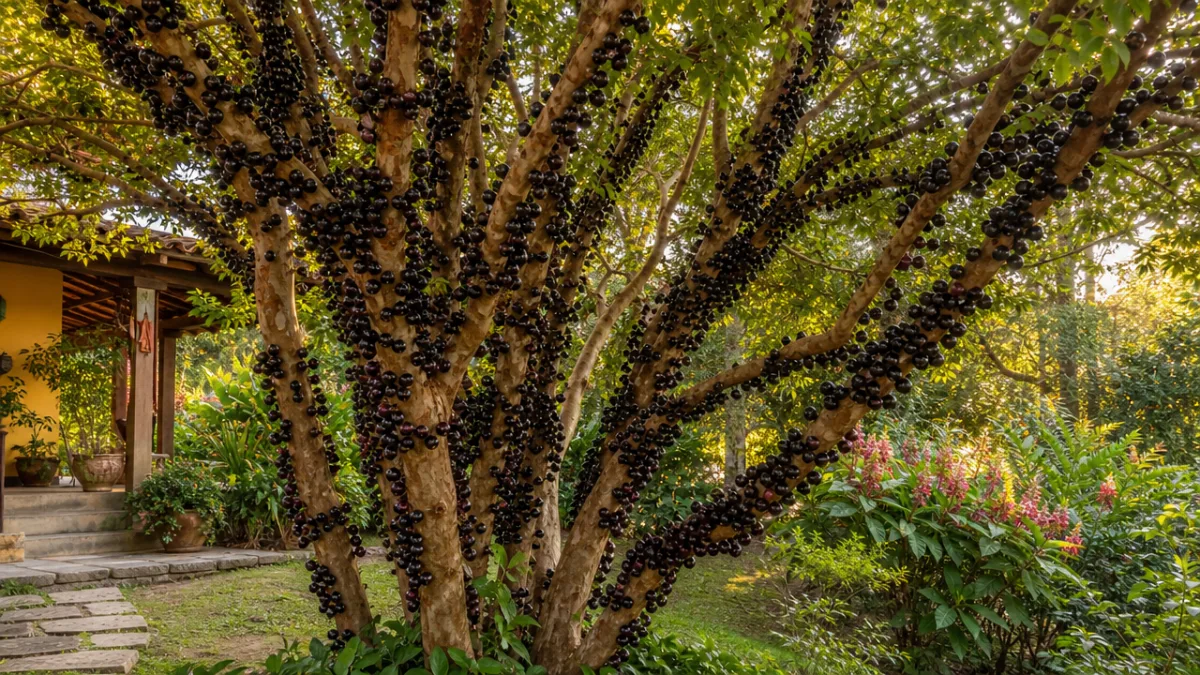
If you’ve never heard of the Brazilian Grapetree — or Myrciaria jaboticaba, as botanists know it — you’re in for a treat. This is genuinely one of the strangest and most captivating fruit trees on the planet. It’s native to the Atlantic Forest region of southeastern Brazil, and it’s been turning heads among botanists, growers, and food lovers for centuries. The reason? It fruits directly on its trunk and main branches rather than out at the tips of its twigs, which makes a mature tree look like something out of a dream — or a very creative art installation.
The process behind this quirky fruiting behavior is called cauliflory. Instead of blossoming at the branch tips like most trees do, the jaboticaba pushes out clusters of tiny white flowers directly from its bark, and those flowers eventually become round, deep purple-black fruits that cling to the wood in dense bunches. See a mature tree loaded with ripe fruit and you’ll immediately understand the name — it really does look like someone pressed thousands of dark grapes straight into the bark. There’s honestly nothing else quite like it in the plant world.
The “Brazilian Grapetree” nickname comes from that unmistakable grape-like look, though jaboticaba and grapes aren’t actually related at all. The tree belongs to the family Myrtaceae, which puts it in the same family as guava, feijoa, and allspice. As for the word “jaboticaba” itself, it comes from Tupi — a language spoken by Brazil’s indigenous peoples — and translates roughly to “place of jaboti,” a reference to a type of land tortoise that was known to snack on fallen fruit. That small linguistic detail hints at just how deep the jaboticaba’s roots run in Brazil’s ecological and cultural history.
Botanical Characteristics and Physical Description
Myrciaria jaboticaba is a slow-growing, evergreen tree that typically tops out somewhere between three and twelve meters, though exactly how tall it gets depends a lot on the climate, soil, and cultivar. Even when it’s not fruiting, it’s an attractive tree — dense, rounded canopy, small lance-shaped leaves with a rich glossy sheen that catches the light nicely. New growth is particularly showy, often emerging in shades of copper, pink, or red before deepening to a full dark green, so during active growing periods the tree can look almost multicolored.
The bark is one of the jaboticaba’s most distinctive features. It’s smooth and pale, peeling away in thin layers like birch or eucalyptus, and it’s right on that smooth surface that all the flowering and fruiting happens. To pull off cauliflory, the tree has to build and maintain specialized tissue along its trunk and larger branches — and that biological investment is a big part of why it grows so slowly. It’s essentially pouring resources into a really unusual reproductive system, and that takes time.
The fruit itself is roughly spherical, usually somewhere between two and four centimeters across depending on the variety and growing conditions. The skin is thick and somewhat astringent, a deep purple-black when fully ripe, and inside you’ll find a translucent white or pink pulp that’s gelatinous, sweet, and mildly floral. There are one to four large seeds nestled in there as well. People often describe the flavor as somewhere between a grape and a lychee, with hints of vanilla, tropical fruit, and a pleasant tartness. The way most people eat it is by squeezing the pulp and seed directly into their mouth and setting the skin aside — a little different from your average fruit, but you get used to it quickly.

Native Habitat and Geographic Distribution
In the wild, the jaboticaba calls the Atlantic Forest home — one of the most biodiverse ecosystems on Earth, and unfortunately one of the most threatened. This forest stretches along Brazil’s eastern coast and was once enormous, but deforestation has taken a severe toll over the centuries. Within that biome, jaboticaba tends to grow at elevations between 500 and 1,200 meters, where temperatures stay moderate and humidity is consistently high. It naturally grows as an understory or mid-canopy tree, somewhat sheltered from the harshest direct sun by taller trees around it.
The heart of its native range is in the states of Minas Gerais, São Paulo, Rio de Janeiro, and parts of Brazil’s southern states. All that geographic variety has produced a number of distinct cultivars over time, each shaped by local soils, altitudes, and rainfall. Some of the most widely known include Sabará — the most commonly cultivated, with smaller fruit and an intense flavor — Paulista, which produces larger fruit with a milder taste, and the more regionally grown Ponhema and Rajada. Each has its own harvest window, its own flavor nuances, and its own quirks in the garden.
Outside Brazil, the jaboticaba has found its way into subtropical and tropical gardens around the world. Florida has a solid population of cultivated trees, and you’ll also find them growing in parts of California, Australia, Israel, Portugal, Japan, and across Southeast Asia. That said, it remains a specialty or novelty crop in all of these places rather than a commercial staple — the slow growth, short shelf life, and highly perishable fruit make large-scale production tricky. But wherever it does grow, it tends to become something people really treasure, sometimes passing individual trees down through generations like an heirloom.
Cultivation and Growing Requirements
The single most important quality for anyone wanting to grow a jaboticaba is patience. From seed, you might wait eight to fifteen years before seeing your first fruit. Grafted trees are considerably faster — often fruiting in three to five years — but even so, this is not a plant for people who want quick results. What makes the wait worthwhile is that once established, jaboticaba trees are extraordinarily long-lived. There are specimens in Brazil that have reportedly been producing fruit for well over a century.
Climate-wise, the jaboticaba does best in warm subtropical to mild tropical conditions. It can handle a light frost — down to around minus two or three degrees Celsius for short stretches — but anything prolonged and colder than that will cause serious damage or kill the tree outright. USDA hardiness zones 9b through 11 are its sweet spot, though some determined growers in zone 9a have made it work with careful placement and protection. The tree likes humidity and consistent moisture, and while it’s reasonably adaptable to different soil types — including both sandy and clay-heavy soils — drainage needs to be solid. Waterlogged roots for any extended period are bad news.
Regular feeding with a balanced, slightly acidic fertilizer makes a real difference. Aim for a soil pH between 5.5 and 6.5, and work in organic matter like compost or well-rotted manure when you can. One of the more fascinating things about jaboticaba cultivation is that the tree can flower and fruit multiple times a year — typically two to five times under good conditions — and each flowering event is triggered by a dry spell followed by rain or irrigation. Experienced growers actually use this to their advantage, deliberately holding back water to coax the tree into flowering and then resuming irrigation to push it into fruit set. It’s a nice level of interactivity for a garden tree.
- Soil pH: Maintain between 5.5 and 6.5 for optimal nutrient uptake and root health.
- Watering: Consistent moisture is essential, but excellent drainage must be maintained to prevent root rot.
- Sunlight: Full sun to partial shade; young trees benefit from afternoon shade in very hot climates.
- Fertilization: Apply a balanced, slow-release fertilizer every three to four months during the growing season.
- Pruning: Minimal pruning is required; remove dead or crossing branches to maintain airflow and canopy shape.
- Frost protection: Provide protection below minus two degrees Celsius with frost cloth or by situating near a heat-retaining wall.
Nutritional Profile and Health Benefits
Jaboticaba isn’t just a novelty — it’s actually a pretty nutritious fruit. The pulp is a good source of vitamin C, contributes meaningfully to daily B vitamin intake, and contains useful amounts of potassium, phosphorus, iron, and calcium. Calorie-wise it’s moderate, and the natural sugars are balanced by decent fiber content, especially in varieties where people eat the skin along with the pulp.
What’s really caught the attention of researchers, though, is the fruit’s polyphenol content. That characteristic deep purple-black color comes from anthocyanins — a class of flavonoid compounds that function as antioxidants in the body. Scientists have identified specific anthocyanins in jaboticaba, including cyanidin-3-glucoside and delphinidin-3-glucoside, which have shown anti-inflammatory activity and potential cardiovascular benefits in lab studies. The fruit also contains ellagic acid, a phenolic compound that’s been studied for antimutagenic and anticancer properties. It’s worth being clear that most of this research is still at the in vitro or animal study stage, so it shouldn’t be read as clinical medical advice — but the science is genuinely interesting and still developing.
Traditional Brazilian medicine has been using parts of the jaboticaba tree for a long time. Dried fruit skins have been used as a remedy for diarrhea, asthma, and throat inflammation, while the bark has appeared in preparations for skin conditions and tonsillitis. Modern science is still catching up with these traditional uses, but the documented presence of tannins, flavonoids, and other bioactive compounds does provide a plausible basis for some of them. Ongoing research is looking at jaboticaba extracts in nutraceutical and pharmaceutical contexts, with particular interest in areas like diabetes management and weight regulation.
Culinary Uses and Cultural Significance
In Brazil, jaboticaba is more than just a fruit — it’s woven into the fabric of regional food culture in a way that’s hard to fully explain to an outsider. Fresh off the tree is always the gold standard, and the urgency around fresh eating is real: the fruit starts fermenting naturally within three to four days of harvest. For Brazilians lucky enough to have access to a producing tree, the experience of eating jaboticaba fresh in the warmth of a Brazilian afternoon carries deep nostalgic weight. It’s one of those foods that’s inseparably linked to childhood, family, and a sense of place — less a snack and more of a cultural memory.
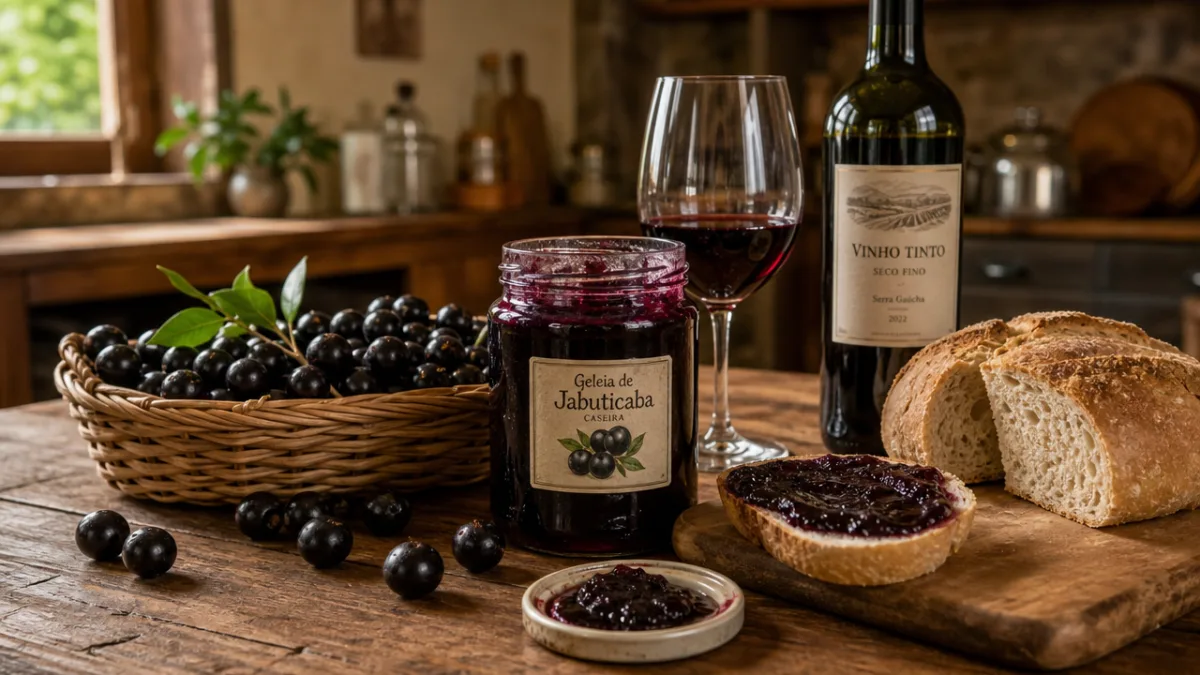
When there’s more fruit than anyone can eat fresh — which happens, given how prolifically a mature tree can produce — the surplus gets turned into an impressive range of preserved and fermented products. Jaboticaba wine is probably the most celebrated of these, made both commercially and at home across southern and southeastern Brazil. It runs the full gamut from dry and tannic to sweet and dessert-like, and its deep ruby color and complex flavor profile have started attracting real interest from international wine drinkers looking for something genuinely different. Jaboticaba cachaça is another beloved product, as are jams, jellies, liqueurs, vinegars, and fermented teas made from the dried skins.
The fruit has even made it into the Brazilian language. The expression “é jaboticaba” — roughly “it’s a jaboticaba thing” — gets used to describe something so peculiarly Brazilian that it simply couldn’t exist anywhere else. That a fruit ended up as shorthand for national distinctiveness says everything about how embedded it is in Brazilian identity. Several municipalities hold annual jaboticaba festivals that draw tens of thousands of visitors, celebrating the sheer variety of products that local producers and artisans have built around this one remarkable tree.
- Fresh consumption: The most prized use; eat directly from the tree within days of harvest for optimal flavor.
- Jaboticaba wine: Fermented from whole fruit, producing rich, deeply colored wines ranging from dry to sweet.
- Jams and jellies: The high pectin content of the skin makes for beautifully set, intensely flavored preserves.
- Liqueurs and spirits: Jaboticaba-infused cachaça and fruit liqueurs are popular throughout Brazil.
- Dried skins: Used to make herbal teas and as a natural food coloring agent in commercial applications.
- Sorbet and ice cream: The pulp blends beautifully into frozen desserts with a unique tropical-grape flavor.
Conservation Status and Future Outlook
For all its cultural importance in Brazil, the jaboticaba faces some real challenges in the wild. The Atlantic Forest, where the species evolved and still grows naturally, has been reduced to less than fifteen percent of its original size by centuries of agricultural expansion, logging, and urban development. Within that already fragmented habitat, wild jaboticaba populations face additional pressure from selective removal of mature trees, invasive species, and the disruption of the pollinators and seed dispersers the tree relies on for reproduction. The species isn’t currently classified as globally threatened, but certain regional populations are genuinely struggling.
Conservation efforts are coming from several directions — Brazilian government agencies, botanical gardens, university research programs, and NGOs focused on Atlantic Forest restoration are all involved in various ways. Seed banks and living collections help preserve genetic diversity among cultivars and wild-type plants, creating a resource base for future breeding and restoration work. Agroforestry projects that integrate jaboticaba into small farm systems have shown particular promise on both the conservation and economic development fronts, since the trees provide shade, improve soil structure, and generate real income from fruit, wine, and other products, all while contributing to forest corridor restoration.
Looking ahead, there’s good reason to be optimistic about the jaboticaba’s future on the global stage. Growing curiosity about exotic and heritage fruits among chefs, food entrepreneurs, and health-conscious consumers has brought the tree more attention than it’s ever had outside Brazil. Improved grafting techniques, better container cultivation methods, and new cold-tolerant varieties are steadily expanding the range of climates where it can be successfully grown. As more people look beyond the usual commercially dominant crops toward the extraordinary diversity of edible plants the world has to offer, the Brazilian Grapetree stands out as a pretty compelling argument for why that exploration is worth making.








What do you think?
It is nice to know your opinion. Leave a comment.