










Best Monstera Deliciosa Soil: The Ultimate Guide to 3 Top Recipes
Why Soil Mix Matters More Than You Think for Monstera Deliciosa
When most plant enthusiasts bring home a gorgeous Monstera deliciosa, they focus on finding the perfect bright corner, choosing a beautiful pot, or setting up a watering schedule. What often gets overlooked is the very foundation that determines whether this tropical beauty will thrive or merely survive: the soil mix. The right growing medium is arguably the single most important factor in your Monstera’s long-term health, directly influencing root development, water retention, aeration, and nutrient uptake. Getting this wrong can lead to a cascade of problems that no amount of sunlight or fertilizer can fix.
Monstera deliciosa originates from the tropical rainforests of Central America, where it grows as an epiphyte and hemi-epiphyte, clinging to trees and rocky surfaces in environments with exceptional drainage. In its natural habitat, roots are exposed to fast-draining, nutrient-rich organic matter that never stays waterlogged for long. Replicating these conditions in a container setting requires understanding what the plant actually needs rather than simply reaching for whatever bag of generic potting soil is on the shelf at your local garden center. That standard potting mix, while fine for many houseplants, is often far too dense and moisture-retentive for Monstera.
Choosing the right soil also protects your plant from the most common killer of Monstera deliciosa: root rot. When roots sit in soggy, compacted soil, they become oxygen-deprived and susceptible to fungal pathogens that break down root tissue rapidly. By contrast, a well-crafted soil mix that balances moisture retention with excellent drainage and aeration creates an environment where roots can breathe, expand freely, and absorb nutrients efficiently. Understanding this relationship between soil structure and plant health is the first step toward growing a truly spectacular Monstera.
Understanding Root Health and Soil Aeration
Healthy Monstera roots are firm, white or light tan in color, and slightly pliable. They require consistent access to both moisture and oxygen simultaneously, which sounds contradictory but is entirely achievable with the right soil composition. Poorly aerated soil compacts over time, pushing out the air pockets that roots depend on for gas exchange. When this happens, roots begin to suffocate even if the plant isn’t being overwatered, creating symptoms that look deceptively like underwatering: wilting, yellowing leaves, and stunted growth that confuses many growers.
Aeration in a potting mix is primarily achieved through the inclusion of chunky, porous materials that resist compaction and maintain structural integrity over many months. Materials like perlite, orchid bark, and pumice create stable air pockets within the mix that persist through repeated watering cycles. As organic components like coco coir or peat gradually break down over one to two years, these inorganic additions maintain the overall porosity of the medium. This is why experienced growers often repot their Monsteras every one to two years, refreshing the mix before it becomes too dense.
Key Ingredients to Understand Before Mixing
Before diving into specific recipes, it is essential to understand the function of each ingredient you might incorporate into a Monstera soil mix. Every component serves a specific purpose, and substituting one material blindly for another without understanding its properties can throw off the balance of your entire mix. Think of creating a potting blend as similar to following a recipe in cooking: each ingredient plays a role, and understanding why it is included allows you to adapt the recipe intelligently based on what you have available and what your specific growing conditions demand.
Perlite is one of the most universally recommended amendments for Monstera soil. This lightweight, volcanic glass material is heated until it expands into white, porous granules that dramatically improve drainage and aeration. It holds very little water itself but creates space within the mix for water to flow through freely and for air to occupy. Perlite is inexpensive, widely available, and virtually impossible to overuse in a Monstera mix, making it a staple ingredient in nearly every recipe you will encounter. A mix containing twenty to forty percent perlite will drain far better than unamended potting soil.
Orchid bark, typically made from fir bark processed to various sizes, adds significant chunky texture and organic matter to a mix. As it slowly decomposes, it releases nutrients and improves the overall structure of the medium. Bark also mimics the natural growing conditions of epiphytic plants, giving roots something rough and porous to grip and grow around. Coco coir, made from coconut husks, is an excellent peat alternative that retains some moisture while remaining structurally light and resistant to compaction. Pumice, worm castings, and activated charcoal are additional amendments worth understanding before you begin mixing.
What to Avoid in Your Monstera Soil Mix
Just as important as knowing what to include is understanding what to avoid. Heavy garden soils, clay-based mixes, and dense all-purpose potting soils that are designed for outdoor vegetables will suffocate Monstera roots and promote root rot. Many commercial potting soils also contain large amounts of peat moss, which, while initially good at retaining moisture, can dry into a nearly hydrophobic block that repels water entirely once it dries out completely. This creates unpredictable watering behavior where water runs around the outside of the root ball rather than penetrating evenly.
Soils with excessive moisture-retaining crystals or gels, sometimes marketed as water-saving additives, are generally counterproductive for Monstera deliciosa. While these products can benefit drought-sensitive plants, Monstera roots need periods of slight dryness between waterings to encourage healthy downward growth and prevent fungal issues. Similarly, avoid mixes with very fine particles throughout, as these will compact quickly, reducing the aeration that Monstera roots rely on. Look for mixes that feel chunky and light in your hand, not dense, heavy, or overly smooth in texture.
Recipe One: The Classic Chunky Mix
The classic chunky Monstera mix is the gold standard that experienced growers have relied on for years, and for good reason: it strikes an excellent balance between moisture retention and drainage while providing the structural integrity that Monstera roots love. This recipe is forgiving for growers who tend to water a little too frequently, as its excellent drainage prevents water from pooling around roots even when applied generously. It is also adaptable, making it a perfect starting point that you can adjust based on your home environment, pot type, and individual watering habits.
To make this mix, combine the following components in a clean container and blend them thoroughly until evenly distributed:
- 40% high-quality potting mix (avoid brands with excessive moisture crystals)
- 25% perlite (medium or coarse grade preferred)
- 20% orchid bark (medium grade, roughly half-inch to one-inch pieces)
- 10% coco coir (rehydrated and loosened before mixing)
- 5% worm castings (for a gentle, slow-release nutrient boost)
This recipe works exceptionally well in plastic and glazed ceramic pots, which retain moisture more than terracotta. The high proportion of chunky inorganic and organic amendments means the mix dries out at a moderate pace, giving roots consistent access to moisture without prolonged saturation. When you water a plant potted in this blend, water should begin flowing freely from the drainage holes within a few seconds, confirming that the mix is open and well-structured. If water pools on the surface for more than ten seconds before absorbing, the mix may be too compact or the perlite may be distributed unevenly.
Adapting the Classic Mix for Different Environments
One of the great strengths of the classic chunky mix is how easily it adapts to different growing environments. If you live in a humid climate or keep your home particularly warm, consider increasing the perlite content to thirty or thirty-five percent while reducing the potting soil accordingly. This will help the mix dry out faster and reduce the risk of fungal issues that humidity can encourage. Conversely, in very dry climates or during winter months when indoor heating reduces ambient humidity significantly, you might increase the coco coir slightly to help the mix retain moisture for a few extra days between waterings.
The type of pot you use also influences how you should adjust this recipe. Terracotta pots are porous and allow moisture to evaporate through their walls, drying the soil considerably faster than plastic or glazed ceramic. If you prefer terracotta, reduce the perlite slightly and increase the coco coir to compensate for the faster drying rate. Conversely, if you use large, heavy ceramic planters without drainage holes, you need to be especially cautious, as no soil mix, however well-draining, can compensate indefinitely for the absence of drainage. Always prioritize drainage holes regardless of which recipe you choose.
Recipe Two: The Bark-Heavy Epiphytic Blend
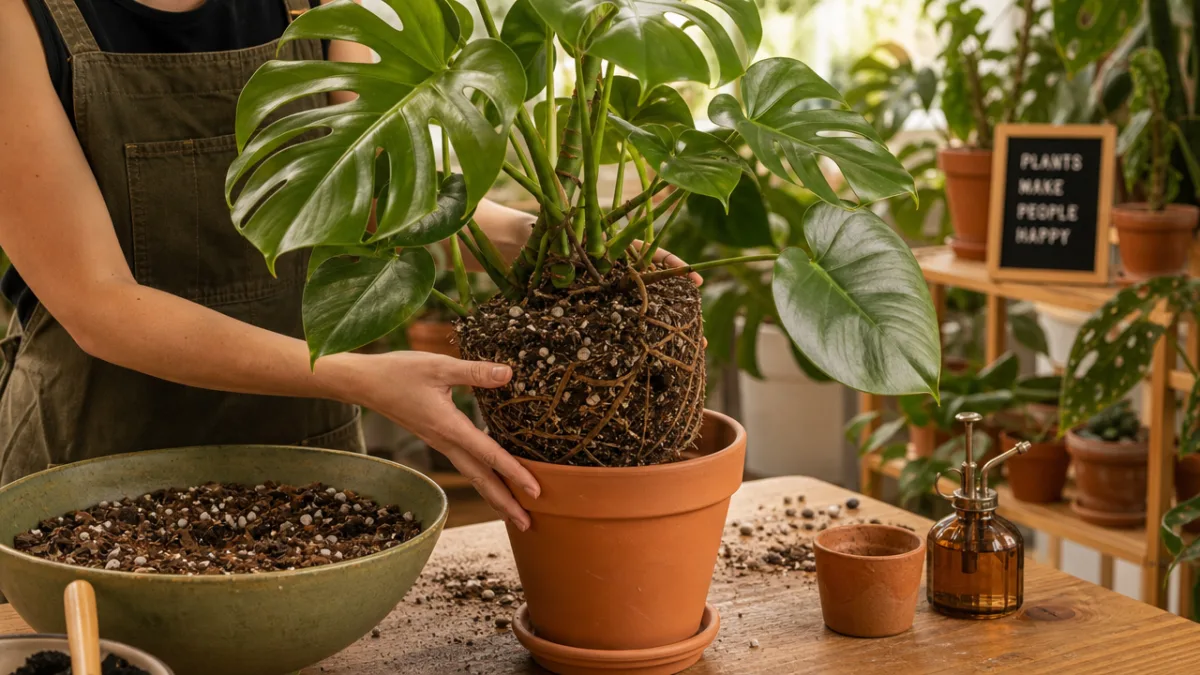
The bark-heavy epiphytic blend is designed specifically for growers who want to replicate Monstera’s natural growing conditions as closely as possible in a container setting. This recipe leans heavily on orchid bark and other chunky organic materials to create an extremely airy, fast-draining medium that mimics the decomposed organic matter and bark that Monstera roots cling to in rainforest environments. It is particularly well-suited for growers who tend to water frequently or who live in humid conditions where a standard mix might stay wet too long.
The components for this recipe are as follows:
- 40% orchid bark (medium to coarse grade)
- 20% perlite or pumice (pumice preferred for better moisture balance)
- 15% coco coir
- 10% potting soil
- 10% activated charcoal (improves drainage and inhibits odor-causing bacteria)
- 5% worm castings
Because this blend is significantly chunkier and faster-draining than the classic recipe, it requires more attentive watering. Plants potted in this mix will typically need water more frequently, as the medium dries out quickly due to its low proportion of moisture-retaining components. However, this also means the risk of root rot is dramatically reduced, making it an excellent choice for anyone who has struggled with overwatering in the past. Many growers find that switching to this mix resolves persistent yellowing and root health issues that other interventions failed to fix.
Long-Term Maintenance of the Epiphytic Blend
The bark-heavy blend benefits greatly from regular fertilization, since its reduced proportion of potting soil means there is less inherent nutrient content in the mix. A balanced liquid fertilizer applied every two to four weeks during the growing season will ensure your Monstera receives the macro and micronutrients it needs to support its famously large, fenestrated leaves. Slow-release granular fertilizers can also be incorporated into the top layer of the mix at the beginning of each growing season as a supplemental feeding strategy that reduces the frequency of liquid applications.
Over time, the bark in this recipe will break down and the mix will become finer and denser. Plan to repot into fresh mix every twelve to eighteen months to maintain the structural benefits of this recipe. When you remove the root ball during repotting, take the opportunity to inspect roots carefully, trimming any that appear brown, mushy, or hollow before placing the plant into fresh mix. Healthy roots in an epiphytic blend will often appear more spread out and adventurous than those in denser mixes, as they explore the open, airy medium freely.
Recipe Three: The Moisture-Balanced Mix for Dry Climates
Not every Monstera grower battles overwatering and excessive humidity. Those living in arid climates, keeping their homes very warm and dry, or simply prone to underwatering may find that standard chunky mixes dry out far too quickly for their lifestyle and environment. The moisture-balanced mix addresses this challenge by incorporating more water-retentive ingredients without sacrificing the drainage and aeration that Monstera roots require. This recipe keeps moisture available for longer periods while still protecting against the saturation that causes root rot.
The moisture-balanced recipe includes:
- 40% potting soil (a high-quality, peat-free formula preferred)
- 20% coco coir (provides moisture retention without compacting)
- 20% perlite (maintains drainage despite the higher water-retentive components)
- 10% orchid bark (adds structure and moderate organic matter)
- 10% worm castings (nutrient enrichment and slight moisture retention)
In this formulation, the higher proportions of potting soil and coco coir create a medium that stays consistently moist for several days longer than the previous two recipes. Despite this, the perlite and bark ensure that the mix never becomes waterlogged or suffocating to roots. Growers in dry climates often find this blend ideal during winter months when heating systems reduce indoor humidity substantially and plants generally need water more frequently than their reduced growth rate would suggest. Monitoring the top two inches of soil and watering when they feel nearly dry works well with this mix.
Seasonal Adjustments for the Moisture-Balanced Mix
One of the most practical advantages of understanding your soil mix is being able to make thoughtful seasonal adjustments to your watering behavior and amendment choices. During summer, when Monstera is actively growing and transpiring at high rates, the moisture-balanced mix will typically dry out faster and may benefit from a slight increase in coco coir to support the plant’s increased water demand. During winter dormancy, when growth slows and your home heating system creates drier air, the mix may stay wet longer than expected, so reducing watering frequency becomes essential even though the mix itself leans moisture-retentive.
You can also top-dress the moisture-balanced mix with a thin layer of worm castings or compost at the beginning of each growing season to refresh the nutrient content without full repotting. This is particularly valuable for larger Monsteras that have outgrown frequent repotting as a practical option due to their size and weight. Gently loosening the top inch of soil before applying the top-dressing helps it integrate with the existing medium over time as you water, slowly improving the nutritional profile of the root zone throughout the growing season.
Choosing the Right Recipe for Your Specific Monstera Setup
Selecting the best recipe from these three options depends on an honest assessment of your environment, your watering habits, and your plant’s current health status. Begin by considering your climate and the conditions inside your home. Do you live somewhere humid and warm where soil tends to stay moist for a week or longer? If so, the bark-heavy epiphytic blend or the classic chunky mix will protect your plant from the root rot risks that humid environments amplify. Are you in a dry apartment where soil dries within two to three days? The moisture-balanced mix may serve you far better and reduce the stress of frequent watering.
Your personal watering habits are equally important to consider. Be honest with yourself about whether you tend to water too frequently or too infrequently. Enthusiastic, frequent waterers will benefit enormously from the faster-draining bark-heavy epiphytic blend, which provides a buffer against oversaturation. More forgetful waterers, or those who travel frequently, will appreciate the moisture-balanced mix’s ability to keep roots hydrated for longer without penalizing them for missing a watering day. The classic chunky mix sits comfortably in the middle and works well for most growers as a reliable starting point that can be adjusted as you learn more about your plant’s preferences.
Finally, consider the current health of your Monstera. A plant that has been struggling with root rot or yellowing from overwatering should be transitioned immediately into the bark-heavy epiphytic blend, which will give compromised roots the best possible environment for recovery. A plant that is growing vigorously and showing no signs of stress can be maintained in whatever mix it is currently thriving in, with adjustments made gradually during the next repotting cycle. Avoid changing soil mixes unnecessarily for healthy plants, as repotting itself causes stress and should be reserved for situations where the benefits clearly outweigh the temporary setback to growth.
Final Tips for Mixing, Storing, and Using Your Custom Blend
When preparing your chosen recipe, always mix ingredients in a large, clean container or on a tarp to ensure even distribution of all components. Pre-moisten your coco coir thoroughly before mixing, as dry coco coir can be difficult to rehydrate once it is blended into a dry mix and placed in a pot. Store any unused soil mix in a sealed container or bag in a cool, dry location away from direct sunlight, which can degrade organic components and encourage unwanted mold or pest activity. Properly stored homemade mix typically remains usable for six to twelve months.
Label your mix with the date it was prepared and the specific recipe used, so you can track what works best for your plants over time. Keeping simple notes about how long each mix takes to dry out in your conditions, how your plants respond in terms of growth and root health at repotting, and whether you needed to adjust watering frequency will build a personalized knowledge base that makes you a more intuitive and successful Monstera grower with every passing season. The right soil mix truly is the foundation upon which every other aspect of Monstera care rests, and investing time in getting it right pays dividends in lush, vibrant growth for years to come.








What do you think?
It is nice to know your opinion. Leave a comment.