










Best Dimensions to DIY Flower Garden Beds for Cut Flower Gardens
Why Garden Bed Dimensions Matter for Cut Flower Success
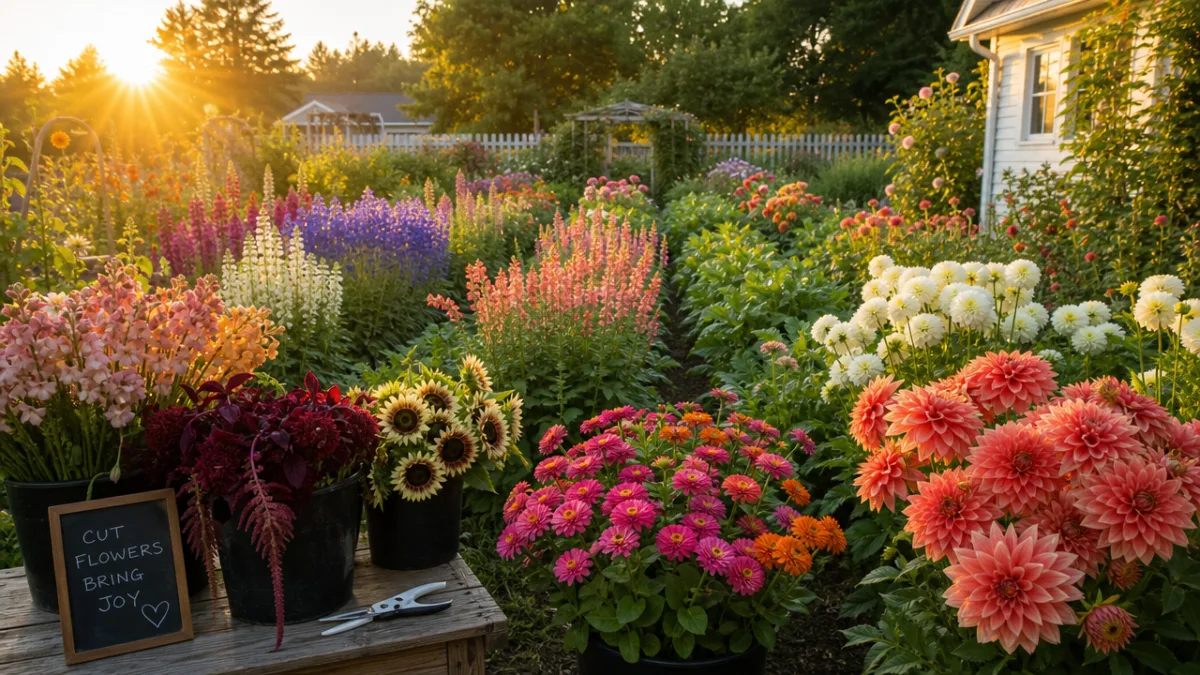
If you’re growing cut flowers at home, the size and shape of your garden beds matter a lot more than most beginners expect. A cut flower garden isn’t just something pretty to look at from across the yard — it’s a working space where you’re reaching in to harvest blooms, managing stems, and trying to get to every plant before the flowers fade. Getting your dimensions right from the start will save you a surprising amount of back pain, frustration, and wasted flowers over the course of the season.
How you size your beds affects drainage, sunlight distribution, and how easily you can weed, fertilize, and deadhead without compacting the soil. Compacted soil is one of the biggest culprits behind poor root development and stunted blooms in home gardens. When beds are too wide or poorly planned, you end up stepping right into them — which presses down the same soil you spent time loosening and amending. It’s a frustrating cycle that the right dimensions can help you avoid entirely.
There’s also a practical economics side to this. Well-proportioned beds let you pack in more plants per square foot, which means more stems and a better return on everything you’ve invested in seeds, bulbs, and soil. Professional flower farmers have been fine-tuning these measurements for generations, and as a home gardener you can borrow directly from that knowledge to build beds that work well right from the start.
The Ideal Width for Easy Access and Maximum Planting Density
Width is the single most important dimension to get right in a cut flower bed. The standard that both professional flower farmers and experienced home growers keep coming back to is 30 to 48 inches, with 36 inches being the sweet spot for most people. At that width, an average adult can comfortably reach the center of the bed from either side without awkward stretching or stepping in — which keeps your soil structure intact and your roots undisturbed all season long.
A 30-inch wide bed works especially well if you’re on the shorter side, have limited mobility, or are building raised beds where the added height shifts how far you need to lean. Even at that narrower width, you can fit two to three rows of most cut flowers — zinnias, lisianthus, sunflowers — and still reach that middle row without any trouble. Narrower beds also tend to dry out more evenly, which is a real bonus for flowers that don’t like sitting in waterlogged soil.
If you’ve got long arms and good flexibility, or your bed is only accessible from one side — say it’s running along a fence or wall — you’ll need to adjust accordingly. Single-sided beds should max out at 24 inches so you can still reach the back without climbing in. Beds with access from both sides can go up to a comfortable 48 inches for taller or more experienced gardeners. It’s tempting to push the width wider just to squeeze in more plants, but those gains disappear quickly once soil compaction and awkward harvesting start working against you.
Recommended Lengths and How to Scale Your Garden Efficiently
Unlike width, which is really determined by how far your arms can reach, bed length is flexible and can be shaped to fit almost any space you’re working with. That said, keeping a consistent length across all your beds makes life noticeably easier. Professional flower farmers typically work in 50 to 100-foot beds because that scale allows for efficient planting, irrigation, and harvesting. For home gardens, somewhere between 25 and 50 feet is a very manageable and productive range.
When you’re planning multiple beds, matching their lengths simplifies everything — from laying out row cover to setting up drip irrigation to doing basic seed math. If your space is a little irregular, it’s usually better to have fewer beds with consistent dimensions than a patchwork of different lengths. During the busy planting and harvesting seasons, the last thing you want is to stop and mentally recalculate which bed is which size.
For a first-time cut flower garden, a single bed that’s 4 feet wide by 25 feet long is a great place to start. That’s roughly 100 square feet — enough to grow a real variety of flowers for fresh arrangements while staying completely manageable for one person. As your confidence grows, you can add more beds at the same dimensions to keep everything organized and easy to scale. A lot of experienced home growers land on three to five beds of this size as their personal sweet spot.
Path Width and Spacing Between Beds
The paths between your beds deserve just as much thought as the beds themselves, even though they’re easy to overlook when you’re in planning mode. A path that’s too narrow turns into a muddy, compacted mess within the first few weeks of the season — especially when you’re squeezing through with a harvest bucket, a watering can, and a bag of fertilizer all at once. Too wide and you’re just giving up growing space for no real reason. The sweet spot for a home cut flower garden is 18 to 24 inches — enough room to walk comfortably and kneel beside a bed without crushing whatever’s growing next door.
If you plan to run a garden cart or wheelbarrow between beds — and once your garden grows, you almost certainly will — bump that path width up to at least 30 inches. A standard garden cart comes in around 24 to 26 inches wide, so 30 inches gives you just enough clearance to navigate without dragging the wheels over your bed edges. For paths that get a lot of foot traffic throughout the season, putting down some kind of surface — wood chip mulch, gravel, or even landscape fabric under a thin layer of straw — makes a big difference in keeping mud and weeds under control.
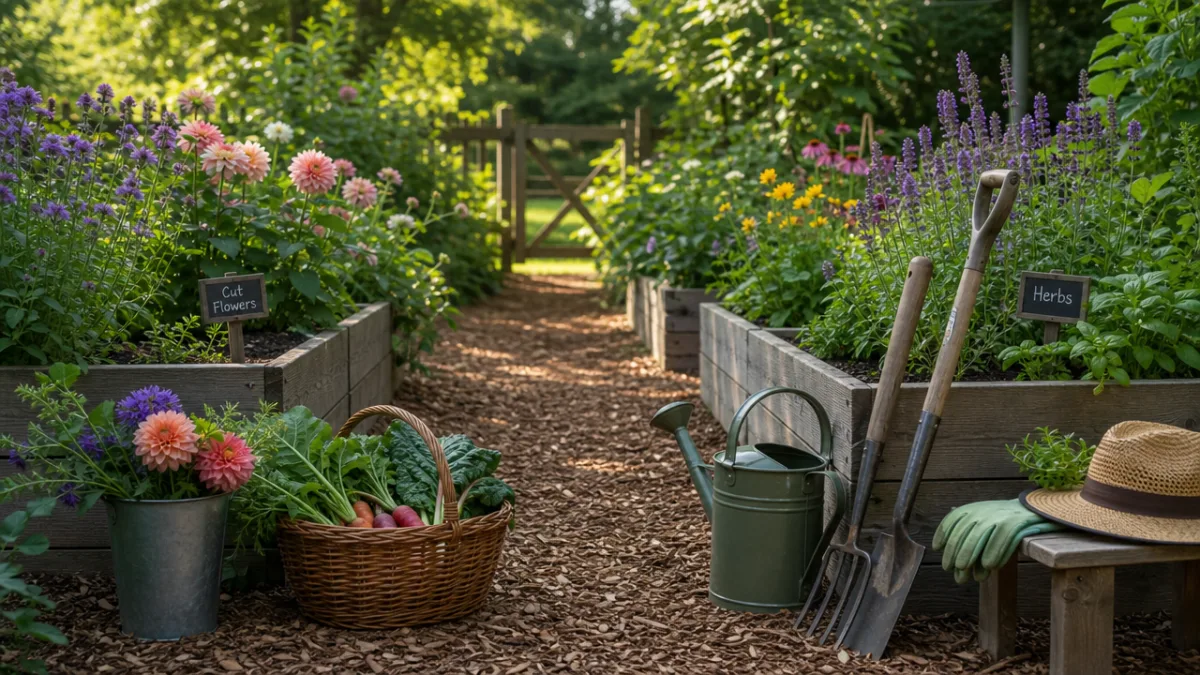
What you put on your paths matters more than you might think over the long term. Wood chips slowly break down and add organic matter to the soil around them, which is a nice bonus. Gravel is more permanent and low-maintenance. Bare soil paths work fine in dry climates but get messy fast anywhere rain is common. Whatever you choose, edging your paths clearly with boards, bricks, or even a clean mowing line helps you stay disciplined about not crowding your planting areas — and it makes the whole garden look intentional rather than improvised.
Raised Beds Versus In-Ground Beds: Dimensions That Work for Each Style
Whether you’re building raised beds or planting directly in the ground changes which dimensions you should be thinking about. With raised beds — whether you’re framing them in wood, galvanized steel, or composite lumber — you’ve got an extra variable to consider: height. A standard 12-inch raised bed works well for most cut flowers, but if you’re growing dahlias, tall lisianthus, or long-stemmed sunflowers, going deeper at 18 inches gives their root systems more room and improves the drainage those varieties really need to produce strong, long stems.
Raised beds also change the math on reach, since the elevation means you’re not leaning down as far. High raised beds in the 24 to 30-inch range are especially useful for gardeners with back issues or mobility limitations — at that height, you can do much of the planting and harvesting while seated or standing upright, which adds up to a lot of saved strain over a full growing season. The tradeoff is that they cost more to build and take a bigger volume of soil to fill.
In-ground beds have their own advantages, particularly the fact that you’re tapping into your existing soil ecosystem — the beneficial fungi, earthworms, and microorganisms that support healthy plant growth naturally. The width recommendations stay the same (30 to 48 inches with clear paths), but you have more freedom with length since you’re not constrained by building material costs. In-ground beds also tend to hold moisture better in hot, dry climates, while raised beds have the edge in wetter regions where drainage is a constant challenge.
Planning Your Layout: Orientation, Sun Exposure, and Bed Arrangement
Even perfectly sized beds will underperform if you put them in the wrong spot or point them the wrong direction. Most cut flowers need at least six to eight hours of direct sun per day to produce the long, strong stems you’re after, and orienting your beds on a north-to-south axis is the best way to maximize that exposure across the full width of each bed. It also prevents taller plants from casting shadows over shorter neighbors as the sun moves through the sky during the day.
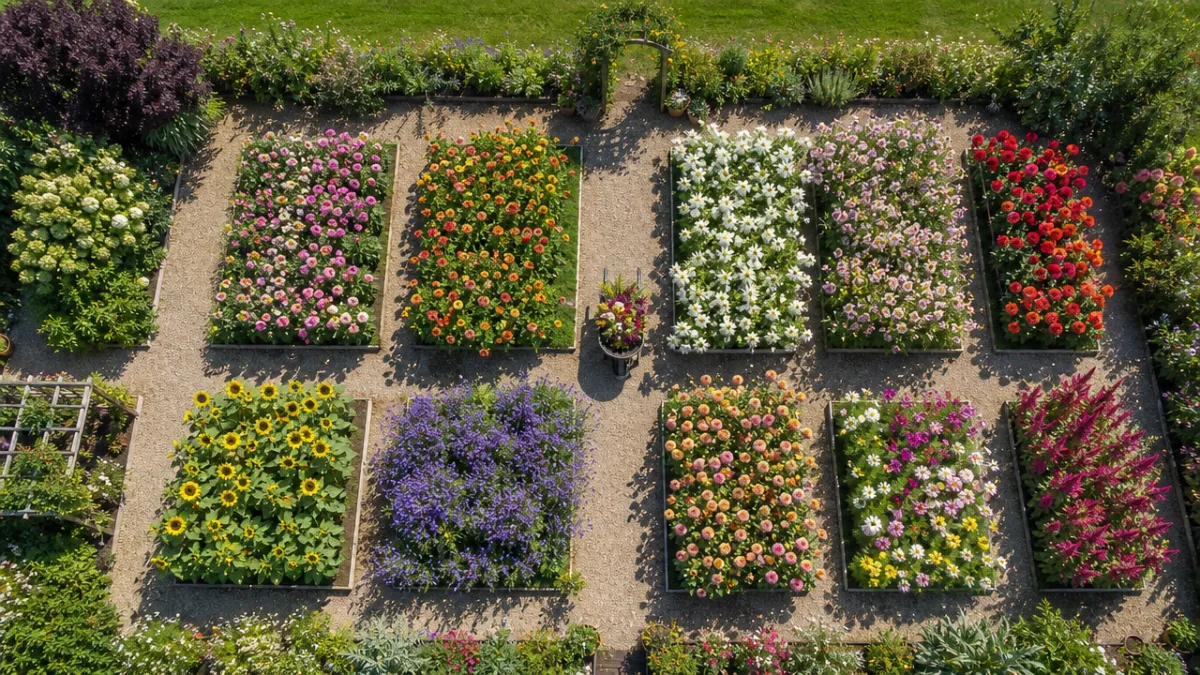
When you’re placing multiple beds, group them close enough together to make irrigation and soil care easy, while still keeping those generous path widths we talked about earlier. A common approach is clustering three to five beds in a rectangular block with a slightly wider perimeter path — around 36 inches — for cart and equipment access. One thing people often underestimate: put your beds as close to your water source as you reasonably can. Dragging a hose across a large yard every time you need to water adds up to real time and energy over a full growing season.
And don’t completely ignore the aesthetics when you’re finalizing your layout. A cut flower garden doesn’t have to be purely functional — rows of blooms at different heights in well-proportioned beds can be genuinely lovely to be in. Plan to put your tall flowers like sunflowers, dahlias, and amaranth at the north end of each bed, where they won’t shade shorter varieties like sweet peas, ranunculus, and anemones. Working out that vertical arrangement before you plant a single seed is one of those habits that separates gardens that thrive from ones that just muddle through season after season.
- Bed width: 30 to 48 inches for two-sided access; 24 inches maximum for single-sided access
- Bed length: 25 to 50 feet is ideal for home gardens; keep all beds the same length for efficiency
- Raised bed height: 12 inches standard; 18 inches for deep-rooted varieties; 24 to 30 inches for accessible gardening
- Path width: 18 to 24 inches for foot traffic; 30 inches or more if using a garden cart
- Bed orientation: North-to-south axis for maximum and even sun exposure across the full bed
- Beginner starting point: One bed, 4 feet wide by 25 feet long, giving approximately 100 square feet of growing space
Taking the time to think through your dimensions before you break ground or cut any lumber is genuinely the highest-return thing you can do for your growing season. The flowers themselves are fleeting — a few days in a vase and they’re done — but a well-built, well-planned garden bed can work for you productively for ten years or more. Measure carefully, plan it out, build with these principles in mind, and your cut flower garden will pay you back with beautiful, abundant blooms right from that very first season.








What do you think?
It is nice to know your opinion. Leave a comment.