










Bee Orchid: Nature’s Most Astonishing Floral Mimic
Introduction to the Bee Orchid
Of all the orchid species out there — and there are thousands — few stop people in their tracks quite like the Bee Orchid (Ophrys apifera). This wildflower, native to Europe, North Africa, and parts of the Middle East, has pulled off one of the most jaw-dropping tricks in the entire plant kingdom: its flowers look almost exactly like a bumblebee in mid-flight. It’s convincing enough to have puzzled and delighted botanists, naturalists, and curious passersby for centuries. In many ways, the Bee Orchid is evolution showing off.
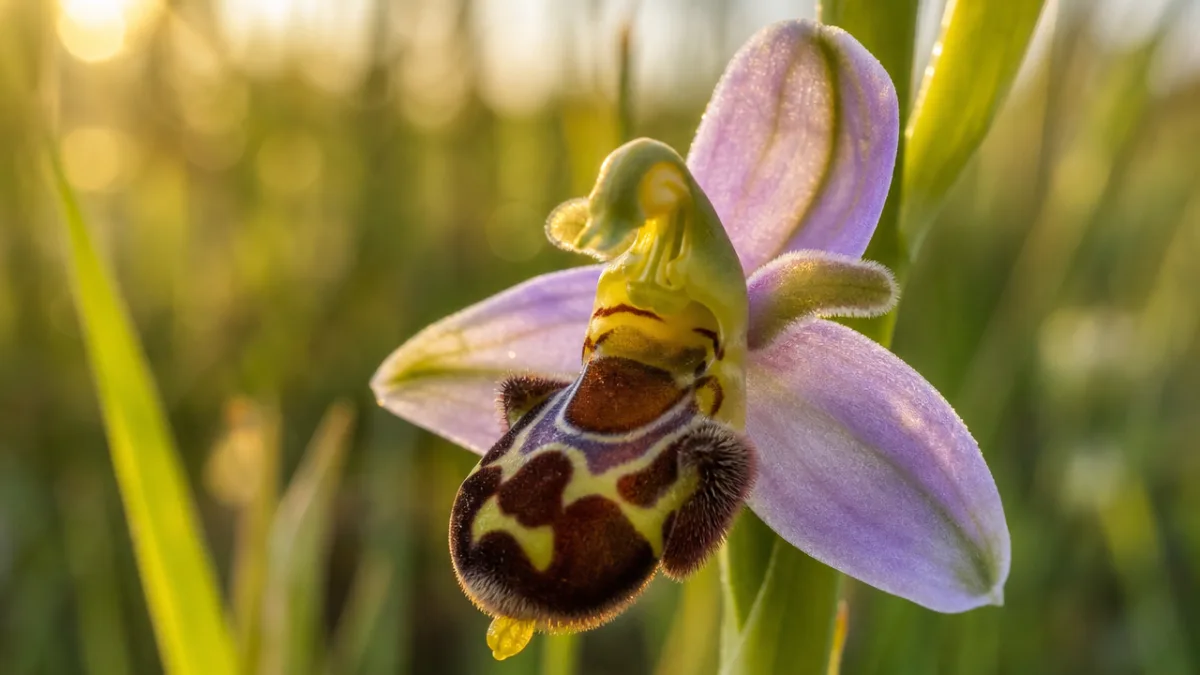
The Bee Orchid belongs to the genus Ophrys, which includes around 250 species — all of them running some version of the same con, tricking pollinators into doing their bidding through sexual deception. But Ophrys apifera takes the artistry to another level. The lip of the flower, called the labellum, is velvety, richly patterned in deep maroon and brown, and shaped so precisely like a female bee that male bees are actually drawn to try mating with it. This behavior — called pseudocopulation — is one of the most dramatic examples of plant-insect co-evolution that scientists have ever come across.
What makes the whole thing even more interesting is the orchid’s rather contradictory relationship with pollinators depending on where it lives. In Mediterranean regions, it counts on male solitary bees of the genus Eucera to handle cross-pollination. But head north to Britain, and those bees are nowhere to be found — so the plant has simply learned to pollinate itself instead. That kind of flexibility says a lot about the Bee Orchid’s resilience, and it helps explain how a single species manages to thrive across such a wide swath of Europe and beyond.
Anatomy and Appearance
The Bee Orchid is a genuinely beautiful plant to look at up close, and its structure is worth understanding because every part of it is doing something clever. Plants typically grow between 15 and 45 centimeters tall, sending up a slender spike carrying anywhere from two to seven flowers. The upper petals — the sepals — are a soft rosy pink, sometimes almost white, and they spread outward like little wings on either side of the central lip. They work double duty: catching the eye of passing insects from a distance while also creating a contrasting backdrop that makes the bee-like labellum look even more convincing.
The labellum is really the star of the show. It’s three-lobed, covered in soft velvety hairs that mimic the fuzzy texture of a bee’s body, and decorated with intricate markings in brown, maroon, yellow, and cream. Right in the center sits a distinctive H- or U-shaped patch called the speculum — shiny and almost mirror-like — which adds one final touch of realism to the whole illusion. When a male bee approaches from just the right angle, it genuinely looks like a female bee sitting on a pink flower. That resemblance didn’t happen by accident; it’s the product of millions of years of evolutionary fine-tuning.
The plant’s leaves are a study in contrast with all that floral drama. They emerge as a basal rosette in autumn, persist through winter, and allow the orchid to photosynthesize during the milder months and build up energy for spring flowering. They’re grey-green, oval to lance-shaped, and completely plain — no spots, no markings, nothing fancy. Depending on the season you come across one, you could almost be looking at two entirely different plants.
The Science of Sexual Deception
The Bee Orchid’s pollination strategy is a remarkably intricate piece of chemical and visual trickery that scientists have been picking apart for decades. The flowers release chemical compounds called semiochemicals that closely mimic the sex pheromones of female bees. Male bees that emerge in spring — often before the females have appeared — are especially susceptible to these signals, which trigger deep instinctual urges to find a mate. Essentially, the orchid hijacks the bee’s own reproductive drive and puts it to work for the plant instead.
When a male bee lands on the labellum and tries to mate with what it thinks is a female, it brushes against the orchid’s pollinia — small bundles of pollen attached to sticky pads called viscidia. These latch onto the bee’s head or thorax, and when the same bee gets fooled again at another Bee Orchid flower, the pollinia get transferred to that flower’s stigma, completing cross-pollination. The whole system is beautifully timed: the pheromone mimicry kicks in exactly when male bees are out and about but females haven’t yet emerged, maximizing the chances of catching a willing (if unwitting) pollinator.
What researchers have found particularly fascinating is just how specific this chemical mimicry really is. Different Ophrys species target different bee species, with each using a subtly different chemical profile to attract its chosen pollinator. That specificity helps keep related orchid species reproductively isolated even when they grow side by side — and over long stretches of geological time, each new variation in chemical signal can open the door to exploiting a new pollinator, potentially giving rise to an entirely new orchid species. It’s a neat explanation for why the genus has diversified so explosively across the Mediterranean.
Habitat, Range, and Ecology
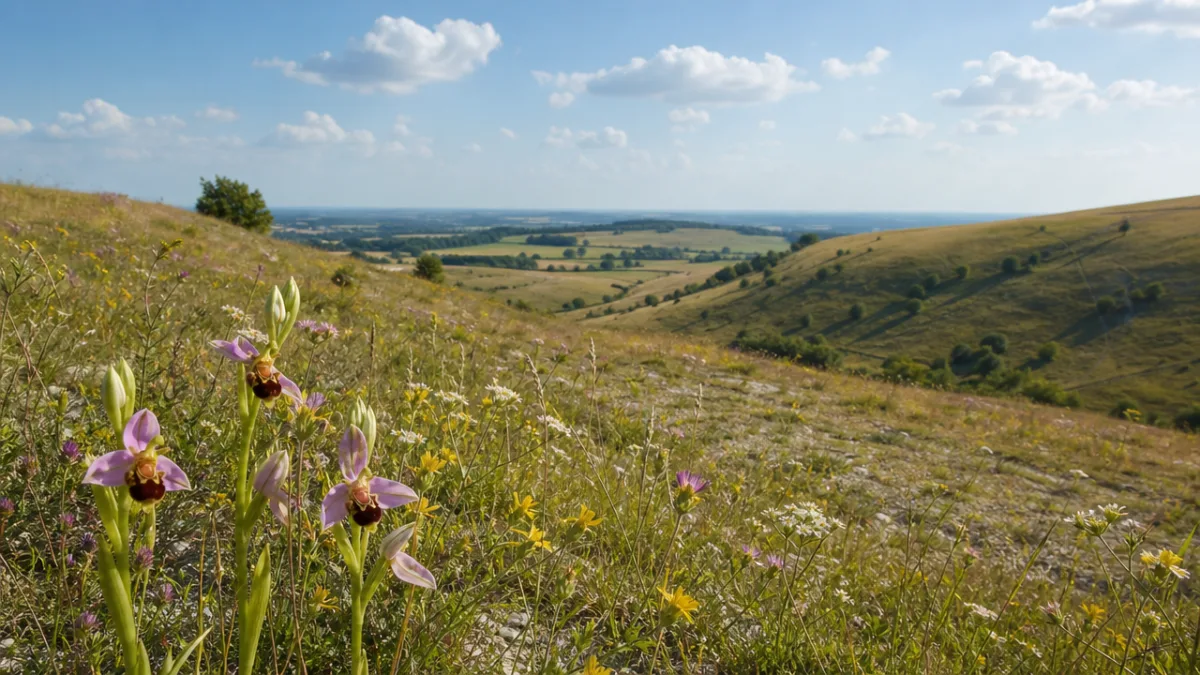
The Bee Orchid is a plant that likes life on the lean side. It favors open, sunny spots with well-drained, alkaline soils — chalk and limestone grasslands, old meadows, road verges, quarry floors, coastal dunes, and even the grassy edges of old railway lines. The key is low soil fertility and short vegetation, which keeps the more aggressive grasses and wildflowers from crowding it out. In Britain, it has popped up in some unexpectedly urban spots — roundabouts, playing field margins, school grounds and hospital lawns — anywhere a thin patch of calcareous soil has been left to its own devices.
Its range stretches from Britain and Ireland in the northwest all the way across Europe and the Mediterranean, and east into Turkey, the Caucasus, and parts of the Middle East and North Africa. It’s most abundant in the Mediterranean region, particularly where traditional low-intensity farming has kept old meadows and grasslands intact and free from plowing or fertilizers. In Britain, your best chances of finding one are in the chalk counties of southern England — Kent, Sussex, Hampshire, Wiltshire — though records extend as far north as Yorkshire and parts of Wales.
The orchid’s ecological story doesn’t begin and end with bees, though. Like all orchids, it depends critically on a partnership with soil fungi, especially in its earliest life stages. Orchid seeds are almost absurdly tiny and contain virtually no nutrient reserves, meaning they can only germinate if the right fungal partner moves in to supply the seedling with the carbohydrates it needs to get going. This dependency makes orchids surprisingly sensitive indicators of soil health and long-term ecological stability, and it’s a big part of why you can’t just dig one up and replant it somewhere else — the whole underground community has to come with it.
Life Cycle and Reproduction
The Bee Orchid takes its time. From germination to first flower can be a surprisingly long journey — the tiny seeds sprout with fungal help, but the resulting protocorm, a little undifferentiated lump of plant tissue, may spend several years underground, entirely dependent on its fungal partner for nutrition before it produces even its first above-ground leaves. After that, it can still be another three to five years before the plant flowers for the first time. Patience is built into this plant’s DNA.
In Britain, where bees don’t reliably show up to do the pollination work, the Bee Orchid has developed a neat workaround. As a flower matures, the stalks holding the pollen masses gradually dry out and lengthen, causing the pollinia to droop forward until they make contact with the flower’s own sticky stigma. It’s a tidy piece of self-pollination that sacrifices some genetic diversity but guarantees seed set regardless of what the local bee population is up to. It’s exactly the kind of pragmatic solution that makes this plant so interesting — it doesn’t just rely on one strategy when conditions vary.
Individual plants don’t necessarily flower every year. After a flowering season, a plant may retreat entirely underground, surviving as a pair of tubers while it rebuilds its energy reserves. In a good year, an established plant might throw up several flowering spikes; in a dry summer or cold spring, it might not appear above ground at all. This is worth knowing if you’re counting populations at a particular site, because numbers can swing dramatically from year to year and a quiet year doesn’t necessarily mean a population is in trouble — the plants may simply be taking the season off.
Seed dispersal is handled by the wind, which is quite happy to carry the dust-fine seeds considerable distances. The catch is that successful germination still hinges on landing somewhere the right mycorrhizal fungi are already present — a demanding ask that makes rapid colonization of new ground pretty unlikely. It helps explain why Bee Orchids tend to show up on disturbed calcareous soils only after the soil ecosystem has had time to mature, and why, once they do establish themselves somewhere, they tend to stick around for decades.
Conservation Status and Threats
Across most of its range, the Bee Orchid isn’t in immediate danger — in Britain it’s classified as Least Concern — but that relatively comfortable status is no reason to be complacent. The plant is genuinely vulnerable to a handful of pressures that have hit populations hard in certain areas, and the trends that caused those losses haven’t gone away. The biggest long-term problem is the disappearance of traditional unimproved grassland, which has been shrinking steadily since the mid-twentieth century as agricultural intensification, urban development, and the decline of traditional land management have reshaped the countryside.
Artificial fertilizers are a particular problem. When nutrients are added to grassland, the more vigorous grasses and herbs respond enthusiastically, growing tall and dense and shading out slower, more delicate plants like the orchid. Abandoning grazing or cutting altogether creates a similar outcome, as rank vegetation, scrub, and eventually woodland gradually take over ground that was once open and sunny. On the other end of the spectrum, overgrazing or mowing at the wrong point in the season can stop plants from flowering or setting seed entirely — which is a reminder that good habitat management isn’t just about doing something, it’s about doing the right thing at the right time.
Climate change adds another layer of uncertainty. Shifting temperatures and rainfall patterns could throw off the carefully timed synchrony between orchid flowering and bee emergence, which the cross-pollination strategy depends on. In the Mediterranean, hotter and drier summers could stress tubers and reduce the plant’s ability to flower in subsequent years. Interestingly, warming in Britain might eventually allow the bee species needed for cross-pollination to extend their range northward, which could change how British populations reproduce — though whether that would be a straightforward benefit is genuinely hard to predict.
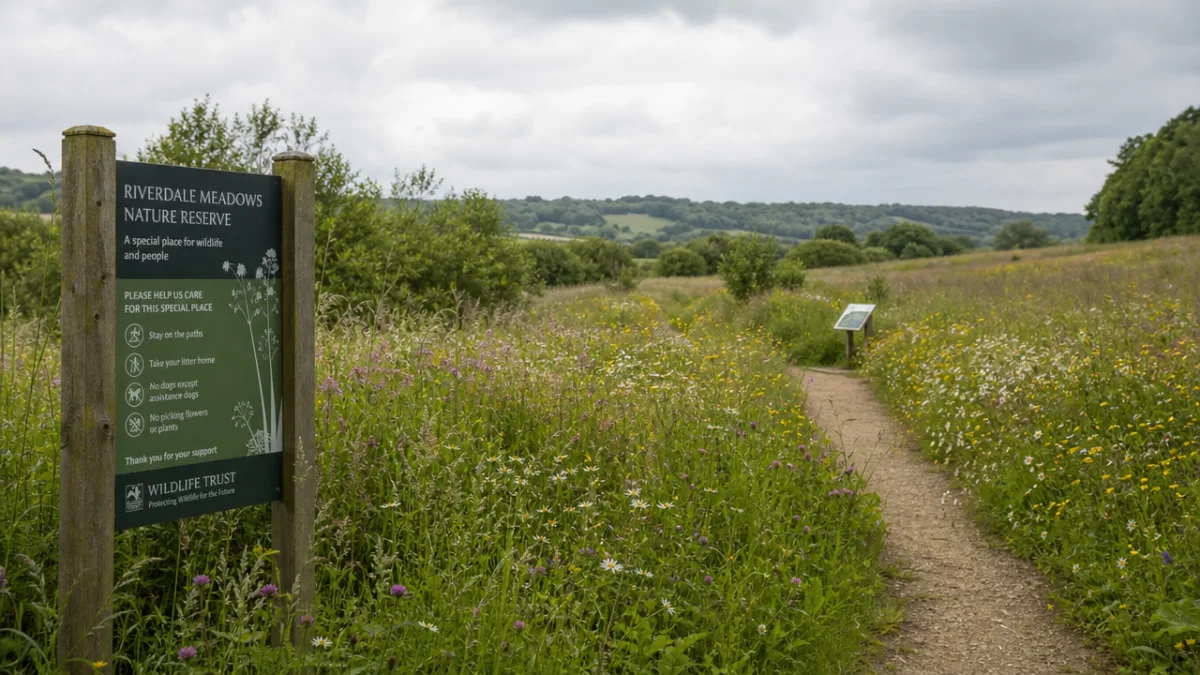
On the positive side, conservation efforts centered on protecting and carefully managing existing grassland habitats are making a real difference. Nature reserves run by Natural England, the Wildlife Trusts, and Plantlife support healthy populations through traditional hay cutting, controlled grazing, and scrub clearance. There’s also growing enthusiasm for creating new habitat on restored calcareous ground — road verges, brownfield sites, and similar spots — to give the species more stepping stones across an increasingly fragmented landscape.
Cultural Significance and Human Fascination
People have been captivated by the Bee Orchid for a very long time. Its extraordinary appearance has sparked wonder, myth, and artistic expression across centuries and cultures. In the old European tradition known as the Doctrine of Signatures — the belief that plants resembling body parts or animals could be used medicinally to treat related conditions — the orchid’s bee-like appearance was taken as a sign that it could treat bee stings and ailments of the nervous system. There’s no scientific basis for any of that, of course, but it does say something about how powerfully the flower imprints itself on the human imagination.
In Britain today, the Bee Orchid has developed something of a celebrity status among wildflower enthusiasts. Word of a new colony turning up on a road verge or a school playing field spreads quickly through local nature groups and social media, and the plant reliably draws crowds on botanical field trips. That enthusiasm has done genuine good, helping to raise the profile of chalk grassland conservation and turning the Bee Orchid into something of a flagship for protecting lowland calcareous habitats more broadly.
For photographers and artists, the appeal is obvious. The labellum rewards close attention — the closer you look, the more intricate the layers of color, texture, and pattern become, in ways that a casual glance walking past would never reveal. The flower has appeared in botanical illustration since the seventeenth century, and contemporary wildlife photographers often describe it as one of the most satisfying and technically demanding wildflower subjects they encounter. Its combination of beauty, biological complexity, and relative accessibility in the British countryside makes it a natural draw for anyone working creatively with the natural world.
The Bee Orchid also turns out to be a surprisingly effective teaching tool. It brings together natural selection, co-evolution, sexual selection, and the intricacies of species interactions in a single, memorable package — and because the story involves deception, sex, and an adaptation that seems frankly implausible for something growing on an English roadside, it tends to hook students who might otherwise find botany a bit dry. It’s a regular presence in school curricula, nature education programs, and popular science writing, and it earns its place every time: few things communicate the strangeness and brilliance of evolutionary biology quite as vividly as this small, improbable flower.








What do you think?
It is nice to know your opinion. Leave a comment.