










The Complete Guide to Growing Wisteria: Beauty, Patience, and the Reward of Cascading Blooms
Understanding Wisteria: A Vine Worth Getting to Know
If you’re looking for a climbing plant that can genuinely stop people in their tracks, wisteria is hard to beat. Those long, drooping flower clusters — purple, blue, white, or pink — that cascade off pergolas, arbors, and fences have a way of making even the most experienced gardeners pause and stare. You’ve probably seen it somewhere that stuck with you: spilling over an old stone wall in the French countryside, or arching gracefully across a Japanese garden bridge. Growing it yourself is absolutely doable, but it helps to go in with a clear picture of what this plant is like to live with.
Wisteria is native to China, Japan, and parts of the eastern United States, and it belongs to the pea family (Fabaceae). It’s a woody, deciduous vine, and the three species you’ll most often encounter are Wisteria sinensis (Chinese wisteria), Wisteria floribunda (Japanese wisteria), and Wisteria frutescens (American wisteria). They each have their own personality. Chinese wisteria is the most vigorous of the bunch and often blooms before its leaves even fully open, which gives it that almost ghostly, ethereal quality. Japanese wisteria produces the longest flower clusters of any species and blooms a little later in the season. American wisteria is much more easygoing — less aggressive, more compact, and honestly a smarter pick if you have a smaller garden or you’d rather not spend your weekends managing an extremely enthusiastic vine.
One thing worth being upfront about before you plant: wisteria is not for the impatient. A plant grown from seed can take ten to fifteen years before it produces a single flower. Even a grafted plant from a good nursery might keep you waiting three to five years. A lot of new growers find this maddening, which is completely understandable. But those who stick with it get something remarkable in return — a plant that can live and bloom for decades, and in some documented cases, for centuries.
Choosing the Right Location and Soil Conditions
Where you plant your wisteria might be the single most important decision you make, and getting it right early saves a lot of headaches later. Wisteria wants sun — lots of it. We’re talking at least six hours of direct sunlight per day if you want reliable blooms. In a shadier spot, the vine will still grow, and sometimes grow quite enthusiastically, but flowering will be sparse or won’t happen at all. A south- or west-facing location is ideal, especially if you’re in a cooler climate where you need to squeeze every bit of warmth out of the growing season to set flower buds properly.
The good news on soil is that wisteria isn’t terribly picky. It can handle clay, loam, or sandy ground as long as drainage is decent — standing water is a problem and can cause root rot. Aim for a slightly acidic to neutral pH, somewhere in the 6.0 to 7.0 range. If your soil is heavily compacted or pretty poor, mixing in some compost before planting will help. That said, don’t go overboard enriching the soil. Soil that’s too rich and high in nitrogen will push the plant toward lush leafy growth at the expense of flowers, which is exactly what you don’t want.
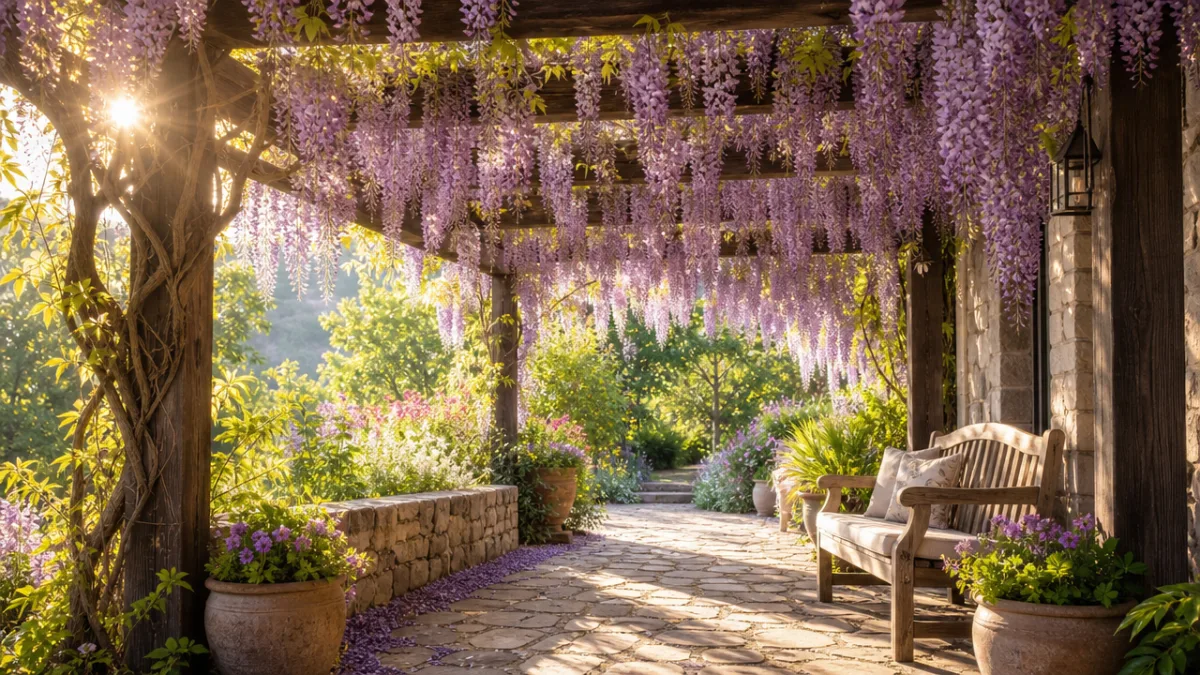
You also need to think seriously about the structure your wisteria is going to climb. Mature wisteria can easily reach 30 feet and gets surprisingly heavy. That charming little wooden lattice trellis from the garden center? It won’t cut it for long. You need something solid and permanent — a heavy-duty pergola, a robust metal arbor, or thick wire cables anchored securely into masonry. Even good wooden structures will eventually need replacing, and trying to move an established wisteria out of the way to do so is a real ordeal. Build something that’s meant to last, right from the start.
Planting Wisteria: Getting Started the Right Way
Spring and autumn are both good times to plant wisteria, when temperatures are mild enough for the root system to get established without being stressed by heat or cold. For most home gardeners, buying a container-grown plant from a nursery is the way to go. When you’re ready to plant, dig a hole at least twice as wide as the root ball but roughly the same depth. The extra width gives the roots room to spread outward naturally, which sets the plant up for much better long-term stability and growth.
Before you drop the plant in, take a moment to loosen any roots that have started circling around the inside of the pot. Left alone, those circling roots can eventually wrap around the plant’s own base and choke it — so it’s worth the extra minute to gently tease them outward. Set the root ball in the hole so the crown of the plant sits at or just barely above the surrounding soil. Fill in around it with the original soil, pressing down gently as you go to close up any large air pockets. Then water it thoroughly — a good deep soak right after planting helps settle the soil and gets those roots off to a strong start.
Once it’s in the ground, lay down a two- to three-inch layer of organic mulch around the base — wood chips, shredded bark, or compost all work well. Keep it a few inches away from the stem itself to avoid rot. The mulch helps hold moisture in, keeps the soil temperature more even, and cuts down on weed competition. During that first growing season, keep an eye on watering during dry stretches, since the plant is still getting its roots established. After a year or two, wisteria becomes noticeably more drought-tolerant, though consistent moisture through the growing season will always give you better results.
Watering, Feeding, and Seasonal Care
Once wisteria is established, watering is pretty manageable. Through spring and summer, you want the soil to stay consistently moist but not soggy. Deep, infrequent watering beats shallow watering every day — it encourages the roots to go deeper, which makes the plant tougher during dry spells. In most climates, a thorough soaking once a week during dry weather does the trick, though a younger vine will need more attention than a mature one. If you’re in a hot or dry region, a drip system on a timer can take a lot of the guesswork out of it.
Fertilizing is one of those areas where less is genuinely more with wisteria. One of the most common frustrations people have is a vine that grows like crazy but never flowers, and overfeeding with the wrong fertilizer is often part of the problem. High-nitrogen fertilizers push the plant into producing lots of leaves and stems, which is not what you’re going for. Instead, reach for a low-nitrogen fertilizer with higher phosphorus — something designed for tomatoes or flowering plants works well. Apply it once in early spring when new growth is just starting, and maybe once more in midsummer if you feel the plant needs it, but don’t push it.
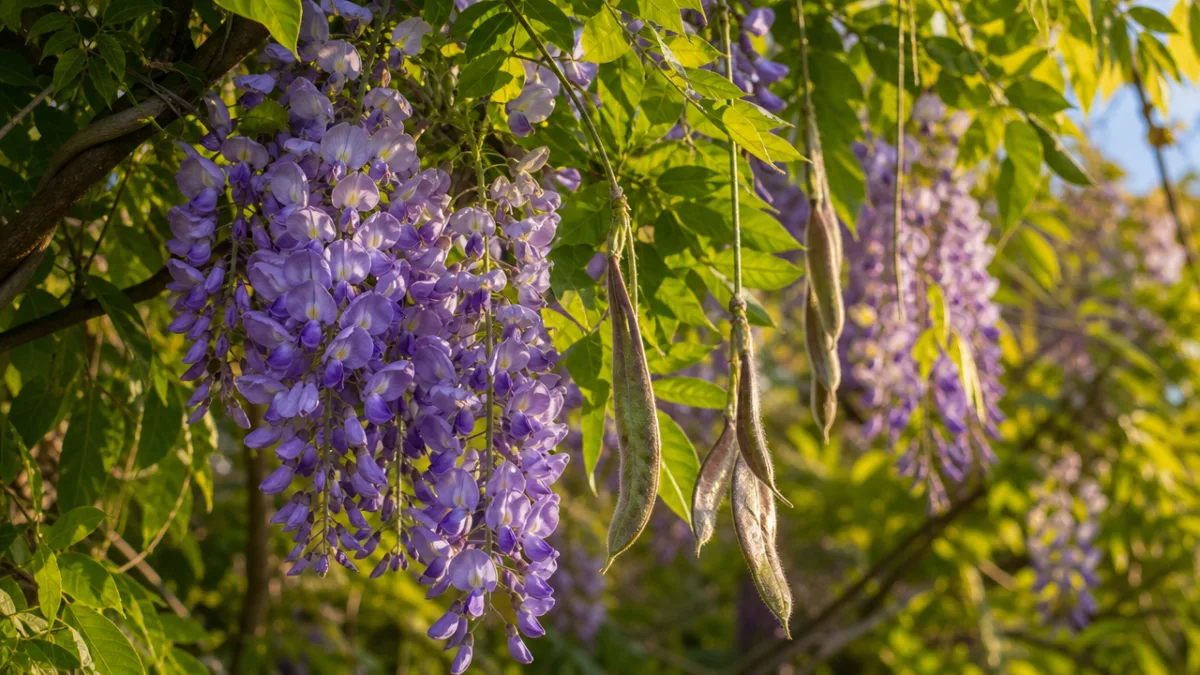
Wisteria follows a pretty satisfying seasonal rhythm once you get to know it. Spring is the main event — buds open, flowers appear, and the whole vine becomes something spectacular. Summer shifts into full leafy growth mode as the vine pushes out new shoots in every direction. Come autumn, the leaves go golden before dropping, and you’ll often see long, velvety seed pods hanging from the branches. Winter strips everything back and reveals the vine’s gnarled, sculptural framework in all its bare beauty. Each season has its own character, and learning to read your plant through all of them is one of the more rewarding parts of growing wisteria.
Pruning Wisteria: The Key to Abundant Blooms
If there’s one thing that separates a wisteria that blooms magnificently from one that just sits there looking leafy and sullen, it’s pruning. Wisteria needs two pruning sessions a year, and once you understand what each one is actually doing for the plant, the whole process feels a lot less intimidating. Pruning is basically how you tell wisteria to stop pouring all its energy into long green shoots and start putting it into flower buds instead — and over time, it genuinely transforms the plant.
The first session is in late winter or very early spring, before any new growth gets going. This is the harder of the two cuts. You’re going back to all those long, whippy shoots the vine threw out last summer and cutting them way back — down to just two or three buds from where they attach to the main framework of the plant. It can feel almost cruel the first time you do it, because you’re removing a lot. But this is exactly what prompts the plant to produce the short, stubby little flowering spurs that are responsible for all those blooms. While you’re at it, take out anything dead, damaged, or crossing through the center of the plant.
The second session comes in midsummer, usually around July or August. By that point, the vine will have pushed out a lot of new growth that’s starting to look pretty unruly. Cut those new shoots back to five or six leaves from the main stem. This tidies things up, improves airflow through the plant, and gets a head start on shortening those shoots before winter comes around and you cut them back even further. Think of the two sessions as a team — summer does the first pass, winter finishes the job. Do both consistently, and you’ll have a wisteria that flowers rather than one that just keeps growing.
Troubleshooting Common Problems and Growing Concerns
For all its dramatic reputation, wisteria is actually a pretty tough, pest-resistant plant. But there are a few issues that come up often enough to be worth knowing about. The most common complaint — and you’ll notice it’s come up more than once in this guide — is a vine that grows with great enthusiasm but simply won’t bloom. Beyond the pruning and fertilizing approaches already covered, other culprits include not enough sunlight, late frosts that kill off the developing flower buds, or in the case of a seed-grown plant, just needing more time to reach maturity. Sometimes the honest answer is: give it another year or two.
On the pest front, wisteria usually holds its own without much help. Aphids are the most common visitors, and they tend to cluster on tender new growth in spring. A firm blast from the garden hose is usually enough to deal with them, and a healthy, vigorous plant can typically shrug off minor aphid pressure without lasting damage. Scale insects and wisteria borers are more serious problems that sometimes affect older vines and may need targeted treatment. Powdery mildew and leaf spots can show up during humid summers, and keeping the plant well-pruned to allow good airflow is your best defense there.
Something worth addressing honestly is the invasiveness issue. Chinese and Japanese wisteria are on invasive species lists in a number of US states, particularly across the Southeast, because they can escape garden boundaries and crowd out native plants. If you live in one of those areas, American wisteria is a much more responsible choice — it’s still beautiful, just far better behaved. Cultivars like ‘Amethyst Falls’ and ‘Blue Moon’ have become popular for good reason: lovely blooms, manageable growth, and a lot less guilt. Being a thoughtful gardener means thinking about what’s happening beyond your own fence line, and this is one of those cases where it really matters.
Quick Reference Growing Tips
- Plant in full sun with at least six hours of direct light daily for reliable blooming.
- Use a sturdy, permanent support structure that can bear significant weight over many years.
- Prune twice yearly — hard in late winter and lightly in midsummer — to encourage flower bud development.
- Avoid high-nitrogen fertilizers, which favor leafy growth over flowers.
- Be patient: grafted nursery plants may take three to five years to bloom; seed-grown plants take far longer.
- Consider American wisteria cultivars if you garden in a region where invasive spread is a concern.
- Water deeply and infrequently once established, and mulch the root zone to retain moisture.
The Long View: Enjoying Wisteria for Decades to Come
At its core, growing wisteria is an act of faith. It’s not like planting annuals that reward you within a single season, or even fast-growing perennials that hit their stride within a year or two. Wisteria asks for real investment — time, consistent attention, and genuine patience — before it delivers the show you’re hoping for. The gardeners who do best with it are the ones who find something to appreciate in every stage: those first tentative shoots reaching for their support, the gradual thickening of the woody stems, the first small cluster of blooms that appears after years of waiting, and eventually the full, mature vine that just stops people dead in their tracks.
Once it’s there, though, an established and well-managed wisteria is one of the most low-maintenance high-impact plants you can have in a garden. No replanting, decent drought tolerance, and just two pruning sessions a year to keep it productive and shapely. The work you put in early — siting it properly, building a support that can go the distance, learning the pruning rhythm — comes back to you for decades. There are wisteria vines in England and Japan that are hundreds of years old, held up by elaborate structures and drawing crowds of visitors every spring. The vine you plant this year is the beginning of that same long story.
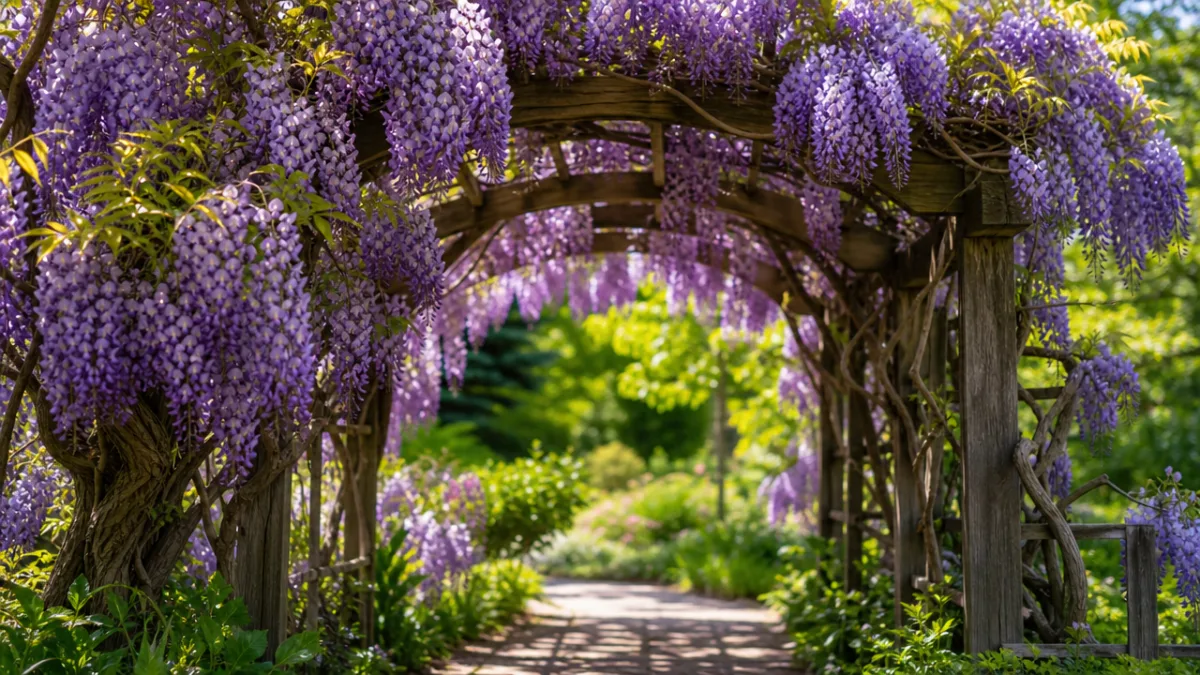
Whether you’re imagining wisteria tumbling romantically over a garden gate, making a bold statement across the front of your home, or simply casting some dappled shade over a spot where you like to sit in summer — this plant can do all of that and then some. What it asks for in return is straightforward: sun, a solid structure, sensible feeding, consistent pruning, and time. Give it those things, and it will give you back one of the most genuinely breathtaking displays in the gardening world. A living curtain of color and fragrance that arrives every spring like a reminder of why you planted it in the first place.








What do you think?
It is nice to know your opinion. Leave a comment.