










26 Neck Warmer Crochet Patterns: Fashionable DIY Projects for Beginners
Why Crocheted Neck Warmers Are the Perfect Beginner Project
If you have been looking for a way to dive into the world of crochet without feeling overwhelmed, neck warmers are one of the most rewarding places to start. Unlike full sweaters or blankets, a neck warmer is compact, quick to finish, and immediately wearable. Most patterns can be completed in just a few hours, which means you get that satisfying sense of accomplishment without committing days or weeks to a single project.
Beyond the practical time savings, neck warmers offer an incredible range of creative expression. You can work with bold chunky yarns that showcase dramatic textures, or use fine threads to create delicate lace-like designs. The relatively small surface area means that even a simple stitch pattern becomes a standout feature, and experimenting with color combinations is low-risk because you are not investing in yards and yards of expensive yarn before you see the result.
There is also a deeply satisfying functional element to crocheted neck warmers. Handmade items carry warmth in more ways than one — they represent hours of care, intention, and creativity. Whether you are making one for yourself or gifting it to someone you love, a crocheted neck warmer communicates thoughtfulness in a way that store-bought accessories simply cannot replicate. This combination of accessibility, creativity, and purpose is exactly why so many crafters fall in love with this particular project.
Essential Tools and Materials to Get Started
Before casting on your first stitch, it helps enormously to gather the right supplies. The good news is that crocheting a neck warmer requires very little in the way of equipment. At the most basic level, you need a crochet hook in the appropriate size for your chosen yarn, the yarn itself, a yarn needle for weaving in ends, and a pair of scissors. Most beginners find that starting with a medium-weight yarn — commonly labeled as worsted weight — paired with a size 5 mm or 5.5 mm hook gives them the easiest experience, as the stitches are large enough to see clearly without being too bulky to manage.
Yarn selection can feel daunting at first given the sheer variety available, but for neck warmers a few considerations should guide your choice. Softness is paramount since the finished piece will sit against your skin and neck all day. Look for yarns labeled as superwash merino, alpaca blends, or acrylic blends specifically marketed as soft, because scratchy fibers will make even the most beautiful pattern unwearable. Additionally, consider the drape and stretch of the yarn — fibers with a slight elasticity, such as those containing a small percentage of nylon or bamboo, will help your finished neck warmer maintain its shape over time.
A few additional tools can make your crocheting experience significantly more enjoyable. Stitch markers are inexpensive little rings that clip onto your work and help you track your stitch count, which is especially useful when you are working in the round. A row counter or a simple notepad to track your progress will save you from the frustrating experience of losing your place mid-pattern. If you plan to block your finished piece — a process of wetting and shaping it to its final dimensions — a set of blocking mats and pins is worth the small investment for the polished results they produce.

Understanding the Most Popular Stitch Patterns for Neck Warmers
One of the joys of crocheting neck warmers is the extraordinary variety of stitch patterns available to you, even as a beginner. The single crochet stitch produces a dense, tightly woven fabric that is incredibly warm and sturdy — ideal for truly cold climates. The half double crochet sits between single and double in height, creating a fabric that is slightly softer and more flexible, which many crafters prefer for items that sit close to the skin. The double crochet, meanwhile, works up quickly and produces a more open fabric with a beautiful drape.
Textured stitches are where neck warmers really come alive visually. The moss stitch, which alternates single crochets with chain spaces, creates a subtle dotted texture that looks far more complex than it actually is. The shell stitch produces elegant fan-shaped clusters that add a decorative feminine touch, while the cable stitch — achieved through front post and back post double crochets — mimics the look of traditional knitted cables and looks impressively intricate even though it requires only a little practice to master. These are all achievable by beginners who are willing to work through a few practice swatches.
For those who want maximum visual impact with minimal technique, the bobble stitch and the puff stitch are extraordinary choices. Both involve working multiple loops into a single stitch to create raised, rounded clusters that pop out dramatically from the flat fabric. A row of bobbles running down a simple neck warmer transforms an otherwise basic piece into something that looks genuinely artisanal. As you grow in confidence, combining stitch patterns — for instance, a central cable panel flanked by moss stitch borders — opens up a world of design possibilities that will keep you inspired for years.
A Guided Tour Through 26 Stunning Pattern Styles
With so many patterns available, it helps to have a sense of what each type offers before you commit to one. The following categories represent the range of styles you will encounter across the 26 patterns in this collection, from the simplest rectangle cowls to more structured fitted designs. Understanding the shape and construction method of each type will help you choose the right pattern for your skill level, your yarn stash, and the aesthetic you are going for.
The classic infinity scarf and cowl shapes dominate beginner-friendly patterns, and for good reason. These designs are worked either flat and then seamed, or directly in the round, creating a continuous loop that slips over the head and sits around the neck without any complicated closures. Many of these patterns introduce the concept of working in the round, which is one of the most useful skills a crocheter can develop. Among the 26 patterns, several offer infinite-loop designs in varying widths — from a narrow snood that bunches elegantly at the throat to a wide dramatic cowl that drapes down over the shoulders.
Beyond the classic cowl, you will find patterns for buttoned neck warmers, which are worked as flat rectangles and then finished with one or more buttons for a tailored, adjustable fit. These are particularly practical because you can loosen or tighten the neck warmer depending on the temperature. Other patterns in the collection explore keyhole scarves — where a slit in the fabric allows one end to be threaded through — as well as crossover designs, asymmetrical shapes, and structured turtleneck-style warmers that extend higher to frame the jaw and chin. This variety means there is genuinely something for every taste and every level of experience within these 26 options.
- Simple Rectangle Cowls: The most beginner-friendly option, worked flat in rows and seamed at the end to form a loop. Ideal for practicing basic stitches and stitch consistency.
- Worked-in-the-Round Cowls: Eliminate seaming entirely and introduce the technique of joining rounds, which is foundational for countless other crochet projects.
- Buttoned Neck Warmers: Add a practical, tailored finish and introduce the skill of creating button loops or buttonholes within your work.
- Cable-Textured Designs: Use front and back post stitches to create raised texture, producing a high-impact look with intermediate-level techniques.
- Lace and Mesh Patterns: Perfect for transitional seasons, these lighter designs use chain spaces and open stitches to create airy, feminine accessories.
- Chunky Statement Cowls: Worked with super bulky yarn and a large hook, these pieces complete in as little as one to two hours and make bold fashion statements.
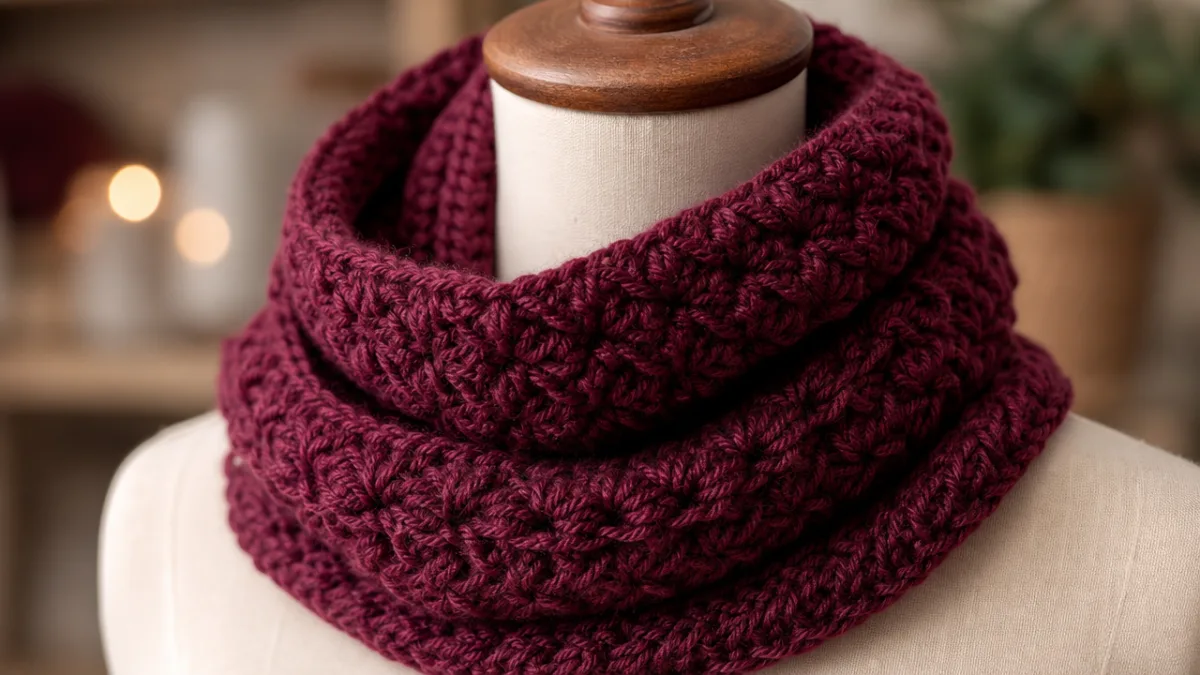
Step-by-Step Tips for Crocheting Your First Neck Warmer Successfully
Approaching your first neck warmer with a clear plan will dramatically increase your chances of finishing it with confidence. Start by reading through your chosen pattern entirely before you pick up your hook. This might feel tedious, but it allows you to understand the overall structure of the piece, identify any techniques you are unfamiliar with, and anticipate where you might need to slow down or seek additional guidance. Many beginners make the mistake of jumping in immediately and then encountering an unexpected instruction halfway through that throws off their entire piece.
Swatching is another step that beginners often skip but should not. A swatch is simply a small test square — typically four inches by four inches — worked in your chosen yarn and hook size before beginning the actual pattern. By counting how many stitches and rows fit into a four-inch square and comparing that number to the gauge specified in your pattern, you can determine whether your tension is tighter or looser than the designer’s. If your stitch count is too high, try a larger hook; if too low, try a smaller one. This simple step ensures that your finished neck warmer comes out the right size rather than ending up too tight or too loose around the neck.
As you work through the pattern, develop the habit of counting your stitches at the end of every row or round. This is especially important for beginners because it is surprisingly easy to accidentally skip a stitch or add an extra one, and catching the error early saves you from having to unravel significant amounts of work. Placing a stitch marker at the beginning of each round when working in the round is particularly helpful because it gives you a clear reference point. And when you do make a mistake — which is entirely normal and expected — practice the skill of calmly pulling out just the stitches back to the error rather than abandoning the project entirely.
Finishing your neck warmer beautifully is just as important as the crocheting itself. Weaving in your yarn ends securely using a yarn needle is essential to ensure they do not unravel with wear or washing. Thread the end through the needle, weave it through the backs of several stitches in one direction, then reverse direction and weave through a few more — this locks the end in place without creating a visible bump on the right side of your work. If your pattern calls for blocking, this step will transform your piece from something that looks homemade to something that looks professionally crafted, evening out your stitches and giving the fabric its best drape and shape.
Styling Your Crocheted Neck Warmer: Fashion Tips and Outfit Ideas
One of the most delightful aspects of crocheted neck warmers is their versatility as fashion accessories. A chunky cable cowl in a neutral tone like cream, camel, or charcoal grey pairs effortlessly with a tailored wool coat for a polished winter look that feels both cozy and sophisticated. The same cowl worn casually over a flannel shirt and jeans takes on a completely different, laid-back character. This chameleon quality makes a well-made neck warmer one of the most useful accessories in a cold-weather wardrobe.
Color choices play a huge role in how your finished neck warmer reads stylistically. Rich jewel tones — deep emerald, sapphire, burgundy, and plum — feel luxurious and statement-making, adding a pop of color to an otherwise neutral outfit. Earthy natural tones like rust, mustard, and forest green feel grounded and on-trend with current fashion directions toward organic aesthetics. For those who prefer subtlety, tonal designs using two shades of the same color family create texture and dimension without the boldness of a contrasting palette. And for the adventurous, color-blocked or striped neck warmers made with leftover yarn allow for genuinely one-of-a-kind creations.
Beyond personal wear, crocheted neck warmers make exceptional handmade gifts for nearly any occasion. Because they are size-flexible — a cowl that fits loosely around the neck can accommodate most adults — they sidestep the sizing challenges that make gifting handmade clothing complicated. Pairing a finished neck warmer with a skein of complementary yarn and a beginner crochet hook is a wonderful way to introduce a friend to the craft. For holiday gift-giving, a stack of matching cowls in a family’s preferred colors, each worked in the same simple pattern, creates a cohesive and deeply personal present that will be remembered long after commercially wrapped gifts are forgotten.
- Choose a neutral base color for maximum outfit versatility and long-term wearability.
- Layer your cowl over turtlenecks for added warmth and a sophisticated stacked-texture look.
- Wear a wide draped cowl off one shoulder for an asymmetrical, fashion-forward silhouette.
- Pair a lightweight lace neck warmer with a transitional-season trench coat or denim jacket.
- Use a bold jewel-toned cowl as the focal point of an otherwise monochrome outfit.
- Match your cowl to your hat or mittens for a coordinated handmade accessory set.
Growing Your Skills Beyond the Beginner Stage
Once you have completed your first neck warmer successfully, you will likely find that your appetite for crocheting has only grown. The skills you develop while making these small accessories — reading patterns, maintaining consistent tension, working increases and decreases, and finishing neatly — are directly transferable to larger and more complex projects. A crocheter who has made several neck warmers is genuinely well-prepared to tackle hats, mittens, baby blankets, and eventually garments like cardigans and shawls. The neck warmer is not just a beginner project; it is a training ground for a lifetime of creative making.
Consider keeping a crafting journal as you progress through different patterns. Recording the yarn you used, the hook size, your gauge swatch measurements, any modifications you made to the pattern, and your overall impressions of the finished piece creates an invaluable reference library for future projects. Many experienced crafters also photograph their finished objects alongside a color card showing the yarn details, creating a visual archive of their creative growth over time. Looking back at your earliest work and comparing it to more recent pieces is one of the most motivating experiences a crafter can have.
The crochet community is also an extraordinary resource as you develop your skills. Online platforms host thousands of free patterns and tutorial videos, and communities of crafters gather in forums, social media groups, and local yarn stores to share tips, troubleshoot problems, and celebrate each other’s finished work. Engaging with this community — whether by sharing photographs of your own work, asking questions when you are stuck, or simply drawing inspiration from others — enriches the experience of crocheting enormously. The combination of personal creative practice and communal connection is one of the most compelling reasons why millions of people around the world have made crochet a central part of their lives.
As you advance, you may even find yourself drawn to designing your own neck warmer patterns. Starting with modifications to existing patterns — changing the stitch count to alter the width, substituting one stitch pattern for another, or adding a decorative edging — builds your intuition for how crochet fabric behaves. Over time, this intuition allows you to begin drafting original designs from scratch, which is one of the most creatively fulfilling things a crafter can do. Many beloved independent designers working in crochet today began exactly where you are now: with a simple cowl, a hook, and a desire to make something beautiful with their hands.








What do you think?
It is nice to know your opinion. Leave a comment.